The best beaches in France's without the crowds - picked by our expert
A weekend à la plage is always a bonne idée, whether you're heading to a busy beach town for cocktails or seeking solace in wild, unruly sands.
While there are some great beaches in the UK, sometimes a trip across the Channel is what you need to inject some glamorous flair into your holiday.
France's beaches are hardly a well-kept secret. From bustling Nice to crowded Cannes and plenty of other popular hotspots on the tourist map, there's no shortage of choices.
But one thing's for sure: having your summer retreat ruined by screaming children, overpriced ice cream and fellow beachgoers encroaching on your sunbathing spot is a sure-fire way to take your beach day from 'yay' to 'nay'.
Instead, opt for one of France's quiet, crowd-free sandy shores - these are some of the best...
Plage de la Coubre, La Tremblade

Plage de la Coubre is the first beach to feature, with a lighthouse and swimming area
While many opt for the well-trodden shores of Antibes and St Tropez, in reality some of France's wilder beaches offer a more secluded getaway with less flashy displays of wealth everywhere you look.
Plage de la Coubre in the west of France offers just that, part of the 'Côte Sauvage' ('Wild Coast') - and a large red and white lighthouse is the crown jewel.
While this part of the beach draws in more tourists in the summer months, the area is so vast you can easily find a quiet spot.
'Very large and clean beach with few people,' one Tripadvisor review wrote, describing the 'Magnificent panorama at the top of the dune.'
Plage de Saleccia, Corsica

In Corsica, opt for the crowd-free Plage de Saleccia with expansive views and clear waters
Plage de Saleccia in Corsica is difficult to get to - you'll need a 4x4 to drive down a track, a taxi boat or to hike - but if you make the effort, you'll be rewarded.
With ivory sands, clear seas and dense forestry behind you, it feels like a tropical paradise.
One visitor commented: 'Arriving at this idyllic beach by buggy, you either need to be athletic and courageous to cover the many kilometers between the last accessible parking area and the buggy, or have a suitable vehicle.
'But such beauty is worth the effort. Once there, savor the tranquility, the white sand, and the beauty of this magical place.'
Plage de La Baule, La Baule-Escoublac

On Plage de La Baule, one of Europe's longest beaches, it is easy to find a sunbathing spot
La Baule in Loire-Atlantique is another of the country's most photographed beaches, and its cleanliness and turquoise seas explain why.
Located an hour north of Nantes, it is one of Europe's longest beaches at 9km - meaning however busy the season may be, you'll always be able to find a spot for yourself, away from the hordes of tourists.
Plus, it links the harbour towns of Pornichet and Le Pouliguen and has a variety of activities from beach clubs, watersports, and vast tidal flats for horse riding and land yachts.
Plage de l'Espiguette, Le Grau-du-Roi

Next up is Plage de l'Espiguette, with calm waters and gorgeous views
The relaxed beach of Plage de l'Espiguette in Le Grau-du-Roi in the south of France is ideal - it's huge, with plenty of small towns and restaurants nearby.
'This is the largest and most 'natural' Languedoc beach. With so much space you will be able to find a quiet spot, even in high summer, if you are prepared to walk,' one visitor remarked.
Be warned - the beach has a naturist area, not for everyone!
Lège-Cap-Ferret, Nouvelle-Aquitaine

For a wilder, refreshing beach experience, head to Lège-Cap-Ferret
At the tip of a peninsula on France's Atlantic coast, Cap Ferret feels secluded despite its popularity with French holidaymakers.
Fishing villages, pine forests and long sandy beaches define the area, while the Atlantic side attracts surfers and the calmer bay offers quieter swimming.
Typical days here revolve around cycling, seafood, oysters and relaxed seaside dining, or exploring fashion and homewares alongside boulangeries, ice-cream parlours and restaurants along Boulevard de la Plage.
Berck Plage, Berck-sur-Mer

For peace and quiet, opt for the expansive shores of Berck
In the peak season, Berck Plage can get busy - but the massive sand area means it feels much quieter than nearby alternatives.
With 12km of sandy shores to explore, it's ideal for watersports; kitesurfing is a popular pastime in the region.
The beach is perfect for children, having been awarded the label 'Famille Plus' in 2012.
Dune du Pilat, La Teste-de-Buch

Rounding out the list is Dune du Pilat - while a popular tourist attraction, it is so vast it can feel quiet
More than 100 metres above the coast, Dune du Pilat is Europe's tallest dune - and is well worth a climb.
It can be done barefoot, and the views at the top make the effort worthwhile.
Spanning almost 3km in length, even during the peak summer months it is easy to avoid the crowds here.
Activities here include paragliding, as well as the good old-fashioned 'run down the slopes, throwing caution to the wind' so adored by children.
Is France the Best Team at This World Cup or Is It Yet to Be Properly Tested?
Is France the Best Team at This World Cup or Is It Yet to Be Properly Tested?
France has blown opponents away at this tournament, becoming the first team to score three or more goals in five straight World Cup matches.Conor Orr|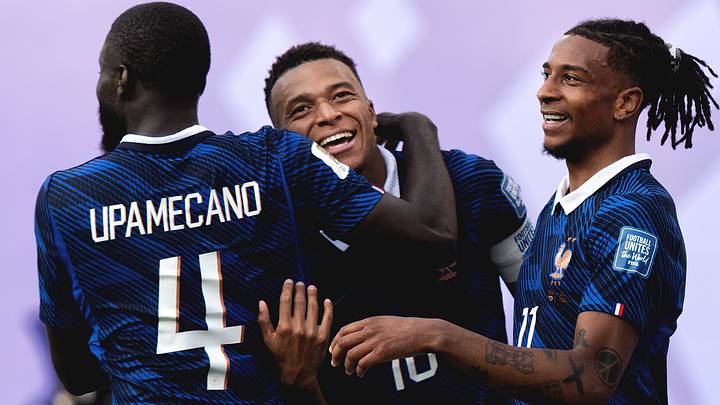
EAST RUTHERFORD, N.J. — Truly the stuff of fever dreams over here in section 225 along the stadium’s north side. Pass the man in the tight striped shirt wearing a red beret and holding a fake plastic baguette and you turn the corner to find a pair of men dressed as mimes. They are waving a French flag to fan a young supporter of Les Bleus who has overheated and is slumped down in a chair as security forms a wall around him to cool down.
Around the corner comes Max, an athletically built male of about 5’10” who is dripping sweat beneath what looks like a heavy, non-breathable blonde wig decorated in a kind of braided pigtail. He’s wearing a traditional Swedish dress for Midsommar atop shin guards, soccer socks and tennis shoes. Follow him through the concourse and onto the patio, and you’ve arrived at Camp Sweden.
The fan section of Swedish football—which also cleverly featured fans wearing yellow shirts with the word IKEA written on them—was paltry in size to the overwhelming number of French supporters here among the 83,000 attendants in New Jersey, but for the first 40 minutes, the chants of ‘Allez, Allez, Allez’ (‘Onward Sweden’) did not relent.
Max said Swedish fans took pride in their FIFA ranking for kindness, but when informed that France were heavy favorites, his eyes narrowed and he assumed a joking fighter’s posture. When asked if he believed, as Sweden seemed to escape one piercing attempt on goal after another (including a 19th-minute goal by Kylian Mbappe that was called back upon review) by the blistering French attack over the course of the first 40 minutes, he smiled.
“Of course I do,” he says. “I f—- flew here.”
France and Kylian Mbappé Take Charge

Of course, in rapid succession just before halftime, just after halftime and a third time at the 73rd minute, France eventually honed its eye for the goal and obliterated any chance of a stunning upset. Gone were the scattershot follows, the moments where Les Bleus’ incredible strikers were slapping their heads in frustration.
Kylian Mbappé sliced between two defenders and pounded the ball in the far side of the net. Bradley Barcola slipped between a pair of Swedish defenders, took a quick touch and scored again. Then Mbappé, one last time, punched the ball to the far corner of the net, just off the outstretched hand of Sweden's keeper, Jacob Widell Zetterström. After the last one Mbappé found an open swath of space and skied into the air, a bit like a toddler pretending he was a rocket ship blasting off to the moon.
Outside of the confidence that momentarily reverberated from Camp Sweden, though, the eventual 3-0 result was heavily expected. France became the first team in World Cup history to score three or more goals in five straight matches, though those matches were against some of the Cup’s lowliest opponents: A lukewarm Senegal, Iraq and a second-string Norway, none of which are in the FIFA top 15 World Rankings (Iraq hovers in the mid 60s). Sweden was in organizational tatters leading into the World Cup as well.
WIN FIFA WORLD CUP 2026™ FINAL TICKETS & OTHER PRIZES

Just How Good is This France Team?

It brings up the important question, as France advances to play Paraguay (another team outside of the Top 30 in FIFA World Rankings, though riding high after a stunning upset over Germany in the opening round) in the second stage of the knockout tournament: Are we responsible for believing what our eyes tell us to believe? Or, is it merely another victory over a small, bright-eyed, understaffed army like we saw in Camp Sweden?
“We knew we had to be perfect,” Graham Potter, Sweden’s manager said afterward, noting that, even if Sweden was perfect, it may not have been enough. “We needed a couple of miracles.”
When asked if he thought any team could beat France, he said: “Of course, it’s football, anything is possible, but I haven’t personally seen a better team.”
As Mbappé was subbed off in the 86th minute, France manager Didier Deschamps stretched out his arms and bowed several times, welcoming the 27-year-old star to the bench. Mbappé has now played in 18 World Cup games and has scored 18 goals. He is now the lone record holder, passing Ronaldo and Leonidas, for the most goals ever scored in the knockout stage of the World Cup (10).
What France Does to Opponents

French soccer, at this very moment, is the picture of versatility, with an amoebic attack that is grounded in a concept that is simple theoretically but almost impossible to achieve in real time: Make yourselves fluid enough to empower your goalscorers. France has dominated by mastering width, drawing double teams at both ends of the pitch and thinning out defenses that still cannot manage to bracket the team’s fleet of strikers. Even with quarterly hydration breaks, the tiring effect this has on defenders is debilitating.
They are also appropriately dominant. Before Mbappé’s first goal, he made a backward no-look pass to Ousmane Dembélé that looked more like a dance step (the pair have more mutual assists for one another than any tandem dating back more than 50 years). Every part of his facial expression suggested that he planned for the moment to go viral. France possessed the ball more than 60% of the game and had a shot advantage of 12-3.
Les Bleus appear comfortable enough, then, to sidestep the question of opponent quality. Deschamps admitted that “for us, it wasn’t that difficult” to reach the round of 16 but cautioned a reporter who mentioned the cementing confidence among French fans and journalists.
“Slow down, please,” he said. “There are issues, there’s always room for improvement.”
READ THE LATEST WORLD CUP NEWS, ANALYSIS AND INSIGHT FROM SI FC
Published 2 hours ago | Modified 17 minutes ago
 CONOR ORR
Conor Orr is a Senior Writer for Sports Illustrated with more than 15 years of experience covering the NFL. His work has been cited in Best American Sportswriting and has won a PFWAA award. Prior to Sports Illustrated, he covered both the Giants and Jets for The Star-Ledger. Conor lives in New Jersey with his amazing wife and three children.
Home/Soccer