USA vs. Bosnia & Herzegovina Prediction, Odds, Best Prop Bet for World Cup Round of 32
USA vs. Bosnia & Herzegovina Prediction, Odds, Best Prop Bet for World Cup Round of 32
Iain MacMillan|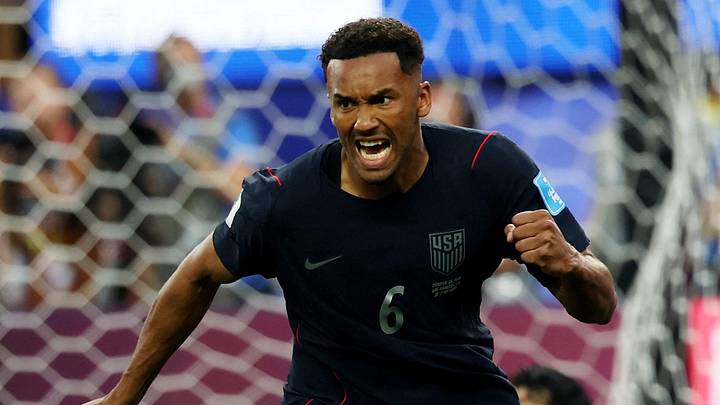
The prime time Round of 32 matchup on Wednesday will feature the co-host, the United States, taking on Bosnia & Herzegovina with a spot in the Round of 16 on the line.
The United States won Group D, while Bosnia & Herzegovina managed to advance as a No. 3 seed in Group B. Is there any chance of an upset on Wednesday night? Let's find out what the oddsmakers think.
USA vs. Bosnia & Herzegovina Odds and Total
To Advance
- USA -750 (88.24% implied probability)
- Bosnia & Herzegovina +500
3-Way Moneyline
- USA -290
- Bosnia & Herzegovina +800
- Draw +400
Total
- OVER 2.5 (-118)
- UNDER 2.5 (-104)
USA vs. Bosnia & Herzegovina How to Watch
- Date: Wednesday, July 1
- Time: 8:00 p.m. ET
- Venue: San Francisco Stadium
- How to Watch (TV): Fox/Tele/Fox One
- USA record: 2-1-0
- Bosnia & Herzegovina record: 1-1-1
USA vs. Bosnia & Herzegovina History and Tournament Results
These two countries have faced each other three times before. All three matches were international friendlies, with the USA going 2-1-0 in them. The most recent match was a 1-0 victory for the United States in 2021.
United States
The United States began its tournament by beating Paraguay 4-1 and Australia 2-0. With the group already locked up, they rested some players against Turkiye, leading to a 3-2 loss.
Bosnia & Herzegovina
Bosnia & Herzegovina played to a 1-1 draw against Canada to open its tournament. They then lost 4-1 to Switzerland, but wrapped up their group stage by beating Qatar 3-1 to secure a spot in the Round of 32.
United States vs. Bosnia & Herzegovina Best Prop Bet
- Folarin Balogun Anytime Goal (+120)
In today's edition of my Best World Cup Goal Scorer Bets Today, I made the case for betting on Folarin Balogun to score:
Folarin Balogun leads all of the United States in expected goals through the group stage portion of the World Cup at 1.78. His seven shots also lead all United States players. The USMNT has a favorable matchup ahead of them in Bosnia & Herzegovina, so I wouldn't be surprised to see them score multiple goals, with Balogun getting at least one.
United States vs. Bosnia & Herzegovina Prediction and Pick
In the July 1 edition of Best World Cup Bets Today, I broke down why I'm betting on the United States to win by 2+ goals:
Bosnia & Herzegovina played in one of the weakest groups in the tournament, and while four points were enough for them to advance, a -0.45 expected goal differential per 90 minutes after games against Switzerland, Canada, and Qatar. Now, they have to face arguably the best team they've had to play against yet. The United States is going to come out firing, and currently have an expected goal differential of +0.86 per 90 minutes. I'm willing to bet on the United States proving they're a step above Bosnia & Herzegovina on Wednesday.
Pick: USA -1.5 (+104) via FanDuel
Follow Iain on X and Instagram
With the latest FanDuel promo code new-user offer, you can get $350 in bonus bets. Create your new FanDuel account today, bet $5 for seven straight days and get $350 in bonus bets back.
Odds refresh periodically and are subject to change.
If you or someone you know has a gambling problem and wants help, call 1-800-GAMBLER.
You can check out all of Iain's bets here!
Published 2 hours ago | Modified 2 hours ago
-eb6ee9a9f2179a90cbfe0d8c654d1a62.jpg) IAIN MACMILLAN
IAIN MACMILLANOriginally from Nova Scotia, Iain MacMillan is a senior editor covering betting, with a focus on NFL, NHL, and golf. He hosts the Bacon Bets Podcast and has been featured on VSIN, BetQL and Monumental Sports Network. He is a member of the Metropolitan Golf Writers Association and his beloved Falcons and Maple Leafs break his heart on a yearly basis.
Follow iainmacbetsHome/Betting
Brain cancer breakthrough as new drug shows 'promising results'
A groundbreaking immunotherapy treatment could help push the deadliest form of brain cancer into remission, a study suggests.
Researchers in London and Canada have found that a new CAR-T cell therapy may eliminate aggressive glioblastoma tumours and lead to long-term disease survival.
It could be a major breakthrough in the fight against the currently incurable cancer, which affects 3,200 Britons per year and devastatingly kills 95 per cent of patients within just five years of diagnosis.
Scientists have spent decades searching for ways to manage glioblastoma but it has proved difficult because the disease spreads through the brain by sending tiny, thread-like extensions into healthy tissue.
Unlike many other cancers, it also cannot typically be fully removed with surgery and remaining cells often resist chemotherapy and radiotherapy, allowing the disease to thrive.
Now, however, teams at King's College London and McMaster University believe CAR-T therapy could be the answer.
Already available on the NHS, CAR-T is used to treat around 2,500 patients in Britain each year - often for blood cancers - and works by instructing a patient's own immune cells to recognise cancer cells in the body and destroy them.
In the new study, published in the journal Nature, scientists tested a new version of the treatment in animals with glioblastoma using models designed to mimic the human disease.

Researchers in London and Canada have found that a new CAR-T cell therapy may eliminate aggressive glioblastoma tumours and lead to long-term disease survival
Strikingly, in two of the main experiments, the therapy completely eliminated tumours in 12 out of 13 mice treated.
The mice also remained tumour-free for longer than four months in one group, and for more than five months in another.
The scientists' method involved identifying a protein, named GPNMB, on glioblastoma and macrophages - immune cells that normally help defend the body from infection but are hijacked by cancer to resist treatment.
They then engineered the CAR-T therapy to recognise the protein, allowing them to attack both the tumour and the cells protecting it.
Sheila Singh, professor of neuro-oncology and neurosurgery at King's College London and McMaster University, and the study's lead author, said: 'Instead of treating glioblastoma as only a mass of cancer cells, we need to think of it as a connected tumour-immune ecosystem.

Glioblastoma affects 3,200 Britons per year and kills 95 per cent of patients within just five years of diagnosis. Labour politician Dame Tessa Jowell died from the disease in 2018
'Our approach targets both the tumour and the environment that allows it to thrive.
'By going beyond the cancer cells alone, we are also targeting immune cells that help shield the tumour from treatment.'
Although the treatment has not yet been tested on humans, authors say their results demonstrated 'strong preclinical efficacy'. This could open the door for the therapy to one day be used for human treatment if any future trials are successful.
Most glioblastoma patients currently live on average for between 12-18 months, and charity Brain Tumour Research say there have been no advances on a cure for two decades.
CAR-T therapy, meanwhile, is typically used for treating children and adults with leukaemia and for some adults with lymphoma. Both leukaemia and lymphoma are forms of blood cancer.
The process involves collecting white blood cells from a patient's immune system, which the body uses to help fight disease. The cells are then genetically modified to recognise proteins found on cancer cells before being put back into the bloodstream.
The study's co-author Shan Grewal, from McMaster University, said their method of attacking the disease with the CAR-T therapy differs from most previous approaches which focused on killing cancer cells alone.
This is because the new treatment attacks two parts of the disease at once: the tumour itself and the immune cells that help it evade the body's defences.
He said: 'Our work suggests we may also need to dismantle the immune support system that helps glioblastoma survive.'
The use of CAR-T therapy in the trial is part of a growing drive to investigate how effective the treatment can be against brain tumours.
Read More
I'm a hospital consultant and missed my own prostate cancer. These are the signs you MUST not ignore

Glioblastoma is the most common type of cancerous brain tumour in adults and killed Labour politician Dame Tessa Jowell in 2018. The Wanted singer Tom Parker also died following an 18-month battle with the disease in March 2022.
Symptoms of brain tumours include persistent or worsening headaches, seizures, feeling sick or drowsy and suffering with memory problems.
Other signs can also include feeling weak on one side of the body or having new problems with vision or speech.
Anyone experiencing persistent or unusual symptoms should speak to their GP.
Professor Singh concluded: 'Only through collaboration with scientists across the world and with clinicians can we tackle this devastating disease.
'I've seen first-hand through my work as a neurosurgeon the impact glioblastoma has on patients and their family members and I am committed to developing new treatments to improve outcomes for those affected by brain cancer.'