Open Thread: Free Agency Frenzy 2026 (10:00 a.m. MT)

Ah, that new league year smell.
Join us and follow along as we celebrate the official start of the 2026-27 NHL season and witness hundreds of millions of dollars spent on free agents hitting the open market. The festivities begin officially at 10 a.m. MT.
Who will the Avalanche sign to round put their roster? How many AHL level deals to help the Colorado Eagles are on tap? And as always, plenty of intrigue on who will get the largest contract in the NHL on the open market? Some big extensions are eligible starting today as well, will any get filed and announced quickly?
Is the flurry of trades largely concluded for the Avalanche and NHL as a whole or will there be more shocking moves on the horizon? Join us in the comments as it all unfolds.
Who do you want the Avalanche to sign? Other than Cale Makar, of course.
Rob Parker Calls Bills' Cowards for Omitting OJ Simpson from Ring of Honor at New Stadium
Rob Parker Calls Bills’ Cowards for Omitting OJ Simpson from Ring of Honor at New Stadium
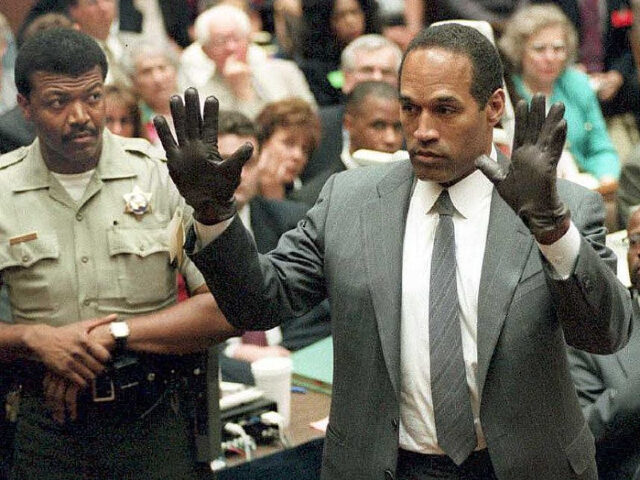

One would think that being held liable for the wrongful deaths of two people would be enough to get someone excluded from an NFL team’s Ring of Honor, and it is.
But Rob Parker has an issue with its timing.
As the Bills get set to begin a new chapter with their multi-billion-dollar facility at Highmark Stadium, they are leaving something of their past at Ralph Wilson Stadium in Orchard Park behind, like any mention of O.J. Simpson.
While Simpson was Buffalo’s first honoree on their old Wall of Fame, he will have no place on their new one at Highmark Stadium.
Fox Sports Radio host Rob Parker takes great umbrage with this decision. In his view, the Bills should have done this while he was alive.
“If you ever wanted to know why the Buffalo Bills are losers, have never been able to win a championship, and have all kinds of other things going on, this is a prime example. This is the worst of the worst, the most cowardish move I’ve ever seen,” Parker said. “They didn’t do this when O.J. Simpson was alive, and I don’t care what you talk about all the other stuff, because I’m not sitting here trying to make it like O.J. was the perfect person or did everything right.”
“But if you’re the Buffalo Bills, I have a question for you. O.J. Simpson is still in the Pro Football Hall of Fame, O.J. Simpson is still in the College Football Hall of Fame. And he was still honored at your old stadium. Why would you do this now that he’s deceased and that he’s gone? It’s a coward move. You should have done it when he was still alive if you had any cause to do it and say, ‘no, O.J. we don’t care what the jury said, we don’t care about anything, we don’t care about the legal system and how it works in this country and we’ve determined that you’re guilty and we want nothing to do with you.’”
“How the hell can the Buffalo Bills have any kind of honor or ring or salute any players in that freakin’ organization and not include O.J. Simpson? He was the Buffalo Bills. Disgraceful,” Parker said.
Parker’s point isn’t without merit.
What were the Bills waiting on? The terrible things that Simpson did were well known before his death and before the Bills decided to switch stadiums.
FCC Working to Streamline Satellite, Earth Station Licensing
FCC Working to Streamline Satellite, Earth Station Licensing for ‘America’s Growing Commercial Space Economy’

The Federal Communications Commission (FCC) in July will vote on an order that would streamline satellite and earth station licensing processing to remove “outdate regulations” that hamper “America’s growing commercial space economy.”
FCC Chairman Brendan Carr outlined in a release on Tuesday that during its July meeting the agency will consider an order that would modernize its satellite and earth station licensing processes. The reforms aim to create a faster and more predictable “licensing assembly line,” increase space safety, and scrap onerous regulations that hamper the commercial space economy.
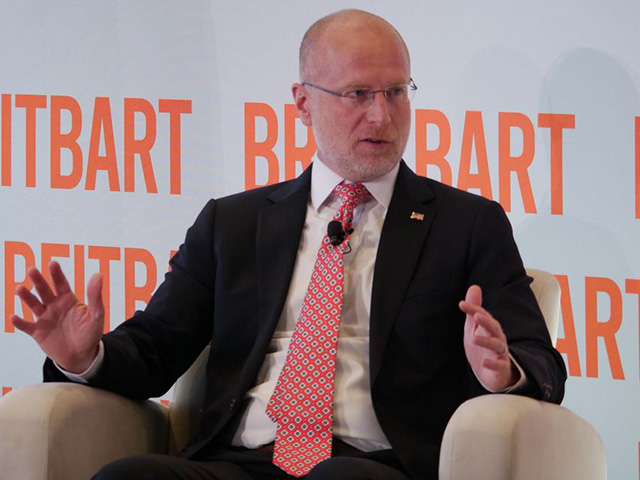
Federal Communications Commission Chairman Brendan Carr is interviewed at a Breitbart News policy even on March 10, 2026, in Washington, DC. (Matthew Perdie/Breitbart News)
During a press conference call on Wednesday, a senior FCC official said the agency has been working to clear the backlog in FCC space licensing. Since Carr took the reins as chairman, the FCC has reduced the backlog by 52 percent over 18 months.
The senior FCC official said Carr seeks to make the United States the best place to build and operate a space company. The order will seek to drastically reduce red tape and boost the expansion of space-based broadband internet.
A senior FCC official said on the call that space-based internet providers such as Starlink or Amazon’s Leo are constantly innovating how to provide faster and more reliable internet, and that the FCC’s order would make it easier to update their licenses to facilitate the innovation in a week or a month.
In June, Breitbart News’s Lucas Nolan reported that the FCC granted Amazon a waiver for its Leo satellite internet project to compete against SpaceX’s Starlink service.
“Waiver serves the public interest by promoting a second large satellite broadband constellation,” the FCC wrote at the time. “At this time, only one operator, SpaceX, is providing broadband to American consumers from low-Earth orbit. Amazon Leo’s service promises to be ‘groundbreaking,’ both in quality of service and affordability for consumers. Amazon Leo has further invested significant resources into meeting its commitments, including more than $10 billion to deploy the system along with investments in physical infrastructure and manufacturing capabilities.”
Supreme Court will hear Trump's bid to end legal protection for up to 1.3 million immigrants
 People march during a rally in support of the extension of temporary protected status for Haitian immigrants in Fort Lauderdale, Fla., in January. (Lynne Sladky / Associated Press)
  By Andrea Castillo Staff Writer Follow April 28, 2026 3 AM PT
 - Click here to listen to this article
- Share via
This is read by an automated voice. Please report any issues or inconsistencies here.
See more from the L.A. Times in Google Search. Set us as preferred
- The federal government is arguing that decisions regarding the program are entirely immune from review by courts.
- Lower courts have repeatedly deemed the administration’s actions improper.
WASHINGTON — The Supreme Court will hear arguments this week over whether the Trump administration may revoke temporary protected status for about 350,000 Haitian and 6,100 Syrian immigrants.
TPS allows people who are already in the United States to legally reside and work here if they are unable to safely return to their home country because of a sudden emergency such as war or a natural disaster. The humanitarian program, enacted by Congress in 1990, has since been used by Republican and Democratic administrations alike.
Since President Trump returned to office last year, his administration has terminated such protections for immigrants from 13 countries. Court challenges on behalf of Haitians and Syrians have been consolidated into a single case, Mullin vs. Doe, which the justices will hear Wednesday.
The high court’s ruling could eventually have sweeping repercussions for all 1.3 million immigrants from the 17 countries that were designated for TPS at the start of this administration. That’s because the federal government is arguing that decisions regarding the program are almost entirely immune from review by courts.
“Temporary means temporary and the final word will not be from activist judges legislating from the bench,” a Department of Homeland Security spokesperson, who did not provide their name, wrote in response to a request for comment.
Lower courts have repeatedly deemed the administration’s actions improper.
“We’re seeing clear gamesmanship from government to insulate all TPS decision-making from any oversight,” said Emi MacLean, a senior staff attorney at the American Civil Liberties Union of Northern California, who is counsel in the case for Syrians and in other cases challenging five of the terminations. “They’ve created a farce of a process to justify the ends that they sought, which was to strip humanitarian protections from over a million people.”
In the Trump administration’s appeal, Solicitor Gen. D. John Sauer argued that Congress gave the Homeland Security secretary the power to grant or end the temporary protected status for troubled countries and barred judges from intervening.
He pointed to a provision that says: “There is no judicial review of any determination of the [secretary] with respect to the designation, or termination or extension of a designation, of a foreign state.”
Citing this hands-off provision, Trump’s lawyers won brief emergency orders last year that allowed the administration to strip legal protections from about 600,000 Venezuelans. In that case, then-Homeland Security Secretary Kristi Noem had quickly reversed an extension granted by the Biden administration three days before Trump was sworn in.
The circumstances surrounding the Syria and Haiti cases are different. Advocates for the immigrants argue that the administration failed to conduct the required process to properly evaluate each country’s conditions.
They point to emails in July from a Homeland Security official to a State Department official. The Homeland Security official listed TPS designations coming up for review — Syria, South Sudan, Myanmar and Ethiopia. In response, the State Department official wrote: “I confirm that State has no foreign policy concerns with ending these TPS designations.”
State Department travel advisories for both countries warn people against traveling to either because of the risk of terrorism, kidnapping and widespread violence. U.S. citizens are advised to prepare a will.
For Syria, the advisory cites active armed conflict since 2011. For Haiti, it says the country has been under a national state of emergency since March 2024.
But Federal Register notices announcing the terminations said country conditions had sufficiently improved. The notice for Syria, for example, says “the Secretary has determined that, while some sporadic and episodic violence occurs in Syria, the situation no longer meets the criteria for an ongoing armed conflict that poses a serious threat to the personal safety of returning Syrian nationals.”
If the government loses, Homeland Security officials would have to reevaluate the TPS decisions in consultation with the State Department and make a decision based entirely on the country conditions themselves.
The government could start over, in that case, and still find that TPS is no longer warranted — if the process bears that out.
In a friend-of-the-court brief led by immigration law scholars at Georgetown and Temple universities, they explained that before TPS existed, similar forms of humanitarian relief were determined by the executive branch “without reference to any statutory criteria or constraints, and with little if any explanation for why nationals of certain countries received protection while others did not.”
With TPS in 1990, Congress sought to end that “unfettered discretion,” they wrote. Instead, the statute requires the Homeland Security secretary to terminate TPS if the review finds that conditions justifying the designation no longer exist. Otherwise, the law states, it “is extended.”
“The point of the TPS statute was to depoliticize humanitarian decisions,” said MacLean, the ACLU attorney. “Secretary Noem in all of her TPS decisions has completely undermined that fundamental goal.”
Ahilan Arulanantham, who is arguing for the Syria case on Wednesday, added that if the government wins, “it also means they could probably grant TPS to countries that don’t deserve it.” Arulanantham, co-director of the Center for Immigration Law and Policy at UCLA, has represented the National TPS Alliance in separate litigation during this administration and Trump’s first.
Top Homeland Security and State Department officials from the George W. Bush, Obama, Trump and Biden administrations filed a brief arguing that the Trump administration’s terminations of TPS for Syria and Haiti were “not based on evidence and sharply departed from past inter-agency practices.”
Haiti was originally designated for TPS in 2010 after a massive earthquake devastated the country and redesignated because of subsequent natural disasters and gang violence. In November, Noem announced that she would terminate TPS for Haiti, effective Feb. 3. She wrote in the Federal Register that “there are no extraordinary and temporary conditions in Haiti” that prevent Haitians from safely returning.
But even if there were, she continued, “termination of Temporary Protected Status of Haiti is still required because it is contrary to the national interest of the United States.”
The Homeland Security spokesperson said TPS for Haiti “was never intended to be a de facto amnesty program, yet that’s how previous administrations have used it for decades.”
Syria, meanwhile, “has been a hotbed of terrorism and extremism for nearly two decades,” the spokesperson wrote, “and it is contrary to our national interest to allow Syrians to remain in our country.”
In the Federal Register notice for Syria, Noem added that maintaining its TPS designation would “complicate the administration’s broader diplomatic engagement with Syria’s transitional government” by undermining peace-building efforts.
The Supreme Court will take up the question of whether the Homeland Security secretary can use national interest as a reason to revoke TPS. Attorneys for the TPS holders believe any decision to revoke TPS must come down to the country conditions alone.
Syria and Haiti are among the countries for which the Trump administration has also paused processing all immigration benefits. If their TPS protections expire, those immigrants would become vulnerable to detention and deportation even if they are eligible for other forms of relief.
 U.S. Solicitor Gen. D. John Sauer argued that Congress gave the Homeland Security secretary the power to grant or end the temporary protected status for troubled countries and barred judges from intervening. (Aaron Schwartz / Getty Images)
 Attorneys for the TPS holders say the terminations were also driven by racial animus. They point to various statements by Trump over the years, including his false claim that Haitians were eating the pets of people in Springfield, Ohio, that they “probably have AIDS” and that Haiti is among the “shithole countries” from which he would permanently pause migration.
Among those affected is a 35-year-old Haitian woman who has lived in the U.S. since 2000 and is raising her four U.S. citizen children in a Southern state. The woman requested to be identified by her middle and last initials, B.B., out of concern for her immigration case.
After graduating high school, B.B. got into nursing school but couldn’t attend because she didn’t qualify for financial aid. She said later getting TPS allowed her to become a certified nursing assistant, and she now works as a medical coordinator while owning a nail salon and three real estate properties.
Though B.B.’s TPS remains active because of the court proceedings, her driver’s license expired Feb. 3 and she has since had to rely on friends and rideshares to get around while repeatedly requesting a renewal.
She said she worries most about her children. If she were deported back to Haiti, she said, she would leave them in the U.S. for their own safety.
“It’s like planning your death,” she said. “I’m 35 and I already have a will — not because I’m going to die but because of the situation.”
On a call with reporters, attorneys and advocates, a Syrian man said he earned his master’s degree in the U.S. and now works in the healthcare industry. The man, who was identified by a pseudonym, said he and his wife are afraid of what their future will look like.
“TPS gave us something we had not had in years: a place to settle and a moment to grieve,” he said, later adding that “telling Syrians to go back right now is not a policy — it’s abandonment.”
Among the public, there is broad support for TPS and other humanitarian programs. According to a poll conducted last month by the firm Equis Research, 68% of Latino and 65% of non-Latino voters support fighting to give back legal protection to those who have lost their temporary protected status or asylum protections as a result of the current administration’s actions.
Earlier this month, the House voted in favor of a bill that would require new Homeland Security Secretary Markwayne Mullin to redesignate Haiti for TPS. Among those who crossed the political aisle to support it were 10 Republicans and Rep. Kevin Kiley, an independent from Rocklin, Calif., who caucuses with Republicans. The measure faces an uphill battle in the Senate.
In an interview with The Times, Kiley said his vote was about common sense and being humane.
“It’s particularly dangerous for people that would be returning where the gangs that are ravaging the country are just lying in wait outside the airport in Port-au-Prince,” he said, referring to the Haitian capital.
And because most won’t return willingly, Kiley added, “really all you’d be doing is removing work authorization from 350,000-some people who are going to mostly remain in the country, who will not be able to work anymore and may end up being more reliant on public assistance in states where they’re eligible.”
At the same time, Kiley said, the TPS system hasn’t worked as intended because most so-called temporary designations drag on.
“The system needs to be reformed,” he said. “But that’s all separate and apart from what we do with the folks who were already given this designation.”
Times staff writer David G. Savage in Washington contributed to this report.