John Mozeliak Q&A: New Angels’ interim GM on Arte Moreno’s vision, trade deadline
John Mozeliak Q&A: New Angels’ interim GM on Arte Moreno’s vision, trade deadline

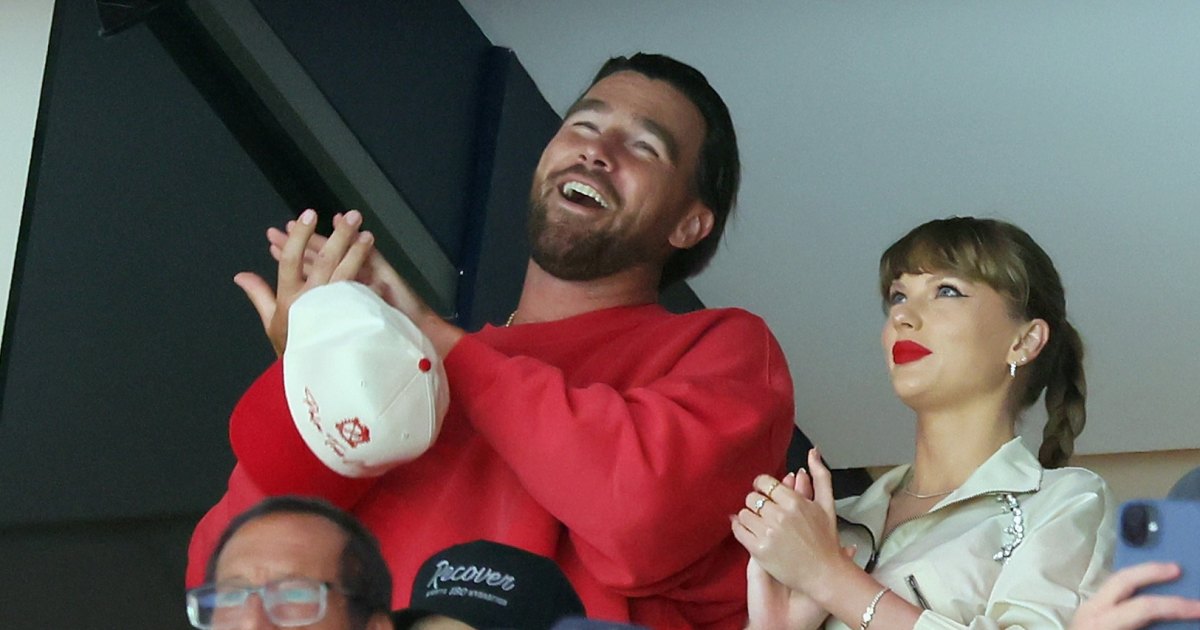
John Mozeliak previously spent over a decade with the St. Louis Cardinals. Charles LeClaire / Imagn Images
By Ken RosenthalJune 30, 2026 Updated 7:48 pm EDTFor Los Angeles Angels owner Arte Moreno, John Mozeliak represents something different.
After taking control of the club in May 2003, Moreno inherited Bill Stoneman as his general manager, then went with four straight first-time heads of baseball operations – Tony Reagins, Jerry Dipoto, Billy Eppler and Perry Minasian (Dipoto was interim GM of the Arizona Diamondbacks from July 1 to Sept. 22, 2010, but that was the extent of his experience in the role).
Mozeliak, who on Friday joined the Angels as a Baseball Operations Consultant, serving as interim GM, is the opposite kind of hire.
When he stepped down at the end of last season as the St. Louis Cardinals’ president of baseball operations, Mozeliak was the game’s second-longest tenured lead executive, behind only the New York Yankees’ Brian Cashman.
Mozeliak, 57, ran the Cardinals for 18 seasons, helping transitioning Chaim Bloom into the top job in his final year. He was out of the game less than nine months when the Angels came calling. And though his contract runs only through December, the task he faces is enormous — reversing the course of a franchise steamrolling toward its 11th straight losing season.
The Cardinals accomplished much during Mozeliak’s tenure, reaching the postseason 10 times, capturing the National League pennant twice and winning the 2011 World Series. The team eventually sputtered, missing the postseason in each of the past three seasons. But compared to Anaheim, St. Louis was indeed baseball heaven.
With the Angels, Mozeliak not only must overcome a losing culture, but also navigate a relationship with Moreno, a challenge his predecessors found exasperating. The extent to which Moreno will grant Mozeliak autonomy is an open question. Mozeliak addressed that concern and others Tuesday in an interview with The Athletic.
At what point after stepping down did you realize you wanted to get back into baseball operations. And why the Angels? What about this opportunity stood out to you?
There was never a moment in time that I felt like I had to get back in. I think really what happened was, the presentation of this opportunity intrigued me to want to do it.
What intrigued you?
I’ve always liked a good challenge. And after speaking with Molly (Jolly), their team president, over the past few weeks, the more we discussed this opportunity and the challenges that lie ahead, I just found it very intriguing, compelling and interesting.
I was enjoying my time away from baseball. But this was something, in speaking with her, where I felt like this might be a very good fit for myself and this organization.
What was it like being out of the game? It seems like you got the itch to return pretty quickly.
A lot of people have sort of asked me that. The one thing about baseball is that you never get that break. The fact that I did get to have that time away, you could term it almost like a sabbatical. You can get recharged and refreshed.
Where I was in my career and personally, it was the right time to step away and take that moment to refresh and get energized again.
I know Steve Hilliard (a player agent) connected you with Molly. But I was wondering, who initiated the first conversation? What was it like?
She reached out to me. I’d characterize the first conversation as more exploratory on both ends. Ultimately, it obviously led to more conversations. I would have to say it was first productive.
 Under first-year manager Kurt Suzuki, the Angels entered Tuesday with a 36-50 record. (Katelyn Mulcahy / Getty Images)
When was the first one?
I believe it was around June 7.
In your role with the Cardinals the past few years, when you looked at the Angels, what did you see? How did you view the Angels?
Well, I think the way I’d answer that is that, obviously, they are a team in a robust market where finding a consistent pattern of winning was not happening. There are lots of things you can point to, lots of things I still need to learn about why. But my view of what was happening with the Angels is probably no different than most people’s.
There are things that just weren’t going right. I don’t know the answers yet. I’ve only been here three days. But I’m certainly going to spend a lot of time and energy trying to understand what do we need to do to get them to where they once were.
A lot of people, including me, find it curious that you took the job without talking to Arte Moreno? Why were you comfortable doing that?
In my time with Molly, she told me that she’s responsible for this search, responsible for this hire. Subsequently, I have met with Arte since that (introductory news conference). I had breakfast with him (Monday). It was a productive meeting. When I left, I felt very positive.
Do you have an understanding of his vision?
I think he’s going to rely a lot on what I think the vision needs to be. I definitely think there is going to be opportunity to have some autonomy in how we do it. Obviously, he’s the owner. There’s going to have to be communication and trust built.
Mr. Moreno and I have met before. It wasn’t like the first time we’ve ever met. But as far as spending time together and understanding backgrounds and philosophies and all that, that was our first blush at that.
It was a productive meeting. Molly was in attendance as well. The three of us talked about a lot of things. Did we iron any direct strategy out of it? No. I didn’t want to come out of that with that. I feel like there are a lot of things I don’t know yet. It’s my responsibility to figure those out between now and when these certain deadlines approach.
How long was the meeting?
Probably two and a half, three hours.
Are you the only person joining the organization? Or are you going to bring some other people with you.
Good question, and one I don’t know the answer to yet. I don’t know where I necessarily need help yet. That’s not to say I won’t need help. But I’m just starting to get an understanding of the landscape.
Depending upon who is named GM, any chance you stick around as president of baseball operations?
The person that ends up being GM, depending upon the relationship and who it is, there’s always a certain possibility that there’s a chance I stay around in some capacity. But that is not where my energy is right now. The short view right now is trying to understand how we run the draft, preparing for the draft. Then we’ll flip the script to the trading deadline, build a strategy for that. Then, after that, the GM search will begin in earnest.
Speaking of the draft, Perry had a big hand in who the Angels drafted. At times, it seemed like he was taking control. In your initial conversations Molly and Arte Moreno, has that come up? And how important is it to you for people in the organization to have more autonomy?
Very important. That’s obviously how I ran the Cardinals. And my expectations here are that the people in those roles step up and do those roles.
Obviously, this is a unique situation where someone like myself steps in. We’re definitely going to take a deep dive and understand what tools they use in their decision-making. Ultimately, my responsibility is to make sure we get the best players. But I am going to rely heavily on the existing staff to accomplish that.
In recent years, under Perry, the Angels rarely drafted high school players in the upper rounds. The strategy has been mostly to go with college guys, then go over slot for high school players after the 10th round. Do you know if that was a preference of the owner’s? And would you be allowed to draft a high-school player in the first round?
I have no restrictions. We did discuss that (Monday). Not specifically on your Perry example. But I told him our goal is try to get the best player possible, whether it’s a high school player or a college player. We’ll see what that looks like. I don’t know what that looks like today. But we have the freedom to do what we need to do.
In your transition year in St. Louis, were there things you picked up about the modernization of player development and scouting, amateur and pro, that you will bring with you to Anaheim?
I certainly hope so. I always feel like in baseball, the best way to describe it is, are you current? Do you know what’s there? There are also skills from having wisdom and experience that also matter. But I also feel what I was witness to and what I learned about going through that transition certainly will be helpful moving forward.
Albert Pujols. He’s being paid $1 million per year to be an advisor to the Angels as part of a personal services contract. You obviously have a longstanding connection with him. How much have you thought about involving him in this process? Is that possible?
We have connected via text. But at this point, there’s so much I need to do with things I don’t know before I worry about addressing some of the things I do know.
If he wants more involvement, he’s always going to be welcome. We both know his goal right now is to be a manager somewhere. But if there’s something that helps bridge that in terms of having him available more to our minor leagues, big leagues, whatever that might look like, we haven’t discussed it. But obviously, we’re going to be open to it.
Mike Trout. He has said repeatedly that he wants to stay in Anaheim and win in Anaheim. Have you met with him yet? And what would you like to know from him? What would you like to talk about?
Excellent question, actually. I did meet with him. It was a very cursory introduction. I simply said to him, “You’re the face of this franchise. You’ve been here forever. I’d love to sit down and get your insights about what’s going on here.” He told me he’s welcome to that.
In terms of trading him, that topic never came up, and I don’t think it will.
You developed numerous young players with the Cardinals, some more rapidly than others. The Angels under Perry often advanced their top prospects with greater consideration for the major-league team’s needs than perhaps individual development. Does that need to change?
I’m going to assume your assumption is correct. I’m not debating that at the moment. I definitely think that allowing players to grow at the minor-league level is always to their best benefit. There are times when people make reactionary moves because of certain needs. But if your record is not (at a place) where you’re contending and pushing, it does seem like that might not be the smartest strategy.
 Reid Detmers is one such player the Angels could trade at the deadline. (Thearon W. Henderson / Getty Images)
The trade deadline. If you choose, I won’t say you can control the deadline, but you certainly can be a leading seller. You’ve got (José) Soriano, (Reid) Detmers, (Zach) Neto, (Jo) Adell. Teams generally listen on almost all players, I get that. But how will you go about determining what is the best course here?
Working through that actually right now. I don’t have a definitive strategy. Once we work through that, that would be something I would share with Molly and ownership just so they understand how we’re thinking. I have not tackled that. But I get it. It’s got to get done soon.
Based on your initial conversations, are you generally confident that you’ll be able to trade players as you see fit? If you wanted to trade Soriano and Detmers, could you do it?
I don’t want to answer that question in such a black-and-white scenario. All players in trade discussions have to (be under) some consideration. There could be a possibility where of course you need to make that deal because it’s too good to pass up. But I’m not going into it with X, Y and Z we’re looking to move and we’re going to take the very best we can get even if it’s not good enough. That’s not really the strategy we’re thinking. Again, I don’t have one yet. But I wouldn’t recommend that.
Do you think the team needs to rebuild?
No. I don’t think in this market you need to do that. I think what you need to do is understand what those arbitrages look like. You need to understand what the future free-agent market looks like.
This team has resources. Now it’s just making sure we deploy them correctly.
It’s interesting. You mention that, and some of the Angels’ issues are related to funding. (Poor) facilities in Anaheim. Minor leaguers doing spring training off-site. Haven’t spent much on free agents since (Anthony) Rendon. How much of this is simply going to come down to a greater financial investment?
You touched on a broad spectrum of issues. I’m just learning about their spring training situation recently. In terms of deployment for major-league payroll, I think Arte wants to see not just a quality product, but one that’s competing, one that will get to October.
It’s easy to say that. But what are we going to do to do that? What does that look like? What does that mean? That’s something where I have to put pen to paper and explain how that looks.
Last thing. As you know, a lot of people have come to Anaheim and tried to fix this place, GMs, coaches, managers. Why do you think with you there now this can be different?
I’ve always bet on myself. I’m certainly entering this with some renewed energy. I’m excited.
Do I guarantee it’s going to be a positive outcome? I can’t. But I think with my experience, what I’ve been exposed to, I bring a lot of resources that perhaps some of those other people you’re referencing didn’t have.
The Athletic’s Sam Blum and Katie Woo contributed to this report.
May you like

Connections: Sports Edition
Spot the pattern. Connect the terms
Find the hidden link between sports terms
Tagged To: MLBLos Angeles Angels