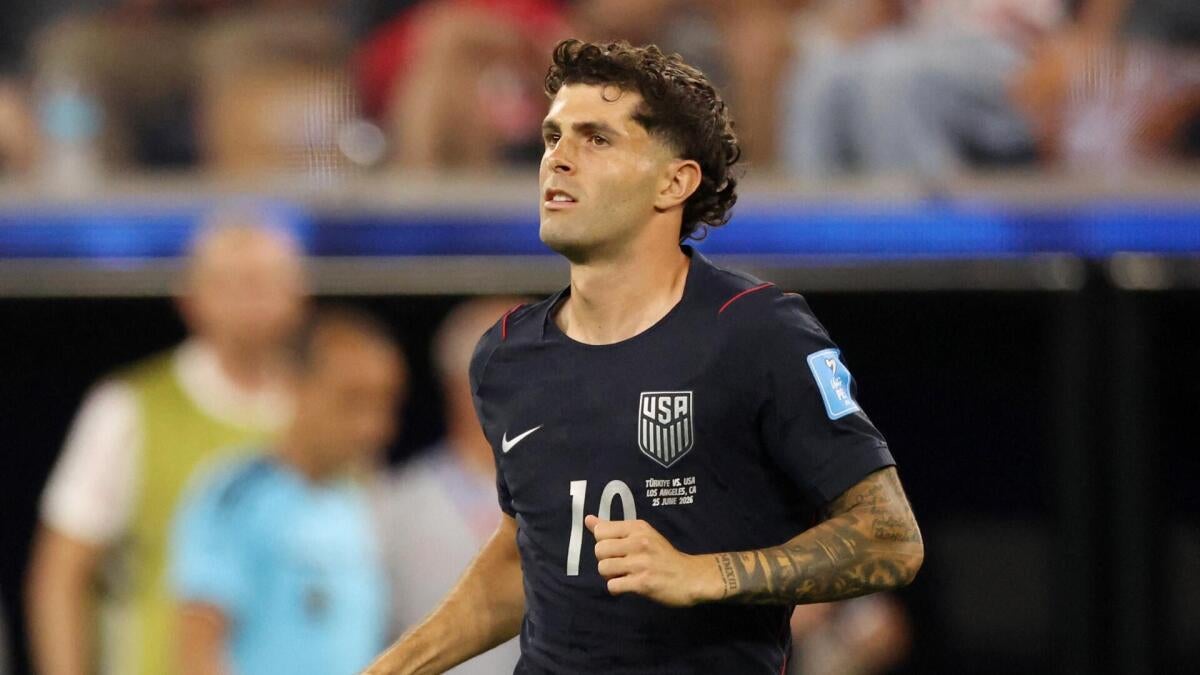
How ‘Storage Wars’ Star Darrell Sheets’ Son Honored His Dad in Emotional Celebration of Life Speech

Darrell Sheets’ son, Brandon Sheets, paid tribute to his father in an emotional celebration of life speech.
“He was like a pillar. [He was] stellar, he was strong. He reminds me of his father so much,” Darrell’s Storage Wars costar Laura Dotson exclusively told Us Weekly of Brandon’s presence at the memorial service held at the Hyatt Regency in Huntington Beach, California on Monday, June 29. “He has a lot of the same anecdotes and funny things that he does. He also says, ‘That’s the wow factor, baby,’ and when he does that it sounds just like Darrell in the room.”
Laura, who attended the event alongside husband Dan Dotson, also shared that Brandon, 42, spoke about the impact that Darrell had on him.
“He got to talk about him being a wonderful father, grandfather and friend, and how much Darrell really helped him through his life, becoming the man that he is, and the father that he is,” Laura recalled.

Related: Darrell Sheets’ Son Brandon Opens Up About ‘Tough Times’ After Dad’s Death
There are plans to reopen Storage Wars star Darrell Sheets’ store following his death. “We are not open yet,” Brandon, 42, shared via Instagram Stories on Tuesday, June 2. “Just know, planning has begun!” Brandon shared a photo of the late Darrell’s Arizona store, Havasu Show Me Your Junk, alongside the update. In a second […]Brandon shares two kids with his wife, Melissa. In addition to Brandon, Darrell was father to daughter Tiffany, who has a daughter named Zoie, 22. Before his death, Darrell helped raise Zoie, who was in attendance for the memorial.
“She seems to be doing really well. She has so much support,” Laura, 58, said of Zoie. “All of Darrell’s sisters were there, [his] brothers were there, family members were there, his cousins were there and they all kind of look like him. His friends look like him.”
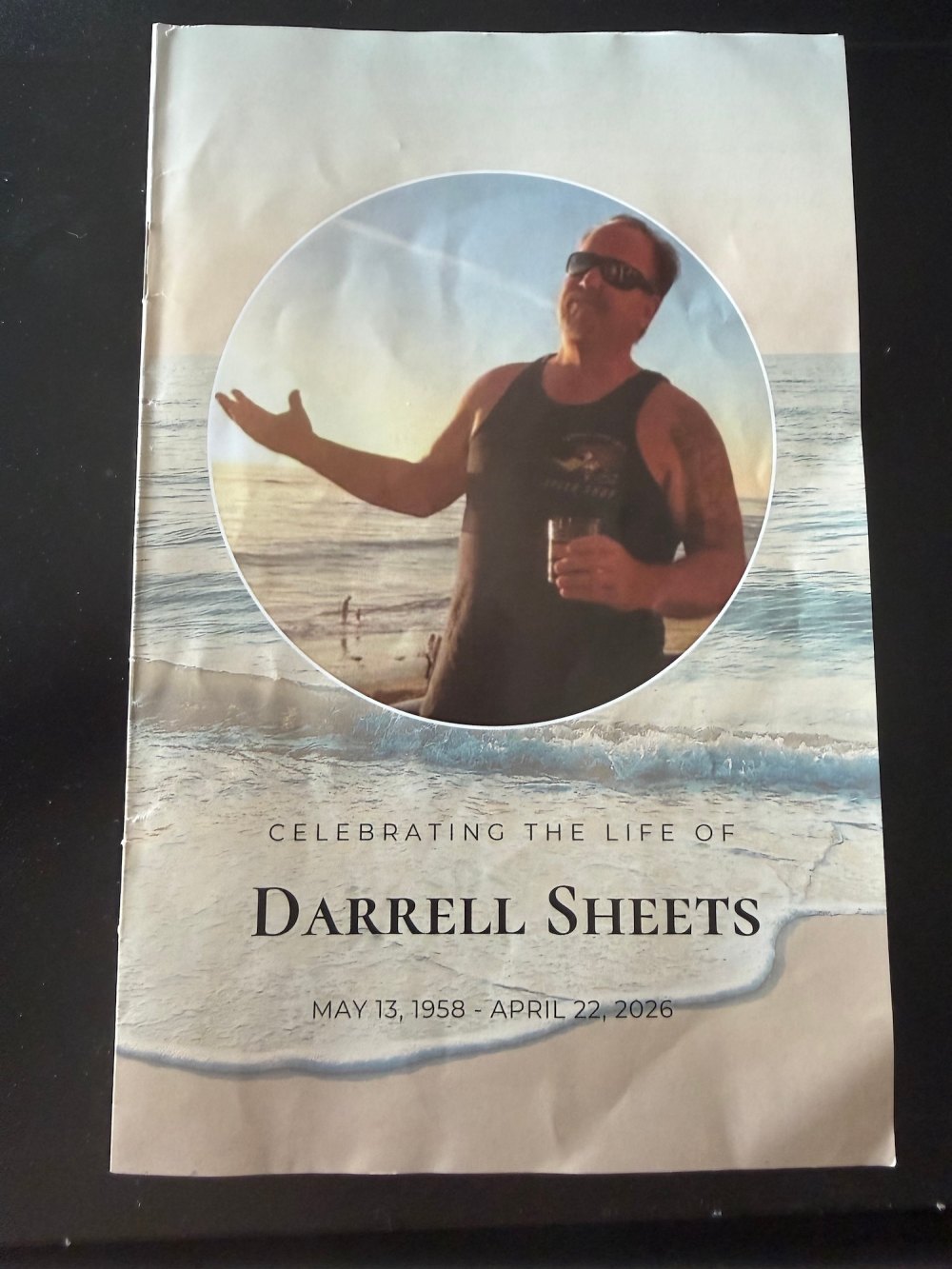
Darrell’s ex-wife Kimber Wuerfel, whom was with from 2011 to 2016, also attended the service. According to Laura and Dan, Wuerfel was “right up at the front” and “so accommodating” with Darrell’s family.
“Everybody was so concerned for her and her health, but she looked strong,” Laura said of Wuerfel. “She was just attending to everybody, and just full of love and stories, and saying, ‘Share, share the story of Darrell,’ and [it was] bringing her comfort I could see, so that was really, really wonderful.”
Kimber also spoke at Darrell’s celebration, recalling the good times the pair shared together.

Related: 'Storage Wars' Cast Reacts to Darrell Sheets’ Death by Suicide at Age 67
The cast of A&E’s reality series Storage Wars has come together to mourn their late costar Darrell Sheets following his death at age 67 from suicide. Lake Havasu City, Arizona, police confirmed to Us Weekly on April 22 that officers responded to calls about a “reported deceased individual” earlier in the day and subsequently “pronounced […]“I did see tears and breakdowns from all of them,” Laura said of all the speeches made in honor of Darrell. “Everybody would be hugging and praying and lifting Darrell up again, and then they would start laughing at something somebody would say, so it was tears of joy and happiness, and [they were] talking about, ‘We know that Darrell is with God. We know he’s in heaven,’ and just the feeling that you know that they know that he’s there, so they can have peace.”


Thank You!
You have successfully subscribed.

Deal of the Day
Deal Alert! This 44%-Off Throw-On Mini Dress Is Too Good to Leave in Your Cart View DealEarlier this year, Us confirmed that Darrell died at age 67. His death was ruled a suicide by the Mohave County Medical Examiner’s Office in Arizona.
“We are saddened by the passing of a beloved member of our Storage Wars family, Darrell ‘The Gambler’ Sheets,” A&E said in an April statement to Us. “Our thoughts are with his family and loved ones during this difficult time.”
If you or someone you know is struggling or in crisis, help is available. Call or text 988 or chat at 988lifeline.org.
Just For You



How Norway’s Viking Row has captured the American imagination
How Norway’s Viking Row has captured the American imagination

The Viking row has become a popular ritual for players and fans alike Lars Baron/Getty Images
By Patrick IversenJune 30, 2026 10:28 pm EDT UpdatedARLINGTON, Texas — The drum descended the stands like a sanctified relic, passed hand over hand through sections of fans who wouldn’t let it touch the ground.
By the time its journey began from the fans gathered in the third deck to the pitch at Dallas Stadium, Norway had already done the hard part: a 2-1 win over Ivory Coast, sealed by Erling Haaland’s 86th-minute winner — the country’s first knockout-round win in its World Cup history.
Captain Martin Ødegaard took the drum from the stands, placed it on the grass with his teammates sat behind him, and raised the stick high.
What happened next has become familiar to anyone who has followed Norway’s run through this tournament. The crowd above (red and blue, with Viking helmets scattered throughout) needed no instruction. They sat down in their seats, in the aisles. They reached forward, pulled back, and shouted “RO!” in time with the drum, the chant building speed as the beat quickened, arms moving in unison through a stadium full of many people who, a month ago, had no real reason to know what any of this meant.
The ritual is called the Viking Row, and it works the same way every time, whether it’s happening on a pitch in Arlington or a subway platform in Queens. Fans sit down in a line, one behind the other, lean back and pull their arms toward their chests in unison, as if hauling an oar through water, while a leader keeps time on a drum and the group chants “ro” — Norwegian for “row” — faster as the beat speeds up.
 Fans doing the viking row during the sixth inning of a game between the New York Mets and the Chicago Cubs (Ishika Samant/Getty Images)
It has done what its creators hoped, giving a country without a World Cup appearance in nearly three decades something simple to rally around. But it has also done something they didn’t fully anticipate: it has become one of the defining images of the North American World Cup, performed by people with no connection to Norway at all.
The gesture went viral in the U.S. after a video of Norwegian fans rowing up a Boston escalator gained millions of views. Since then, it’s been done on the floor of a New York City subway car, in the middle of Times Square, and by a section of fans at a Mets game who probably needed a distraction from their team.
Norway fans are doing a “Viking Row” up the escalator at Boston’s South Station before heading to the World Cup
Adding this to the list of things I’ve never seen before and probably never will again pic.twitter.com/j8NvltOvfk
— Jeremy Siegel (@jersiegel) June 16, 2026
The trend now attracts participants regardless of soccer ties; in Arlington on Tuesday, free agent NFL quarterback Jameis Winston taught Dallas Mavericks star Cooper Flagg how to row. As Norway’s plane landed at Dallas-Fort Worth Airport on Sunday, officers from the Dallas police department and the airport police were seated on the tarmac, doing their own version of the row just outside the aircraft.
“My buddy showed me a video of it like two weeks ago, and I was like, ‘That’s kind of awesome’, and now I’m doing it here with people I met today,” said Brett Couch, 37, of Fort Worth, outside the stadium post-game. Behind him, a family of four Norwegian fans sat on the grass doing the row as a foreign correspondent urged them on with a camera.
“Whoever invented the rowing has patented it, I hope,” head coach Stale Solbakken said on Monday.
The chant is older than it looks, dating back more than a year to Norway’s qualifying win over Italy. But the Viking framing was deliberate: a musician and a member of the team’s fan club, who dreamed up the chant together, built it around the image of Vikings “returning” to a continent they’d reached long before Columbus. It was a hook that turned out to travel much farther than anyone in Norway expected.
After Norway’s 3-2 win over Senegal in East Rutherford, New Jersey, which clinched their knockout-stage spot, Ødegaard banged the drum, and the team rowed with their fans on the field. With the team’s full adoption of the ritual, a post-game tradition appears to have taken hold. And the players, the sight of it spreading beyond their own fans hasn’t gone unnoticed.
 Erling Haaland, front right, and the rest of the Norway team have embraced the row (Lars Baron/Getty Images)
“They mean so much to us. It’s amazing to see so many Norwegians coming over, and everyone’s getting involved in the rows as well. So it’s brilliant,” midfielder Kristian Thorstvedt said. Asked how much the team looks forward to doing it themselves, as they did Tuesday, he didn’t hesitate. “It’s something we look forward to, and of course, this has to be a thing now. We have to keep doing it.”
Defender Torbjørn Heggem said the setting in the Dallas Cowboys’ home stadium gave it an extra charge. “It’s actually really fun. The first time was great, and now with this stadium and the acoustics and everything, it was unbelievable.”
“It’s like the wave, but better, because you get to yell,” said Valerie Brackett, 27, of Dallas.
That’s more or less the point fans and organizers keep making about why it has traveled so well. It doesn’t require knowing the words to a song or the history behind a banner. It requires sitting down, moving your arms and bellowing when someone tells you to.
A high-angle view of the Norway fan Viking row 🤯 pic.twitter.com/CJIda5U7ed
— Interesting things (@awkwardgoogle) June 24, 2026
It’s traveling in the other direction, too. “Back home, my mom is doing this in the kitchen, my whole family group chat is just rowing videos now, it’s out of control,” said Erik Stensrud, 31, from Norway, who flew over for the knockout rounds.
He is not exaggerating. Back in Norway, the row has spread well past stadiums and living rooms. A kindergarten class outside Oslo lined up shoulder to shoulder and rowed together in a video that Haaland himself shared. At a nursing home in the country’s north, residents set their alarms for the middle of the night to catch a match, then pulled on Viking hats and rowed before kickoff. Members of Norway’s Parliament have done it too, with the prime minister joining in.
 Members of the Norwegian parliament doing the row (Håkon Mosvold Larsen / NTB / AFP via Getty Images) / Norway OUT
So why has it spread in the U.S., too? Part of the explanation is timing: this is the first U.S.-hosted World Cup since 1994, arriving in a country where soccer fandom has spent three decades borrowing chants and rituals rather than inheriting them, and American sports culture already runs on simple, teachable group gestures like the wave.
The Viking Row fits that mold exactly — no chant, no language beyond a single syllable. Anyone can join in (and some Ivory Coast fans did on Tuesday) and get it right within four beats. It also travels well on social media, resolving into one clean, sweeping motion built for a tournament, followed in short clips by people who couldn’t afford a ticket.
Of course, anything viral will attract some pushback. One journalist labeled it an “introvert’s nightmare” due to social pressure. During the Senegal match, a Norway fan who refused to join was singled out online; he later dismissed the gesture as a copy of Iceland’s Euro 2016 “Thunderclap”. While the physical movements differ (overhead claps versus seated rowing), shared Viking heritage from some fanbases has led to some friction.
Swedish defender Gustaf Lagerbielke admitted to reporters last last week, after Norway’s first win, that Swedish players “just sigh” when the row gets shown on TV.
“But whatever floats your boat,” he added with a shrug.
None of it seems to have slowed the row’s momentum down in the United States, though.
What You Should Read Next Erling Haaland, a striker so good he doesn’t even need to touch the ball
Norway's talisman was kept quiet for long spells by Ivory Coast but exploded into life when it mattered
Erling Haaland, a striker so good he doesn’t even need to touch the ball
Norway's talisman was kept quiet for long spells by Ivory Coast but exploded into life when it mattered
Even Norway’s manager seems bemused by how far past the team it has spread. “I think that’s a question for culture journalists and people who follow trends,” he said when asked why the United States seems so enamored with the ritual. “Every woman and man from 100 years old to two years old is rowing in Norway now. And when we arrive in airports around the states, they are rowing there as well. It’s fun for togetherness.”
Whether the Viking Row outlives this tournament is a separate question, and many stadium traditions don’t survive the run that made them famous. But for one afternoon in Texas, with Haaland’s goal still fresh and Norway’s captain’s arm raised over that well-traveled drum, that wasn’t the point. Everybody knew what to do next.
Jul 1, 2026Connections: Sports Edition
Spot the pattern. Connect the terms
Find the hidden link between sports terms
Tagged To: CultureFIFA Men's World CupSoccerNorway