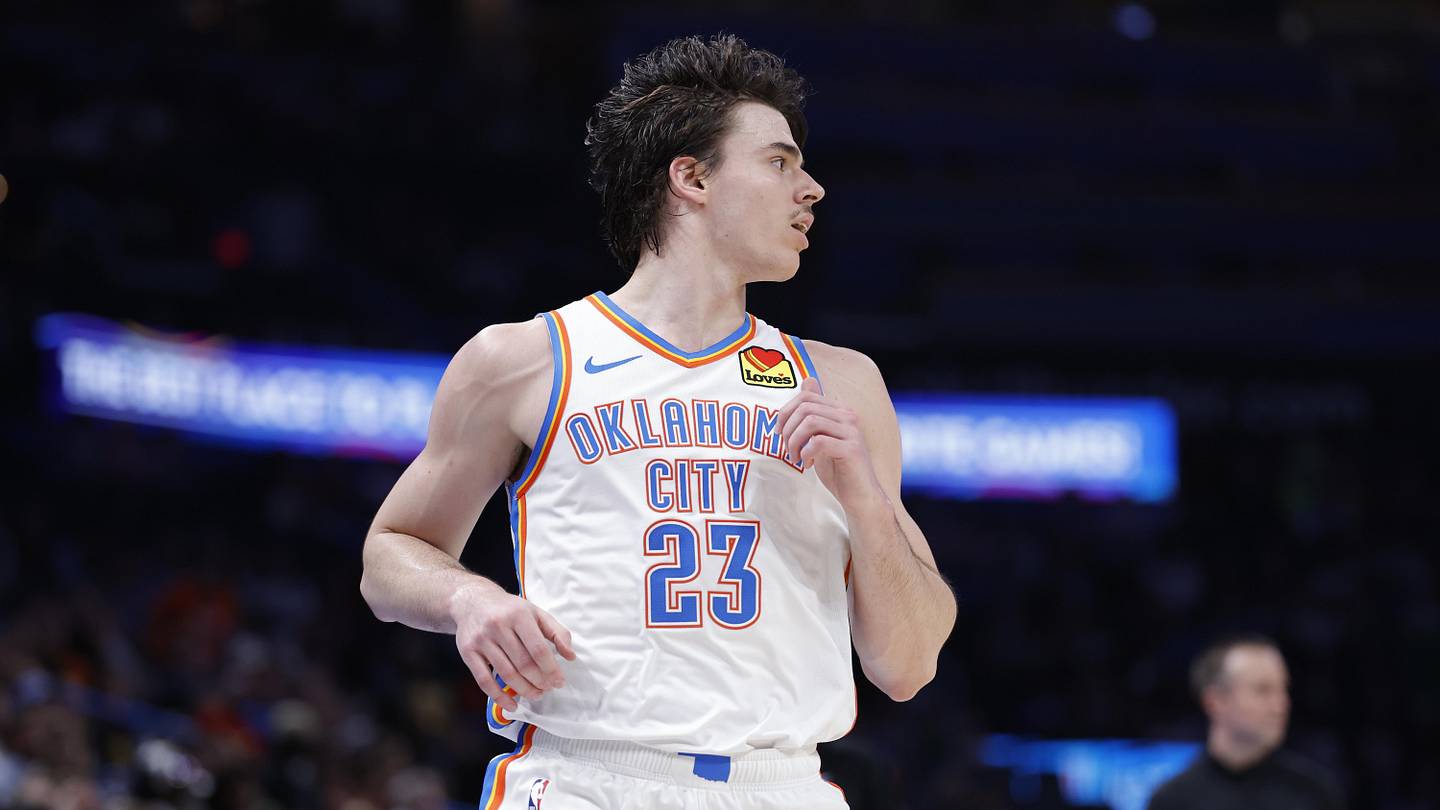
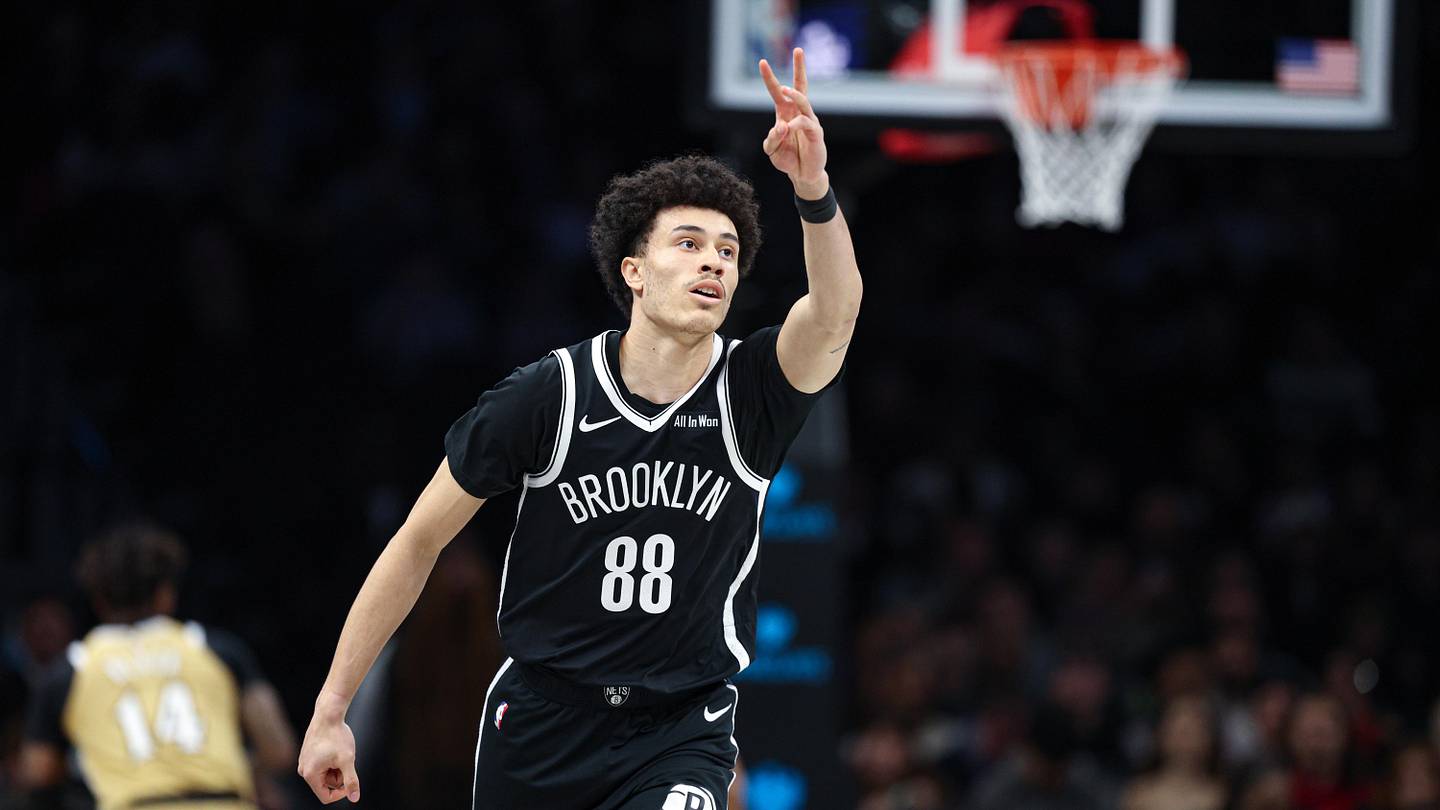
Top Targets for Milwaukee Bucks in NBA Free Agency
Top Targets for Milwaukee Bucks as NBA Free Agency Begins
Plenty of roster sorting to do in the post-Giannis eraTi Windisch|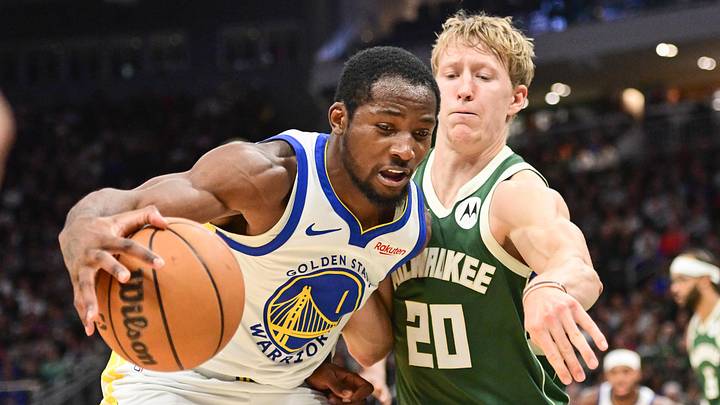
In this story:
Milwaukee BucksThe Milwaukee Bucks find themselves in unfamiliar territory as NBA free agency opens on Tuesday.
For the entirety of the 2020s, the Bucks have opened free agency targeting 1-2 rotation players to fit in their various cores built around Giannis Antetokounmpo. Often needing shooting and specifically shooting guards, the Bucks signed veterans they believed could plug and play into a contending team.
With Giannis heading to Miami, Milwaukee’s focus has obviously changed. The Bucks priority is not winning as many games as possible in 2026-27, but instead building a new core. Unlike the 2026 NBA Draft, where the Bucks prioritized their rookies fitting together more than fitting Brayden Burries and Nate Ament into an existing team, free agency provides an opportunity to prioritize roster fit.
Players hitting free agency in the Bucks’ price range (the full non-taxpayer mid-level exception, starting at roughly $15 million in year 1) simply don’t have the upside of lottery picks. And as much as the Bucks aren’t going all in to win games this season, since Milwaukee doesn’t control its first-round pick there’s no incentive not to win either. It’s just not the all-encompassing goal it used to be.
Finding players who both fit Milwaukee’s current roster and offer some sort of medium-term upside makes the most sense. For this specific team, given the glut of guards and pair of true stretch fives currently on the roster, that means power forwards present the best fit. Outside of Kyle Kuzma, on an expiring contract and seemingly very available in trade talks, there aren’t really any “true” fours on Milwaukee’s roster.
Ament should be a developmental priority for the Bucks, but his current frame isn’t ready for full-time minutes at the power forward spot. Adding a player who puts the power in power forward would help the Bucks young pieces slide into their best positions in the short term.
Finally, even though a free agent contract isn’t as valuable of a rebuilding tool as the 10th overall pick, there is still inherent value in adding a player who is “worth” eight figures annually to the roster. Despite the Bucks currently not having any roster spots, it’s worth exploring free agent options and signing a good young player even if such a move requires cutting or trading veterans later on. So let’s talk about some free agent options!

Tari Eason
Tari Eason is the trickiest player on this list for Milwaukee to add. He’s a restricted free agent, meaning the Houston Rockets can match any deal Eason signs with an outside team. Eason is a good enough player and fit to be worth the Bucks swinging and missing on him though.
The 25-year-old Eason is a rugged defender at 6’8” who would immediately pair well with both Ryan Rollins and Brayden Burries in potent, switchable defensive lineups. Eason’s biggest knock is his relatively unrefined offensive game. He has scored more than 10 points per game in back-to-back seasons, but is coming off of an inefficient campaign where he shot 35.8% from 3 and 46.3% from 2.
Nobody will mistake Eason for a point forward as his career assist-to-turnover ratio is barely above 1:1, but he is a good rebounder who’s pulled down 6 boards per game despite playing 25 minutes or fewer in all four of his NBA seasons. Eason has played his role well in Houston, but given the focus on Amen Thompson more or less at his position has not been a priority there.
Milwaukee’s pitch to Eason is obvious – he would slot in as a starter on the wing and likely get more offensive opportunity than a team with Kevin Durant and Alperen Sengun (not to mention Thompson) can offer. This would be a slam dunk acquisition for the Bucks, but the big question is whether the Rockets would simply match their offer to keep their skilled forward in town.

Jonathan Kuminga
Kuminga is younger (turns 24 in October) and offers more theoretical upside than Eason, although his fit isn’t quite as clean. He’s certainly a more skilled offensive player. Kuminga’s scoring numbers and minutes trended down in year 3 as his relationship with the Golden State Warriors deteriorated, but this is a player who averaged 16 points per game at age 21 back in the 2023-24 season.
Kuminga also doesn’t profile as a three-point shooter, but he can get downhill with the best of them. He’s also been above two assists per game for three straight seasons now, as Kuminga leverages his downhill burst to distribute to open teammates.
Milwaukee has enough guards that they don’t necessarily need their power forward to be a shot creator. To be extremely clear, Kuminga nor any free agent can truly replace Giannis, but if the Bucks did want a player who could slot into those huge shoes in strictly the sense of adding rim pressure, then Kuminga is the best available option.
The Atlanta Hawks are declining Jonathan Kuminga's $24.3 million team option, making him a free agent, sources tell ESPN. pic.twitter.com/Zu57MTTp3g
— Shams Charania (@ShamsCharania) June 29, 2026
Atlanta declined a team option on Kuminga, so he’s now an unrestricted free agent who can sign with any team. Two teams in a row opting to get rid of Kuminga rather than pay him is certainly a red flag, but the Bucks are limited to offering a modest annual value contract offer anyway and should at least investigate adding Kuminga if they can.

Ousmane Dieng
Bucks fans should be familiar with Ousmane Dieng. The lanky shooter overlaps with Ament to an uncomfortable degree, but is still a worthwhile free agency target given his age (just turned 23 in May) and skill level.
The biggest problem is despite many fan-made Bucks depth charts listing Dieng as a four, he’s simply not a physical enough player for that position. Especially if Ament is starting or playing a lot at the small forward spot. While Dieng is young, he’s now four years into his NBA career. I wouldn’t expect him to show up to camp as a bruiser all of a sudden.
Dieng got the opportunity to play real minutes for the first time in Milwaukee last season, and was impressive at times. His shot-making was up-and-down, ending in a sub-par 33.1% rate from three, but 11 points and 3.6 assists to 2.2 turnovers is solid for what was a mess of a situation.
Sources: The Milwaukee Bucks declined to tender Ousmane Dieng a qualifying offer, which will make him an unrestricted free agent. Bucks have significant interest in re-signing Dieng in free agency. He averaged 11.0 points, 4.6 rebounds and 3.6 assists last season for Milwaukee. pic.twitter.com/BD13ckM5tW
— Michael Scotto (@MikeAScotto) June 29, 2026
The Bucks have already shown their hand to an extent here, declining to tender Dieng a qualifying offer but still reportedly looking to re-sign him. That showcases some interest but not a strong desire, as Dieng is now also an unrestricted free agent who could sign anywhere. It doesn’t seem like Dieng will be a huge financial priority for Milwaukee, but he is a good flier worth bringing back.

Khris Middleton
Khris Middleton is obviously not a member of any young core unless we’re looking into the Big 3 league, but the Bucks would truly benefit from bringing him back into the fold. Middleton is not the player he once was but would be added back more for his leadership and mentorship than his on-court contributions this time around.
Middleton is a great vet, a Bucks champion, and much of the glue that held the Giannis era together for so long. It’s not a coincidence that the house of cards toppled soon after he was traded for Kuzma.
Outside of purely basketball aspect, it’d be great for Bucks fans to have a hero back in the fold for them to celebrate on a nightly basis too.
Obviously Miami plus any other contending team loom as fits for Middleton to chase a second ring and more team success, but the Bucks should be open to welcoming him back in Milwaukee if that’s something Middleton is interested in doing.
Published 35 minutes ago
 TI WINDISCH
Ti has covered the Milwaukee Bucks and Wisconsin Herd since 2015, including as host of the Gyro Step podcast covering all things Bucks since 2019. His first favorite Buck was Brandon Knight and he was the one who asked the question that prompted Brandon Jennings to state that Bucks in 6 is for the culture.
Follow TiWindischHome/News
Blackstone Sells Stake In Three Virginia Data Centers Amid Grassroot Outrage


Up until now, when it comes to real estate, Blackstone was best known in recent years for dumping many of its trophy office properties - which in the aftermath of work from home never recovered their projected cash flow potential - at a huge discount. Now, it may be pulling a page from its old, pre-Lehman playbook by calling the top in yet another commercial real estate segment: data centers.
According to Bloomberg, Blackstone is selling its stakes in a trio of data centers across Northern Virginia for $3.5 billion, cashing out of part of a bet it made less than three years ago.
Digital Realty Trust will pay $1.2 billion of cash and offer $2.3 billion of its shares to Blackstone funds, the firms said in a statement Monday. In exchange, the data center company will acquire Blackstone’s 80% interest in two 96-megawatt data centers in Manassas, Virginia, and a 50% interest in a 96-megawatt center in nearby Sterling.

The assets involved in this week’s sale were part of a joint venture that Blackstone announced it would set up with Digital Realty in 2023 as it sought to get ahead in the AI arms race that has engulfed Wall Street in recent years. Blackstone and Digital Realty will continue to work together on their remaining data center investments located elsewhere in Northern Virginia as well as in Paris and Frankfurt.
“We have developed a strong partnership with Blackstone,” Greg Wright, Digital Realty CEO, said in the statement. “This transaction reflects the next phase of that relationship, allowing us to increase our ownership in a portfolio of fully leased, high-quality hyperscale assets.”
It does. The question is why did Blackstone decide to pull the cord now, just as fresh doubts are creeping whether the Mag 7s will continue funding the AI expansion with virtually unlimited capex.
As part of Wall Street’s broader push into data centers, investment has poured into Northern Virginia, which is considered the country’s largest data center market, and is better known as "Data Center Alley".

That includes Digital Gateway, an ambitious plan for a 2,100-acre corridor in the region that would house as many as 37 data-center buildings.
Data center developers eyeing that land have faced strident opposition. Compass Datacenters, backed by Brookfield Asset Management, recently pulled out of a yearslong effort to build a key part of the development after facing intense pushback from local residents. Blackstone’s QTS is also fighting in court to salvage a similarly sized development on adjacent parcels.
The increasingly vocal political and grassroots pushback against new data center construction may explain why Blackstone is getting cold feet just as the AI bubble is peaking. A recent Gallup poll found that 7 in 10 Americans oppose constructing data centers for artificial intelligence in their local area, including nearly half, 48%, who are strongly opposed. Barely a quarter favor these projects, with 7% strongly in favor.

Half of opponents mention data centers’ excessive use of resources, including 18% each mentioning their use of water and energy. Sixteen percent mention a related environmental concern of pollution, including noise pollution and air and water pollution.
About one in five opponents are concerned with the impact on local quality of life, including increased population, increased traffic and preferring that the land be used for other purposes. A similar share mention potentially negative economic consequences, including higher utility bills, cost-of-living increases, and the cost of building the data centers (which could involve the use of taxpayer funds).
Most of the remaining opposition stems from general or specific concerns about artificial intelligence.
Blackstone, which manages more than $1.3 trillion, bills itself as the largest global provider of data centers, and also owns some of the utilities that power them. It acquired QTS in 2021 and bought Australian computing provider AirTrunk in 2024. In May, the firm held an initial public offering for Blackstone Digital Infrastructure Trust Inc., its data center acquisition vehicle, which aims to buy already built and leased properties benefiting from the artificial intelligence boom.
The firm has more than $150 billion of data center assets, and it has identified an additional $160 billion worth of opportunities for its pipeline, CEO Steve Schwarzman said in April.
Affiliates of Blackstone are already selling the Digital Realty equity they’re set to receive from this week’s deal, which is expected to be completed Tuesday. They’re offering the stock at as much as a 2.9% discount to Monday’s closing price of $190.58, Bloomberg reported citing people familiar.