Tigers' A.J. Hinch Reaches 1,000 Career Wins
 Miracle DimweshTue, June 30, 2026 at 7:40 PM UTC·2 min read
AJ Hinch became the 68th manager in big-league history to reach 1,000 regular-season wins after Detroit beat the Yankees 7-3 on Monday night at Yankee Stadium. He is also the second active manager to hit the mark, joining Reds manager Terry Francona.
Hinch, 52, has managed the Tigers since being hired before the 2021 season, after previous stops with the Diamondbacks and Astros. The Athletics selected him in the third round of the 1996 MLB Draft out of Stanford, and the former catcher has built one of baseball's most accomplished managerial résumés.
AdvertisementAdvertisementHe won the 2017 World Series with Houston, captured two American League pennants, and signed a long-term extension with Detroit in 2023. Casey Mize started the milestone game and delivered seven scoreless innings with one hit allowed, no walks, and 10 strikeouts.
Monday's win was the 430th of Hinch's Tigers tenure, adding to 481 with Houston and 89 with Arizona for exactly 1,000 career victories. Reaching the milestone across three organizations puts him in rare company among managers who built sustained success at multiple stops rather than with one franchise.
"It's a great feeling to get to a milestone with this group of players," Hinch said. "I told them, this game is about players. It's always been about players. But this is my third organization. To be able to manage this long and get to this number, it's a really cool feeling," he told reporters, as quoted by the Detroit News.
The achievement reflects the transformation Detroit has undergone under his leadership. When Hinch arrived, the organization was rebuilding after several losing seasons. Since then, the Tigers have developed one of the American League's strongest young cores and reached the postseason in both 2024 and 2025.

Detroit's pitching staff has become one of the club's biggest strengths, led by starters including Tarik Skubal and Mize. The team's steady improvement has established the Tigers as a different organization than the one Hinch inherited six years ago.
Detroit enters Tuesday with a 36-49 record, sitting fourth in the American League Central. The disappointing record stands in contrast to the club's recent postseason appearances, a sign of how competitive the division has become, even for a team with Detroit's recent track record.
Beyond the personal milestone, the win offered a reminder of the foundation Hinch has built in Detroit, even as the team works through a difficult stretch in 2026. Becoming the 68th manager to reach 1,000 wins places him in an exclusive group while underscoring the sustained success he has produced across three organizations.
ALSO SEE:
MLB Home Run Predictions Today: Best HR Prop Bets for Tuesday, June 30
NRFI and YRFI MLB Bets Today: Best First Inning Predictions for Tuesday, June 30
MLB Prop Bets Today: Best MLB Player Prop Predictions for Tuesday, June 30
This story was originally published by Athlon Sports on Jun 30, 2026, where it first appeared in the MLB section. Add Athlon Sports as a Preferred Source by clicking here.
The Kids Are Not Okay With AI, And They Know It...


Authored by Kay Rubacek via The Epoch Times,
Eric Schmidt hadn't finished the word "artificial" before the booing started.

The former Google CEO stood at the University of Arizona's commencement last month, ready to deliver the kind of speech he had probably given a dozen times before: AI as the next great transformation, graduates as its rightful authors.
He got as far as telling them the technology would "touch every profession, every classroom, every hospital, every laboratory, every person, and every relationship you have." The boos rose before he could finish his own sentence. "I can hear you," he said gently. The boos continued, as did Schmidt, who was unable to fully conceal the awkward embarrassment.
He wasn't the only one. A week earlier, at Middle Tennessee State University, Big Machine Records CEO Scott Borchetta told graduates that "AI is rewriting production as we sit here." The boos from graduates started immediately. He responded with tough love: "I know it. Deal with it." But the boos only grew louder.
A week before that, real estate executive Gloria Caulfield barely got through the phrase "next industrial revolution" at the University of Central Florida before the crowd erupted. "Okay, I struck a chord," she said, turning around with her hands up in disbelief and clearly caught off guard.
They were all caught off guard. This isn't how graduations usually go.
Older generations had their own frustrations with the people steering their world, but they rarely stood up at their own commencement, in front of their families, and told a stranger they didn't believe them or what they had to say about their future.
It would be easy to read the response as simple nerves about a tough job market and leave it there. But when you look more closely at how this generation actually lives with technology, their worldview takes a different form.
A recent Gallup survey found that Gen Z's use of AI has leveled off, but their feelings about it have not. Excitement has fallen 14 points in a year, to just 22 percent. And anger has climbed 9 points, to 31 percent. Even among those who use it every day, enthusiasm dropped by 18 points over 12 months. Eight in ten now believe AI will make learning harder. Forty-two percent believe it will hurt their ability to think carefully. Only a quarter believe it will help. Nearly half say the risks of AI in the workplace now outweigh the benefits, which is a sharp rise from the year before. And when asked whose work they actually trust, 69 percent said human work. Only 3 percent said AI's work alone.
A separate Gallup study found that 47 percent of college students have seriously considered changing their major because of what AI is doing to the job market. Sixteen percent have already changed. The students who use AI most, such as in technology, business, and engineering, are also the ones most likely to be reconsidering whether they picked the right field at all.
The kids know the use of artificial intelligence is built into every device they touch throughout their day. It is being wired to replace the skills they were once told to seek in every career they had been advised to pursue.
They know it is being promised to make their lives "better" and "easier," while they feel it is chipping away at their cognitive abilities and sense of challenge and fulfillment, and the adults in the room - or those being offered as role models on commencement stages - are wondering why youth aren't as excited about AI as they expected.
And we should have seen this coming. According to researchers, Gen Z is the first generation in modern memory to test less cognitively capable than their own parents did at the same age, despite having more schooling and more access to information than any generation in human history.
In January, neuroscientist Jared Cooney Horvath told the U.S. Senate Commerce Committee that attention, memory, literacy, numeracy, reasoning, general IQ - key cognitive performance indicators among young people - have stalled or reversed across much of the developed world over the past two decades. He points to classroom screens and education technology as the cause, arguing the brain was never built to learn the way these tools teach. More tools. More data. Less mind.
For nearly two centuries, every generation had tested smarter than the one before it. Researchers called it the Flynn effect, and it held through wars, depressions, and the collapse of empires. It was a 200-year winning streak. Horvath told lawmakers the streak is over.
The graduates booing those speakers are not confused about this. They are living it. They are the data.
A year ago, I wrote about a different version of this same generational response. Vinyl records were outselling CDs, mostly bought by people under 35. Journaling by hand, crochet, taking silent walks, and a trend called "Posting Zero," in which young people stepped back from performing their lives online. That calm rebellion looked like withdrawal, but it has given way to something louder and bolder. It is a signal that we older folk need to pay attention to.
Older generations tend to see AI the way we see most new technology: as a tool that does or doesn't work, that we adopt or resist on our own terms, in our own time. Younger generations don't have that luxury of distance, and there is a fury at being told how to feel about it by people who built it, sold it, or profited from it first without understanding the consequences of using their youth as part of a larger experiment.
This next generation may not hit all the test scores that their forbears did, but they still have human wisdom intact. Children don't get a vote on the experiments run on their own development, and yet these graduates found a way to cast their vote loudly. Either way, I hope their votes will be counted.
Kay Rubacek is an award-winning educator, filmmaker, author, and mother. Detained in a Chinese prison in 2001 for her human-rights advocacy, she has since dedicated her work to exposing the systems and ideologies that diminish human life and human sovereignty. She has been a contributor to The Epoch Times since 2010.
Bills' C Connor McGovern: Buffalo's No. 13 Player Looks to Pay Off Big Contract
Bills' C Connor McGovern: Buffalo's No. 12 Player Looks to Pay Off Big Contract
Buffalo Bills' veteran center Connor McGovern is next in our Top 25 Player Rankings.Owen Klein|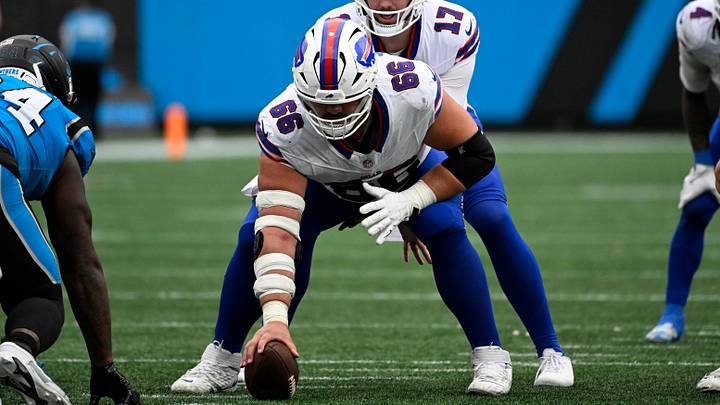
In this story:
Buffalo Bills | News, Scores, Schedules & StandingsAs the team enjoys its summer break, Bills On SI will unveil its Top 25 Player Rankings (based upon expected impact) for the 2026 season. The ranking methodology is based on positional value, past performance and expectations for any player. C Connor McGovern carries a new contract with his No. 12 ranking.
The anchor of any offensive line in football is the center, the player who snaps the ball to the quarterback and gives the signals up front, and those qualities make the Buffalo Bills' Connor McGovern one of their more important players.
After a three-season stretch in Buffalo that saw McGovern start 56 total games, including in the playoffs, and earn a Pro Bowl nod in 2024, he was awarded a four-year, $52 million contract in March.
McGovern is one of the best all-around centers in the game, and his being the fourth-highest-paid center in the NFL backs up that belief. Also, his annual average value is less than half of that of the Las Vegas Raiders' Tyler Linderbaum, who became the highest-paid center in league history, so the Bills retained him at a relatively low price.
Why is McGovern so important?
Connor McGovern last season:
— BillsOnReal (@BillsOnReal) June 29, 2026
- 1037 Offensive Snaps
- 0 Sacks Allowed
Got paid that BAGGGG 🤑🤑🤑 pic.twitter.com/ooiCN3xfkX
Despite Josh Allen being sacked a career-high 40 times in 2025, McGovern was not responsible for a single one on 1,037 snaps, the second-highest snap count of his career. His 73.4 Pro Football Focus pass protection grade ranked him as the sixth-best in the NFL in that regard.
McGovern played 98.1% of Buffalo's offensive snaps in 2025, and of the 16 games he played (he sat out the regular-season finale against the New York Jets), McGovern played every snap in 13 of them, being constantly available when others missed games with injuries.
Although McGovern had only a 65.3 run-blocking grade, Buffalo had the league's best rushing offense and James Cook won the league's rushing title, a testament to McGovern's role along the unit up front.
McGovern's background

McGovern was born on November 3, 1997 in Larksville, Pennsylvania, and attended Lake-Lehman High School, where he earned Wyoming Valley Conference Most Valuable Player and first-team All-State honors as a senior.
As a four-star recruit, McGovern chose Penn State over schools like Boston College and Duke. He split time between right guard and center during his three seasons as a Nittany Lion, starting 34 games overall and earning third-team All-Big Ten honors in 2018.
The Dallas Cowboys selected McGovern in the third round at No. 90 overall, but he missed his entire rookie season due to a torn pectoral muscle. He made 29 starts in 45 appearances with the Cowboys across three seasons before inking a three-year, $23 million contract with the Bills in March 2023. Since then, he has developed into a key cog on Buffalo's offensive line.
The rest of the top 25 so far:
25. RB Ty Johnson, June 16
24. CB Maxwell Hairston, June 17
23. K Tyler Bass, June 18
22. CB Dee Alford, June 19
21. LB Dorian Williams, June 20
20. RB Ray Davis, June 22
19. S C.J. Gardner-Johnson, June 23
18. G Alec Anderson, June 24
17. TE Dawson Knox, June 25
16. DT Deone Walker, June 27
15. TE Dalton Kincaid, June 28
14. G O'Cyrus Torrence, June 29
Published 2 hours ago
 OWEN KLEIN
Owen Klein has covered football, basketball and baseball for Penn State athletics as a broadcaster on local radio, including producing Penn State’s 2024 men’s basketball Big Ten Tournament games and calling Penn State football’s Whiteout vs. Washington in November 2024. He has internships with the Buffalo Bisons and CBS affiliate WIVB in Buffalo, NY, in the summer of 2025. He is a Penn State University broadcast journalism student at the Bellisario College of Communications majoring in broadcast journalism and is passionate about college and professional sports, the Pokémon Video Game Championships and the Buffalo Bills.
Follow Kleiner2003