The Supreme Court Got It Wrong in Watson v. RNC — Now Congress Must Act
The Supreme Court Got It Wrong in Watson v. RNC — Now Congress Must Act
OPINION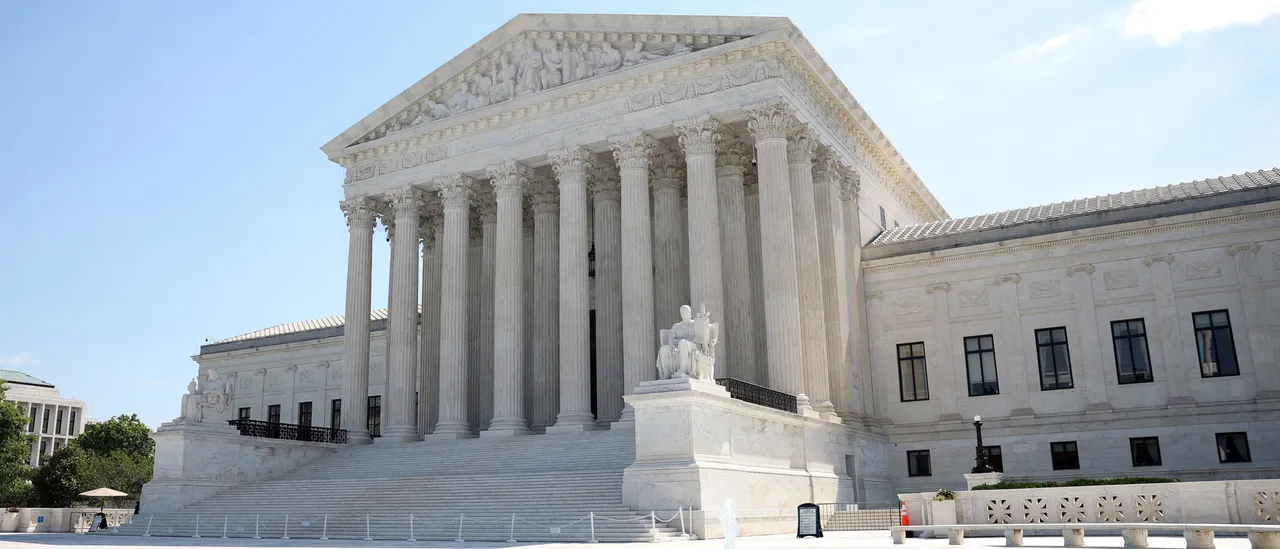
(Photo by Kevin Dietsch/Getty Images)
Trey Trainor Contributor June 30, 2026 11:41 AM ET June 30, 2026 11:41 AM ET Trey Trainor Contributor Font Size:I spent five years as a Commissioner on the Federal Election Commission, served as General Counsel to the Texas Secretary of State, and have over two decades of experience in litigating election cases. In that time, I learned that the single most important thing election law can provide is clarity.
On Monday, in Watson v. Republican National Committee, the Supreme Court delivered the opposite. A five-Justice majority held that federal election-day statutes do not prevent states from counting absentee ballots that arrive days after Election Day, so long as they bear an election-day postmark. That conclusion upends what everyone understood for 180 years: that holding an “election” on a particular day means all ballots must be collected by that day.
Justice Alito got it right in dissent, joined by Justices Thomas, Gorsuch, and Kavanaugh. An election isn’t over when the last voter drops an envelope in a mailbox. It’s over when election officials have the ballots in hand — when, as Alito put it, officials possess “a fixed collection of ballots” that, “taken together, embodied the electorate’s collective choice.” The majority’s view — that “election day” is satisfied the moment a voter surrenders a ballot to the Postal Service — is a remarkable thing for textualists to sign onto. (RELATED: Samuel Alito Warns Mail-In-Ballot Ruling Leaves Giant Opening For Voter Fraud)
And the history here is not close. From the founding until the late twentieth century, ballot collection on election day was how America ran elections. Think about the Civil War: states went to extraordinary lengths to let soldiers vote from battlefields hundreds of miles from home. They tolled statutes of limitations for soldiers. They suspended civil proceedings. But every single state that authorized absentee voting still required those ballots to arrive by election day. The majority’s explanation? Maybe extending the ballot deadline just “might not have even occurred” to those legislators. Please. Legal dictionaries of the era defined “election” as “the act of casting and receiving the ballots.” The majority just looked the other way.
The Court’s holding rests on a postmark, a marking that is supposed to prove a ballot was mailed on Election Day. But in 2026, a postmark proves nothing of the kind.
The U.S. Postal Service applies a postmark to indicate the date and location of the processing facility where a mailpiece was first handled. Historically, postmarks were assumed to reflect the date a letter was dropped in a mailbox or handed to a postal clerk. That assumption is now outdated. Effective December 24, 2025, USPS clarified that postmarks generally reflect the date a mailpiece is first processed at a USPS facility — not the date it was mailed or collected by a carrier. Under the agency’s Delivering for America plan, which consolidated processing centers and rerouted mail transportation, a piece of mail may be postmarked a day or more after it was actually dropped off, especially if it must travel to a regional processing center before receiving a date stamp. (RELATED: Postal Service Poised To Allow Handguns In Mail After DOJ Memo)
Think about what that means for elections. A voter who drops a ballot in a mailbox the day after Election Day could receive an Election Day postmark if her local post office doesn’t process outgoing mail until the following morning. Conversely, a voter who mails her ballot on Election Day from a rural collection box might get a postmark dated the next day, or two days later, because USPS did not route it to the processing center in time. The majority built its entire framework on a timestamp that the Postal Service itself admits is unreliable.
There are workarounds, of course. A voter can go to a USPS retail counter and request a manual postmark applied by a clerk on the spot, free of charge. A voter can purchase a Certificate of Mailing or use Certified Mail to create a paper trail of when the Postal Service first accepted the envelope. But requiring 160 million voters to navigate these bureaucratic options just to prove they voted on the right day is absurd, and it’s a burden that falls hardest on rural voters, elderly voters, and anyone without easy access to a post office counter. The majority opinion doesn’t grapple with any of this. It simply assumes that “postmarked on Election Day” equals “mailed on Election Day.” That equation no longer holds.
Here’s what keeps me up at night as someone who has worked in election administration: this opinion has no limiting principle. Justice Alito calls it “Pandora’s box,” and he’s right. The case involved Mississippi’s five-day grace period, but nothing in the Court’s reasoning depends on that number. Washington State already counts ballots arriving twenty-one days after the election. What stops a state from scrapping receipt deadlines altogether? What stops a state from letting party operatives collect ballots on Election Day and deliver them whenever they get around to it? And here is a wrinkle the majority barely addresses: the Postal Service lets you recall mail mid-transit. So, a voter’s “choice” is supposedly final at the mailbox — except it isn’t, because you can take it back the next morning. Good luck explaining that to a county clerk trying to certify results.
Let’s be blunt about what this decision enables. The Carter-Baker Commission, chaired by a Democratic former president, found in 2005 that absentee voting was “the largest source of potential voter fraud” in American elections. Justice Stevens, no conservative, acknowledged in Crawford that the risk is “real.” Now imagine a close race where everyone can see the margin on election night. Ballots keep arriving for days or weeks. Bad actors know exactly how many votes they need. Justice Kavanaugh put it well: when “thousands of absentee ballots flow in after election day and potentially flip the result of an election,” “charges of a rigged election can explode.” We’ve seen this movie before. Lyndon Johnson’s Senate career was built on 202 late-arriving votes that flipped a 1948 race result, now widely understood to have been stolen. And even absent fraud, the mere appearance of it corrodes democracy. Research shows that drawn-out counting “induces a large, significant decrease” in Americans’ trust in elections.
The majority itself concedes that if “varied deadlines for ballot receipt similarly call for a national solution, the American people must choose it through their elected representatives.” Fine. I’ll take them at their word.
President Trump called today’s ruling a “tremendous loss” for voters’ rights and urged Congress to act immediately. He’s right. It is more important than ever to pass the SAVE America Act. The bill would require photo ID and proof of U.S. citizenship to vote in federal elections, limit mail-in voting to traditional absentee exceptions and other unusual circumstances and restore the common-sense principle the Court abandoned today: that ballots must be received by the close of polls on Election Day. One day. One deadline. One set of rules Americans can understand and trust.
The House has done its job. The Senate needs to do the same — and fast. After today, every state legislature in the country knows it can push ballot-receipt deadlines as far out as it wants and allow mail-in voting to expand without limit. The Framers gave Congress the power over election timing precisely because they knew the states couldn’t be trusted to resist the temptation to game it. Four Justices saw that clearly. The President sees it clearly. Fifty-one Senators need to see it too.
Trey Trainor is a partner at Dhillon Law Group, Inc. and certified in Legislative and Campaign Law by the Texas Board of Legal Specialization. He served as a Commissioner on the Federal Election Commission from 2020 to 2025.
The views and opinions expressed in this commentary are those of the author and do not reflect the official position of the Daily Caller.
Rob Pelinka ‘botched’ the Lakers decisions - what’s next without LeBron?

 Rob Pelinka ‘botched’ the Lakers decisions - what’s next without LeBron?Yahoo Sports senior NBA analyst Kevin O’Connor reacts to The King’s decision to leave Los Angeles and what’s next for the club. Check out the full conversation on “The Kevin O’Connor Show” and subscribe on Apple Podcasts, Spotify, YouTube or wherever you listen.2:01Now PlayingPaused
 Zach Johnson on where the John Deere Classic fits into future schedule1:31Now PlayingPaused
Conor McGregor mocks Floyd Mayweather ahead of UFC return1:31Now PlayingPaused
 Keep an eye on the Memphis Grizzlies offseason1:27Now PlayingPaused
Khamzat Chimaev urges Sean Strickland to accept UFC title rematch1:15Now PlayingPaused
 Examining the most optimistic timeline of the Protect College Sports Act1:57Now PlayingPaused
Roster Prediction: Mapping Out The 49ers' Defense For Week 1 In Australia1:48Now PlayingPaused
 LeBron James leaving L.A. means it's likely he'll join Warriors2:58Now PlayingPaused
 LeBron and Anthony Davis to the Warriors presents some fun new wrinkles for Steve Kerr4:03Now PlayingPaused
Noah Schultz Set to Rejoin White Sox Rotation2:49Now PlayingPaused
Joel Ward Hiring Was Years In The Making1:13Now PlayingPaused
Rob Pelinka ‘botched’ the Lakers decisions - what’s next without LeBron?
 Kevin O'ConnorNBA Senior AnalystTue, June 30, 2026 at 6:04 PM UTC
Yahoo Sports senior NBA analyst Kevin O’Connor reacts to The King’s decision to leave Los Angeles and what’s next for the club. Check out the full conversation on “The Kevin O’Connor Show” and subscribe on Apple Podcasts, Spotify, YouTube or wherever you listen.
AdvertisementAdvertisementVideo Transcript
What's next for the Lakers?
LeBron James is gone.
They have all this cap space.
They already resigned Austin Reaves, DeAndre Ayton opted in, Marcus Smart might be leaving.
How are they gonna perfectly construct this roster around Luka Doni?
What's this grand plan that Rob Pelinka has been building towards around Luka?
'Cause I'm not seeing it.
What I'm seeing is Pelinka botch decision after decision after decision over the last five years.
And this is another one, because LeBron James is still a top 25 player in the NBA, but he felt exiled ever since they acquired Luka Doni.
Ramona Shelburne from ESPN said they had a meeting with Luka about the future and how to build the team, and it didn't include LeBron James.
AdvertisementAdvertisementwe already know earlier this year, LeBron was slighted when Rob Pelinka barged into the room and, and honored JJ Redick for his, his 100th win, even though LeBron James had another record and JJ was about to give him the game ball before Pelinka came in.
All these little things, you can say LeBron's just being a big, whiny baby.
You can say all that, and that might be true.
It is partially true.
But you can also understand why the guy would feel slighted after he spent eight years there, and very clearly, the Lakers were pushing him out the door.
W- We want you, we want you to be here, but actually, secretly, they want you gone.
AdvertisementAdvertisementThat's what happened with the Lakers.
And so what's Pelinka gonna do?
What are the Lakers gonna do?
What's this new ownership gonna do, run by the Dodgers, who have had great success in building out that baseball team?
So what's gonna happen with the basketball team?
We'll find out in the coming days and in the coming weeks, but I'm skeptical about this whole grand plan that the Lakers supposedly have, 'cause they haven't shown much of a plan over the last five years, ever since they won the championship in the bubble in 2020.
So I'll see it when I believe it.
- Rob Pelinka ‘botched’ the Lakers decisions - what’s next without LeBron?Yahoo Sports senior NBA analyst Kevin O’Connor reacts to The King’s decision to leave Los Angeles and what’s next for the club. Check out the full conversation on “The Kevin O’Connor Show” and subscribe on Apple Podcasts, Spotify, YouTube or wherever you listen.2:01Now PlayingPaused
- Zach Johnson on where the John Deere Classic fits into future schedule1:31Now PlayingPaused
- Keep an eye on the Memphis Grizzlies offseason1:27Now PlayingPaused
- Examining the most optimistic timeline of the Protect College Sports Act1:57Now PlayingPaused
- LeBron James leaving L.A. means it's likely he'll join Warriors2:58Now PlayingPaused
- LeBron and Anthony Davis to the Warriors presents some fun new wrinkles for Steve Kerr4:03Now PlayingPaused