Mag-7 outperforms amid semi & memory weakness ahead of US payrolls - Newsquawk US Market Wrap


- SNAPSHOT: Equities down, Treasuries down, Crude down, Dollar up, Gold up.
- REAR VIEW: ISM mfg PMI misses; US ADP short of St. consensus; US Challenger job cuts ease in June; OPEC+ reportedly likely to raise oil output quotas for August by 188k BPD; Trump said okay with Iran talks going past August 18th deadline; EIA crude stocks draw less than expected; USTR's Greer stated USMCA shifting to rolling talks and no renewal; BoE's Bailey noted soft UK economy was the reason to hold rates; Softer-than-expected EZ Flash inflation; META reportedly building a cloud business to sell excess AI compute; Mixed NKE earnings
- COMING UP: Data: Australian Trade Balance (May), Swiss Inflation (Jun), EU Unemployment Rate (May), US Jobs Report (Jun), Initial Jobless Claims (Jun/27). Speakers: ECB's Elderson, Cipollone; BoE's Mann; Fed's Daly. Supply: Japan, Spain, France, UK
More Newsquawk in 2 steps:
- 1. Subscribe to the free premarket movers reports
- 2. Trial Newsquawk’s premium real-time audio news squawk box for 7 days
MARKET WRAP
US indices were mixed with a clear divergence seen, as the tech-heavy Nasdaq 100 was the clear laggard amid broad-based weakness in semiconductor names, although the Mag-7 names notably firmed. Meta (META +8.8%) was the notable outperformer, buoyed by a Bloomberg report that the Co. plans to build a Cloud business to sell excess AI compute capacity. As such, Communications sat atop the sectoral breakdown, with Technology and Utilities at the bottom, with the former on the aforementioned reasons, with sectors overall mixed.
Little came out of the US/Iran technical talks, and the crude complex settled in the red as participants await further developments in the Middle East. T-notes steepened as Fed Chair Warsh stuck to the script, offering few fresh hawkish surprises, while the Dollar broadly saw gains vs. G10 FX peers. The Pound managed to eke out gains, albeit seeing some intra-day weakness, as BoE Governor Bailey noted that the softening economy and labour market were the reasons not to raise rates. Precious metals firmed, with spot silver noticing greater gains than its counterpart.
There was a slew of US labour market data on Wednesday, ahead of the US non-farm payrolls report on Thursday, brought forward a day on account of the US market holiday. Overall, there was little market reaction, although Challenger announced 45,849 job cuts in June, marking the lowest monthly total since December 2025, with Tech once again leading the most losses as AI remains a key citation. ADP was 98k, falling M/M and beneath the expected, while Revelio Labs Nonfarm Payrolls came in hot at +258.5k, jumping M/M. ISM Mfg. PMI was largely weak, as the headline disappointed, as did most of the internals, but the price metrics encouragingly declined.
US
FED CHAIR WARSH: Fed Chair kept to the script he gave at his first FOMC Press Conference in June. He reiterated the central bank's commitment to delivering price stability, noting that prices are too high. He continued to refrain from giving forward guidance on policy and the balance sheet, but said there will be dot plots at least for the short term, though he described forward guidance as an obstacle that prevents them from having health debates at meetings. Warsh described labour markets as steady with a solid supply side, whilst acknowledging inflation expectations over the past four weeks have eased. Warsh teased news next week on the task force leaders that he's appointed. On productivity, he noted that over the last year, it's in the high 2% range, and if the last four quarters are an indication, it's a reason to be optimistic. Lastly, Warsh said it's no secret he wanted balance sheet to be smaller, and has not changed his view in the first four weeks at the Fed.
US ISM MANUFACTURING PMI: The Headline Manufacturing PMI fell to 53.3 from 54.0, below the 53.8 consensus. New Orders fell to 56.0 from 56.8, the production index fell to 52.2 from 54.3, and the backlog of orders also dropped to 50.5 from 52.2. Although all metrics remain above 50, it indicates growth in the latest month, but not as fast as what was seen in May. Pantheon Macroeconomics explains that the rush of activity aimed at getting ahead of supply-chain disruptions linked to the Middle East showed signs of fading in June. The desk also highlights that the drop in the headline was led by the drop in supplier delivery times to 57.4 from 60.6, and partly reflects supply side improvements rather than weaker demand alone. Meanwhile, the pricing and labour metrics were encouraging, with the Prices Index dropping to 73 from 82.1. Meanwhile, employment rose to 49.7 from 48.6, albeit still below the 50 level. Pantheon writes that the big picture is that the manufacturing sector still seems to be in relatively good health.
ADP: ADP national employment change for June was 98k, falling from May's 122k, and beneath the expected 110k. Median change in annual pay Y/Y was unchanged for job-stayers M/M at 4.4%, while job-changers ticked marginally higher to 6.6% from 6.5%. ADP's Chief Economist Richardson says, "The pace of hiring is telling a story of both supply and demand. We know it's taking people longer to find work, but there are also signs of labor supply constraints in certain industries. For now, the overall effect is a slowdown in job creation."
CHALLENGER LAYOFFS: US-based employers announced 45,849 job cuts in June, falling 97,006 cuts in May, and marking the lowest monthly total since December 2025. Technology again led all sectors, announcing 15,503 job cuts, followed by Services with 4,296. On tech, Challenger said, “Remains the epicenter of this year’s cuts. AI is the dominant force as companies are restructuring around it, automating roles, and reallocating budgets toward new capabilities. The sector is being reshaped in real time." In June, as expected, AI led all reasons for job cuts, with 14,029 announced during the month, or 31%, and so far in 2026, AI has been cited in 101,743 job cut announcements, c. 23% of all cuts. Challenger said, “The pace of layoffs cooled considerably in June, similar to plans last June, and as is typical for summer months. That said, the cuts we are seeing remain concentrated in technology, and AI continues to reshape how companies think about headcount”. Employers announced plans to hire 10,933 workers in June, down 44% from the 19,536 plans announced in May, with Challenger adding, “Employers appear to be modestly hiring more workers this year, which would buck the trend since 2020".
FIXED INCOME
T-NOTE FUTURES (M5) SETTLED 10 TICKS LOWER AT 109-18+
T-notes steepened as Warsh stuck to script, offering few fresh hawkish surprises. At settlement, 2-year +0.6bps at 4.176%, 3-year +1.3bps at 4.190%, 5-year +1.4bps at 4.237%, 7-year +1.7bps at 4.351%, 10-year +1.8bps at 4.479%, 20-year +1.4bps at 4.972%, 30-year +1.6bps at 4.967%.
THE DAY: The Treasury curve steepened on Wednesday, with front-end yields moving lower while longer-dated yields edged higher. The move appeared to reflect an unwind of some of the hawkish positioning that had built ahead of Chair Warsh's appearance at the ECB's Sintra Forum.
Warsh largely reiterated the message delivered at his first FOMC press conference. He emphasised that the Federal Reserve remains focused on achieving price stability, while once again refusing to provide any forward guidance on the future path of interest rates. He did, however, acknowledge that inflation expectations have eased during his first four weeks as Chair. With little in the way of fresh hawkish rhetoric, front-end Treasuries found support as markets pared some of the recent move higher in yields.
Economic data was mixed. ADP employment came in below expectations, although the Revelio Labs payroll estimate increased notably from the prior month ahead of Thursday's official nonfarm payrolls report. Elsewhere, the ISM Manufacturing PMI narrowly missed forecasts, while the employment component improved and prices paid eased.
The geopolitical backdrop remained largely unchanged. Markets continue to await further updates from indirect US-Iran negotiations, with Iranian officials reiterating that discussions remain focused on implementing the recently agreed memorandum of understanding. Oil prices continued to weaken, with WTI falling below USD 69/bbl as geopolitical risk premia continued to unwind.
Attention now turns squarely to Thursday's US nonfarm payrolls report, which will provide another key assessment of labour market conditions ahead of the July FOMC meeting.
SUPPLY
Bills
- US to sell USD 85bln of 4-week bills (prev. 70bln) and USD 85bln of 8-week bills (prev. 75bln) on July 2nd; all to settle July 7th
STIRS / OPERATIONS
- Fed Pricing: +36bps (prev. Dec +35bps)
- EFFR at 3.63% (prev. 3.63%), volumes at USD 98bln (prev. USD 123bln) on June 30th
- SOFR at 3.68% (prev. 3.62%), volumes at USD 3.418tln (prev. USD 3.126tln) on June 30th
- NY Fed RRP op demand at 1.001bln (prev. 26.90bln) across 4 counterparties (prev. 10) on July 1st
CRUDE
WTI (Q6) SETTLED USD 0.92 LOWER AT 68.58/BBL; BRENT (U6) SETTLED USD 1.38 LOWER AT 71.57/BBL
The crude complex was lower on Wednesday, with little new information and no breakthrough coming from the US/Iran technical talks in Doha. Axios's Ravid recently reported that US and Iranian negotiators resumed talks in Doha, focusing on the management of the Strait of Hormuz and the terms of a 60-day MoU aimed at a comprehensive nuclear deal. Ravid added that while a temporary one-week de-escalation agreement is currently in place, US officials warned that the admin remains prepared to respond militarily to further Iranian aggression, noting that the President had previously requested briefings on military options. Further on that footing, source reports suggested that if talks fail, the option of US military action against Iran will be put back on the table, and there have also been recent discussions between the US and Israel on this issue. Despite seemingly no breakthrough in talks, Trump on Iran today said very good meetings and getting along very well, and denuclearisation of Iran is moving along well. Nonetheless, little movement was seen in benchmarks on these remarks, with oil seeing choppy trade but ultimately grinding lower throughout the duration of the session.
Away from the Middle East, Reuters source reports said OPEC+ is likely to raise oil output quotas for August by 188k BPD at the Sunday meeting. In the weekly EIA data, crude saw a shallower draw than expected, while gasoline saw a surprise draw, and Distillates saw an unexpected build. Overall, crude production was down 9k bbl W/W. For the record, WTI traded between USD 68.03-70.19/bbl and Brent USD 71.07-73.53/bbl ahead of US payrolls on Thursday, brought forward a day on account of US Independence Day.
EQUITIES
CLOSES: SPX -0.22% at 7,483, NDX -1.54% at 29,809, DJI -0.03% at 52,310, RUT -0.39% at 3,013
SECTORS: Technology -1.84%, Utilities -1.30%, Industrials -1.06%, Energy -0.56%, Consumer Staples -0.33%, Real Estate +0.28%, Materials +0.33%, Health +0.52%, Consumer Discretionary +0.82%, Financials +2.13%, Communication Services +2.62%.
EUROPEAN CLOSES: Euro Stoxx 50 -0.70% at 6,284, Dax 40 +0.29% at 25,069, FTSE 100 -0.18% at 10,478, CAC 40 -0.79% at 8,337, FTSE MIB -0.15% at 51,605, IBEX 35 -0.34% at 19,407, PSI -0.46% at 9,090, SMI -0.56% at 14,114, AEX -0.65% at 1,073
STOCK SPECIFICS
- Meta (META) is planning a cloud infrastructure business to sell excess to AI compute and models, creating direct competition with AWS, Microsoft Azure and Google Cloud, Bloomberg reports, citing sources.
- Nike (NKE): Cautious demand comms., pressure on consumers, guidance & ongoing weakness in China outweighed stronger-than-expected. results.
- Shutterstock (SSTK): Getty Images (GETY) said it would terminate its planned merger following a UK CMA ruling.
- Constellation Brands (STZ): Solid results, resilient beer sales, reaffirmed profit guidance outweighed a rev. declined linked to wine & spirits divestitures.
- Caterpillar (CAT): Investor Michael Burry said he is shorting CAT for the first time.
- Bloom Energy (BE): Co. & Brookfield expanded their AI infrastructure power partnership to $25bln from $5bln.
- Microsoft (MSFT): Plans to announce fresh job cuts & exp. to be less than 2.5% of its workforce.
- General Mills (GIS): EPS & rev. topped.
- Kroger (KR): Announces agreement to acquire Giant Eagle w/ deal valued at $1.65bln.
- Salesforce (CRM): Upgraded at Guggenheim to 'Buy' from 'Neutral'.
- Apple (AAPL) has reportedly cut iPhone 17 lineup production, according to Mac Rumours.
FX
USD kept a bid ahead of NFP on Thursday, brought forward a day on account of Independence Day on Friday. Ahead of the report, which is expected to see 110k jobs added to the economy, ADP printed 98k private payroll growth, shy of the expected 110k; Revelio printed 259k overall. Meanwhile, US challenger layoffs eased to 45.85k from 97k, with cuts remaining concentrated in tech; ISM mfg PMI missed expectations but saw a welcome drop in the prices component. The dollar was largely muted through the data releases, though it did see strength trim once Fed Chair Warsh spoke at Sintra. No remark(s) in particular drove the pullback, but rather the overall tone failed to prove as hawkish as expected after his inaugural FOMC press conference. DXY hit highs of 101.595 before retreating to ~101.40.
G10 FX were generally in the red against USD, led by EUR and AUD. GBP managed to see slight strength, albeit not without intraday weakness, in response to BoE Governor Bailey. He noted that the softening economy and labour market were the reasons not to raise rates. Cable hit a low of 1.3219 on the remarks before reversing the move to high highs of 1.32794.
Mild EUR pressure was seen on the EZ HICP report, which came in below expectations and cooled from the prior on all gauges. ECB's Demarco and Stournaras seemed fine with where policy stands for the time being, with ECB's Wunsch arguing they would need stronger second-round effects to justify further tightening. EUR/USD hit lows of 1.1362, narrowing the gap between the June low of 1.1325.
Loading...‘Big Brother’ Host Julie Chen Moonves Teases ‘Controversial People’ Being ‘Factored In’ to Season 28
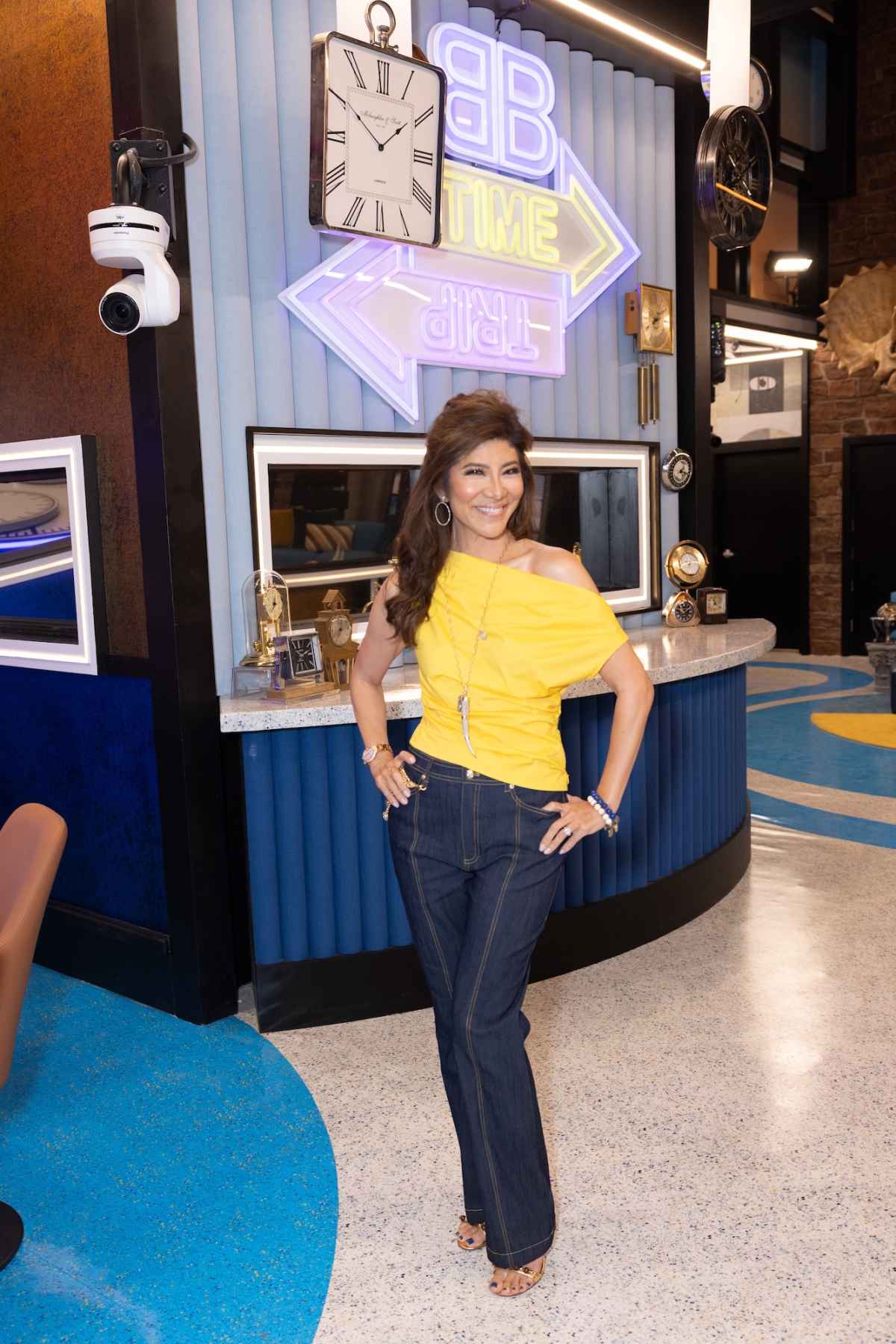
Julie Chen Moonves is dropping some major hints about what — or who — season 28’s “time travel” twist will bring to the Big Brother house.
“That could go forwards or backwards, and that will play into some of the competitions. Does that mean we’re going to bring back some competition you haven’t seen since season 3,2,4, [or] 5? I sure hope so,” the Big Brother host, 56, exclusively tells Us Weekly and additional outlets during a preseason roundtable. “I’m pretty sure you’re gonna [be], like, ‘Oh, they haven’t done that forever.’”
According to Chen Moonves, that’s not all that the incoming houseguests will be forced to endure.
“And then with [the] time travel theme, maybe we’ll do the new twist, which you loved that competition in season four, but they have to be in, like, I don’t know, surrounded by dinosaurs, who knows, and controversial people will be factored in,” she shares.

Related: Julie Chen Moonves Shares What Makes Some Showmances Work on ‘Big Brother’
Big Brother is a social game, and sometimes it helps to have a partner by your side. From Jeff Schroeder and Jordan Lloyd to whatever Vince Panaro and Morgan Pope had last year, showmances have been a staple of the game for almost as long as it has existed. But what makes some showmances work, […]Chen Moonves adds that what Big Brother has cooked up for season 28 will please the fans.
“It’s good TV, and if you love reality television beyond Big Brother, yes, there are other shows beyond Big Brother, you’ll be excited as well,” she says.
Big Brother’s time travel theme was revealed on Wednesday, July 1, when the official house tour dropped.
“For season 28 we’re throwing out all the rules of time and space and sending our houseguests on a journey unlike anything you’ve ever seen before,” Chen Moonves said in the trailer for the upcoming season. “From prehistoric times to iconic decades, and unforgettable moments from Big Brother history, this house is packed with surprises around every single corner.”
Fans will have to wait a little longer to see what Chen Moonves meant by “controversial people” being “factored” into the game, as the official season 28 cast has yet to be revealed. Rumors have swirled online that former houseguests could be returning to the game.
Several alums have spoken out before and since the reveal, warning fans that they should not expect to see them in the house on premiere night. Legendary player Janelle Pierzina posted online that she doesn’t have the bandwidth to play the reality TV game for a fifth time.


Thank You!
You have successfully subscribed.

Deal of the Day
Stop Scrolling! This 46%-Off Floral Bikini Looks Like a Resort Boutique Find View Deal
Related: 'Big Brother’ Host Julie Chen Moonves Reveals if She's Going to Retire
Big Brother fans shouldn’t expect to see Julie Chen Moonves walk away from hosting the program any time soon. When asked by Entertainment Weekly if she had any intention of retiring from the show, Chen Moonves, 55, gave a pretty iconic answer. “You know what? This is a game of chicken. As long as [Jeff] […]“No, I’m not doing #BB28,” the four-time player, 46, wrote via X last month. “Between selling houses, running Airbnbs, raising three kids, and pretending I know what day it is, I don’t have time to be locked in a house for 100 days. You guys can fight over slop without me. 😂.”
Another iconic old school player, Danielle Reyes, also shared that she has other obligations this summer.
“I’m working. I’m not doing Big Brother 28,” the Traitors alum, 54, said in a video shared via X last month. “I know, I know. I appreciate you guys hoping but I haven’t been contacted by the producers. I am excited that this season is going to be the 1,000th episode of Big Brother. How exciting is that? And I haven’t been invited to do anything for this. So you guys more than likely won’t see me.”
Just For You


In this article

Julie Chen