LISTEN: CNBC Chief KC Sullivan on Transforming its Linear TV Business in a Digital World After the Versant Spinoff: ‘We’re Very Much on Offense’
On today’s episode of “Daily Variety” podcast, CNBC president KC Sullivan discusses the channel’s evolution following the Versant Media spinoff. The preeminent financial news network is transforming from a business rooted in linear cable to multiplatform digital. “We’re very much on offense,” Sullivan told Variety during last week’s Cannes Lions festival.
Sullivan, who has logged 17 years with CNBC and has held the top job since 2022, addressed the big issue that was on everyone’s lips at the festival: AI and the business disruption that is affecting every sector. For CNBC, that’s a big opportunity and also a challenge.
Popular on Variety
Related Stories

Robert Downey Jr. Says 'Avengers: Doomsday' Figured Out How to Make Marvel Movies 'Not Be a Letdown' After 'Infinity War' and 'Endgame'
“Disruption is everywhere. And I think it’s an opportunity from an editorial coverage perspective. The amount of news flow is massive, whether it’s the intersection between Washington and Wall Street and business or AI disruption that’s disrupting all industries. The amount of content is massive, but also for our business and our ability to differentiate the content we have,” Sullivan says. “There’s a massive amount of commoditized content that’s out there. But I think for trusted brands that are delivering differentiated content, which is what we think about every day, that’s more and more important. We’re focusing on making sure we get our content to our audience how and where they want that. Because in years past there were only a few places where [CNBC] content was consumed. Now there’s been huge fragmentation of consumption. So you need to make sure that the content is getting delivered where and how that the audience wants it.”
CNBC was part of the Versant Media spinoff from NBCUniversal that took effect earlier this year. The transition has been energizing for the organization, Sullivan says.
“It’s a totally different game for us. We’re very much on the offense. We’re hiring. We’re looking at partnerships in a different way. We’re looking at M&A in a different way,” Sullivan says. “We have a very flat structure. So decision-making happens quickly and with a lot of urgency, and that’s been a really fun place to be in an industry that’s being highly disrupted. There are other media companies that are tightening the belt every quarter. We very much are trying to think about what’s the next big win? What’s the transformational win that we can do and we have the resources to do it. We have the management and board support to do it. Culturally, it’s been an injection of excitement for the organization.”
Listen to Daily Variety on iHeartPodcasts, Apple Podcasts, Variety’s YouTube Podcast channel, Amazon Music, Spotify and other podcast platforms.
Jump to Comments-
Chris Martin’s ‘Not Very Good’ Attempt to Write a James Bond Theme Song Goes on Auction
-
Donald Trump as James Bond? White House Posts Image of President as Gun-Wielding 007
-
James Bond Search: ‘Sunset Boulevard’ Star Tom Francis Auditions to Be Next 007 (EXCLUSIVE)
-
Disney Failed to Buy James Bond Franchise, Walked Away From Owning Twitter Hours Before the Deal Closed and Held Apple Merger Talks
-
Idris Elba Says Bond Rumors Were ‘Never Legit’ and ‘Not Realistic’: Audiences ‘Won’t Go for a Black Male Playing Bond’
-
Jacob Elordi or Callum Turner Should Not Be James Bond, Says Ex-007 Casting Director: ‘We Know So Much About Them’ and the Actor Should Be ‘Out of the Blue’
Dodgers' Shohei Ohtani Scratched From Scheduled Pitching Start on Wednesday
Dodgers' Shohei Ohtani Scratched From Scheduled Pitching Start on Wednesday
This is a surprise.Noah Camras|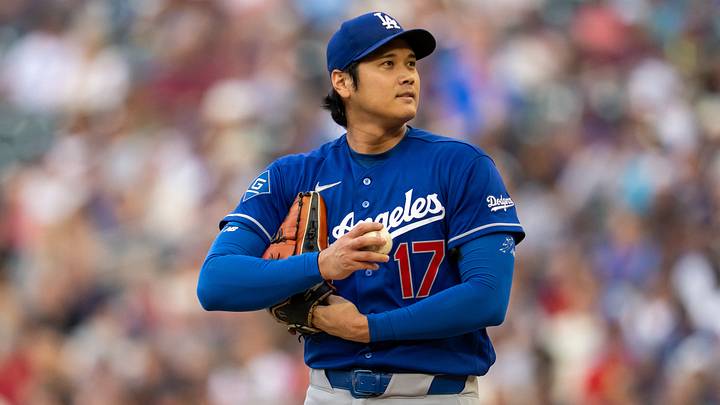
In this story:
Los Angeles DodgersLos Angeles Dodgers two-way star Shohei Ohtani won't be pitching in Wednesday's series finale against the Athletics, the team announced on Tuesday.
While Ohtani was initially scheduled to start on Wednesday, the team will now use a bullpen game instead, per Katie Woo of The Athletic.
Ohtani's next pitching start has been pushed back to Friday against the San Diego Padres. That is the second game of a four-game set with the Padres at UNIQLO Field at Dodger Stadium.
Shohei Ohtani will not start tomorrow against the A’s and will pitch Friday against the Padres.
— Los Angeles Dodgers (@Dodgers) June 30, 2026
Why Isn't Shohei Ohtani Starting on Wednesday vs Athletics?
It's currently unclear why Ohtani isn't making his start on Wednesday, and is instead pitching Friday.
Manager Dave Roberts recently said Ohtani still isn't 100 percent in his recovery from a knee injury. However, that hasn't stopped him from pitching the last couple of weeks.
Ohtani has been on a once-a-week pitching schedule, starting every Wednesday for LA. It remains to be seen how this change shakes up his schedule moving forward.
It's possible that the Dodgers wanted Ohtani to get some extra rest because of his knee. It's also possible the team planned on pushing him back at this point in the year with them playing 13 games in 13 days.
Ohtani has only pitched on less than six days' rest once this season. In order to keep that going, he would have had to be pushed back at some point in this stretch.
Shohei Ohtani Struggling After Dominant Start to Season
Ohtani's last three starts have been significantly less sharp than his first 10 this season.
Through 10 starts in 2026, Ohtani had allowed just five earned runs and sported a 0.74 ERA.
In his last three starts, he's allowed nine earned runs, and has seen his ERA rise to 1.58.
Ohtani has not only been pitching with a blister on his hand, but he's also thrown to Dalton Rushing in his last three starts since Will Smith went on the injured list.
Shohei Ohtani with Will Smith as his catcher this year: 10 G, 5 ER, 0.74 ERA
— Noah Camras (@noahcamras) June 25, 2026
Shohei Ohtani with Dalton Rushing as his catcher this year: 3 G, 9 ER, 4.34 ERA pic.twitter.com/BltB2rBqxF
Ohtani and Rushing weren't on the same page in his start last week, leading to some viral disagreements and more publicity than the team would have wanted.
For what it's worth, Rushing took accountability for his actions after the fact, and vowed to be better moving forward.
“Look, he’s the greatest player to play this game,” Rushing said to the California Post. “And he has every right to, one, call whatever he would like, and two, just attack the way that he wants to on the mound. Because no one on this earth can tell him that he doesn’t know what he’s doing out there.
“So we’re gonna move forward from it. I’ve talked to him a lot. Never in a million years could you ever have a bad thing to say about a guy like that. Never in a million years could you ever feel like a player like that is in the wrong. So it’s kind of up to me, as a young guy, to wear the situation, wear it on my chest, get over it, move past it, and make sure that we allow a guy like that to do what he wants to do.”
Roberts said earlier this week he hadn't yet decided if Rushing would catch Ohtani's next start. That decision has now been pushed back a couple days.
Sign up for our free newsletter and follow us on X/Twitter and Facebook for the latest news.
Published 2 hours ago | Modified 2 hours ago
 NOAH CAMRAS
Noah Camras graduated from the University of Southern California in 2022 with a B.A. in Journalism and a minor in sports media studies. He was born and raised in Los Angeles and has extensively covered Southern California sports in his career. Noah is the publisher of Dodgers on SI after contributing as a writer and editor over the last three years.
Follow noahcamrasHome/News
Largest US Power Grid Declares Emergency To Prevent Blackouts


A mega heat dome is set to descend on the eastern half of the U.S., prompting the Energy Department to issue two emergency orders to reduce the risk of rolling blackouts in the Mid-Atlantic area as PJM Interconnection braces for record power demand.
DOE's first order directs the PJM region, which serves 67 million people across 13 states, "to dispatch specified units and to order their operation as needed to maintain reliability."
PJM has implemented several alerts and actions to maintain reliable system operations throughout this week’s forecasted extreme heat and humidity. A Hot Weather Alert is currently in effect for the entire region PJM serves through July 3. PJM has also issued a Maximum Generation… pic.twitter.com/Ho1txMZBIh
— PJM Interconnection (@pjminterconnect) June 30, 2026
The second order states that PJM, working with transmission owners and electric distribution companies, must use backup generation as a last resort before or during a Level 3 energy emergency.
Energy Secretary Chris Wright said, "Maintaining affordable, reliable, and secure power in the PJM service territory is non-negotiable."
Bloomberg's forecast for maximum temperatures across the Washington, D.C., metro area could average in the low triple digits through Saturday.

The hot temperatures, beginning tomorrow, will increase cooling demand and boost power demand on the PJM grid, potentially straining the system during peak late-afternoon hours. Concerns about grid reliability have risen as data center buildouts are blamed for soaring power bills - yet aging grids and climate policie should also be blamed.
The Kids Are Not Okay With AI, And They Know It...
Authored by Kay Rubacek via The Epoch Times,
Eric Schmidt hadn't finished the word "artificial" before the booing started.

The former Google CEO stood at the University of Arizona's commencement last month, ready to deliver the kind of speech he had probably given a dozen times before: AI as the next great transformation, graduates as its rightful authors.
He got as far as telling them the technology would "touch every profession, every classroom, every hospital, every laboratory, every person, and every relationship you have." The boos rose before he could finish his own sentence. "I can hear you," he said gently. The boos continued, as did Schmidt, who was unable to fully conceal the awkward embarrassment.
He wasn't the only one. A week earlier, at Middle Tennessee State University, Big Machine Records CEO Scott Borchetta told graduates that "AI is rewriting production as we sit here." The boos from graduates started immediately. He responded with tough love: "I know it. Deal with it." But the boos only grew louder.
A week before that, real estate executive Gloria Caulfield barely got through the phrase "next industrial revolution" at the University of Central Florida before the crowd erupted. "Okay, I struck a chord," she said, turning around with her hands up in disbelief and clearly caught off guard.
They were all caught off guard. This isn't how graduations usually go.
Older generations had their own frustrations with the people steering their world, but they rarely stood up at their own commencement, in front of their families, and told a stranger they didn't believe them or what they had to say about their future.
It would be easy to read the response as simple nerves about a tough job market and leave it there. But when you look more closely at how this generation actually lives with technology, their worldview takes a different form.
A recent Gallup survey found that Gen Z's use of AI has leveled off, but their feelings about it have not. Excitement has fallen 14 points in a year, to just 22 percent. And anger has climbed 9 points, to 31 percent. Even among those who use it every day, enthusiasm dropped by 18 points over 12 months. Eight in ten now believe AI will make learning harder. Forty-two percent believe it will hurt their ability to think carefully. Only a quarter believe it will help. Nearly half say the risks of AI in the workplace now outweigh the benefits, which is a sharp rise from the year before. And when asked whose work they actually trust, 69 percent said human work. Only 3 percent said AI's work alone.
A separate Gallup study found that 47 percent of college students have seriously considered changing their major because of what AI is doing to the job market. Sixteen percent have already changed. The students who use AI most, such as in technology, business, and engineering, are also the ones most likely to be reconsidering whether they picked the right field at all.
The kids know the use of artificial intelligence is built into every device they touch throughout their day. It is being wired to replace the skills they were once told to seek in every career they had been advised to pursue.
They know it is being promised to make their lives "better" and "easier," while they feel it is chipping away at their cognitive abilities and sense of challenge and fulfillment, and the adults in the room - or those being offered as role models on commencement stages - are wondering why youth aren't as excited about AI as they expected.
And we should have seen this coming. According to researchers, Gen Z is the first generation in modern memory to test less cognitively capable than their own parents did at the same age, despite having more schooling and more access to information than any generation in human history.
In January, neuroscientist Jared Cooney Horvath told the U.S. Senate Commerce Committee that attention, memory, literacy, numeracy, reasoning, general IQ - key cognitive performance indicators among young people - have stalled or reversed across much of the developed world over the past two decades. He points to classroom screens and education technology as the cause, arguing the brain was never built to learn the way these tools teach. More tools. More data. Less mind.
For nearly two centuries, every generation had tested smarter than the one before it. Researchers called it the Flynn effect, and it held through wars, depressions, and the collapse of empires. It was a 200-year winning streak. Horvath told lawmakers the streak is over.
The graduates booing those speakers are not confused about this. They are living it. They are the data.
A year ago, I wrote about a different version of this same generational response. Vinyl records were outselling CDs, mostly bought by people under 35. Journaling by hand, crochet, taking silent walks, and a trend called "Posting Zero," in which young people stepped back from performing their lives online. That calm rebellion looked like withdrawal, but it has given way to something louder and bolder. It is a signal that we older folk need to pay attention to.
Older generations tend to see AI the way we see most new technology: as a tool that does or doesn't work, that we adopt or resist on our own terms, in our own time. Younger generations don't have that luxury of distance, and there is a fury at being told how to feel about it by people who built it, sold it, or profited from it first without understanding the consequences of using their youth as part of a larger experiment.
This next generation may not hit all the test scores that their forbears did, but they still have human wisdom intact. Children don't get a vote on the experiments run on their own development, and yet these graduates found a way to cast their vote loudly. Either way, I hope their votes will be counted.
Kay Rubacek is an award-winning educator, filmmaker, author, and mother. Detained in a Chinese prison in 2001 for her human-rights advocacy, she has since dedicated her work to exposing the systems and ideologies that diminish human life and human sovereignty. She has been a contributor to The Epoch Times since 2010.