Dead Baby Found in Portable Toilet at Music Festival in Michigan
Dead Baby Found in Portable Toilet at Music Festival in Michigan
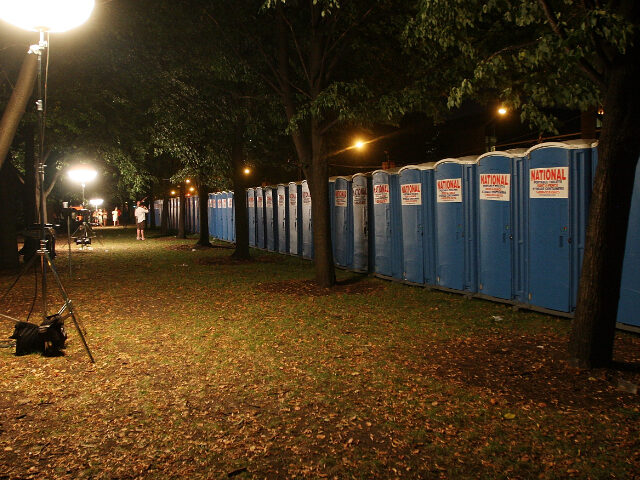

ROTHBURY, Mich. (AP) — The body of a baby was found inside a portable toilet at a music festival in rural Michigan over the weekend, prompting police to ask the public for help.
The child was less than a month old, Michigan State Police said, and its remains were discovered by a bathroom company employee during rMicoutine maintenance Sunday morning, the last day of the Electric Forest festival.
Authorities have not said how the baby died, whether it was a boy or a girl, or whether a parent, guardian or person connected to the baby has been identified.
An autopsy was completed on Monday and police would provide updates once those results are reviewed by investigators, Michigan State Police Lt. Pat Agema said. So far, the death has not been classified as a homicide, Agema said Tuesday.
The festival began Thursday and typically draws tens of thousands of people for electronic dance music and jam bands. Most attendees camp at the 2,000-acre Double JJ Resort near the shores of Lake Michigan. Police said the body was found in the festival’s camping area, and are seeking any possible witnesses or people with relevant information.
Festival organizers shared the state police post about the death on Monday, saying “it causes us so much pain to have to share this difficult news with you.” Organizers joined the call from police to help with the investigation, urging festival attendees to “assist in any way.”
Organizers did not immediately return a message seeking comment Tuesday.
Nets GM Sean Marks Addresses Blockbuster Trade Possibility Amid Jaylen Brown Buzz
Nets GM Sean Marks Addresses Blockbuster Trade Possibility Amid Jaylen Brown Buzz
The Brooklyn Nets have been linked to a couple of big names who have recently become available this offseason.Sameer Kumar|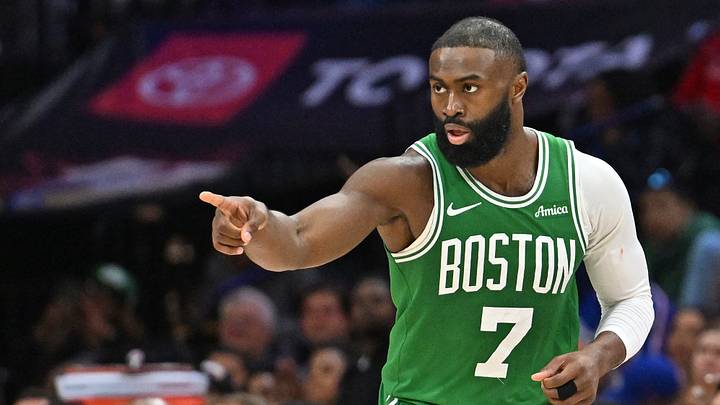
In this story:
Brooklyn NetsThe Brooklyn Nets have been linked to a couple of big names who have recently become available this offseason.
One such name has been Boston Celtics All-Star Jaylen Brown, whom the Nets are in a strong position to acquire in a trade.
A 22-year-old All-NBA center could also be a nice fit with the Nets, especially on a youthful roster on an upward trajectory.
With that said, Brooklyn could look to pounce on an opportunity to add a star-caliber player should it make sense with the direction of the roster, as Nets GM Sean Marks alluded to in recent comments.
“We’re always going to be opportunistic," Marks said. "If the right options come around, there’s no stone left unturned. But we just have to look at the big picture here. When is the right time for Brooklyn to go all in? And how these (young) guys develop is going to predicate a lot of that. That to me is the most important thing right now: developing these young guys and surrounding them with the right fits, the right caliber vets who motivate them and lead them down the right path.”
Of course, the name of the game right now for the Nets is to maximize the potential of all the young players on the roster, but the franchise is in a unique position to make a splash in the near future with the number of draft picks and cap space at the team's disposal.
The organization will continue to monitor the developments of Mikel Brown Jr., Egor Dëmin, Nolan Traoré and Danny Wolf closely, but with the recent acquisition of Julius Randle, the team also seems intent on making a push towards the playoffs next season.
Mikel Brown Jr. is almost certainly untouchable in any trade talks, save for a young, ready-made superstar or surefire MVP caliber player that suddenly becomes available this offseason.
The Nets would likely have to trade Michael Porter Jr. to the Celtics for any Jaylen Brown deal to make sense financially, but a sticking point could be the amount of first-round picks the team is willing to give up, especially with MPJ being an All-Star caliber player in his own right.
Of course, anything can happen this offseason, but the safer bet is that the Nets won't make a big splash and will choose to retain as much flexibility as possible in the future.
Published 10 minutes ago
 SAMEER KUMAR
Sameer Kumar covers the NBA and specializes in providing analysis on player performance and telling stories beyond the numbers. He graduated from SUNY Oswego with a B.A. in Broadcasting & Mass Communication.
Home/News
This Isn't The Rockets' Last Chance To Compete
This Isn't The Rockets' Last Chance To Compete
The Houston Rockets have created an opportunity to have two phases of competitive basketball, despite the pressure they have to win now.Trenton Whiting|
In this story:
Houston RocketsThe Houston Rockets are doing everything they can to create a championship team with Kevin Durant and their current cast of players. Instead of making a big swing like some of Houston's peers, the front office seems content to make moves on the margins to increase the production from the bench.
While winning now is a high priority for the Rockets, they've structured themselves in a way to be able to compete for years to come, even after the Durant era comes to a close.
The Rockets have a wealth of young talent, regardless of what their ceilings may become in their careers. Alperen Şengün and Amen Thompson are the team's highest value young players, and some of the team's best players.
Regardless of how high they peak as players, they have a baseline of highly productive players with high upside on the side of the court they are best at. As long as they are on the Rockets, they will be productive contributors because of the skill sets they've already developed in their careers.
The same could be said about some of their teammates, albiet to a lesser extent. Jabari Smith Jr. has proved to be a productive role player, despite needing some improvements with his deep range shooting. Tari Eason is a plus defender, and Reed Sheppard still has some upside as a ball handler and floor spacer.
These young athletes make up a solid core of rotational players that could keep the Rockets competitive after Durant and Fred VanVleet's playing days with the Rockets are over.
There's also the potential that one of these players is able to increase their ceiling and become one of the league's most productive players.
Thompson is already elite on defense, and he has shown real upside on offense without a consistent jump shot. Shooting will likely be a consistent issue for Thompson, but there have been plenty of highly productive guard NBA players without a jumper. All-stars, MVPs and championship-winning lead guards have been able to contribute without one.
Şengün is also a highly creative offensive engine. Increasing his efficiency in the paint and from the free throw line could lead to a significant jump with his scoring per game.
The true value in these players, is that their production is not at the level of an MVP caliber player who will get paid well into the $60 million range. Teams with players of that caliber will eventually have to be more creative with the surrounding cast to keep the team creative.
Unless one of the Rockets takes a large leap, they'll still be able to afford a well rounded team that can compete in the future when financial constraints start affecting the current elite teams. Some will make hard choices and let go of talent, while others will find the next generation of stars through the draft and young players who gain more opportunity.
The Rockets should be right in the mix of those teams because of the financial flexibility they'll likely have with players at a slightly lower price point than the league's best.
Published 9 minutes ago
 TRENTON WHITING
Trenton is a Houston-born, Pearland-raised University of Houston graduate who first developed his love for journalism while in school. He began his professional career as a sports reporter for a newspaper in Columbus, Texas, before becoming the managing editor.
Home/News
Washington’s Cuba Policy Is Self-Sabotage
Argument An expert’s point of view on a current event.Washington’s Cuba Policy Is Self-Sabotage
The U.S. blockade is destroying Havana’s chances of becoming stable and democratic.
By Oliver Stuenkel, a senior fellow in the Democracy, Conflict, and Governance Program at the Carnegie Endowment for International Peace.
-
Get audio access with any FP subscription.
ALREADY AN FP SUBSCRIBER? LOGIN
Trump’s Second Term
Ongoing reports and analysis
Welcome to FP Free Week. To celebrate America’s 250th birthday, our entire site is completely unlocked this week only. Enjoy the article.
Since January, when the United States captured Venezuelan President Nicolás Maduro and cut Cuba off from the flow of Venezuelan oil that had long helped it function, Washington has pursued a “maximum pressure” campaign against Havana. The Trump administration hopes that sanctions and an effective fuel blockade can force Cuba’s leadership toward a negotiated economic and political opening that would turn the island into a dependent U.S. partner.
In one respect, the pressure has already paid off. On June 18, Cuba’s National Assembly approved some 175 measures that together amount to the boldest departure from the economic order of the 1959 Cuban Revolution. Private banks will now be allowed to operate in Cuba, real estate and state-owned enterprises will be opened to private and foreign capital, Cubans abroad can invest in the country, and most price controls will disappear. President Miguel Díaz-Canel cast the overhaul as a defense of socialism rather than an abandonment of it.
Since January, when the United States captured Venezuelan President Nicolás Maduro and cut Cuba off from the flow of Venezuelan oil that had long helped it function, Washington has pursued a “maximum pressure” campaign against Havana. The Trump administration hopes that sanctions and an effective fuel blockade can force Cuba’s leadership toward a negotiated economic and political opening that would turn the island into a dependent U.S. partner.
In one respect, the pressure has already paid off. On June 18, Cuba’s National Assembly approved some 175 measures that together amount to the boldest departure from the economic order of the 1959 Cuban Revolution. Private banks will now be allowed to operate in Cuba, real estate and state-owned enterprises will be opened to private and foreign capital, Cubans abroad can invest in the country, and most price controls will disappear. President Miguel Díaz-Canel cast the overhaul as a defense of socialism rather than an abandonment of it.
U.S. President Donald Trump might conclude that maximum pressure is working—and that he should tighten the screws on Havana to achieve further changes. Just days after the reforms passed, U.S. Secretary of State Marco Rubio announced sanctions on five Cuban entities, including the bank that handles most foreign business on the island.
Yet, as the humanitarian toll from the U.S. pressure campaign on Cuba mounts, Washington’s strategy may end up undermining its own interests. The same pressure that produced Cuba’s recent economic opening is steadily destroying the conditions that the island needs to succeed.
This month, the United Nations high commissioner for human rights, Volker Türk, held the Trump administration directly responsible for what he described as a humanitarian emergency in Cuba. According to his office, the survival rate for children with cancer has dropped from roughly 85 percent to 65 percent since the United States imposed fuel restrictions on the country in January. The resulting blackouts have destabilized the refrigeration and transport systems essential to medical supply chains.
Infant mortality has doubled since then to almost 10 deaths per 1,000 live births, Türk said, and only about a third of essential medicines are available in the country. Fuel shortages have also choked the island’s food supply, cutting production by a reported 60 percent and leaving pregnant women and small children most exposed to malnutrition.
By mid-May, daily blackouts in Cuba routinely exceeded 20 hours, hospitals were suspending surgeries, and millions of people lacked reliable access to clean water, according to Türk. He pointed out that sanctions designed to strangle entire sectors of an economy, with indiscriminate effects on the population—as is the case with U.S. sanctions on Cuba—are incompatible with international human rights law.
Beyond the immediate human suffering caused by the U.S. blockade of Cuba, Washington’s strategy is self-defeating. Hardship imposed by a foreign siege rarely translates into anger at a local government. Even when discontent does grow, it tends to feed hostility toward the United States. The Cuban government has also shown itself effective at suppressing dissent.
There is also a deeper, structural cost of the U.S. strategy. A productive future partnership between the United States and a stable Cuban government of any kind would rest on the foundations of a functioning society. But those foundations are precisely what the U.S. blockade is eroding.
A market economy needs banks that can extend credit to entrepreneurs and foreign investors willing to risk U.S. penalties for doing business on a sanctioned island. It also requires a stable workforce. Energy shortages and the collapse of basic services are counterproductive. They have accelerated emigration from Cuba, draining the island of its working-age population. (More than 1 million Cubans have left the island since 2021.) Childhood malnutrition risks diminishing per capita productivity for decades.
The longer U.S. pressure on Cuba persists, the closer it gets to economic ruin—making Havana more vulnerable to radicalization and mass exodus and less capable of sustaining an orderly transition to democracy.
It appears that Trump hopes to replicate in Cuba the approach he used in Venezuela: replace Díaz-Canel with a more pliant figure who would be deferential to Washington. White House officials have talked about finding a “Cuban Delcy,” the Wall Street Journal reported, a reference to Venezuela’s interim leader, Delcy Rodríguez. To date, no such candidate has stepped forward.
Given the right conditions, Cuba might actually be better positioned than Venezuela to open up politically. Although Cuba lacks an organized opposition, it has the cohesion and institutional capacity to absorb the strain of a transition without collapsing. The U.S. siege is eroding precisely those capacities.
Cuba is a small, highly centralized island state and generally lacks organized crime and armed nonstate actors. In Venezuela, any transition to democracy is complicated by criminal networks and militias that could fill a power vacuum. Cuba, by contrast, has maintained low levels of violent crime by regional standards. To be sure, social tensions exist—but a sudden loss of state authority would be less likely to give way to armed internal strife.
Havana also retains the legacy of a functioning state. Despite ongoing economic collapse and mass emigration, it has real bureaucratic capacity in health care, education, and administration, alongside a near-universal literacy rate. These structures have declined but not vanished. In a sense, Cuba resembles the socialist states of Eastern Europe in the late 1980s, which had politically rigid systems with surprisingly capable institutions that later proved useful in democratic transitions.
None of this is an argument for U.S. intervention—quite the opposite. History suggests that external pressure rarely produces democratic outcomes and instead often strengthens authoritarian narratives of national siege. The U.S. strategy of tightening sanctions on Cuba may deepen hardship without meaningfully weakening the country’s ruling elite. If anything, decades of U.S. sanctions have hardened Havana’s resolve and handed it a convenient explanation for the failures of its own economic model. Foreign-imposed regime change would also taint a new Cuban government’s legitimacy, planting the seeds for a future backlash.
Cuba’s own history illustrates this dynamic. Fidel Castro came to power in 1959 on a wave of resentment built up over decades of overbearing U.S. influence on the island. Today, Washington risks adding another chapter to this pattern of heavy U.S. dominance followed by intense nationalist reaction. In trying to shape Cuba’s future, the United States may be sowing the seeds for the next Castro.
Havana has just begun the economic opening that Trump spent months demanding. For Washington to pocket that concession while continuing to strangle the island would be to risk squandering the chance for a more gradual—but ultimately more sustainable—transition to democracy. The sensible course would be to lift the blockade and ease the sanctions that hit ordinary Cubans hardest—so that fuel, food, and medicine can reach the island while it retains the human capital on which a recovery depends.
The United States would gain far more from engagement with Cuba than from siege, widening trade, repealing the Helms-Burton Act—the 1996 law that wrote the embargo into U.S. law and barred a president from lifting it without congressional action—and promoting investment and travel to Cuba. By letting political change emerge from within, whoever eventually governs the island will do so with genuine legitimacy rather than the stigma of foreign imposition.
Whatever Trump aims to do in Cuba, he should stop prolonging a morally unacceptable and entirely man-made humanitarian crisis. The blockade of Cuba is not only damaging to U.S. interests and the United States’ reputation across Latin America, but it also reduces the island’s chances of ever becoming a stable and prosperous nation.
Like what you read? This week only, the paywall is down to commemorate America’s 250th birthday. To keep receiving our global analysis after the gates close, sign up for FP newsletters.
This post is part of FP’s ongoing coverage of the Trump administration. Follow along here.
- U.S. Foreign Policy
- Economics
- Human Rights
Oliver Stuenkel is a senior fellow in the Democracy, Conflict, and Governance Program at the Carnegie Endowment for International Peace in Washington, D.C., and an associate professor of international relations at the Getulio Vargas Foundation in São Paulo. X: @OliverStuenkel
Read More On Cuba | Democracy | Economics | Human Rights | U.S. Foreign PolicyJoin the Conversation
Commenting is a benefit of a Foreign Policy subscription.
Already a subscriber? Log In.
Join the Conversation
Join the conversation on this and other recent Foreign Policy articles when you subscribe now.
Not your account? Log out
Join the Conversation
Please follow our comment guidelines, stay on topic, and be civil, courteous, and respectful of others’ beliefs.
You are commenting as . Change your username | Log outRead More
-

The silhouettes of three people are shown at night as they walk past fires. Trump Is Playing With Fire in Cuba

The U.S. blockade on the island is unprecedented—and could lead to prolonged upheaval.
Analysis|
Howard W. French -

A woman holds a Cuban flag aboard a ship that is flying the Mexican flag. Cubans Abandon the American Dream
As conditions on the island worsen, people are leaving—just not for the United States.
Analysis|
Gil Guerra, Diana Roy -

A woman holds a flashlight while walking on a street during a blackout in Havana on March 16. Blackouts, Food Shortages, and Water Scarcity
With no oil shipments, Cuba’s humanitarian crisis has become dire.
Analysis|
Katrin Hansing