Why the NFL is Insulating Itself Against Brendan Sorsby and Its Gambling Partners

Why the NFL is Insulating Itself Against Brendan Sorsby and Its Gambling Partners
Albert Breer explains why the league is drawing a bright line between gamblers and those gambled on—anyone in the business of winning and losing its games.Albert Breer|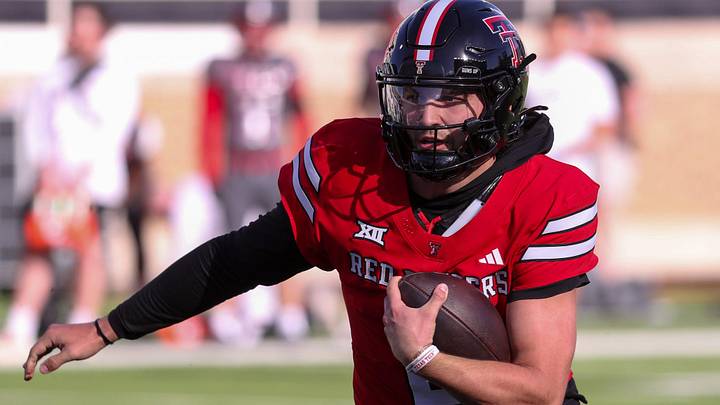
The NFL is deeply in bed with the gambling companies. You look one way, and you’ve got a third down brought to you by DraftKings. You look the other way, and the stadium you walk into has a casino’s name on it. Dig deeper, and you’ll see that going back before the explosion of legalized gambling, you had NFL owners investing in companies leading the way on all of this.
It’s an interesting context when you consider the complicated case of Brendan Sorsby after the NFL declined the former Cincinnati and Texas Tech quarterback’s application to enter the supplemental draft and will not hold one this summer.
The easy way to weigh it, of course, and the way a lot of folks understandably have, is to think that since America has loosened its morality on gambling, and since the NFL itself has done a whiplash-inducing 180 on the topic over the past decade, there should now be more leniency in a case such as Sorsby’s, that the NFL is being hypocritical, or two-faced.
Conor Orr: The NFL makes the right call on Sorsby's supplemental draft application
That may be true. But here’s the reality of it: The NFL is simply protecting itself here, and in a couple of different ways. First, there’s a piece of it we can all get behind. Professional sports can’t allow anyone to bet on their own teams—that is an existential threat. A lot of us who loved pro wrestling as kids stopped watching when we were 11 or 12 because it wasn’t real, and even a whiff of game-fixing reduces a sports league to that. But integrity isn’t the only thing the league is protecting here. This is also about insulating those big-money partners.
There’s a reason every casino you’d ever walk into has more cameras in it than a network headquarters, and more compliance people than all of Wall Street put together. It’s because any appearance that such a business has games that aren’t on the level would be its death knell. You lose the public’s trust on that, and the public will go elsewhere with its money.
So, just as the idea of a kid gambling on a team he plays for creates an existential threat to the NFL, any appearance that the NFL is a safe harbor for violators of the principle would make partnerships with those companies problematic for the companies themselves.
As such, the NFL has to draw a clear, bright line between gambling and those gambled on—the players, coaches, execs and anyone in the business of winning and losing its games.
So, now Sorsby is the precedent-setter in the NFL, keeping to the long-held, across-all-sports principle on players gambling on their own games while also protecting the league’s ability to continue to climb into bed with proprietors of all these bets. Sorsby, to be clear, hasn’t denied the facts of the case. He admitted to placing nearly $100,000 worth of bets over the past four years, including betting on Indiana football (a clear NCAA violation) while he was a teenager on the roster but not yet playing.
Sorsby’s first course of action, to sue the NCAA, actually succeeded when he got a Texas judge to grant an injunction that would allow him to play for Texas Tech while his case was going through the court system. The Big XII’s legal action a week later caused Sorsby, in the cloud of uncertainty the conference’s suit created, to withdraw his lawsuit, and enter the supplemental draft, which, of course, led to Tuesday’s decision by the NFL.
In the letter written to Sorsby by NFL management council lawyer Larry Ferazani, the league said that Sorsby’s petition for entry to the supplemental draft came without a record of the NCAA’s investigation, or reasons for the petition other than being declared ineligible by the NCAA and having “exhausted all of my avenues to continue in the NCAA.” It also, per Ferazani, didn’t detail the basis for the NCAA’s decision to strip Sorsby of his eligibility.
“Your petition does not address these matters,” Ferazani wrote. “Nor does it demonstrate accountability for your conduct or indicate whether, or how, you would adhere to the league’s rules and policies governing the integrity of competition. Instead, even after receiving notice of the NCAA’s decision rescinding your college eligibility in May, you sought to avoid the consequences of that determination through litigation rather than accepting responsibility for your actions, and you pursued entry into the NFL only after abandoning those efforts.”
Sorsby’s lawyer, Jeffery Kessler, a decades-long rival of sports leagues on the labor side, responded, via email, with this: “This is an unlawful action by the NFL in violation of the CBA. We will be taking this matter to the NFLPA.”
Which simply means this is now in the hands of lawyers like Ferazani and Kessler.
Sorsby’s side will likely now argue that the NFL is a trade association and, by law, must leave the quarterback’s employability up to its companies (in this case, the teams). They could also argue Sorsby is exactly who the supplemental draft exists for—a player having seen his eligibility status changed after the deadline for entry into the April draft. The NFL, indeed, has allowed players in before who lost eligibility for reasons related to drugs (Josh Gordon), NCAA rules (Terrelle Pryor) and academics (Ahmad Brooks, among others.
The counter will be that the broad powers the NFL referenced having in its letter were collectively bargained. And though Sorsby would likely argue that he isn’t yet part of the union that negotiated that provision, the league would have the precedent set in the Maurice Clarett case of 2004 to fall back on—Clarett was ruled subject to the CBA without being a member of the union back then.
And round and round, they’ll go. Maybe Sorsby wins. Maybe he doesn’t. Appeals are likely, and it’s not out of the realm of possibility that the NFL is forced to let him in.
Either way, the league’s point about gambling will have been made.
Again, that’s a stance that the NFL, and sports leagues in general (see: Rose, Pete), have rightfully taken forever and ever. It’s not hard to understand why they would, should, and almost have to come down so hard when a player bets on his own team, no matter how small or big the bet was.
But in 2026, it’s also a very clear stance that’s brought to you by FanDuel. Among others.
More NFL from Sports Illustrated
Published 12 seconds ago | Modified 12 seconds ago
 ALBERT BREER
Albert Breer is a senior writer covering the NFL for Sports Illustrated, delivering the biggest stories and breaking news from across the league. He has been on the NFL beat since 2005 and joined SI in 2016. Breer began his career covering the New England Patriots for the MetroWest Daily News and the Boston Herald from 2005 to ’07, then covered the Dallas Cowboys for the Dallas Morning News from 2007 to ’08. He worked for The Sporting News from 2008 to ’09 before returning to Massachusetts as The Boston Globe’s national NFL writer in 2009. From 2010 to 2016, Breer served as a national reporter for NFL Network. In addition to his work at Sports Illustrated, Breer regularly appears on NBC Sports Boston, 98.5 The Sports Hub in Boston, FS1 with Colin Cowherd, The Rich Eisen Show and The Dan Patrick Show. A 2002 graduate of Ohio State, Breer lives near Boston with his wife, a cardiac ICU nurse at Boston Children’s Hospital, and their three children.
Home/NFL
Badenoch blasts 'moaning' female Labour MPs over Burnham jobs 'quota'

Kemi Badenoch has told Labour women to earn a job in Andy Burnham's Cabinet instead of demanding they are handed jobs because of their gender.
The Tory leader lashed out today amid reports that female MPs are demanding the de-facto new prime minister introduce a 50:50 gender split 'quota' in his government.
Amid reports that former foreign secretary David Miliband is being lined up to return to the role, possibly with his brother Ed as Chancellor, one female minister also complained that Burnham could not have 'more Milibands than women' in the top posts.
But in a scathing article in the Times today Mrs Badenoch told them to 'stop moaning' and get chosen on merit instead of retreating into 'more of the failed identity politics that is holding back our country'.
'There are many, many reasons why you shouldn't have any Milibands in the cabinet,' she said.
'But complaining that the boys haven't given them the right jobs or that the boys are taking all the jobs, just shows that Labour's women still don't get it.'
The idea of quotas was also attacked by Baroness Jacqui Smith, Labour's Skills Minister.
Asked by Times Radio if Mr Burnham should reserve jobs for women, she said: 'No, I think what Andy Burnham should be doing is building the very best team around him to change this country.'

A letter written by the Women's Parliamentary Labour Party has called on Mr Burnham to ensure a 50:50 split between men and women in government jobs

Amid reports that former foreign secretary David Miliband (above, right, in 2010) is being lined up to return to the role, possibly with his brother Ed as Chancellor, one female minister complained that Burnham could not have 'more Milibands than women' in the top posts

But Mrs Badenoch told them to pipe down and get chosen on merit instead of retreating into 'more of the failed identity politics that is holding back our country'
A letter written by the Women's Parliamentary Labour Party and seen by the BBC has called on Mr Burnham to ensure a 50:50 split between men and women in government jobs after he succeeds Sir Keir Starmer.
'We are asking you to demonstrate this change from day one and address the toxicity and misogyny within our own party and government,' it said.
Labour has never had a female leader, while the Conservatives have had three, and Mrs Badenoch urged the government to follow its meritocratic example.
'If you run a meritocracy, then you do not have to worry about jobs for the boys,' she wrote.
'Every woman who is a Conservative MP, every woman who has ever won the leadership, has had to fight to get where she is.
'By contrast, Labour women are demanding guarantees from Burnham. But the truth is he doesn't have to give any guarantees.
'If none of Labour's women are prepared to get their hands dirty and challenge him for the leadership, their demands are toothless.'
'In fact, it's quite revealing that the women's parliamentary Labour Party has written to Burnham asking him to commit himself to at least 50 per cent female ministers.
'This has nothing to do with meritocracy. It is yet more of the failed identity politics that is holding back our country.'