Where might we find life in our solar system?
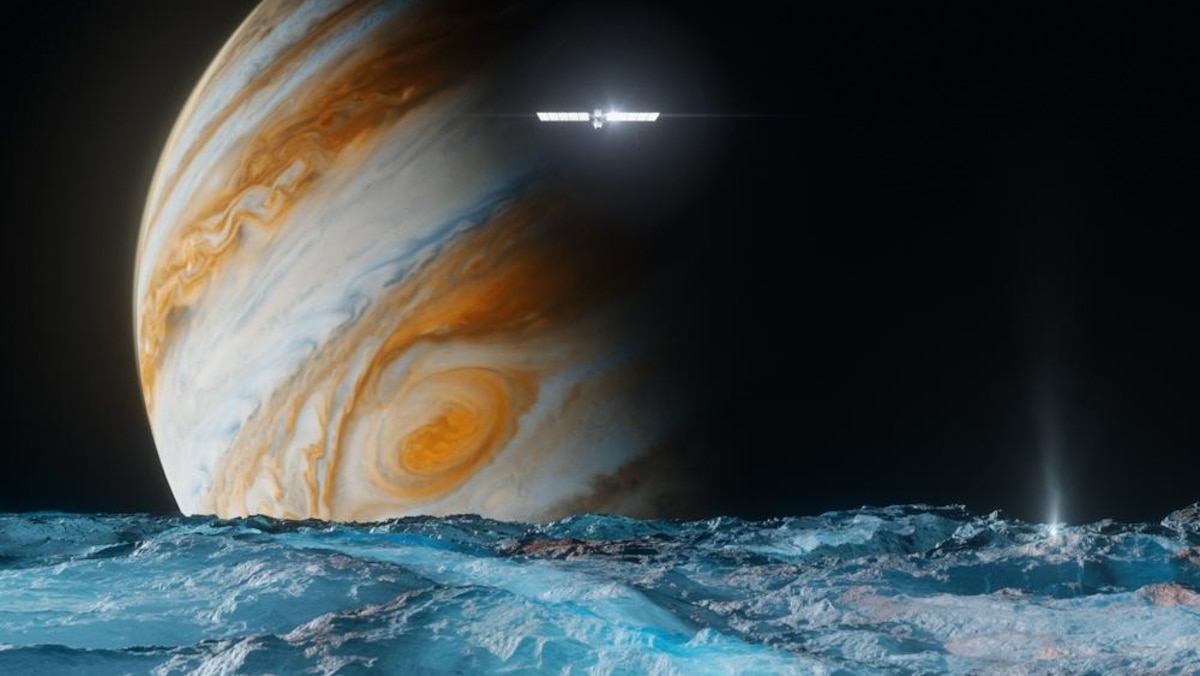
Where might we find life in our solar system?
While life on Mars (and Venus) has long been an obsession for those wondering if we're alone, there are other places in our solar system that could support life in some form.
Humans have pondered the question of life beyond our planet for millennia. Only in the past few decades, however, has musing given way to observation.
Given its promising physical features and proximity, Mars was the obvious target for humanity’s first efforts in “boots on the ground” astrobiological exploration, but it is not our solar system’s only body of interest. Venus is something of an anti-Mars, its mean surface temperature a scorching 464°C (867°F), maintained by a runaway greenhouse atmosphere. Some, however, propose that earlier in its history, Venus was more temperate, perhaps a potential abode for life. It has even been suggested that the clouds that envelop the present-day Venusian surface are sufficiently cool to support life. Indeed, phosphine (PH3), a gas produced by organisms on Earth, has been reported from Venusian clouds, although both the measurement and its interpretation have been debated vigorously. Neither do all planetary scientists agree that the surface of Venus was once habitable.
For now, then, Earth remains the inner solar system’s Goldilocks planet for life: Mars is too cold, and Venus too hot. Earth? Just right.
The concept of a habitable zone— the range of orbits around a star within which liquid water can be stable on revolving planets— permeates modern discussions of astrobiology. It turns out, there is more than one way to sustain liquid water in our solar system.
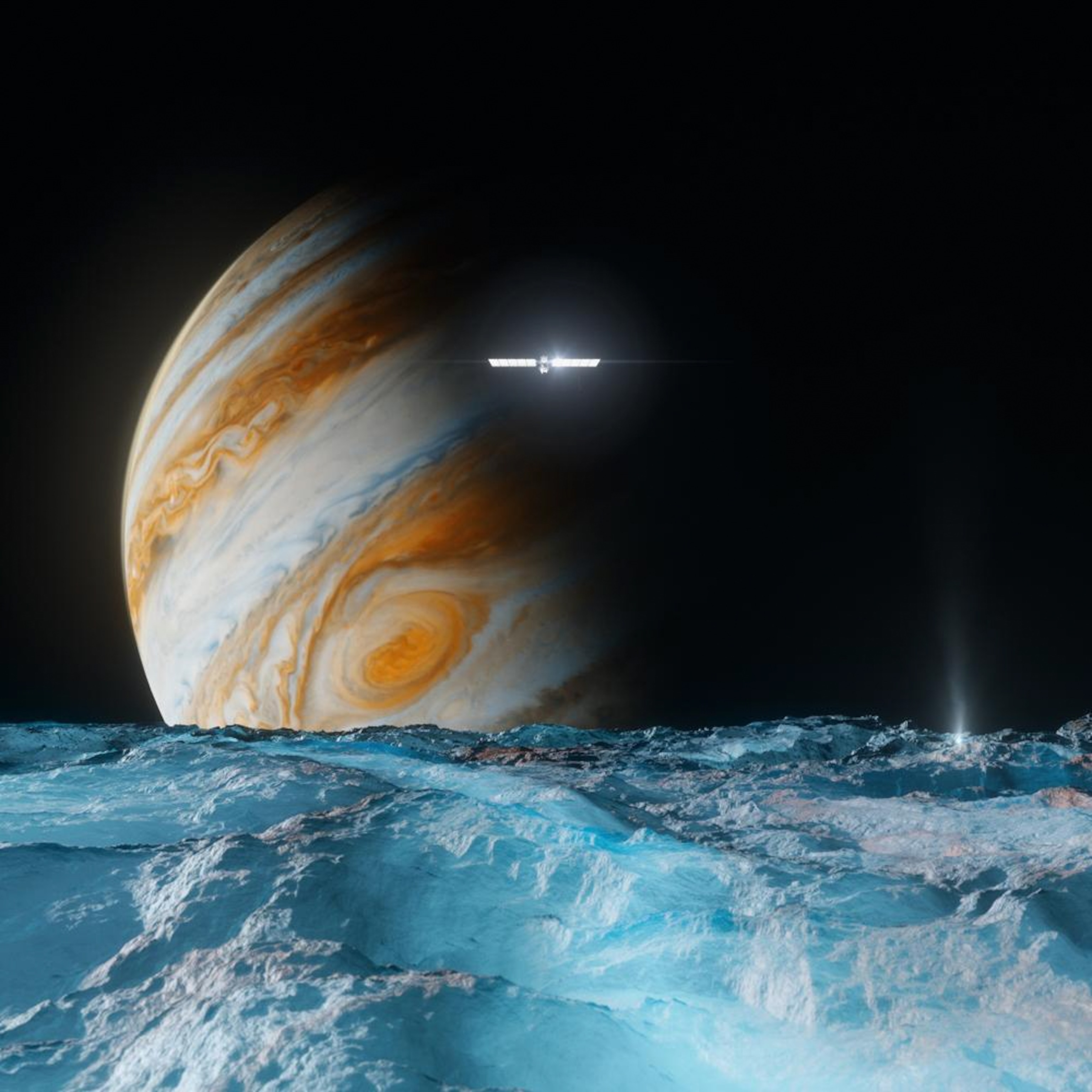
Europa is a moon of Jupiter, far too distant from the Sun to be heated by its rays. Despite this, Europa has an ocean hidden beneath a veneer of water ice. Beginning in the 1970s, analysis of light absorbed or reflected by Europa identified H2O on its surface. Later, satellite images confirmed the moon’s icy face, and ensuing measurements of Europa’s gravity demonstrated that this surface is only skin deep, extending downward 80 to 170 km (50 to 106 miles) to a rocky interior. Finally, studies of magnetism indicated that the lower part of Europa’s watery mantle is liquid. Together, then, light, gravity, and magnetism revealed a subsurface ocean deep within the solar system.
(Saturn now has a ridiculous number of moons)
How can liquid water be maintained so far from the Sun? The answer is “tides.” Most readers, whether they live in Atlantic City or Saskatoon, are familiar with tides on Earth. Our planet and moon are locked in a gravitational dance, and as Earth rotates beneath the moon, seawater is alternately drawn toward the moon or, on the other side of our planet, away from it, generating the oscillating tides observed along coastlines. (The Sun also influences tides on Earth, much as the moon does, but less strongly.) Tides affect the solid Earth as well, but because both Earth and the moon are minor players in the gravitational relationships found throughout our solar system, and because the moon’s orbit is nearly circular, tidal influence on the solid Earth is small. Not so for the moons revolving around our solar system’s giant planets, Jupiter and Saturn. Together, these planets have some 369 documented moons, mostly small bodies with highly eccentric orbits. (No fewer than 128 of Saturn’s are sufficiently tiny that they were discovered only in early 2025.) Jupiter’s strong gravitational pull induces tides in the moons, and as their rocky interiors are pushed and pulled, the resulting friction generates heat.
Io, the closest moon to Jupiter, gets so hot that its rocky interior melts; because of this, Io is our solar system’s most active volcanic body. The next three closest moons, Europa, Ganymede, and Callisto, don’t generate volcanoes, but they heat up enough to melt the lower part of their icy surfaces.
Currently, much astrobiological interest focuses on Europa. Light cannot penetrate beneath the moon’s icy surface, but geochemical models suggest that chemical reactions between Europa’s ocean and its rocky interior could provide energy for at least a limited biosphere. Indeed, magnetic data indicate that Europa’s subsurface ocean is salty, telling us that that water does interact chemically with underlying rocks. Moreover, the strong tides induced by Jupiter crack Europa’s icy shell, allowing subsurface ocean water to spread onto the surface, depositing sodium chloride (NaCl, or table salt) and perhaps other materials on top of the ice. There is also evidence for carbon dioxide ice (the “dry ice” of high school science demonstrations), documenting the presence of carbon at and near Europa’s surface. Thus, observations of Europa check some of the boxes of interest to astrobiologists. Liquid water? Check. Source of energy? Check. Carbon? Check. But is there nitrogen? Phosphorus? We don’t yet know.
(This global experiment will help humanity prepare for a future in space)
For the moment, we can’t tell whether Europa’s subsurface ocean is habitable, perhaps even inhabited. If all goes well, however, we’ll soon know much more. In October 2024, NASA launched its Europa Clipper, a mission that promises to enhance dramatically our understanding of the Europan ocean. Importantly, a suite of instruments will interrogate the chemistry of Europa’s surface, providing a deeper understanding of the chemical makeup of subsurface ocean waters that episodically reach the surface. Those fissures in Europa’s ice shell may also transport surface materials, including organic matter from micrometeorites, downward into the ocean. Direct observations of microorganisms are unlikely, but the mission team will be alert for possible indications of a conversation between moon and life in the details of Europa’s surface chemistry. The Clipper should arrive at Europa in 2030.
Jupiter is not alone in harboring moons of astrobiological interest. Indeed, two of the most fascinating moons in the solar system revolve around Saturn: Enceladus and Titan.
Enceladus is a small moon, less than 600 km (375 miles) in diameter, with an icy surface that sits atop a rocky interior. So far, this sounds a bit like Europa, but there are intriguing differences. Notably, Enceladus’s north polar region is pocked by numerous impact craters, evidence that this surface has existed for a long time, while the southern hemisphere is nearly smooth, revealing that it has been resurfaced relatively recently. A series of long, broadly parallel fissures colloquially known as tiger stripes marks the south polar region. Observations by NASA’s Cassini spacecraft have revealed that the temperature of these stripes is high relative to the rest of the moon’s surface. And Cassini discovered something else: The stripes put on one of the solar system’s greatest shows. Geyser-like fountains regularly spew subsurface liquids hundreds of kilometers into space. Like Europa, Enceladus has a subsurface ocean, and it is the spectacular emissions from this ocean that continually resurface its southern hemisphere.
As was true for Europa, we will not soon drill through Enceladus’s ice cover to sample its ocean directly. But Enceladus offers an additional option not available for Europa. We can sample the jets of salty water as they shoot into space.
So far, we know that Enceladus’s subsurface ocean is salty, indicating, once again, that subsurface waters react chemically with the moon’s rocky interior. We also know that there is hydrogen (H2), nitrogen gas, traces of ammonia (NH3), and even amines— carbon-bearing molecules bound to hydrogen-and nitrogen- rich structures, found, among other places, in the amino acids that form proteins. Other carbon-bearing compounds have also been detected, including carbon dioxide and trace amounts of simple organic molecules, such as methane, propane, acetylene, formaldehyde, and benzene. Moreover, there is reason to believe that the interior of Enceladus may contain phosphorus, a key element in terrestrial biomolecules.
None of these molecules requires the presence of life, but a number of them— formaldehyde, for example, and those amines— are thought to have played a role in the origin of life on Earth.
We don’t know what future missions will find. Enceladus may or may not harbor a limited microbial biota. At the very least, however, Enceladus will be confirmed as another solar-system body where biologically relevant carbon chemistry takes place.
This leaves Titan, perhaps the most interesting body in the solar system, save for Earth itself. Titan is the largest moon of Saturn. It has a thick, cloudy atmosphere and a surface patterned by lakes and rivers. This sounds a bit like Earth, and the first images of Titan’s surface, beamed home by the European Space Agency’s Huygens probe that dropped onto the moon in 2005, look eerily familiar.
That familiarity, however, is misleading. Titan’s atmosphere consists mostly of nitrogen gas, but its clouds are hydrocarbons; it rains methane, and its rivers and lakes consist of liquid methane as well. The surface of Titan is far too cold for liquid water; the mean surface temperature is −179°C (−290°F). There is H2O at the surface of Titan, however; it makes up the moon’s solid surface. There may also be liquid water at depth, heated, once again, by tidal friction. I doubt that we’ll ever detect life on Titan, but its remarkable chemistry can tell us much about the possibilities of environments and carbon chemistry far from Earth.
In sum, we may or may not be the only life to have taken root in our solar system. Mars and, perhaps, Venus might have harbored organisms in the past, and, just possibly, microbes may exist today in the subsurface oceans of moons that orbit Jupiter and Saturn. I’m not convinced that any of these possibilities is likely, but their probability is not zero, and continuing exploration is warranted. What we can say with more certainty is that within our solar system, only on Earth has the conversation between life and its physical home transformed both through time. And only on Earth has persistent life evolved intelligent beings capable of asking questions about the universe we inhabit.
Badenoch blasts 'moaning' female Labour MPs over Burnham jobs 'quota'

Kemi Badenoch has told Labour women to earn a job in Andy Burnham's Cabinet instead of demanding they are handed jobs because of their gender.
The Tory leader lashed out today amid reports that female MPs are demanding the de-facto new prime minister introduce a 50:50 gender split 'quota' in his government.
Amid reports that former foreign secretary David Miliband is being lined up to return to the role, possibly with his brother Ed as Chancellor, one female minister also complained that Burnham could not have 'more Milibands than women' in the top posts.
But in a scathing article in the Times today Mrs Badenoch told them to 'stop moaning' and get chosen on merit instead of retreating into 'more of the failed identity politics that is holding back our country'.
'There are many, many reasons why you shouldn't have any Milibands in the cabinet,' she said.
'But complaining that the boys haven't given them the right jobs or that the boys are taking all the jobs, just shows that Labour's women still don't get it.'
The idea of quotas was also attacked by Baroness Jacqui Smith, Labour's Skills Minister.
Asked by Times Radio if Mr Burnham should reserve jobs for women, she said: 'No, I think what Andy Burnham should be doing is building the very best team around him to change this country.'

A letter written by the Women's Parliamentary Labour Party has called on Mr Burnham to ensure a 50:50 split between men and women in government jobs

Amid reports that former foreign secretary David Miliband (above, right, in 2010) is being lined up to return to the role, possibly with his brother Ed as Chancellor, one female minister complained that Burnham could not have 'more Milibands than women' in the top posts

But Mrs Badenoch told them to pipe down and get chosen on merit instead of retreating into 'more of the failed identity politics that is holding back our country'
A letter written by the Women's Parliamentary Labour Party and seen by the BBC has called on Mr Burnham to ensure a 50:50 split between men and women in government jobs after he succeeds Sir Keir Starmer.
'We are asking you to demonstrate this change from day one and address the toxicity and misogyny within our own party and government,' it said.
Labour has never had a female leader, while the Conservatives have had three, and Mrs Badenoch urged the government to follow its meritocratic example.
'If you run a meritocracy, then you do not have to worry about jobs for the boys,' she wrote.
'Every woman who is a Conservative MP, every woman who has ever won the leadership, has had to fight to get where she is.
'By contrast, Labour women are demanding guarantees from Burnham. But the truth is he doesn't have to give any guarantees.
'If none of Labour's women are prepared to get their hands dirty and challenge him for the leadership, their demands are toothless.'
'In fact, it's quite revealing that the women's parliamentary Labour Party has written to Burnham asking him to commit himself to at least 50 per cent female ministers.
'This has nothing to do with meritocracy. It is yet more of the failed identity politics that is holding back our country.'