Trump Insists Iran Caved On Nuclear Inspections, As Tehran Touts US To Unfreeze $12BN; Hormuz Tolls Still Disputed


Summary
- Conflicting Claims Remain: Washington and Tehran continue to dispute whether Iran agreed to extensive IAEA nuclear inspections and the terms of sanctions relief; also, Hormuz tolls remains an issue of contention.
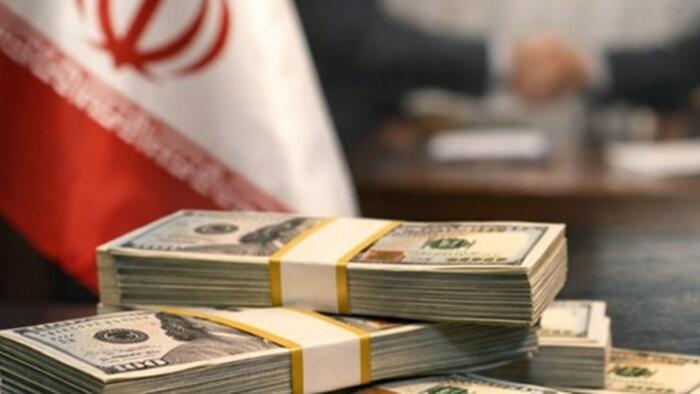
- $12 Billion Asset Release: Iran says $12 billion in frozen assets will be released initially, with total relief potentially reaching $50 billion if a final deal is reached.
- Battle Over Fund Control: The US says released funds would be restricted to humanitarian purchases, while Iran insists it will decide how to use its own money.
- Oil Relief and Hormuz: Temporary sanctions relief for Iranian oil exports has begun, and both sides say the Strait of Hormuz remains open to shipping.
- Fragile Progress & a Russian Role? Iran is considering sending enriched uranium to Russia, but regional tensions and unresolved issues still threaten the talks.
* * *
Fees for Transiting Hormuz? Another Switzerland Unresolved Issue
Despite Washington pressure and warnings, it appears Oman is still on board with cooperating with Iran to extract Hormuz Strait transit fees, or tolls, over and against repeat objections from the White House.
Alongside nuclear inspectors, this remains a top disputed issue, despite the MoD framework having been signed. But the two sides are likely to leave the details to be hashed out during the 60-day 'technical negotiations'.
Iran and Oman said any future arrangements for the Strait of Hormuz must respect the sovereign rights of the two coastal states, adding that they plan to charge fees for ships transiting the waterway.
— Breaking911 (@Breaking911) June 23, 2026
Following talks in Muscat, the two sides agreed to form a joint working group… pic.twitter.com/3EAkdDFVAH
Trump Insists Iran Agreed to 'Highest Level' of Nuclear Inspections
With a number of issues still up in the air, amid claims and counter-claims coming after Switzerland - from nuclear inspectors accessing Iran to how Tehran is able to use its soon to be unfrozen funds - President Trump heightens the drama by issuing a Tuesday morning Truth Social message regarding the negotiations
Trump insists that Iran has agreed to the "highest level" of nuclear inspections, calling it a guarantee of "Nuclear Honesty" and stressing that there would have been "no further negotiations" without such a commitment. He also says the US will allow the Strait of Hormuz to remain "OPEN" and is not pursuing a naval blockade, though military assets remain in place if conditions change.
According to Trump, any sanctions relief or released Iranian funds will be held in US-controlled escrow and can only be used to purchase food and medical supplies from the United States, including "Corn, Wheat, and Soybeans from our great American Farmers."
Trump now characterizes the situation in Iran as a "humanitarian crisis" and concluded that "Talks are going well!!".
Trump says "Iran has fully and completely agreed to highest level Nuclear inspections long into the future" and yet adds "If they did not agree to this, there would be no further negotiations"
— zerohedge (@zerohedge) June 23, 2026
Iran has repeatedly said it has not agreed to this pic.twitter.com/SI82IXb1hf
Iran Touts $12BN in Frozen Assets to Be Released, Will Use How it Pleases
Among the biggest latest developments in the immediate wake of the Switzerland meeting is that Iranian Parliament Speaker Mohammad Bagher Ghalibaf has announced an agreement has been reached for the United States to release $12 billion in frozen Iranian assets.
It also comes after the US Treasury Department announced temporary sanctions relief, namely freeing up Iranian oil and petrochemical sales until August 1st. Concerning the frozen asset partial release, Tehran is now emphasizing that it alone will decide how the funds will be used.
But this may be another area where the headlines and declarations are too far out front, given Washington has sought to impose some caveats which likely remain unacceptable to the Iranians side. For example Vice President JD Vance made clear his stance Monday that Iranian assets had not yet been unfrozen as part of the deal, describing that if there were, they must be limited in use and implementation - to purchase US agricultural goods. He has emphasized - perhaps wishing to address American domestic criticisms - that the funds would not be used to support terrorism.

Ali Bahreini, the Iranian ambassador to the United Nations, has already firmly rejected the soybean plan, saying at a UN press briefing, "Iran is the only country who will decide what to do with its assets, which are going to be defrozen."
In total a whopping $50 billion could eventually be released under the MoU framework - something which will drive Republican hawsk mad. Al Jazeera reports Tuesday, citing the Iranian side:
A spokesperson said the agreement would allow Iran access to previously frozen assets, although the US says restrictions would remain in place under the arrangement.
According to sources familiar with the negotiations, two separate tranches of $6bn were originally agreed in Doha, with the final signing ceremony intended to take place in Switzerland. The Iranian spokesperson now says that process has been completed.
Under the reported framework, an initial $12bn in Iranian funds would be released. During the 60-day negotiation period, a further $12bn could be unlocked. If the parties ultimately reach a final agreement, the value of sanctions relief and released funds could reportedly rise to as much as $50bn.
Official Contradiction: Vance Had Hailed Iran Will Allow IAEA Access to Nuclear Sites
Another point of disagreement remains the entry of IAEA nuclear inspectors into the Islamic Republic. Vance had hailed Tehran already agreed to this, while Iran's leaders are in effect saying not so fast. It's but one of several major contradictions in public rhetoric coming from either side in the wake of the top-level round one meeting in Switzerland.
Something interesting - which Washington may or may not be on board with - is that Tehran is now signaling openness to Russia hosting its enriched nuclear material.
Iran says the Strait of Hormuz is “fully” open to commercial shipping and that large volumes of oil have been transported through the waterway in recent days, according to the semi-official Iranian Students’ News Agency.
— Javier Blas (@JavierBlas) June 23, 2026
Russia to Host Enriched Uranium?
Al Arabiya reports that Iran's aforementioned UN ambassador says "transferring enriched uranium to Russia is under consideration." This could indeed be enough to satisfy President Trump, considering it would be a 'lesser evil' option if indeed the Iranians are actually ready for such a plan (which Moscow has offered several times to facilitate over the past year).
Lebanon is another issue which could threaten to unravel all the progress made thus far, but reports cite a 'cautious calm' across the south, but with some limited, sporadic exchanges of fire.
One correspondent on the ground reports, "Here in Tyre, people driving across the city this morning are picking up bits of rubble, starting to clear things out and searching for what they can salvage among their destroyed homes and businesses. That is what people are using this moment of calm for."
However, there's been reports of at least two new Lebanese deaths. In one instance Lebanese national media indicated "A young man was killed and two others were injured” when Israeli soldiers "opened machine gun fire in their direction while they were standing near an excavator which was clearing a road" in a locality near the town of Nabatieh - per the National News Agency. Hezbollah is saying Tuesday that this violates the ceasefire agreement.
The situation on Monday was such that the Iranian delegation almost quit the Sunday-Monday talks completely, Iran's top negotiator has explained:
Iran's Ghalibaf:
— Clash Report (@clashreport) June 22, 2026
In the middle of the discussions, I learned that Trump had made threatening remarks regarding our president, the negotiating team, and possible attacks on our territory.
I told Vance: “We are here engaged in talks, and according to the signed understanding,… pic.twitter.com/Oi0jKrXf19
More Latest Developments
Below are some latest developments on the US-Iran peace front via Middle East Eye:
- Iranian Parliament Speaker Mohammad Bagher Ghalibaf said an agreement had been reached to release $12bn in frozen Iranian assets.
- The US Treasury Department announced temporary sanctions relief allowing Iranian oil and petrochemical sales until 1 August.
- Washington said the measures follow Iran’s commitment to permit international nuclear inspections after intensive talks in Switzerland.
- President Donald Trump said released Iranian funds would be used to purchase food and agricultural products from US farmers.
- Iran’s Central Bank rejected Trump’s comments, saying Tehran is under no obligation to spend released funds on American goods.
- Iranian officials said technical negotiations with the United States have concluded and the process is entering a new phase.
- President Masoud Pezeshkian said the effectiveness of future talks depends on all sides fully implementing their commitments.
- A US official said Centcom has launched a monitoring mechanism in Lebanon to provide American officials with assessments of fighting on the ground.
- Israeli officials reiterated that military operations in Lebanon would continue despite ongoing diplomatic progress between Washington and Tehran.
- Markets and regional observers continued to focus on sanctions implementation, Hormuz shipping activity and the durability of the broader agreement.
And via Newsquawk summary:
- Iran's Foreign Ministry Spokesperson Baghaei said "if the other party does not fulfill its obligations, we should not be expected to unilaterally fulfill our obligations", Iran International reported.
- Iran's Foreign Ministry Spokesperson said defensive capabilities and missiles will never be a topic of discussion. US commitment regarding Lebanon is completely clear.
- Iran's Foreign Ministry Spokesperson said quadrilateral talks were stopped early in Switzerland due to the witnessing of US threats. Thereafter, exchanges were via a mediator, Mehr reported.
- Iran's Foreign Ministry Spokesperson said Iran has no plans to let IAEA inspectors visit nuclear sites targeted in the conflict.
- Iranian President, ahead of trip to Pakistan, said Iran is seeking the full implementation of the clauses that have been signed within the framework of international law, Nour News reported.
- Iranian Parliament Speaker Ghalibaf said the Strait of Hormuz will be administered by Iran according to international law.
- Iranian President Pezeshkian said in phone call to Turkish President Erdogan on Monday that Iran is ready to pursue diplomacy as per international law.
- Iran Central Bank Governor said Tehran is not obliged to purchase US agricultural goods under current agreements, and states that remaining frozen assets can be used to buy non-sanctioned goods beyond essential items, according to Tasnim.
- "Iranian Foreign Minister Abbas Araghchi will visit Baghdad next Sunday", Al Mayadeen reported citing sources; The meeting will include a briefing on the progress of the talks in Switzerland and the preparations.
- Iranian Foreign Ministry said "America has issued the necessary license for the sale of Iranian oil and petrochemical products", Al Jazeera reported.
- Iranian Ambassador to the UN said any further attacks on Lebanon would be a red line.
- Iranian Ambassador to the UN said Hormuz talks will be held with Oman.
- Iranian Ambassador to the UN said there has been good progress in negotiations with the US.
- "Sources indicate that the Iranian Foreign Minister [Araghchi] will hold separate talks with Pakistani officials", Al Hadath reported.
- Oman's Foreign Minister said Iranian negotiators reaffirmed their commitment to international law and to ensuring safe, toll-free passage through the Strait of Hormuz.
- Oman's Foreign Minister meets with Iranian Parliamentary Speaker Ghalibaf, with the officials discussing regional stability and Strait of Hormuz.
- Shipping data cited by Al-Arabia showed at least 20 ships have crossed the Strait of Hormuz in the past 24 hours.
- One person reportedly killed by Israeli gunfire in a southern Lebanese town, according to Lebanese Civil Defense and a security source - timing unclear.
- Senior US official tells Al Jazeera that talks between Lebanon and Israel will continue to advance comprehensive peace and a security agreement between the two countries.
- Israeli National Security Minister Ben-Gvir said Israel must act alone against Iran's nuclear program and must maintain military freedom in Lebanon, hopes withdrawal from southern Lebanon will not happen and will do everything to convince PM Netanyahu.
- Israel military shells and fires at Khan Yunis in Gaza, according to Fars News Agency.
- Israel's PM, Defence Minister and Military Chief said Israeli military will continue to act to neutralise threats to soldiers and citizens, demolish terrorist infrastructure, and maintain security zone in southern Lebanon, according to a joint statement. Israel's leadership reaffirms that the security of Israeli citizens and IDF troops will remain its overriding priority, with no room for compromise.
- Israeli forces reportedly violate Syrian territory, conducting house searches in southern outskirts of Quneitra governorate.
- US-Iran technical talks in Burgenstock had a "breakthrough", talks proceed seemingly in a positive direction, Journalist Mallick reported.
- US President Trump, on Israel and Lebanon, said "we'll take a look at it"; said he gets problems solved fast, including with Israeli PM Netanyahu.
- US President Trump said if Iran doesn't stick to agreement, he will do what he has to do. As long as Iran respects us, we are not going to have any trouble. Could restart the blockade quickly if needed.
Badenoch blasts 'moaning' female Labour MPs over Burnham jobs 'quota'

Kemi Badenoch has told Labour women to earn a job in Andy Burnham's Cabinet instead of demanding they are handed jobs because of their gender.
The Tory leader lashed out today amid reports that female MPs are demanding the de-facto new prime minister introduce a 50:50 gender split 'quota' in his government.
Amid reports that former foreign secretary David Miliband is being lined up to return to the role, possibly with his brother Ed as Chancellor, one female minister also complained that Burnham could not have 'more Milibands than women' in the top posts.
But in a scathing article in the Times today Mrs Badenoch told them to 'stop moaning' and get chosen on merit instead of retreating into 'more of the failed identity politics that is holding back our country'.
'There are many, many reasons why you shouldn't have any Milibands in the cabinet,' she said.
'But complaining that the boys haven't given them the right jobs or that the boys are taking all the jobs, just shows that Labour's women still don't get it.'
The idea of quotas was also attacked by Baroness Jacqui Smith, Labour's Skills Minister.
Asked by Times Radio if Mr Burnham should reserve jobs for women, she said: 'No, I think what Andy Burnham should be doing is building the very best team around him to change this country.'

A letter written by the Women's Parliamentary Labour Party has called on Mr Burnham to ensure a 50:50 split between men and women in government jobs

Amid reports that former foreign secretary David Miliband (above, right, in 2010) is being lined up to return to the role, possibly with his brother Ed as Chancellor, one female minister complained that Burnham could not have 'more Milibands than women' in the top posts

But Mrs Badenoch told them to pipe down and get chosen on merit instead of retreating into 'more of the failed identity politics that is holding back our country'
A letter written by the Women's Parliamentary Labour Party and seen by the BBC has called on Mr Burnham to ensure a 50:50 split between men and women in government jobs after he succeeds Sir Keir Starmer.
'We are asking you to demonstrate this change from day one and address the toxicity and misogyny within our own party and government,' it said.
Labour has never had a female leader, while the Conservatives have had three, and Mrs Badenoch urged the government to follow its meritocratic example.
'If you run a meritocracy, then you do not have to worry about jobs for the boys,' she wrote.
'Every woman who is a Conservative MP, every woman who has ever won the leadership, has had to fight to get where she is.
'By contrast, Labour women are demanding guarantees from Burnham. But the truth is he doesn't have to give any guarantees.
'If none of Labour's women are prepared to get their hands dirty and challenge him for the leadership, their demands are toothless.'
'In fact, it's quite revealing that the women's parliamentary Labour Party has written to Burnham asking him to commit himself to at least 50 per cent female ministers.
'This has nothing to do with meritocracy. It is yet more of the failed identity politics that is holding back our country.'