The Supreme Court is not in Trump's thrall
The Supreme Court is not in Trump’s thrall
- Tuesday, June 30, 2026, 8:31 PM
-
Text size
- Small
- Medium
- Large
- Compact
- Normal
- Spacious
- Comments
-
Share
Share
Chris Mondics
The Supreme Court is not in Trump’s thrall
The latest Supreme Court term, which ended on Tuesday, surely must have been a deep disappointment for those who argue the court is in the thrall of political puppet masters.
In decision after decision in the term that began Oct. 6, the high court asserted a degree of institutional independence that undercuts the idea its jurists are merely politicians in judicial robes.
Most popular
Gavin Mortimer
Why is the New York Times celebrating the slave-trading Vikings?
Christopher Caldwell
America is still an English countryAlexander Larman
What went wrong with the Madonna biopic?At bottom, the issues before the court were characterized by Trump’s attempts to vastly expand presidential authority and efforts by states, political opponents and others to rein him in.
In the end, the match was a draw.
This court, with a 6-3 conservative majority, of course tilts right and has handed down decisions on migrant asylum claims and executive power, among others, that are celebrated by Republicans. Yet on the last day, it dealt Trump a setback by ruling against his executive order banning birthright citizenship.
On key elements of President Trump’s agenda, the court also has made clear it will put up roadblocks when it finds Trump overstepped statutory or constitutional boundaries.
This was so on several issues central to Trump’s governing agenda. In rulings this term, the court found there was no basis in the law for his attempts to unilaterally impose tariffs on US trading partners, fire a member of the Federal Reserve, and send federal troops to cities over the objections of the governors of those states. The court also pushed back against the administration’s demand that mail in ballots that arrive after election day not be counted.
While Trump lost on the federal reserve, birthright citizenship, and tariffs, he won on the question of racial gerrymandering, a decision that will cost Democrats a half dozen or more congressional seats held by blacks elected officials in the south, and on the ability of the chief executive to fire members of certain independent regulatory agencies.
The split decision nature of this term was evident on the last day when the court ruled in favor of a West Virginia ban on biological boys playing on girls sports teams, a high priority for conservative Republicans and the Trump administration. But then the court also struck down a Trump executive order banning birthright citizenship, the long-established principle under the 14th Amendment that any person born in the U.S. automatically is a citizen. This along with tariffs, and the claimed ability to fire members of the Federal Reserve, were signal issues for the Trump administration.
“For those keeping score, the term was a mixed bag”
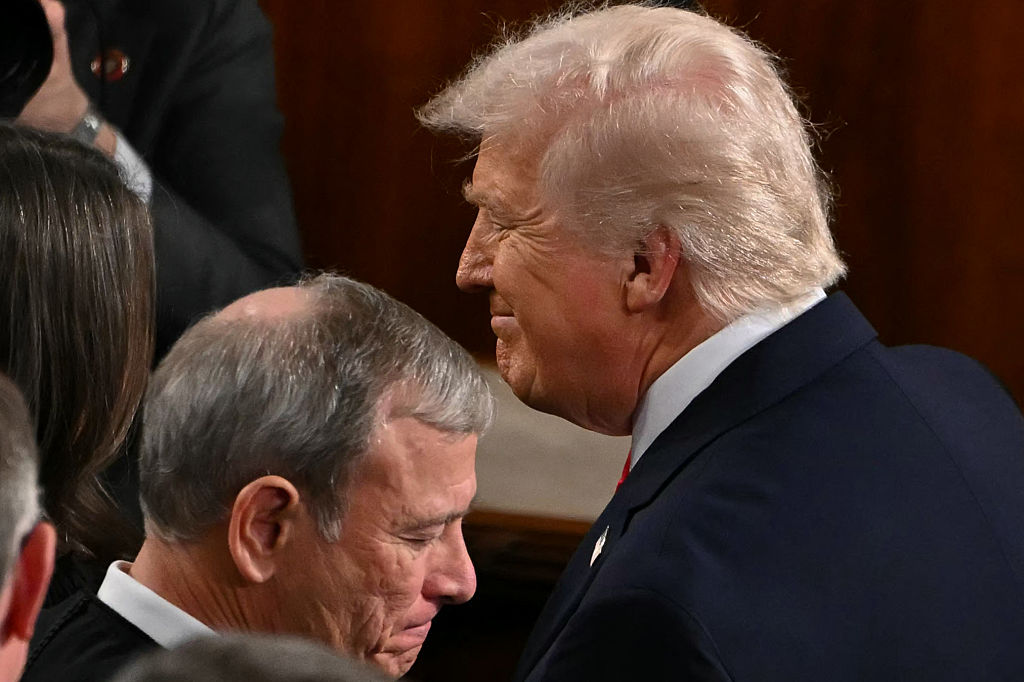
Trump even attended oral arguments on the birthright citizenship case in April, the first president ever to attend a Supreme Court hearing.
Even in the case of the firing of Federal Reserve governor Lisa Cook, which seemed to leave open the possibility that the litigation over Cook’s removal might continue in the lower courts, the Supreme Court underscored the need for a Federal Reserve free of political chicanery.
Trump issued a defiant response on Monday, saying that the decision turned on a minor procedural issue and implying it could be easily surmounted. But a careful reading of Chief Justice John Roberts’ majority opinion makes clear that underlying the procedural flaws in Cook’s firing was a much deeper concern about the need for the Fed to remain independent of interference from elected officials.
Roberts spent a good deal of his opinion outlining the long and troubled history of political meddling in US monetary policy, dating back to the revolution. It was President Andrew Jackson, the raging populist of his day and an apparent role model for President Trump, who dismantled the Second Bank of the United States in the early 19th century, that in turn initiated a series of financial panics over many decades. Those were only brought under a modicum of control with the establishment of the Federal Reserve in 1913.
“Monetary policy should not be subject to political interference,” Roberts wrote.
In writing an opinion that pointedly argued for protection for the Federal Reserve from political conniving, Roberts hardly comes across as a reliable political ally of the White House.
In a related case, the Supreme Court ruled 6-3 that Trump did have the power to fire members of semi-independent agencies like the Federal Trade Commission whose members have less statutory protection than Federal Reserve governors. Each of the regulatory agencies have significant authority over the industries they oversee but lack the broad-based economic impact of the Fed.
In another major victory for Trump and the Republican Party, the court decided 6-3 along ideological lines on April 29 that a Louisiana congressional district violated the Equal Protection Clause of the Constitution. The decision, in Louisiana v. Phillip Callais, overturned Section 2 of the Voting Rights Act, which gave states the authority to create majority black congressional districts as a remedy for past discrimination.
After the 2020 Census, the state Legislature in Louisiana redrew the state’s congressional boundaries to reflect population changes that had taken place in the previous decade. The original map contained one majority black congressional district, but a group of black voters sued, maintaining that the map discriminated against African Americans, who make up one third of the state’s electorate.
A federal district court judge agreed, ruling the map unconstitutional, and in response, the Legislature created yet another black majority district. Then a group of white voters sued, with the case eventually finding its way to the Supreme Court. One of the more salient aspects of the ruling is that it suggests the court is increasingly reluctant to hear claims of racial discrimination.
This idea first emerged in 2016, when Roberts, writing the majority opinion in an earlier challenge to aspects of the Voting Rights Act, found that the virulent racial animus of 1960s that once justified legal protections for black voters was no longer a problem.
The same thinking seemed to underlie the court’s decision to ban racially gerrymandered districts, and apparently its decision to curtail the federal government’s Temporary Protected Status program, which granted permission to 300,000 or more Haitians fleeing turmoil in their home country to remain indefinitely in the United States.
Justice Elena Kagan, in her dissenting opinion, cited several racially hostile remarks aimed at Haitians by President Trump as a basis for keeping the program in place, but the majority chose to overlook them in deciding that those refugees could be deported.
The decision was a major win for the Trump administration, which has made restricting immigration a top priority. So too was its decision, issued on the last day, upholding laws in 26 states that ban transgender athletes from playing on women’ and girls’ athletic teams. Justice Brett Kavanaugh, writing for the majority, said those laws do not violate the Equal Protection Clause.
But for those keeping score, the term was a mixed bag.
Trump ran in part on the issue of restricting transgender rights in 2024 as well as on immigration. The Supreme Court delivered for Trump on those issues for the most part but dealt him severe setbacks on tariffs and oversight of the Federal Reserve and birthright citizenship. And on those issues, much as Trump may not like it, the court will likely have the last word.
Canadian Man Traveled to California and Attacked Female Online Gamer He Became ‘Obsessed’ With

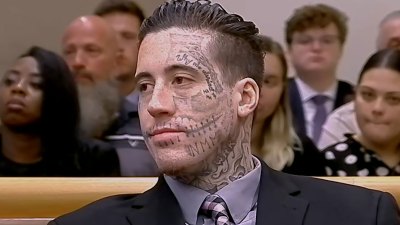
Canadian man Devin Wolfgang Vanderhoef will spend the rest of his life in prison after he traveled to California to attack a woman he became “obsessed” with after they met on an online gaming platform.
The Monterey County District Attorney’s Office announced on Thursday, June 25, that Vanderhoef, 26, was sentenced to two consecutive life sentences following the failed murder plot.
The Monterey County Sheriff’s Department said in an initial press release that the incident took place on November 25, 2024, shortly after Vanderhoef and his alleged coconspirator, Darius Avery Whyte, were arrested while trying to travel into Canada through the border.
Prosecutors announced that Vanderhoef was sentenced to “two consecutive life sentences for the willful, deliberate and premeditated attempted murder of two people.” Additionally, he was “sentenced to serve five consecutive years for personally inflicting great bodily injury and personally using a weapon during the commission of the crimes.”
Related: Wade Wilson Admitted to Killing 2 Women: Everything to Know About the Case
Wade Wilson, the convicted murderer who became a viral social media fixation as the “Deadpool Killer,” is back in the spotlight after his crimes were documented in Paramount+’s Handsome Devil: Charming Killer and Netflix’s Worst Ex Ever. Wilson was found guilty in June 2024 of murdering Kristine Melton and Diane Ruiz in Cape Coral, Florida, […]The sentencing came after Vanderhoef “confessed that he had been planning the attack for a month before flying to California and that his plan was to ‘actually kill someone.’”
The Monterey County Sheriff’s Department previously revealed that Vanderhoef met his victim through an online gaming platform and he “developed a year’s long obsession with the victim which led to him flying to California from Canada where he resides” to commit the murder.
Vanderhoef allegedly crossed the border with Whyte, 26, and he posed as an Amazon employee when he knocked on the victim’s door.
Police said that the victim’s boyfriend answered the door and found Vanderhoef allegedly holding a package while dressed as a delivery driver.
Vanderhoef allegedly lunged toward the boyfriend and “forced his way in and began stabbing the boyfriend with a knife resulting in multiple critical injuries.”
The woman then “grabbed a sharp metal object” to defend her boyfriend. “While fighting back, the female victim was strangled and stabbed by [Vanderhoef], sustaining moderate injuries,” authorities said. “During the struggle, [Vanderhoef] sustained multiple critical stab wounds.”

Related: Georgia Man Shot Pregnant Girlfriend in Attempt to Kill Their Unborn Baby
A pregnant woman’s life was forever changed when she woke up from a coma to learn that her boyfriend shot her in the head in an attempt to kill their unborn child. Now, he will spend the next six decades behind bars for the crime. The DeKalb County District Attorney’s Office announced that Donald Wooten […]When detectives arrived at the scene, they “discovered that the package that Vandorhoef was carrying when he arrived contained handcuffs, duct tape and knives.”


Thank You!
You have successfully subscribed.

Deal of the Day
Deal Alert! This 44%-Off Throw-On Mini Dress Is Too Good to Leave in Your Cart View DealPolice initially said it was “unknown how these items were intended on being used” by Vanderhoef or Whyte.
“The investigation determined that Whyte was an accomplice of Vandorhoef during this incident and that he had knowledge of what Vandorhoef’s intentions were,” police added.
Whyte eventually pleaded guilty to charges for assault and for being an accessory after the fact to a felony. He was given a probationary sentence and was immediately released from custody since he had already served the time while awaiting his trial. Whyte also testified against Vanderhoef during his trial.
Just For You