The real threat to democracy after Brexit
 Robert Tombs
The real threat to democracy after Brexit
- Tuesday, June 23, 2026, 7:17 PM
-
Text size
- Small
- Medium
- Large
- Compact
- Normal
- Spacious
- Comments
-
Share
Share
Robert Tombs
The real threat to democracy after Brexit
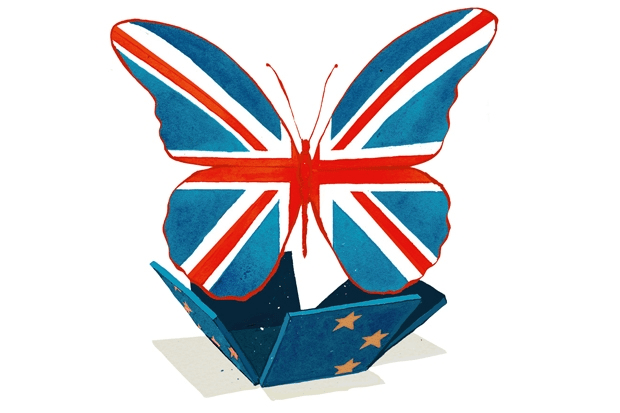
Ten years after the Brexit referendum, its long-term impact on British politics is evident. Not so evident is why this is the case. Every general election sees comparable debates. So too did the 1975 referendum on membership called by Harold Wilson. But none of these other elections has ever produced such an extreme and long-lasting reaction, or a concerted attempt to use both informal and formal methods – constitutional and legal – to block the result.
The conflict of Leave and Remain persisted and deepened after 2016 because the Remain tribe would not allow the Leave tribe to pursue the logical consequences of Brexit and ‘take back control’
Imagine after a general election, MPs, the Speaker of the Commons, the Supreme Court, the BBC and well-funded lobby organizations coming up with a series of expedients to prevent the new prime minister from governing. Before 2016 that would have seemed a banana republic fantasy. In future, it is all too easy to imagine. Since 2016, our politics has become more extreme, more tribal, and in peril of losing the very foundation of constitutional democracy: willingness to accept the result of elections, however unpalatable.
If I try to come up with an analogy, I can only think of the 1832 Great Reform Act, which the political class was forced to accept by popular unrest, but which it deliberately framed to thwart the democratic impulse, causing a generation of political unrest.
Part of the responsibility for our post-2016 turbulence certainly rests on the Cameron government, which behaved disgracefully in fomenting “Project Fear” to try to bully the electorate into voting Remain. No less disgraceful was its marshaling of foreign politicians to interfere in our domestic politics by telling us how to vote, with Barack Obama threatening to place us at the back of the queue. A leading Commonwealth politician told me that his country’s prime minister later regretted having been induced by Cameron to oppose Brexit. The least that can be said is that the government’s efforts must have reduced the Leave majority, and this made the result seem inconclusive and encouraged rejection of the result.
Most popular
Anastasia Brown
Why Jack Schlossberg lost
John Fund
The rise and rise of America’s radical leftAiden Abbott
Ahmed al-Sharaa can be a great man of historyIn 1975, when Harold Wilson called a referendum on membership, there was a similar attempt to scare the voters. Then (in the words of the pro-European writer Hugo Young) membership was supported by “all the acceptable faces of British public life,” including Anglican bishops and most of the press, echoing “the golden thread of deceptive reassurance”: membership would make Britain more prosperous but would change nothing that people cared about. But the Labour minister Peter Shore, in a brilliant and impassioned speech at the Oxford Union (well worth watching on YouTube) dismissed the promises of prosperity as hollow, and summed up the argument for European membership as nothing but “Fear, Fear, Fear.” That time fear worked. And however deeply they disagreed, opponents of membership accepted the result as binding for more than a generation.
In contrast, when in 2016 the electorate refused to vote in the way they had been instructed by their betters, students in university towns wept in the streets and Lord Adonis told us that there had been a “nervous breakdown” in the civil service. Even if they had believed ‘Project Fear’, this reaction appears excessive. We were, after all, talking about membership of a trading bloc. It was not like Henry VIII breaking with Rome.
Moreover, as many of us found at the time, convinced Remainers seemed to know little about the EU, and were reluctant to discuss in it any detail. This was later confirmed by an academic study by Adam Fagan and Stijn van Kessel, “The Failure of Remain: Anti-Brexit activism in the United Kingdom.” They found that Remain campaigners had had little positive to say about the EU, no response to worries about sovereignty and immigration and no shared view about Britain’s possible future in the EU. As for wider political views, another academic study by Harold D. Clarke, Matthew Goodwin and Paul Whiteley (published by Cambridge University Press) concluded that on crucial matters including immigration, equality, ethnicity and national identity, Remain voters differed little from Leavers.
The Oxford economist Sir Paul Collier summed it up neatly: in the absence of strong positive feelings about the EU, had the British in 2016 been voting on whether they wanted to join the bloc, the answer would surely have been a resounding No. Given that the popularity of the EU across Europe had been in sharp decline for a generation, that would probably have been the result in other countries too. So at least thought President Macron, who told Andrew Marr that the French would probably have chosen to leave – had they been allowed to vote.
So why – to return to my starting point – did 2016 cause such turmoil? Moreover, why are attempts being made by politicians to reverse it even now, when the economic and political case for aligning with and even rejoining the EU is patently weak and likely to cause renewed political disruption?
I can only conclude that the 2016 referendum and its aftermath brought into the open a previously unrecognized fissure in our society. EU membership was about more than a rational calculation of costs and benefits. For an influential Remain minority it encapsulated the post-1980s liberal order to which they were firmly attached, based on globalization, permeable borders and post-democratic government. The conflict of Leave and Remain persisted and deepened after 2016 because the Remain tribe would not allow the Leave tribe to pursue the logical consequences of Brexit and “take back control.” That the EU has long proved ineffective, corrupt and undemocratic is irrelevant for those to whom it symbolizes a cosmopolitan ideal. Hence the present government’s eagerness to spend vast sums on an Erasmus scheme that benefits very few: it’s the thought that counts.
The unresolved struggle ten years after the vote inflames and solidifies our tribal division. Leavers and Remainers are now openly aligned on opposite sides in a range of logically unconnected issues, on which they are unwilling to compromise. Perhaps some such polarization was likely, even inevitable, for we see a similar development across the democratic world.
Nevertheless, those who have opened and widened the fissure in Britain – especially for reasons that were spurious, frivolous or self-interested – have caused long-term damage. For politicians to seek “realignment” and even to talk about rejoining the EU, without balanced public debate and a clear vote, is throwing petrol on the flames, and for transparently party-political reasons.
Badenoch blasts 'moaning' female Labour MPs over Burnham jobs 'quota'

Kemi Badenoch has told Labour women to earn a job in Andy Burnham's Cabinet instead of demanding they are handed jobs because of their gender.
The Tory leader lashed out today amid reports that female MPs are demanding the de-facto new prime minister introduce a 50:50 gender split 'quota' in his government.
Amid reports that former foreign secretary David Miliband is being lined up to return to the role, possibly with his brother Ed as Chancellor, one female minister also complained that Burnham could not have 'more Milibands than women' in the top posts.
But in a scathing article in the Times today Mrs Badenoch told them to 'stop moaning' and get chosen on merit instead of retreating into 'more of the failed identity politics that is holding back our country'.
'There are many, many reasons why you shouldn't have any Milibands in the cabinet,' she said.
'But complaining that the boys haven't given them the right jobs or that the boys are taking all the jobs, just shows that Labour's women still don't get it.'
The idea of quotas was also attacked by Baroness Jacqui Smith, Labour's Skills Minister.
Asked by Times Radio if Mr Burnham should reserve jobs for women, she said: 'No, I think what Andy Burnham should be doing is building the very best team around him to change this country.'

A letter written by the Women's Parliamentary Labour Party has called on Mr Burnham to ensure a 50:50 split between men and women in government jobs

Amid reports that former foreign secretary David Miliband (above, right, in 2010) is being lined up to return to the role, possibly with his brother Ed as Chancellor, one female minister complained that Burnham could not have 'more Milibands than women' in the top posts

But Mrs Badenoch told them to pipe down and get chosen on merit instead of retreating into 'more of the failed identity politics that is holding back our country'
A letter written by the Women's Parliamentary Labour Party and seen by the BBC has called on Mr Burnham to ensure a 50:50 split between men and women in government jobs after he succeeds Sir Keir Starmer.
'We are asking you to demonstrate this change from day one and address the toxicity and misogyny within our own party and government,' it said.
Labour has never had a female leader, while the Conservatives have had three, and Mrs Badenoch urged the government to follow its meritocratic example.
'If you run a meritocracy, then you do not have to worry about jobs for the boys,' she wrote.
'Every woman who is a Conservative MP, every woman who has ever won the leadership, has had to fight to get where she is.
'By contrast, Labour women are demanding guarantees from Burnham. But the truth is he doesn't have to give any guarantees.
'If none of Labour's women are prepared to get their hands dirty and challenge him for the leadership, their demands are toothless.'
'In fact, it's quite revealing that the women's parliamentary Labour Party has written to Burnham asking him to commit himself to at least 50 per cent female ministers.
'This has nothing to do with meritocracy. It is yet more of the failed identity politics that is holding back our country.'
Venezuela Fury and Noah Price subsidising their life by livestreaming

Venezuela Fury and her husband Noah Price look to be making their own way in the world by raking it in from their lucrative social media accounts.
The influencer daughter of Tyson and Paris Fury, 16, has become an internet sensation after tying the knot with her husband Noah, 19, earlier this year.
Since getting married and moving in together the couple have been earning thousands of pounds a month, livestreaming their life as newlyweds in their static caravan in the East Riding of Yorkshire.
And fans can't get enough of their regular life updates on TikTok and Kick, which have proved to be very profitable for the pair.
They look to be supporting themselves after Noah denied that he was given £5million by Venezuela's family as a wedding gift.
Despite his wife's huge family wealth, an estimated combined £160 million, Noah recently told his Kick followers that he 'pays for everything' for the couple.
Making light of the claims about Venezuela's millionaire financial status, Noah said: 'I actually pay for everything unfortunately. You'd expect the millionaire to pay for it wouldn't you.'

Venezuela Fury and Noah Price are earning thousands livestreaming their caravan life - after her new groom insisted he pays all the bills and denied he had £5m handout from her dad

The influencer daughter of Tyson and Paris Fury , 16, has become an internet sensation after tying the knot with her husband Noah, 19, earlier this year
Venezuela then asked their fans: 'Do you think I am a millionaire?'
Noah joked: 'She isn't a secret millionaire guys', before she broke into song and sang: 'But I live like a millionaire!'
But it seems according to estimated calculations from their social media work, Noah and Venezuela can more than afford to support themselves.
Noah has been livestreaming on platforms such as Kick and TikTok, where viewers can send paid gifts or donations.
He was previously encouraging viewers to send gifts on his honeymoon during livestreams, suggesting this is one revenue stream.
Both Noah and Venezuela have built substantial followings on Instagram and TikTok. They can potentially earn money through sponsored posts, brand collaborations, affiliate links and creator payouts.
Kick allows its creators to take home 95 per cent of the £4.99 subscription cost that fans pay.
Streamers keep 100 per cent of direct tips and donations, minus minor standard payment processing fees.
It is unclear how many subscribers Noah currently has because this information is hidden, but he does have 7,200 followers which is publicly viewable.
An industry insider has suggested Noah is making around £400 per video on TikTok, while Venezuela is likely to make £2,000 due to her following count of 1.3 million.

An industry insider has suggested Noah is making around £400 per video on TikTok, while Venezuela is likely to make £2,000 due to her following count of 1.3 million
In one video on their honeymoon, Noah asked his followers if they'd give them some more gifts now that they were married.
In a TikTok live viewed by 20,000 he said: 'Keep liking our videos people, keep sending gifts.'
After saying thank you to several of his followers he joked they should stick around on the livestream and 'watch Venezuela punch me in the mouth'.
The other half of the honeymooning couple said: 'I am, honestly!'
Noah previously confirmed that the pair don't share their finances after they were asked whether they have a shared bank account.
'She earns her money, I earn mine,' said Noah, as Venezuela joked: 'Yeah, what you gonna do about it.'
Noah went on to debunk the rumour that Tyson gave him £5million when he tied the knot with his daughter as he insisted: 'No Tyson did not give me £5million'.
Meanwhile Venezuela is being eyed up by executives for a fly on the wall TV series.

Noah went on to debunk the rumour that Tyson gave him £5million when he tied the knot with his daughter as he insisted: 'No Tyson did not give me £5million'
Boasting 1.3 million TikTok followers, Venezuela is already entertaining fans with her honest musings and candid moments, from cooking to kitting out her and Noah's static caravan home.
And following the success of the Netflix series At Home With The Furys, it is no wonder bosses are wanting to draw on the Fury popularity.
A TV insider said: 'The couple are not A-list celebrities but everyone has become obsessed with their love story.
'People are genuinely intrigued by them. Whether it’s the fact they have married so young, Venezuela’s famous family or their gypsy lifestyle, they have the ‘X factor'.
'Several TV executives think a proper fly-on-the-wall series following their lives as newlyweds in the gypsy community would be fascinating,' they told The Sun.
It is thought Netflix would be likely to produce the series due to their already established relationship with the Furys.
Venezuela's representatives told The Daily Mail: 'We have many offers on the table regarding Venezuela which we are discussing.'