The new housing bill is historic. Experts say it may fall short for renters most in need
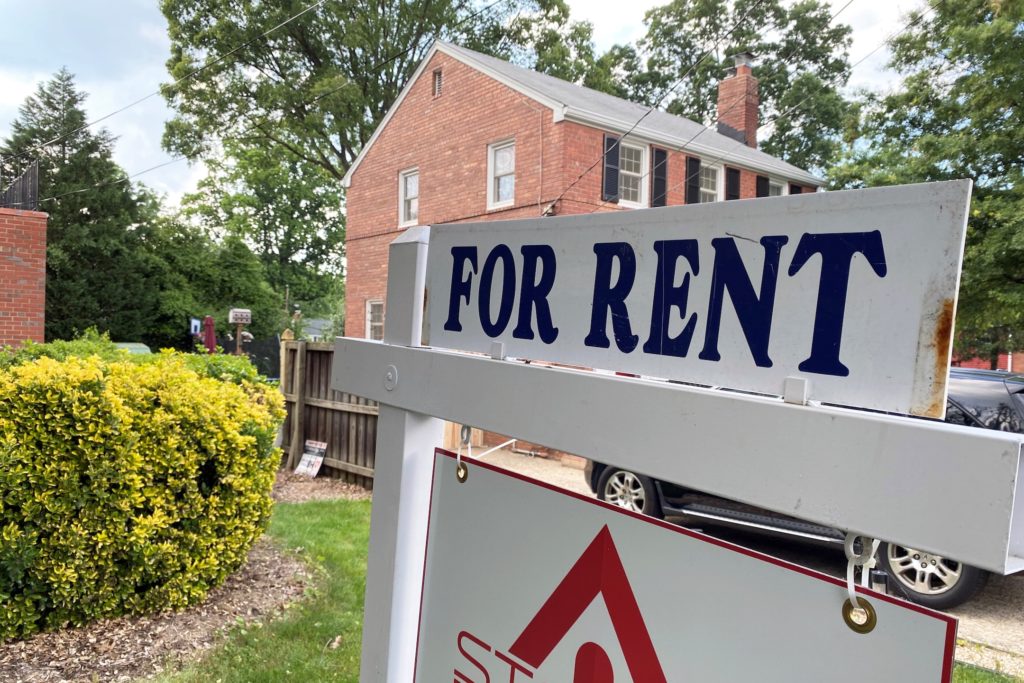
Congress passed the first major housing bill in decades on Tuesday. While it might move the needle on affordability for some Americans, the landmark legislation does not provide enough relief to renters most in need, experts say.
"It's been 30 years since we've done real substantive affordable housing legislation. For many of us, it's the first affordable housing bill in our lifetime," said David M. Dworkin, president and CEO of the National Housing Conference.
Educate your inbox
Subscribe to Here’s the Deal, our politics newsletter for analysis you won’t find anywhere else.
The House overwhelmingly approved the final version of the bill Tuesday. The 21st Century ROAD to Housing Act is the result of months of negotiation between both chambers of Congress. The bill scales back regulations and aligns incentives to encourage more homebuilding, while placing limits on corporate investors who buy up single-family homes to convert to rentals. Though President Donald Trump canceled Wednesday's signing ceremony for the legislation, House Speaker Mike Johnson said he expects the president to sign it in the coming days.
Watch the segment in the player above.
Yet most of the provisions in the bipartisan bill "are not targeted at extremely low-income renters," said Libby O'Neill, senior public policy analyst at the National Low Income Housing Coalition. The organization supports the bill overall, including many of its individual provisions, but "so much more investment is needed in programs" for the lowest-income renters, she added.
Extremely low-income renters, or those who earn at or below federal poverty guidelines or 30% of their area's median income, have the fewest options for affordable housing, according to a National Low Income Housing Coalition report released in March. Nationally, there are 11 million extremely low-income households competing for only 3.8 million rental homes that are available and affordable.
On the whole, the bill strives to increase the U.S. housing supply, which suffered more than a decade of underbuilding after the Great Recession, according to Harvard University's Joint Center for Housing Studies' annual 2026 housing report.
PBS News spoke with housing experts on how the bill can address the needs of lowest-income households and where the legislation falls short.
Why there are fewer housing options for renters with low incomes
The federal government sets income thresholds for "low-income," "very low-income" and "extremely low-income" renters, with each group qualifying for different assistance programs.
- Low-income households have incomes at or below 80% their area's median income.
- Very low-income households have incomes at or below 50% their area's median income.
- Extremely low-income households have incomes at or below the either 30% of their area's median income or the federal poverty level, whichever is greater.
Most new construction is unaffordable to low-income renters, and even to households making the area's median income, according to Harvard's report.
At the same time, the supply of existing affordable housing is shrinking, the report noted.
The number of units available to rent for less than $1,000 per month, adjusted for inflation, dropped by more than 30% between 2014 and 2024. This meant the stock of low-rent homes was reduced by more than 7 million units, the report found.
Meanwhile, the supply of higher-rent units grew by 46% during that same period, especially homes renting for more than $2,000 per month.
READ MORE: Is the 30% rule for rent still relevant? Here's what experts think
No state in the nation had enough affordable and available rental homes for extremely low-income renters as of 2024, the National Low Income Housing Coalition report found.
Adding to that strain is how much a household's income goes to rent and utilities. Eighty-three percent of renters earning under $30,000 per year in 2024 were cost-burdened, meaning more than 30% of their income went to rent and utilities, while two-thirds — 67% — were severely cost-burdened, or spent at least half their income on rent and utilities, Harvard found.
"That's growing too, which is really a red flag," said Daniel McCue, senior research associate at the Joint Center for Housing Studies.
There's optimism over some provisions
Affordable housing is a major concern for Americans right now. A recent poll from the Bipartisan Policy Center found that 79% of voters said housing was an "extremely or very important issue," while 83% said they agreed that "Congress should take action now to make housing more affordable."
The 21st Century ROAD to Housing Act is enormous, containing almost 60 separate provisions largely designed to make it easier to build, buy and rent homes.
While the final bill isn't directly intended for extremely low-income renters, there are some aspects that could be helpful to them, O'Neill said.
One provision — the Choice in Affordable Housing Act — is meant to speed up the Department of Housing and Urban Development inspection processes for homes financed through some federal programs. These units would automatically meet certain inspection requirements if they passed an inspection within the past year.
This would reduce the wait times to move into housing for many low-income renters who rely on government assistance in the form of Housing Choice Vouchers, O'Neill said.
"Sometimes it can take a really long time for them to get into units and so this does some streamlining," she said.
The Reforming Disaster Recovery Act directs federal disaster recovery resources to people with lower incomes. Previous versions of the housing package permanently authorized the funding, but the final text authorizes it for only three years.
Extending HUD's disaster recovery program has been one of the National Low Income Housing Coalition's top priorities "forever," O'Neill said, adding they were "really, really glad" to see it in the final version of the bill. Over the next three years, advocates will push for permanent authorization, she added.
Another provision that could reduce housing costs is the Housing Supply Expansion Act, Dworkin said, which removes a federal requirement that manufactured housing have a permanent chassis, or heavy frame that allows the home to be transportable. Removing the chassis requirement could reduce the cost of each manufactured home by $5,000 to $10,000, according to Niskanen Center, a Washington-based think tank.
"Many manufactured homes are installed on a permanent foundation once they arrive at their destination and are never moved again," and still need to meet a chassis requirement, leading to possible "unnecessary costs," according to the Bipartisan Policy Center.
By expanding the definition, manufactured housing components could be brought in separately and put together "like pieces of a puzzle," Dworkin said.
A 'fairly limited impact' for extremely low-income renters
Each individual provision is important to the people's specific situations, but the bill as a whole has a "fairly limited impact on affordability for the lowest-income folks in the country," said Shamus Roller, CEO of the National Housing Law Project.
The bill's provisions aren't the kinds of sweeping policy changes many affordable housing advocates say will help dramatically reduce housing costs, Roller said. Those would include actions like massive tax reform to change how people invest in housing or a major investment by the federal government into subsidized housing programs.
The bill is also geared toward homeowners, not renters, Roller said. There are aspects of the bill that might help low-income homeowners, such as the Whole-Home Repairs Act, a pilot program that will help repair or upgrade eligible aging homes.
But most extremely low-income households are renters, not homeowners, O'Neill said. Only 25% of people who make $25,000 yearly or less own their homes, according to a 2025 report from the Federal Reserve.
Finally, many pieces of the legislation will require implementation from the now-diminished HUD. Just under a third of HUD's employees have left since September 2024, according to the Partnership for Public Service.
Support trusted journalism and civil dialogue.
Badenoch blasts 'moaning' female Labour MPs over Burnham jobs 'quota'

Kemi Badenoch has told Labour women to earn a job in Andy Burnham's Cabinet instead of demanding they are handed jobs because of their gender.
The Tory leader lashed out today amid reports that female MPs are demanding the de-facto new prime minister introduce a 50:50 gender split 'quota' in his government.
Amid reports that former foreign secretary David Miliband is being lined up to return to the role, possibly with his brother Ed as Chancellor, one female minister also complained that Burnham could not have 'more Milibands than women' in the top posts.
But in a scathing article in the Times today Mrs Badenoch told them to 'stop moaning' and get chosen on merit instead of retreating into 'more of the failed identity politics that is holding back our country'.
'There are many, many reasons why you shouldn't have any Milibands in the cabinet,' she said.
'But complaining that the boys haven't given them the right jobs or that the boys are taking all the jobs, just shows that Labour's women still don't get it.'
The idea of quotas was also attacked by Baroness Jacqui Smith, Labour's Skills Minister.
Asked by Times Radio if Mr Burnham should reserve jobs for women, she said: 'No, I think what Andy Burnham should be doing is building the very best team around him to change this country.'

A letter written by the Women's Parliamentary Labour Party has called on Mr Burnham to ensure a 50:50 split between men and women in government jobs

Amid reports that former foreign secretary David Miliband (above, right, in 2010) is being lined up to return to the role, possibly with his brother Ed as Chancellor, one female minister complained that Burnham could not have 'more Milibands than women' in the top posts

But Mrs Badenoch told them to pipe down and get chosen on merit instead of retreating into 'more of the failed identity politics that is holding back our country'
A letter written by the Women's Parliamentary Labour Party and seen by the BBC has called on Mr Burnham to ensure a 50:50 split between men and women in government jobs after he succeeds Sir Keir Starmer.
'We are asking you to demonstrate this change from day one and address the toxicity and misogyny within our own party and government,' it said.
Labour has never had a female leader, while the Conservatives have had three, and Mrs Badenoch urged the government to follow its meritocratic example.
'If you run a meritocracy, then you do not have to worry about jobs for the boys,' she wrote.
'Every woman who is a Conservative MP, every woman who has ever won the leadership, has had to fight to get where she is.
'By contrast, Labour women are demanding guarantees from Burnham. But the truth is he doesn't have to give any guarantees.
'If none of Labour's women are prepared to get their hands dirty and challenge him for the leadership, their demands are toothless.'
'In fact, it's quite revealing that the women's parliamentary Labour Party has written to Burnham asking him to commit himself to at least 50 per cent female ministers.
'This has nothing to do with meritocracy. It is yet more of the failed identity politics that is holding back our country.'