Teaching the Declaration of Independence with hashtags 250 years later
 U.S.
U.S.
Teaching the Declaration of Independence with hashtags 250 years later
By Cara Tabachnick News Editor Cara Tabachnick is a news editor at CBSNews.com. Cara began her career on the crime beat at Newsday. She has written for Marie Claire, The Washington Post and The Wall Street Journal. She reports on justice and human rights issues. Contact her at [email protected] Read Full Bio Cara TabachnickJune 29, 2026 / 10:12 AM EDT / CBS News
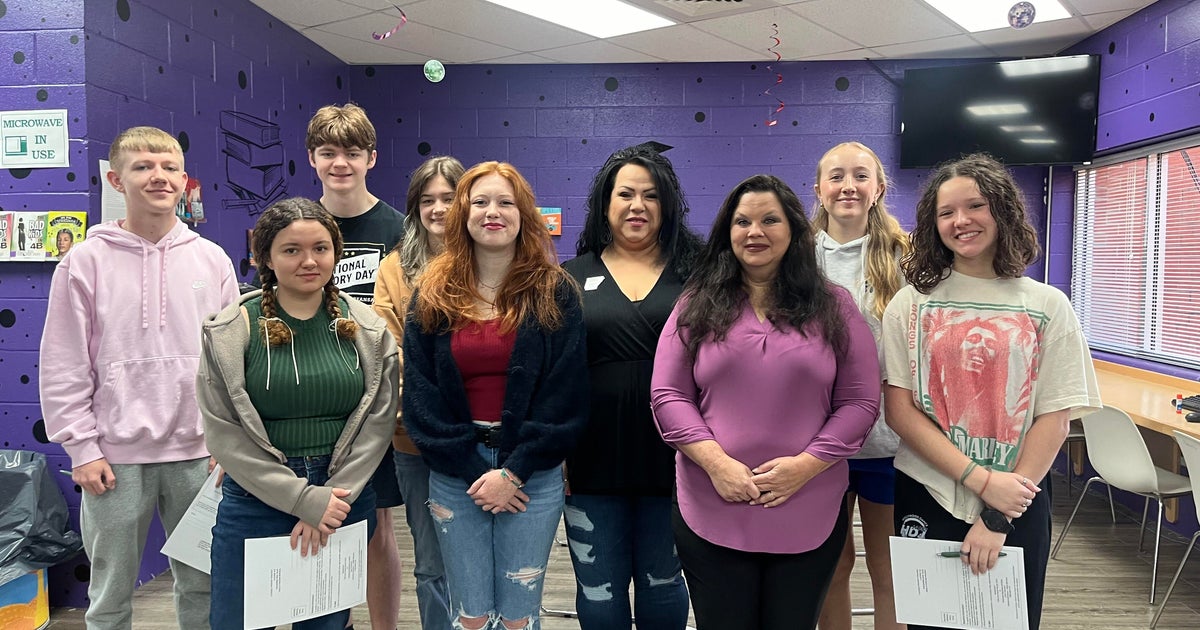
Add CBS News on GoogleJessica Culver teaches her students to understand history with hashtags. It is one of the innovative ways the social studies teacher engages her classes of 11th and 12th grade students in rural Ozarks while studying a 250-year-old subject: the Declaration of Independence.
Culver, who has taught civic education for more than a decade, asks her students to think about the revolutionary period through the modern-day lens of social media. A student wrote the tweet, "The DOI has been approved! #newcountry #finallyfree" to mark the excitement felt in the colonies after the ratification of the founding document.
"How would we tell people about it if we were posting on social media? If you were making a TikTok about the Boston Tea Party, what would you say?" Culver said she would ask her students at Ozark High School in Arkansas as they learned about the events that led to the signing of the Declaration of Independence. She said it helps create a connection to past events that still shape our lives today.
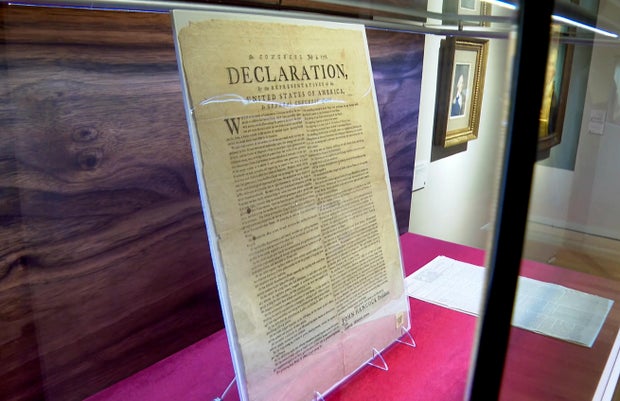
As the country celebrates the 250th anniversary of the signing of the Declaration of Independence on July Fourth, educators, civic organizations, leaders and citizens are finding ways to engage Americans around the signing of the document, which guaranteed the new nation's freedoms.
The declaration, primarily written by Thomas Jefferson and signed by 56 people, including founding figures John Adams, Samuel Adams, Benjamin Franklin, John Hancock and Jefferson. The opening line starts with "We hold these truths to be self-evident, that all men are created equal," which cements the principles on which our government and our identity as Americans are based.
"Our nation's origin story"
Understanding its importance is central for the next generation because "it's our nation's origin story, our shared inheritance," said Emma Humphries, the chief education officer at iCivics, a nonpartisan organization founded by Supreme Court Justice Sandra Day O'Connor to advance civic learning. More than 140,000 teachers use iCivics material annually, and more than 9 million students play its games each year.
The organization launched two initiatives to bring the founding document to life: Civic Star Challenge, which allows teachers from all 50 states to apply for stipends for their classrooms, and the Investigation Declaration, an interactive game students can play to learn about the document.
Users dive into a game featuring "an international crime of epic proportions" in which criminals aim to destroy documents related to freedom, democracy and rights. A series of adventures might save the Declaration of Independence from being harmed. But the point of the game, Humphries explained, is to show that these ideas aren't just what's printed on paper; it's the principles and the promises embedded in the documents that endure forever.
"It's meant to take what can feel really dry and abstract and make it a little goofy and meaningful and relevant for young people," Humphries said.
Julie Silverbrook, chief learning and content officer at the National Constitution Center in Philadelphia, focuses on ways to bring the entire family together to learn about the Declaration through games, play and media.
The center issued a special edition of the Trivial Pursuit game for America's 250th anniversary, which she said was popular. She pointed to an interactive online platform for full annotated text, audio narration, original document images and videos to learn more. There's also a podcast about the ideas at the heart of the founding document.
But the message Silverbrook wanted to impart most was that "July Fourth should not be an endpoint — it should be a starting line" for families interested in learning about the founding documents and ideals of America.
The purpose of government
The Democratic Knowledge Project works with partners and schools across Massachusetts to develop and pilot curriculum and professional development around learning about the importance of the Declaration of Independence.
Adrianne Billingham Bock, director of curriculum and implementation, told CBS News there is "deep value in students learning, reading, exploring, uncovering the Declaration because of its really deep civic concepts within it."
Through the language of the Declaration of Independence, Billingham Bock said, students can think about the purpose of government, what it is supposed to be doing, what it can be doing and what choices can be made "if the government isn't living up to its values or isn't doing what it's supposed to be doing."
Culver, the Arkansas teacher, said she wants her students to try to place themselves in the struggles of America's founders, so they can understand how difficult it was to overthrow the British government and become a new nation.
She said they listen to celebrities reading the Declaration and Constitution, and she brings in outside speakers to the classroom. Students write letters to their senators, learning how to engage respectfully with a "civic voice" and how to interact with leaders, Culver said. They also look at ways they can be leaders themselves.
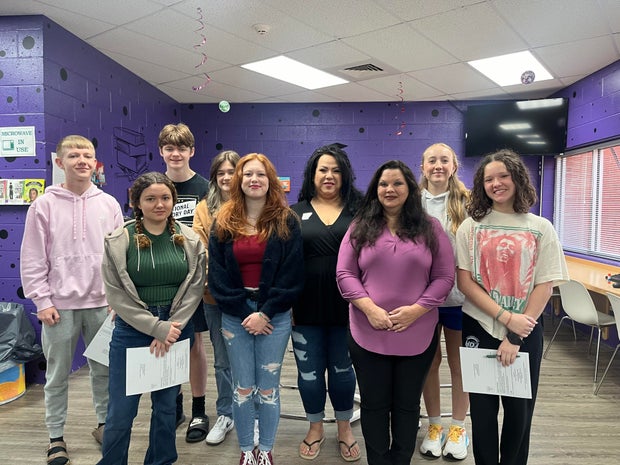
Students organize a voter registration drive from the county clerk's office. "That's the Declaration in action in their community," she said.
Young people need to get out and participate in civic duty to feel what the Declaration of Independence meant — and still means today, she said.
"The Declaration is a continuous document that they're living as 17-year-olds in Ozark, Arkansas," Culver said.
Join CBS for "The Great American Block Party 250," a primetime special on Saturday, July 4, hosted by CBS Evening News anchor Tony Dokoupil and Entertainment Tonight's Nischelle Turner, featuring live musical performances, celebrations around the country, and the largest fireworks show in history in the skies over the nation's capital. Tune in July 4 at 8 p.m. ET on CBS and stream it on Paramount+ and CBS News 24/7.
Badenoch blasts 'moaning' female Labour MPs over Burnham jobs 'quota'

Kemi Badenoch has told Labour women to earn a job in Andy Burnham's Cabinet instead of demanding they are handed jobs because of their gender.
The Tory leader lashed out today amid reports that female MPs are demanding the de-facto new prime minister introduce a 50:50 gender split 'quota' in his government.
Amid reports that former foreign secretary David Miliband is being lined up to return to the role, possibly with his brother Ed as Chancellor, one female minister also complained that Burnham could not have 'more Milibands than women' in the top posts.
But in a scathing article in the Times today Mrs Badenoch told them to 'stop moaning' and get chosen on merit instead of retreating into 'more of the failed identity politics that is holding back our country'.
'There are many, many reasons why you shouldn't have any Milibands in the cabinet,' she said.
'But complaining that the boys haven't given them the right jobs or that the boys are taking all the jobs, just shows that Labour's women still don't get it.'
The idea of quotas was also attacked by Baroness Jacqui Smith, Labour's Skills Minister.
Asked by Times Radio if Mr Burnham should reserve jobs for women, she said: 'No, I think what Andy Burnham should be doing is building the very best team around him to change this country.'

A letter written by the Women's Parliamentary Labour Party has called on Mr Burnham to ensure a 50:50 split between men and women in government jobs

Amid reports that former foreign secretary David Miliband (above, right, in 2010) is being lined up to return to the role, possibly with his brother Ed as Chancellor, one female minister complained that Burnham could not have 'more Milibands than women' in the top posts

But Mrs Badenoch told them to pipe down and get chosen on merit instead of retreating into 'more of the failed identity politics that is holding back our country'
A letter written by the Women's Parliamentary Labour Party and seen by the BBC has called on Mr Burnham to ensure a 50:50 split between men and women in government jobs after he succeeds Sir Keir Starmer.
'We are asking you to demonstrate this change from day one and address the toxicity and misogyny within our own party and government,' it said.
Labour has never had a female leader, while the Conservatives have had three, and Mrs Badenoch urged the government to follow its meritocratic example.
'If you run a meritocracy, then you do not have to worry about jobs for the boys,' she wrote.
'Every woman who is a Conservative MP, every woman who has ever won the leadership, has had to fight to get where she is.
'By contrast, Labour women are demanding guarantees from Burnham. But the truth is he doesn't have to give any guarantees.
'If none of Labour's women are prepared to get their hands dirty and challenge him for the leadership, their demands are toothless.'
'In fact, it's quite revealing that the women's parliamentary Labour Party has written to Burnham asking him to commit himself to at least 50 per cent female ministers.
'This has nothing to do with meritocracy. It is yet more of the failed identity politics that is holding back our country.'