Supreme Court rejects Trump's attempt to fire Fed's Lisa Cook as legal battle continues
 Politics
Supreme Court rejects Trump's attempt to fire Fed's Lisa Cook as legal battle continues
By Melissa Quinn Senior Reporter, Politics Melissa Quinn is a senior reporter for CBSNews.com, where she covers U.S. politics, with a focus on the Supreme Court and federal courts. Read Full Bio Melissa QuinnUpdated on: June 29, 2026 / 10:52 AM EDT / CBS News
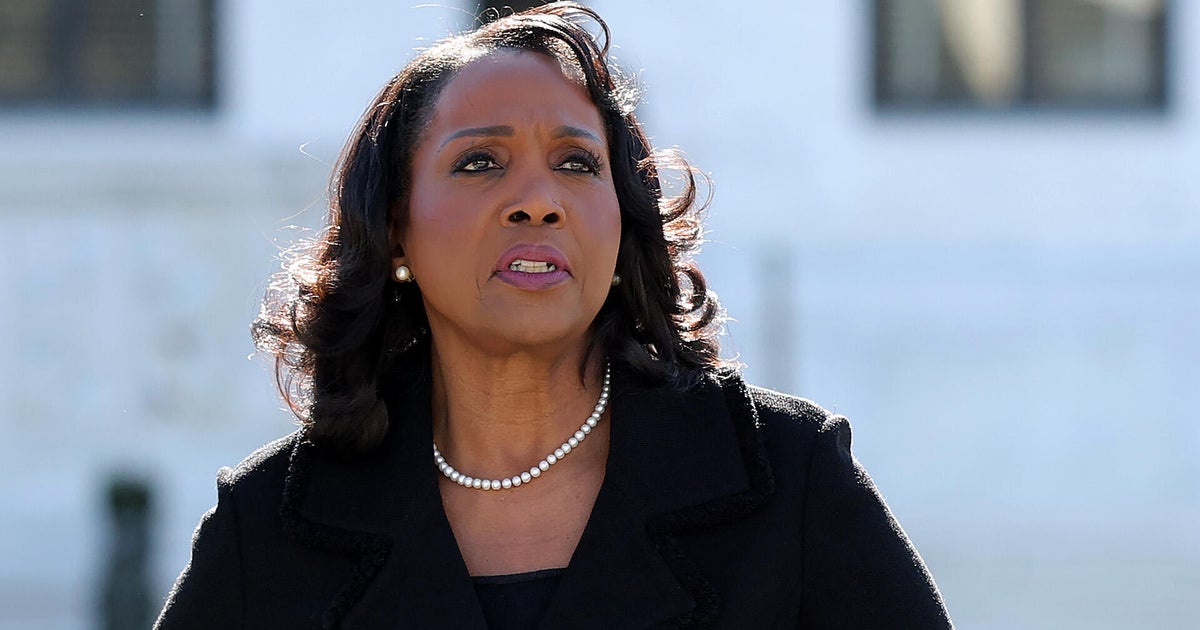
Add CBS News on GoogleWashington — The Supreme Court on Monday allowed Lisa Cook to continue in her post as a member of the Federal Reserve Board of Governors while legal proceedings over President Trump's attempt to fire her continue.
In a 5 to 4 decision, the high court rejected the president's bid to allow him to oust Cook from her role as Fed governor following allegations of mortgage fraud. Mr. Trump first came to the Supreme Court for emergency relief last September, and the justices had let Cook remain in her job at the central bank while they considered whether to freeze a lower court decision that blocked her firing.
The Supreme Court has now left that lower court decision intact while Cook's legal challenge to her removal proceeds.
Chief Justice John Roberts wrote the opinion for the majority, joined by Justices Sonia Sotomayor, Elena Kagan, Brett Kavanaugh and Ketanji Brown Jackson.
To accept the government's arguments that Mr. Trump can fire Cook "would in effect transform the Federal Reserve's for-cause protection into at-will employment — an interpretive leap out of step with the statute Congress enacted and our Nation's tradition of central banking protected from political interference," the chief justice wrote.
The court's decision is narrow and declines to define what constitutes "cause" under the federal law that created the Fed. It said such a definition must reflect the central bank's "unique historical status and role."
The Supreme Court did, however, find that Mr. Trump failed to afford Cook the procedural protections that she was entitled to under the law — namely notice and the opportunity to respond to the allegations leveled against her before she was fired.
"At minimum, Cook was entitled to some explanation of the evidence at issue, some avenue for a response, and a deadline by which a response would be due," Roberts wrote. "Because Cook did not receive such process, her removal was 'erroneous and void' from the start."
Mr. Trump moved to fire Cook from the Fed Board last August, a move that was without precedent across the central bank's 112-year history. It came amid similar efforts to fire officials appointed by Democrats at a slew of multi-member independent agencies, and as Mr. Trump frequently voiced frustrations with the Fed's interest rate decisions.
The president claimed Cook made misrepresentations on mortgage filings related to two properties, one in Michigan and another in Georgia, before she was nominated to the Fed by President Joe Biden in 2021. In a letter posted to Truth Social announcing her purported firing, Mr. Trump said he had "sufficient cause" to remove Cook because of what he claimed was "deceitful and potentially criminal conduct in a financial matter."
Cook has denied wrongdoing and has not been charged with a crime. She swiftly filed a lawsuit to challenge her removal, arguing that Mr. Trump violated the Federal Reserve Act. That law, enacted in 1913, gives the president the authority to remove a Fed governor "for cause," though the term is not defined.
Cook also argued Mr. Trump's actions violated her due process rights because she was not afforded notice of the claims against her and the opportunity to respond before she was fired.
A federal judge ordered Cook to be reinstated and found that Mr. Trump had not validly removed her for cause. U.S. District Judge Jia Cobb also said Cook was likely to succeed on her argument that she was deprived of her due-process rights because she did not receive notice and the opportunity to be heard.
A divided panel of three judges on the U.S. Court of Appeals for the District of Columbia continued to allow Cook to remain at the Fed. The Trump administration then turned to the Supreme Court for emergency relief.
Unlike with officials at other independent agencies, the Supreme Court let Cook continue in her position as a Fed governor while it considered whether to grant Mr. Trump's request to fire her. In other cases, the high court allowed the president to remove members of the National Labor Relations Board, Merit Systems Protection Board and Consumer Product Safety Commission while they pursued litigation.
The Supreme Court also let Mr. Trump fire Rebecca Slaughter from the Federal Trade Commission and heard arguments in December over the constitutionality of a federal law that limits the president's ability to remove members of the FTC to instances of inefficiency, neglect of duty or malfeasance in office.
The decision from the Supreme Court came at the same time that it ruled in the president's favor in the Slaughter case, expanding executive power over those bodies. In an opinion also authored by Roberts, the court's conservative majority struck down removal protections for members of the FTC, a ruling that could have ramifications for similar agencies.
The high court had indicated before that it views the Fed differently than other independent agencies. In a May 2025 decision allowing Mr. Trump to oust two members of the two labor boards, the Supreme Court singled out the central bank as a "uniquely structured, quasi-private entity that follows in the distinct historical tradition of the First and Second Banks."
The dispute over Cook's firing raised concerns that a decision from the Supreme Court allowing her removal by the president would damage the Fed's independence. Looming over the arguments in January was a Justice Department investigation into then-Fed Chairman Jerome Powell stemming from renovations to the central bank's Washington, D.C., headquarters. Days before the Supreme Court convened to weigh Cook's case, Powell revealed that the central bank had received grand jury subpoenas.
A federal judge blocked the subpoenas in March and rejected Justice Department efforts to revive them in early April. U.S. Attorney Jeanine Pirro, whose office in Washington, D.C., was leading the investigation involving Powell, then announced her office would be closing the probe.
Mr. Trump had repeatedly attacked Powell over the scope and timing of interest-rate cuts. Powell's term as Fed chairman expired in mid-May, and Kevin Warsh took over the role shortly after.
Badenoch blasts 'moaning' female Labour MPs over Burnham jobs 'quota'

Kemi Badenoch has told Labour women to earn a job in Andy Burnham's Cabinet instead of demanding they are handed jobs because of their gender.
The Tory leader lashed out today amid reports that female MPs are demanding the de-facto new prime minister introduce a 50:50 gender split 'quota' in his government.
Amid reports that former foreign secretary David Miliband is being lined up to return to the role, possibly with his brother Ed as Chancellor, one female minister also complained that Burnham could not have 'more Milibands than women' in the top posts.
But in a scathing article in the Times today Mrs Badenoch told them to 'stop moaning' and get chosen on merit instead of retreating into 'more of the failed identity politics that is holding back our country'.
'There are many, many reasons why you shouldn't have any Milibands in the cabinet,' she said.
'But complaining that the boys haven't given them the right jobs or that the boys are taking all the jobs, just shows that Labour's women still don't get it.'
The idea of quotas was also attacked by Baroness Jacqui Smith, Labour's Skills Minister.
Asked by Times Radio if Mr Burnham should reserve jobs for women, she said: 'No, I think what Andy Burnham should be doing is building the very best team around him to change this country.'

A letter written by the Women's Parliamentary Labour Party has called on Mr Burnham to ensure a 50:50 split between men and women in government jobs

Amid reports that former foreign secretary David Miliband (above, right, in 2010) is being lined up to return to the role, possibly with his brother Ed as Chancellor, one female minister complained that Burnham could not have 'more Milibands than women' in the top posts

But Mrs Badenoch told them to pipe down and get chosen on merit instead of retreating into 'more of the failed identity politics that is holding back our country'
A letter written by the Women's Parliamentary Labour Party and seen by the BBC has called on Mr Burnham to ensure a 50:50 split between men and women in government jobs after he succeeds Sir Keir Starmer.
'We are asking you to demonstrate this change from day one and address the toxicity and misogyny within our own party and government,' it said.
Labour has never had a female leader, while the Conservatives have had three, and Mrs Badenoch urged the government to follow its meritocratic example.
'If you run a meritocracy, then you do not have to worry about jobs for the boys,' she wrote.
'Every woman who is a Conservative MP, every woman who has ever won the leadership, has had to fight to get where she is.
'By contrast, Labour women are demanding guarantees from Burnham. But the truth is he doesn't have to give any guarantees.
'If none of Labour's women are prepared to get their hands dirty and challenge him for the leadership, their demands are toothless.'
'In fact, it's quite revealing that the women's parliamentary Labour Party has written to Burnham asking him to commit himself to at least 50 per cent female ministers.
'This has nothing to do with meritocracy. It is yet more of the failed identity politics that is holding back our country.'