SCOTUS strikes down limits on campaign spending, overturning 25-year precedent

OAN Staff Addie Davis
12:11 PM – Tuesday, June 30, 2026
The Supreme Court of the United States (SCOTUS) struck down restrictions on campaign spending for political parties, overturning 25 years of court precedent.
In the 6-3 decision on Tuesday, the court ruled that the Federal Election Campaign Act (FECA), by limiting coordinated-expenditure with candidates by a political party, violated the First Amendment of the United States Constitution, overruling the 2001 decision by SCOTUS in Federal Election Commission v. Colorado Republican Federal Campaign Committee (Colorado II).
“This Court has determined that political parties—as well as candidates, private individuals, and outside groups—may make unlimited independent expenditures during political campaigns,” the court stated.
President Donald Trump hailed the decision as a huge win for Republicans.
“The Supreme Court just took restrictions off political spending! A BIG WIN FOR REPUBLICANS and, more importantly, THE FIRST AMENDMENT!” Trump posted to Truth Social on Tuesday.
The Supreme Court just took restrictions off political spending! A BIG WIN FOR REPUBLICANS and, more importantly, The First Amendment! President DONALD J. TRUMP
— Commentary Donald J. Trump Truth Social Posts On X (@TrumpTruthOnX) June 30, 2026
( TS: Jun 30 2026, 10:56 AM ET )… pic.twitter.com/5XRVx057rX
The court explained that the ruling “treats all political parties equally,” noting that it allows all political parties “to participate more freely and compete more fully in the political process, and to coordinate more closely with their candidates.”
According to court precedents, “only one constitutionally permissible government objective for campaign finance restrictions” is recognized, “preventing corruption or the appearance of corruption,” specifically in “quid pro quo” situations.
The court also found that other legal safeguards remained in place to protect against corruption, including rules regarding “earmarking” of funds and campaign finance disclosure laws.
“Importantly, it is the combination of the base contribution limits plus the earmarking rules plus the disclosure requirements together that serve the Government’s anti-circumvention interests here—without unduly restricting core political party speech,” the court said.
Writing for the three dissenting justices, Justice Elena Kagan argued, however, that overruling the 2001 precedent would effectively dismantle other campaign finance guardrails by creating an easy loophole for avoiding spending limits.
“It would then be as though the candidate contribution limits did not exist. The donor could give far more to the party than to the candidate directly, understanding that the money would be passed through to the candidate,” the joint opinion read.
Kagan wrote further that the result of the ruling would be “a legal regime increasingly unable to stop political corruption, and thus to preserve our institutions’ democratic legitimacy.”
The Supreme Court also handed down other pivotal rulings on Tuesday, including upholding the modernized, Democrat-led interpretation of birthright citizenship and state laws banning biological males with gender dysphoria from competing in female sports.
Stay informed! Receive breaking news alerts directly to your inbox for free. Subscribe here. https://www.oann.com/alerts
What do YOU think? Click here to jump to the comments!
Sponsored Content Below
Share this post!
LeBron James next team: Which landing spot would be the most entertaining? Experts make their picks
LeBron James' tenure with the Los Angeles Lakers came to an end Tuesday, hours before the start of free agency, when he told the team he would sign elsewhere this summer. James, who signed with the Lakers in 2018, spent eight seasons with the historic franchise -- longer than his first stint with the Cleveland Cavaliers -- and led them to the 2020 NBA title.
"LeBron James is one of the greatest athletes in history. We will always be thankful for his eight years with the Lakers -- including the title he led us to in 2020 under the toughest imaginable circumstances and the countless records he broke in purple and gold," Lakers governor Jeanie Buss said in a statement. "We wish him all the best in the future, both on the court and off. He will always be a cherished part of the Lakers family."
James, 41, will begin his historic 24th season in a different jersey, though perhaps not a new one. Both the Cavaliers and Miami Heat will be in the mix to sign James, as will the Golden State Warriors, who appear to be the favorites. Earlier this week, our experts predicted where James will play next season. But where do they want him to play?
As James prepares for his latest decision, here are the teams our experts think would be most fun as landing spots:
Favorite landing spots for LeBron James
 |
 |
 |
 | |
|---|---|---|---|---|
 |
 |
 |
|

Denver Nuggets
Maloney: LeBron is not going to sign with the Nuggets, but this is not a predictions post. If I could place James anywhere, it would be Denver for the simple reason that I would love to see what it would look like with James and Nikola Jokić -- two of the smartest basketball players who have ever lived -- on the same team. It wouldn't be a perfect fit, in large part because they're both at their best when they're running the show, but that would only make it more interesting. How would two of the game's best problem solvers figure out how to play together? At the very least, some of the highlights we'd get from James cutting baseline or running in transition off Jokic's passes would be incredible. And best-case scenario, James would give the Nuggets a real chance to compete with the San Antonio Spurs and Oklahoma City Thunder in the Western Conference.
How much can your NBA team pay LeBron James next season? Complete cap salary guide with The King on the move Sam Quinn
Golden State Warriors
Gonzalez: LeBron and Steph Curry teaming up is the giant what-if basketball fans have been fantasizing about forever -- and now it's close to becoming a reality. We got a little taste of it during the Olympics, but that appetizer wasn't quite enough to satiate the hunger for more. LeBron will be 42 in December. Steph will turn 38 in March. I'd love for them to play well into their mid-to-late 40s and do the old-guys-at-the-Y routine, but that seems unlikely. Which is why we need this to happen sooner rather than later, because later is coming up at breakneck speed, and they'll both be gone before we know it. Before that happens, let's have one season of them joining forces -- at least.
Salerno: The duo of Curry and James would be box office. We saw how dynamic those players are together at the Olympics a few years ago. It would pair two of the most impactful players of this generation together. It's a rare opportunity any casual fan would want to see. Steph and LeBron deserve to end their respective careers on a high note. Now, are the Warriors title contenders with that duo? Maybe. They wouldn't be better than OKC or San Antonio, but having Steph and LeBron together and healthy would at least give you a chance in any playoff series.

San Antonio Spurs
Kalland: There is one person in the league who truly understands what Victor Wembanyama is going through right now: LeBron James. He could go to San Antonio and take on a mentorship role for the next face of the league while also contributing in a much-needed on-court role for a championship contender. Seeing LeBron and Wemby together wouldn't just be incredible to watch, but it would make the Spurs the outright title favorites next year. We saw this past postseason that the Spurs desperately need a steady-handed creator for late-game situations, and LeBron would fill that hole in their roster perfectly. James has reportedly said he'll make this decision based on happiness. That likely points him toward Cleveland or Golden State, but I'd argue that nothing has ever made LeBron James happier as a basketball player than winning. The best place to do that is in San Antonio, with the added bonus of getting access to Gregg Popovich's wine cellar.
Add CBS Sports on GoogleKathie Lee Gifford Reveals If She’ll Marry Again After Husband Frank’s Death: ‘I Don’t Want to Date’
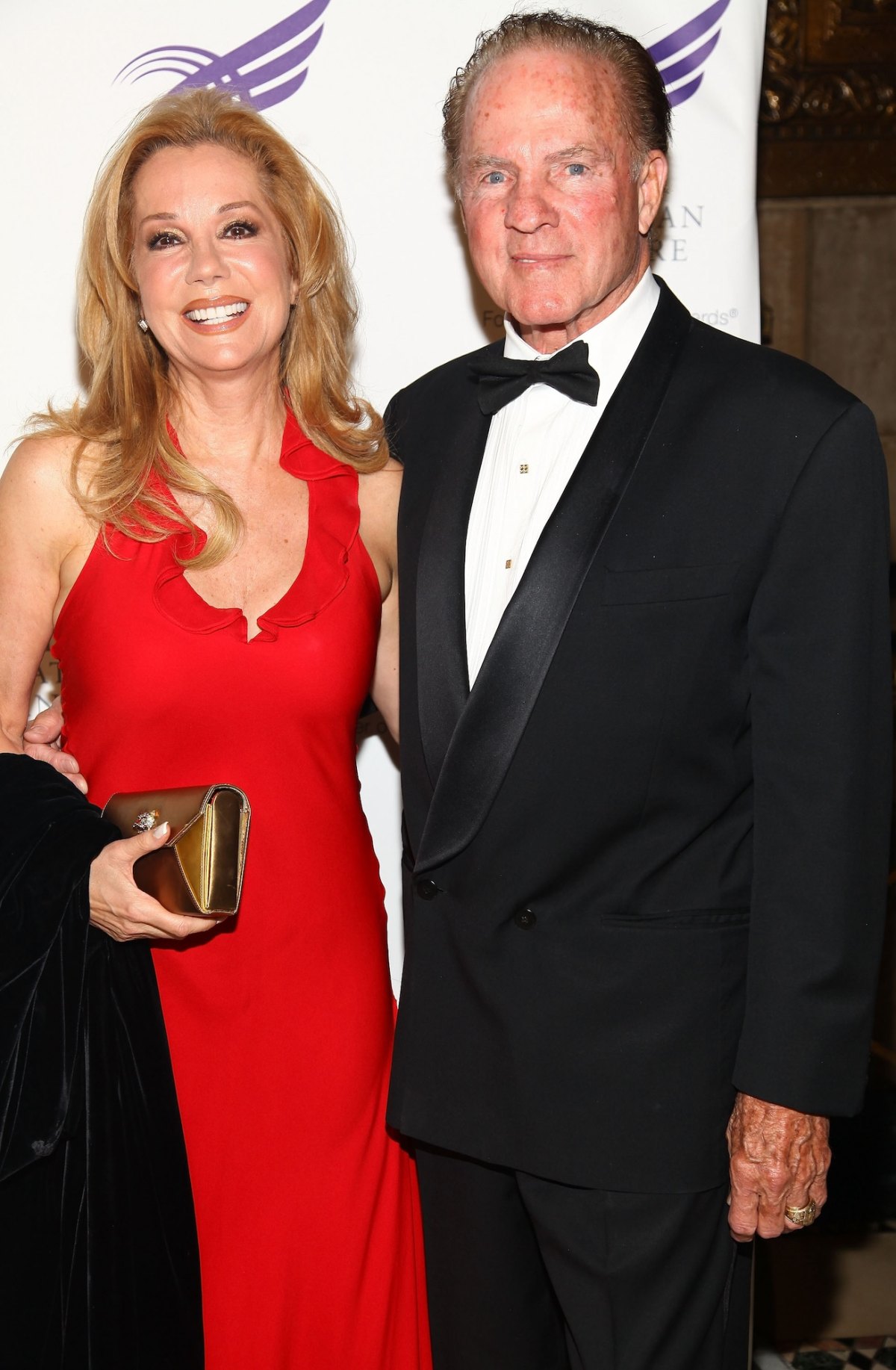
Kathie Lee Gifford is giving fans a candid update on her love life more than a decade after the death of her late husband, Frank Gifford.
“I am not dating anybody right now, and I don’t want to date,” Kathie Lee, 44, said in an interview with People published on Tuesday, June 30. “I’m not looking, and I don’t think I’ll ever get married again.”
Frank died on August 9, 2015, one week before his 85th birthday. The former NFL player and Kathie Lee were married for 29 years, tying the knot in October 1986 and welcoming two children, son Cody, 35, and daughter Cassidy, 32, while they were together.
Kathie Lee met Frank when she worked at Good Morning America in 1982. They went through a rocky patch in 1997, when he publicly admitted he had been unfaithful. The former TV host reconciled with her husband and together they worked to “heal” their marriage.
Related: Hoda Kotb Gives a New Update on Former ‘Today’ Cohost Kathie Lee Gifford
It’s been nearly five years since Kathie Lee Gifford signed off on Today, but she’s still in touch with former cohost Hoda Kotb. On the Wednesday, January 10, episode of Today with Hoda and Jenna, Kotb, 59, gave an update about the beloved former talk show anchor. “By the way, Kat’s living her best life, […]While sharing her thoughts on potentially walking down the wedding aisle again, Kathie Lee said, “I had an opportunity for that to maybe happen, and it didn’t work out.”
The former Today host last dated Nashville-based businessman Richard Spitz from late 2021 until early 2024.
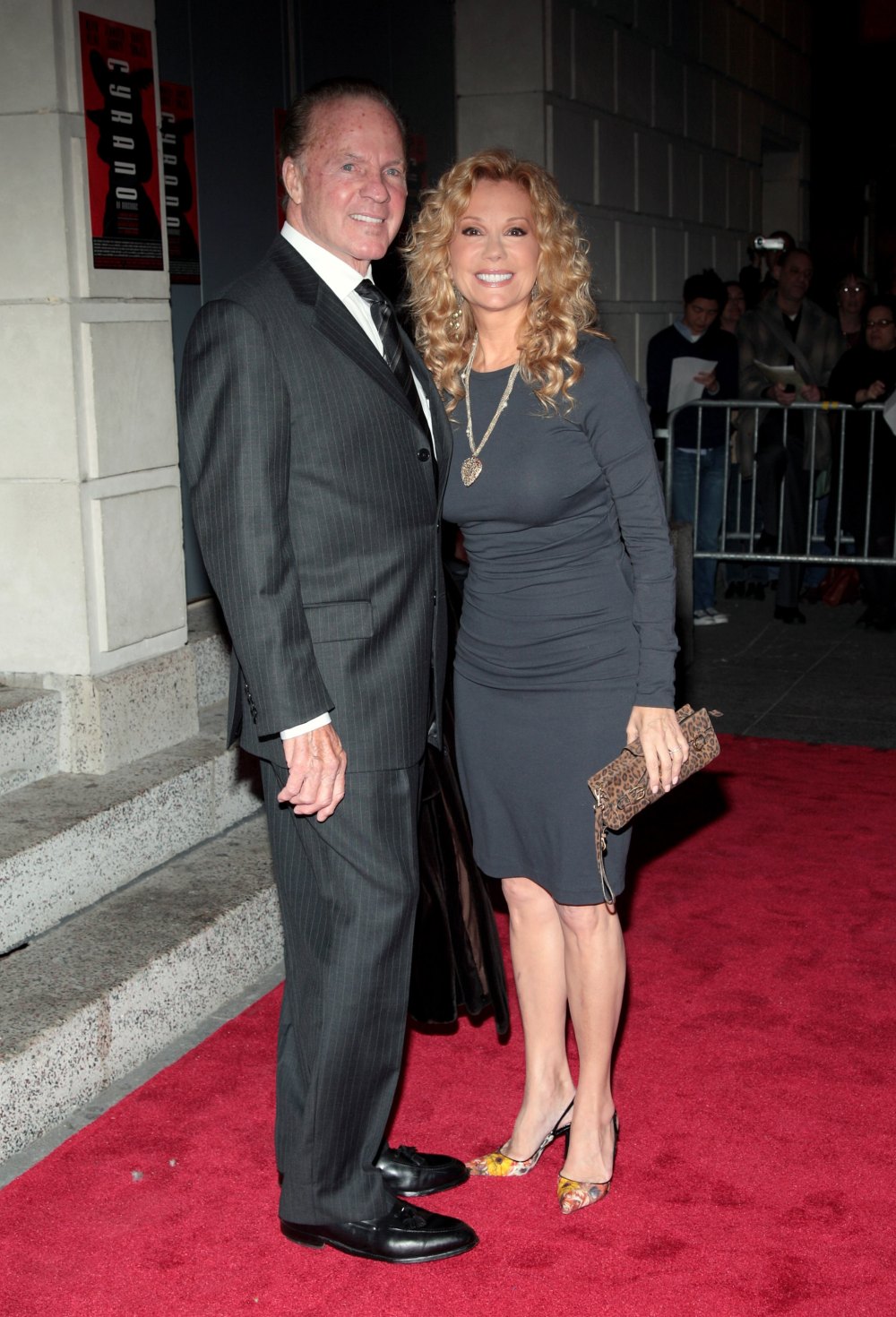
“Frank will always be the love of my life,” Kathie Lee said. “If God wants to do something miraculous, like give me another great love [then I’m open to it]. And so I leave room for the miraculous to happen.”
Frank died of natural causes, although his family shared that he suffered from CTE, a progressive brain disease caused by numerous concussions and brain trauma.
“While Frank passed away from natural causes this past August at the age of 84, our suspicions that he was suffering from the debilitating effects of head trauma were confirmed,” the Gifford family said in a November 2015 statement. “During the last years of his life, Frank dedicated himself to understanding the recent revelations concerning the connection between repetitive head trauma and its associated cognitive and behavioral symptoms — which he experienced firsthand.”
Related: Kathie Lee Gifford’s Son Cody Expecting Baby No. 3 With Wife Erika
Kathie Lee Gifford’s grandma — or “Bubbe” — duties are growing as her son, Cody Gifford, is expecting his third baby with wife Erika Gifford. Alongside a video posted via Instagram on May 5, Erika — who already has two sons, Frankie, 3, and Ford, 18 months, with Cody, 35 — shared the happy news. […]Nearly four years after his death, Kathie Lee exclusively told Us Weekly she was open to love.


Thank You!
You have successfully subscribed.

Deal of the Day
Deal Alert! This 44%-Off Throw-On Mini Dress Is Too Good to Leave in Your Cart View Deal“I don’t think you go out and find love; I think that it finds you,” she told Us at her Today show farewell party in New York City in 2019. “I’m a woman of faith, so I also think that if God wants it, then he’ll bring it. Maybe I have [found love] already and just don’t know it. We’ll see.”
Kathie Lee also spoke to Us about her journey with grief and how she coped with the heartbreak.
“I was having a rough time [in the beginning],” she explained. “But I allowing myself to feel OK.”
Just For You


In this article

Frank Gifford