Sanitized and Unreviewable: Unpacking the Supreme Court’s Mullin v Doe on Ending Temporary Protected Status for 1.3m Noncitizens
In Mullin v. Doe, the Roberts Court issued a sweeping rejection of lawsuits challenging the Trump administration’s summary termination of Temporary Protected Status (TPS) affecting more than a million noncitizens living and working legally in the United States. The 6-3 decision by Justice Samuel Alito dealt a blow to judicial review of unlawful administrative actions and white-washed some of the President’s most offensive and racialized statements.
The decision does two things. First, it effectively bars federal courts from exercising jurisdiction over all statutory claims to enforce compliance with the TPS decision-making process. That is, it removes any ability for noncitizens lawfully in the country to go to court to compel the administration to comply with the TPS statute that Congress carefully crafted in 1990 to regulate executive branch discretion. Second, the decision finds that invocation of racial tropes and deeply offensive racist stereotypes by the President and his subordinates are insufficient to show that racism was even a motivating factor under the Arlington Heights test that the Court purports to apply.
The case arose from consolidated challenges to the termination of Haitian and Syrian TPS, Mullin v. Doe (Syrian) and Trump v. Miot (Haitian) encompassing about 350,000 Haitian TPS recipients and 6,000 Syrians. Numerous other lawsuits, still pending in the lower courts, have successfully challenged the termination of TPS for Venezuela, Afghanistan, and South Sudan, encompassing approximately an additional 600,000 TPS recipients. As the Court partially recounts, Congress enacted TPS in 1990 to provide a statutory framework for the Executive to grant temporary protection from removal for noncitizens in the United States who are from designated countries facing civil war, natural disaster, or other conditions that make return unsafe. TPS was specifically intended by Congress to give structure and predictability to a longstanding practice of Executive action that had previously been purely discretionary. The statute sets forth the criteria for granting, extending, and terminating TPS. It specifies the procedures the Executive is to follow, enumerates the process for individuals to apply, and contains numerous requirements and limitations. Among other requirements, a grant of TPS can be for no longer than 18 months and must be reassessed regularly for extension or termination. Default rules provide for extensions if the government fails to act. For nearly forty years, TPS has operated to provide an effective tool for the Executive branch and to provide a measure of predictability and stability to TPS recipients.
At the beginning of the Trump administration, approximately 1.3 million nationals from 17 countries benefitted from TPS. Virtually all with the exception of El Salvador, Ukraine, and Sudan have been terminated.
The plaintiffs in numerous cases challenged the Trump terminations on the ground that the proper procedures for termination were not followed, that the administration had misapplied the statutory criteria, and that the Haitian and other terminations were motivated by racial animus. Based on evidence developed in the cases, the plaintiffs argued that Secretary Kristi Noem had never actually engaged in consultations with the State Department about country conditions in the relevant countries as required by law, and that the Secretary had improperly based her decision on factors other than country conditions. The plaintiffs made clear in each case that they were not contesting the Secretary’s ultimate decision to terminate TPS if she followed the proper procedures and applied the statutory criteria.
In response, the government argued that the TPS statute prohibited judicial review not only of the ultimate decision but also of all the statutory predicate steps, substantive requirements, and procedures. The government did not argue that the constitutional equal protection, racial animus claim was barred, but instead defended against that claim on the merits.
The Mullin majority held that the provision barring judicial review of “a determination with respect to” TPS designations, terminations, or extensions also applied to every predicate step, including whether the Secretary of Homeland Security had engaged in the statutorily required consultations with other agencies on conditions in the relevant country, and whether she had improperly considered reasons not authorized by the statute for terminating TPS status. The Court held that the Haitians’ additional claim that the termination decision was motivated, at least in part, by racial animus, failed. The majority denied that the many undisputed statements by President Donald Trump – which it largely refused to repeat in writing – constituted sufficient evidence of racial animus.
Justice Kagan, joined by Justices Sotomayor and Jackson, dissented on the jurisdictional ruling and would have found both that the Secretary violated her statutory duty to consult with relevant agencies before making a termination decision and that the plaintiffs made a sufficient showing of racial animus by the President and Secretary to support the interim relief.
Justice Kagan pointedly quoted the many statements that the majority declined to repeat. Her dissent makes clear that to hear them is to know them. Once quoted, the racial hostility and racist tropes are undeniable.
Reviewability
On the threshold question of reviewability, the majority opinion turned on the meaning of the statutory prohibition on judicial review of any “determination” respecting termination (or designation or extension) of TPS. Initially, Justice Alito recognized that the term could describe either an individual decision or the whole process leading to a decision, including all the predicate steps. Likewise, the opinion acknowledged that such legal inquiries should be read against the background principle that “executive determinations generally are subject to judicial review.” Nonetheless, the majority then concludes that the language is sufficiently clear to bar review of all statutory claims.
In doing so, the opinion rejected the Court’s own long-standing view in immigration cases that prohibiting review of a determination applies only to the ultimate result, not to whether proper procedures or criteria were followed in achieving that result. That fundamental distinction, to ensure that the implementation of immigration programs comply with the statutory mandates enacted by Congress, dates back to at least 1991 when the Court upheld a challenge to the procedures by which the 1986 legalization program had been implemented. In that case, McNary v. Haitian Refugee Center, the Court distinguished between legal challenges to individual legalization decisions (review of which was narrowly channeled) and challenges to the legality of how the program was administered, which the Court reviewed and invalidated. The plaintiffs in Mullin emphasized that Congress later added many broader preclusion provisions to the immigration statute against this backdrop but never amended the TPS provision. In Mullin v. Doe, the Court read “determination” far more broadly and limited McNary to the language at issue there.
Likewise, the Court rejected other narrowing interpretations of the provision barring judicial review. Significantly, the majority appears to have left entirely unreviewable whether the Secretary actually followed the law, whether she engaged in the required consultation, and whether the grounds on which she terminated TPS are in fact permissible under the statute. All of that, the Court holds, is encompassed within the unreviewable “determination.”
Strikingly, the Court refused to fully grapple with arguments advanced by the plaintiffs on the implications of the broad non-reviewability adopted by the Court. In addition to emphasizing the importance of the legal claims at issue here, plaintiffs argued that if the judicial review provision were as preclusive as the government asserts, then a different administration and different president could blatantly violate the TPS statute in the opposite direction by granting TPS unlawfully rather than by terminating it unlawfully. For example, the DHS Secretary could designate a country (or numerous countries) for TPS for fifty years (instead of for the statutory maximum 18 months). Or TPS could be granted wholly without regard to whether any of the statutory criteria for designation were present at all. The plaintiffs argued that Congress could not have intended its carefully constructed standards to be so toothless and easily ignored. Instead of forthrightly accepting the necessary consequence of its decision, the Court tried to sidestep the point by citing the government’s brief to suggest that some unlawful grants might be redressable and acknowledging that others may not be. One is left to speculate if the Court would truly apply its ruling even-handedly in the future.
The dissent, written by Justice Elena Kagan, rejected the sweeping reading of “determination” and explained the statute allows review of the “procedural steps the Secretary must undertake prior to making any determination about country conditions.” Specifically, the dissent understood the statute allows judicial review of a failure-to-consult claim and that the plaintiffs’ claims “are in fact meritorious, because the Secretary did not consult (as the statute demands) with ‘appropriate agencies of the Government’ about ‘the conditions’ in Haiti and Syria.”
Equal Protection
The majority then turned to the constitutional Equal Protection claim that the Haitian termination decision was motivated, at least in part, by racial animus. As a threshold matter, the Court must decide which level of scrutiny to apply. In what should have been a significant victory for the plaintiffs, the Court does not adopt the government’s view that Trump v. Hawaii’s deferential test should govern. Instead, the Court assumes (without deciding) that Arlington Heights applies. Under that test, the relevant inquiry is whether “discriminatory purpose was a motivating factor” (emphasis added).
However, the significance of applying Arlington Heights evaporates when the Court addresses the alleged racial animus. Justice Alito recites a few statements made by the President and Secretary Noem, omits many, and quickly (re)characterizes them simply as either (1) strong objections to immigration, (2) displeasure with TPS, (3) “denigrating” the TPS countries, including Haiti, and (4) “maligning” Haitians in the United States. The statements of Secretary Noem in turn are described as merely (1) antipathy to travelers from travel ban countries, (2) derogatory about immigration, and (3) criticism of TPS. In other passages, the Court seeks to defang the statements by referring to them as merely “heated language.”
Notwithstanding the racist smears recounted only in the dissent, which include such statements as Haitians “poisoning the blood” of the country, the majority declares that “none of the cited statements by either the President or the Secretary was overtly racial” and instead “could” rest on race-neutral justifications. In its critical conclusion, the Court states that “the cited statements are insufficient to show that the termination of Haiti’s TPS designation was based on the race of the Haitian people” and that there are “strong, race-neutral explanations” for the termination. In conclusion, Justice Alito states that “viewing all the relevant evidence … [plaintiffs] are unlikely to prove that race was a motivating factor.”
Justice Kagan objects forcefully, noting with apparent incredulity that the majority “claims to see no evidence that race played any role” in the Haiti decision (emphasis original). First, she recites in detail many of the statements on which the plaintiffs rely. Among others, these include, “Why is it we only take people from shithole countries” like “Haiti [and] Somalia”? Why cannot we have some people from Norway [and] Sweden?” As she notes, they include “statements by the President so repellent and racially inflected that the majority declines to put them in print.” She concludes in language worth quoting in full:
“The references—of filth, disease, and primitiveness—are shot through with racial stereotypes and tropes. It is hard to imagine the statements being made today of any White community. No very “sensitive inquiry,” of the kind Arlington Heights compels, is needed to see them for what they are; judges, as we often say, are “not required to exhibit a naiveté from which ordinary citizens are free.” The statements fairly shout, in their racial undertones and overtones alike, that race entered into the President’s resolve to remove Haitians from this country.”
She emphasizes that under Arlington Heights, showing race as a motivating factor, even if there were other race-neutral grounds, is sufficient to support the preliminary relief.
In sum, the six Justices achieve their result – a determination that plaintiffs were unlikely to prove race was a factor – only by obscuring the breadth and scope of the President’s statements and evading the constitutional test. In reaching the result it did, the Court effectively ignores or eviscerates the test that Arlington Heights demands.
Thomas concurrence
Finally, it is worth noting Justice Thomas’s solo concurrence for the extraordinary additional assertions he offers. In brief, his views are that (1) the statute bars judicial review of constitutional claims, (2) congressional preclusion of constitutional claims raises no serious constitutional questions, (3) the Fifth Amendment has no Equal Protection Clause and Bolling v. Sharpe (desegregation of public schools) was “wrong[ly]” decided, evidently denying anyone (including citizens) an Equal Protection claim against the federal government, and (4) even if the Due Process Clause of the Fifth Amendment includes a non-discrimination principle, it would not help the Haitian TPS recipients because they have no protected interest.
Conclusion
The Court’s decision is a devastating blow to the lives of more than a million noncitizens living and working in the U.S. with legal authorization. It validates one of the Trump administration’s most sweeping measures to destabilize immigrant communities and to strip current residents of legal status and protections.
The ruling further erodes judicial oversight of executive actions, undermines the rule of law, effectively abandons or eviscerates the Arlington Heights test, and gives the Supreme Court’s imprimatur to hateful and racist Presidential statements that betray our values and the Constitution in a shameful act of judicial exculpation.
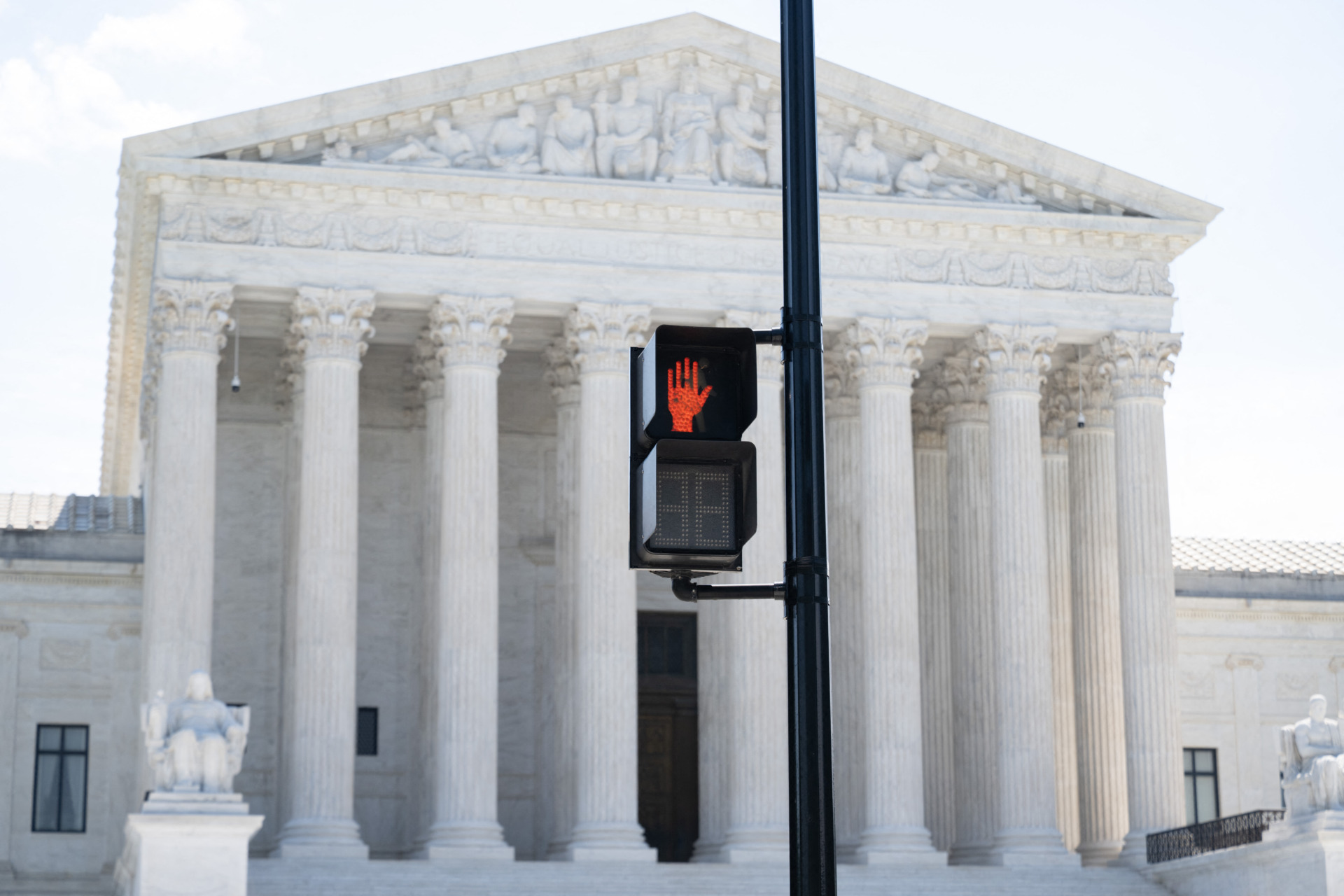
FEATURED IMAGE: A view of the US Supreme Court in Washington, DC, on June 25, 2026. The US Supreme Court on Thursday backed a Trump administration move to strip deportation protections from some 350,000 Haitians and 6,000 Syrians living in the United States. The conservative-dominated court, in a 6-3 ruling, said the Department of Homeland Security's decision to end Temporary Protected Status (TPS) for Haitian and Syrian immigrants was not subject to judicial review. (Photo by SAUL LOEB / AFP via Getty Images)Read Next:

U.S., U.K. Won’t Stop UAE’s Support to Sudan’s RSF by Tiptoeing Around It
Jun. 26, 2026 Mutasim Ali and Adam Keith
A Dangerous Legal Loophole: Consent is Not Enough for U.S. Military Activities in Latin America
Jun. 26, 2026 Rebecca Crootof
Litigation Tracker: Legal Challenges to Trump Administration Actions
Jun. 26, 2026 Just Security
When Warning Loses to Permission: Iran, Trump, and the Misapplied Label of “Intelligence Failure”
Jun. 25, 2026 Brian O'Neill 12323Featured Articles:

Sanitized and Unreviewable: Unpacking the Supreme Court’s Mullin v Doe on Ending Temporary Protected Status for 1.3m Noncitizens
Jun. 26, 2026 Lucas GuttentagA Dangerous Legal Loophole: Consent is Not Enough for U.S. Military Activities in Latin America
Jun. 26, 2026 Rebecca Crootof
As U.N. Secretary-General Candidates Make Pitch to be Mediator-in-Chief, Will Peacebuilding End Up On the Cutting Room Floor?
Jun. 23, 2026 Jordan Street and Maria Kisumbi
The Law of Armed Conflict and the Attack on Kyiv’s Monastery of the Caves and Dormition Cathedral
Jun. 22, 2026 Michael SchmittBadenoch blasts 'moaning' female Labour MPs over Burnham jobs 'quota'

Kemi Badenoch has told Labour women to earn a job in Andy Burnham's Cabinet instead of demanding they are handed jobs because of their gender.
The Tory leader lashed out today amid reports that female MPs are demanding the de-facto new prime minister introduce a 50:50 gender split 'quota' in his government.
Amid reports that former foreign secretary David Miliband is being lined up to return to the role, possibly with his brother Ed as Chancellor, one female minister also complained that Burnham could not have 'more Milibands than women' in the top posts.
But in a scathing article in the Times today Mrs Badenoch told them to 'stop moaning' and get chosen on merit instead of retreating into 'more of the failed identity politics that is holding back our country'.
'There are many, many reasons why you shouldn't have any Milibands in the cabinet,' she said.
'But complaining that the boys haven't given them the right jobs or that the boys are taking all the jobs, just shows that Labour's women still don't get it.'
The idea of quotas was also attacked by Baroness Jacqui Smith, Labour's Skills Minister.
Asked by Times Radio if Mr Burnham should reserve jobs for women, she said: 'No, I think what Andy Burnham should be doing is building the very best team around him to change this country.'

A letter written by the Women's Parliamentary Labour Party has called on Mr Burnham to ensure a 50:50 split between men and women in government jobs

Amid reports that former foreign secretary David Miliband (above, right, in 2010) is being lined up to return to the role, possibly with his brother Ed as Chancellor, one female minister complained that Burnham could not have 'more Milibands than women' in the top posts

But Mrs Badenoch told them to pipe down and get chosen on merit instead of retreating into 'more of the failed identity politics that is holding back our country'
A letter written by the Women's Parliamentary Labour Party and seen by the BBC has called on Mr Burnham to ensure a 50:50 split between men and women in government jobs after he succeeds Sir Keir Starmer.
'We are asking you to demonstrate this change from day one and address the toxicity and misogyny within our own party and government,' it said.
Labour has never had a female leader, while the Conservatives have had three, and Mrs Badenoch urged the government to follow its meritocratic example.
'If you run a meritocracy, then you do not have to worry about jobs for the boys,' she wrote.
'Every woman who is a Conservative MP, every woman who has ever won the leadership, has had to fight to get where she is.
'By contrast, Labour women are demanding guarantees from Burnham. But the truth is he doesn't have to give any guarantees.
'If none of Labour's women are prepared to get their hands dirty and challenge him for the leadership, their demands are toothless.'
'In fact, it's quite revealing that the women's parliamentary Labour Party has written to Burnham asking him to commit himself to at least 50 per cent female ministers.
'This has nothing to do with meritocracy. It is yet more of the failed identity politics that is holding back our country.'