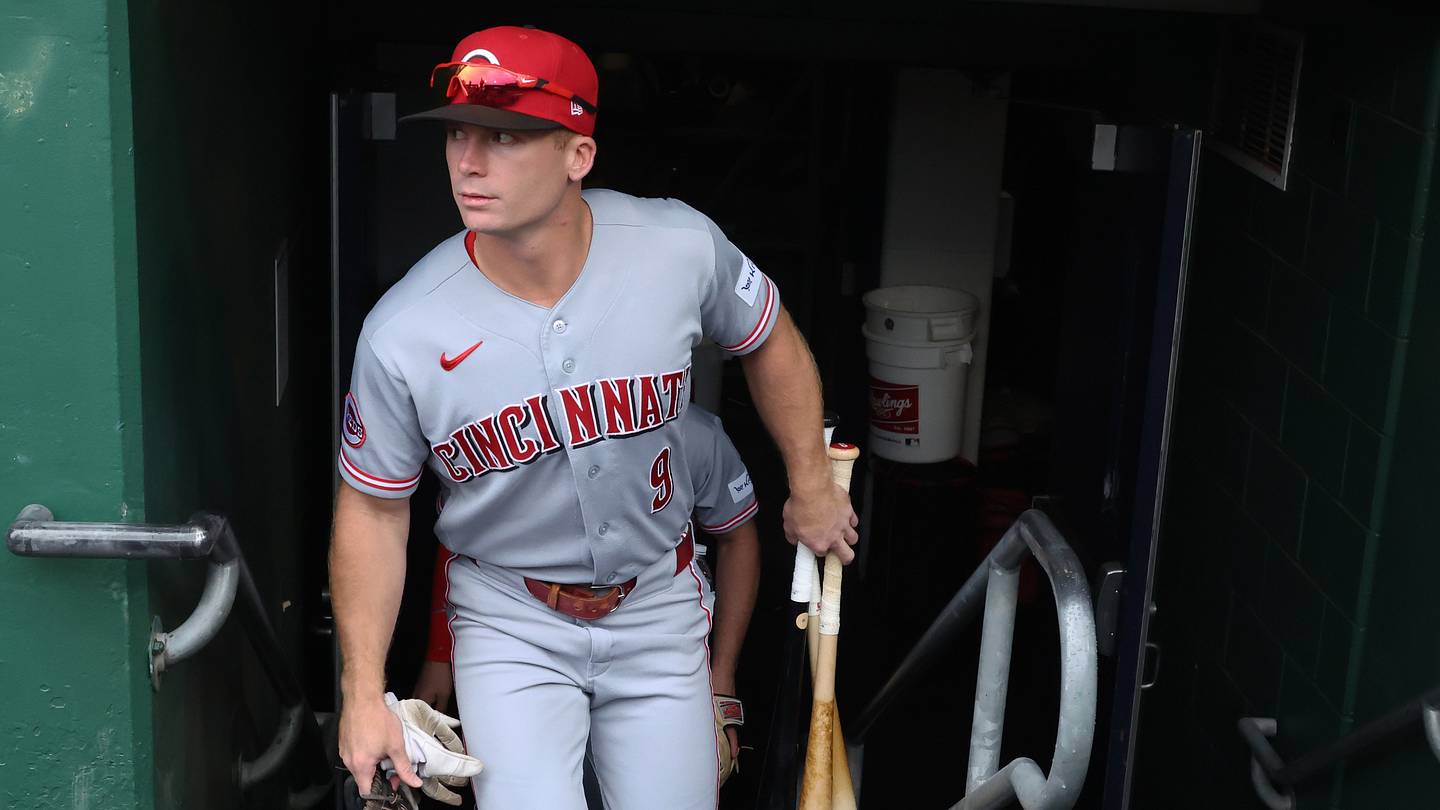
Rayner praises Burnham's bus network in latest job pitch
Angela Rayner has lavished praise on Andy Burnham's record as mayor in what will be seen as another attempt to secure a job in his Government.
The former Deputy Prime Minister hailed Manchester's public transport network as the 'biggest success story' of devolution outside London.
She also used a major speech to highlight her own work on the Prime Minister-in-waiting's key priority of giving more power to the regions.
And she claimed she had fought to push through the introduction of the tourist tax, another policy he championed before returning to Westminster last month.
Ms Rayner – who last week talked up her credentials on social housing – also said mayors should be given the power to buy up grand buildings that have fallen derelict.
It comes amid growing suspicion that despite being a fellow Labour MP in Greater Manchester, she is not among Mr Burnham's closest allies and may not be rewarded with a return to Cabinet.
Addressing an event to mark 40 years of the New Economics Foundation think-tank on Wednesday evening, Ms Rayner said: 'I am proud of the enabling legislation I introduced, which has laid the groundwork and created a framework for the next phase of our devolution revolution.
'But the country needs a much deeper cultural change, and the scale of that challenge can't be underestimated.

Angela Rayner campaigning alongside Andy Burnham in Manchester last week
'To truly get growth in every corner of the country and put more money into people's pockets, we must rewire England by devolving power and money to the country as a whole.'
Ms Rayner, who ran the Ministry of Housing, Communities and Local Government until she quit over her tax bill last year, went on: 'There was institutional resistance to fiscal devolution throughout my time in office. But we have shown it can be overcome. We faced them down in announcing an Overnight Visitor Levy. We can do so again.'
She mentioned the Old Town Hall in Sheffield and the Theatre Royal in Manchester among the 'beautiful old buildings' that are now 'falling apart' and have been 'left to rot by absentee owners'.
'When buildings have been left to rack and ruin by distant investors, Mayors should be given the power to put them up for compulsory sale or lease, so someone else can have a shot - whether that's the council, a local business, or a community group,' she urged.
'Building on the work we've already done to strengthen the powers available to communities to take control of assets of community value - and the introduction of a Community Right to Buy - we can take greater steps to put power in people's hands. That's what real devolution should look like.'
In the most obvious tribute to Mr Burnham, Ms Rayner said: 'Devolution's biggest success story outside of London has been the Bee Network, reversing the destructive Thatcherite invention of multiple private bus companies running expensive, unreliable services in a single city.
'As with so many other things, if we know we want to do it, we should just get it done.'
And she also praised his key ally Louise Haigh, the former Transport Secretary who is now drawing up his plan for Government.
'Thanks to the Better Buses Act spearheaded by Louise Haigh, it is easier for local leaders to take control of their buses and put passengers first - with more routes and lower fares.
'But it still takes years of endless process for areas to be able to take control of their buses. Mayors are understandably frustrated at the slow pace of change.
'We should put a line in the sand, and be clear that government will back every Mayor who wants a franchised bus network to have one by the end of this Parliament.'
"Tan bueno como siempre": Harry Kane brilla silenciosamente en el Mundial
 Harry Kane festeja tras marcar el segundo gol de Inglaterra en la victoria 2-1 ante Congo en los 16vos de final del Mundial, el miércoles 1 de julio de 2026, en Atlanta. (Colin Hubbard/AP Photo/Colin Hubbard)
 - Share via
ATLANTA — Harry Kane volvió a sacar la cara por Inglaterra, aunque ninguno de sus compañeros dudaba de que lo haría.
Con Inglaterra en desventaja durante los primeros 75 minutos del duelo de dieciseisavos de final de la Copa del Mundo contra Congo el miércoles, Kane no perdió la fe. Mientras Lionel Messi y Kylian Mbappé acaparan la mayoría de los titulares, el olfato goleador de Kane está presente.
Eso quedó claro el miércoles, cuando el delantero de 1,88 metros apareció en el momento en que Inglaterra más lo necesitaba con un par de goles postreros para asegurar la victoria 2-1 y depositar a Inglaterra a los octavos de final para citarse con México en el Estadio Azteca de la capital mexicana.
Kane señaló que la clave para rendir al máximo nivel es aportar constancia al entrenamiento diario.
“Por eso haces todo el trabajo entre bambalinas, ya sabes, las cosas que ustedes no ven cuando entrenamos, cuando estamos en casa recuperándonos, haciendo baños de hielo, tratamiento, todos los pequeños detalles que te permiten mantenerte de forma constante al más alto nivel durante el mayor tiempo posible”, dijo Kane. “Tipos como Messi, ellos son la cúspide de eso”.
Congo le exigió al máximo a Inglaterra, pero el suplente Anthony Gordon, quien asistió en ambos goles, nunca tuvo dudas.
“Nunca pensé que nos iban a ganar. Sabía que íbamos a ganar porque confío en todos los que están en nuestro campo, y sé lo duro que estamos trabajando y entrenando. Jugamos como entrenamos, y jugamos con intensidad”, dijo Kane. “Yo solo intenté ser directo, intenté cansar más a (Congo) y darle el balón a ‘H’”.
Los goles de Kane fueron su cuarto y quinto del torneo, con lo que elevó su total a 13 como el máximo goleador de Inglaterra en la historia de los mundiales. Sus compañeros necesitaron todo lo que tenía el miércoles.
Gordon levantó un centro desde la izquierda, que Kane cabeceó por encima del arquero congoleño Lionel Mpasi para el primer gol de Inglaterra del día. Poco más de 10 minutos después, Gordon encontró a Kane por segunda vez al borde del área, desde donde envió su disparo a la escuadra.
Gordon empezó a celebrar en cuanto el balón salió del pie de Kane.
“En cuanto le pegó, era oro. Yo ya estaba celebrando. Cualquiera puede marcar un buen gol, cualquiera a este nivel puede poner el balón en la escuadra”, dijo Gordon. “Lo fenomenal es la constancia con la que lo hace: cada día en el entrenamiento, en cada partido. Juega a un nivel altísimo, altísimo”.
Dieciséis años después de iniciar su carrera profesional, Kane rebosa confianza mientras Inglaterra mira hacia un partido exigente en los octavos de final.
“Me siento tan bien como me he sentido nunca y, en última instancia, cuando entro al campo, sé que todo el trabajo que he hecho entre bambalinas me va a tener listo para los grandes momentos”, afirmó Kane. “Eso es exactamente lo que pasó ahí afuera hoy”.
Breitbart Business Digest: Warsh Sticks to His Guns on Forward Guidance
Breitbart Business Digest: Warsh Sticks to His Guns on Forward Guidance
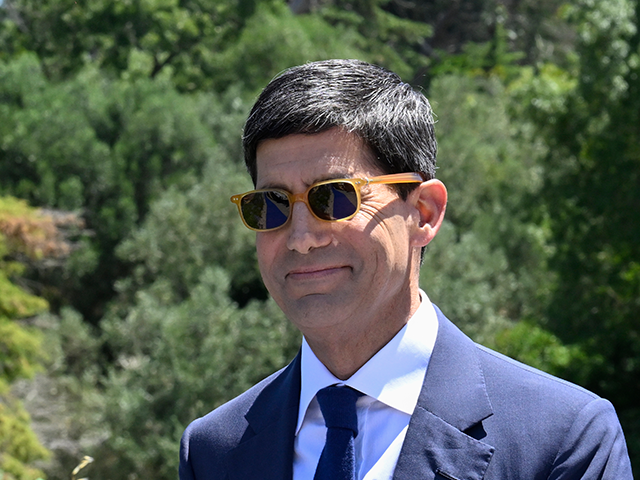

Warsh Turns Down the Volume on the Mood Music of Monetary Policy
Fed Chair Kevin Warsh offered some guidance for Wall Street and the financial press on Wednesday: stop looking for clues from the Fed about the path of interest rates.
Speaking at a central banking conference in Portugal, Warsh stuck by his guns when it comes to refusing to provide so-called “forward guidance.” At some points, Warsh appeared to be teasing those who are demanding guidance.
“At my press conference, I said we’re not going to give forward guidance because we’re meeting in six weeks,” Warsh said. “I have an update for you.”
Had he changed his mind on forward guidance? Nope. The update was that the meeting is now just four weeks away.
When the moderator of the panel—CNBC’s Sara Eisen—pressed him on whether a rate hike would be on the table at this month’s meeting of the Federal Open Market Committee, Warsh joked that “Sara is trying to get me to break this rule” about not providing guidance. “She’s going to fail.”
For more than a decade, Warsh has argued that the Fed had gone overboard when it comes to giving the market a narrative about its own outlook for interest rates. In a speech last year, Warsh made it clear that he thought the time for forward guidance had come to its end. “Forward-guidance – a tool rolled out to great fanfare in the financial crisis—has little role to play in normal times. Moving markets with rolling Fed incantations is tempting, but unhelpful to the Fed’s deliberations, and ultimately, to its mission. The central bank should find new comfort in working without applause and without the audience at the edge of its seats.” Warsh said.
The New Central Bank Consensus
Although the U.S. financial press and some Wall Street analysts are clearly annoyed by Warsh’s stance, he’s hardly alone in this view. One of the first remarks on the panel from Christine Lagarde, the chief of the European Central Bank, was a reminder that the ECB has also abandoned forward guidance. She added that her biggest regret as a central banker was that in the past she felt bound to act in accordance with forward guidance the bank had provided.
Instead of forward guidance, the ECB now provides “framework guidance,” Lagarde explained. That is, the ECB will inform markets about “how we come to our monetary policy stance,” the data the bank takes into account, the indicators it watches, and the intellectual process involved in its decisions.
“We have found common cause,” Warsh said in response. “I liked her when we first met twenty years ago, when she was finance minister. After that answer, I love her…President Lagarde’s answer on forward guidance — I couldn’t have said it better myself.”
The practice of providing forward guidance emerged from the challenge of attempting to ease financial conditions further when the Fed’s policy rate was already up against the “zero bound” and could not be reduced further. The idea was that the Fed could bring down longer-term rates by talking the market into believing that it would keep the policy rate low for longer than the market thought it would and that it would risk higher inflation, if necessary, in order to keep providing monetary stimulus to the economy. The Fed needed to “credibly promise to be irresponsible,” in Paul Krugman’s memorable phrase.
As the years stretched on and interest rates rose above zero, however, the Fed kept up the forward guidance routine. The justification shifted to the idea that it was necessary in order to prevent unwanted volatility in financial markets and to avoid excess uncertainty that might be a drag on the economy. Alternatively, the Fed’s forecasts of its own actions were sometimes presented as being important to controlling inflation expectations. This shifting rationale suggested that forward guidance had taken on a life of its own, becoming a ritual that had outlived its rational purpose.
Of course, big changes like this are going to meet resistance. Old habits die hard, as they say. At the end of the panel, Eisen pressed Warsh on the question of whether he is providing markets with enough information about the Fed’s “reaction function”—what data will cause the Fed to make what kind of decision on rates. Warsh pushed back hard.
“It is said in recent weeks, well, we need to know more about your reaction function. If I look at trigger-pullers—people making decisions in the bond markets, in a range of markets—volatility is not up. It’s down. Yields aren’t up, they’re down. Inflation expectations are down. So I hear this, as if people don’t understand. I think they actually understand quite well,” Warsh said.
It’s sometimes said that the Fed’s job is to take away the punch bowl just as the party is getting going. Warsh has taken on another task: turning down the mood music of monetary policy.