Pat Forde: Congress Is Coming for the SEC and Big Ten’s College Sports Empire
Pat Forde: Congress Is Coming for the SEC and Big Ten’s College Sports Empire
The Protect College Sports Act reflects mounting frustration with the Power 2’s dominance and could force them to consider drastic next steps.Pat Forde|
As the saying goes, pigs get fat and hogs get slaughtered. If the U.S. Senate Committee on Commerce, Science and Transportation has its way, butcher knives are being sharpened with the Big Ten and SEC in mind. It is quite a turn of events.
The Protect College Sports Act moved out of committee by a 19–9 vote last week and could be headed for a full vote, over the objections of the two dominant conferences in the land. It’s by no means a perfect bill, and in some areas it’s not even a good bill. But after years of beseeching Congress for a legislative bailout that would provide an antitrust exemption and apply the proverbial guardrails to athlete transfers, compensation and eligibility, this is likely the last shot.
And the Big Ten and SEC are now of a mind that this is unwanted legislation. It could conceivably unstack a deck that has been stacked in their favor, particularly if it leads to pooled media rights. There also is language specifically prohibiting power-conference mergers and acquisitions that first targeted only the Big Ten and SEC, but then was expanded to include the ACC and Big 12 as well. The Power 2’s power trip has reached the point of serious pushback, with late negotiations to alter the PCSA being rebuffed by its architects.
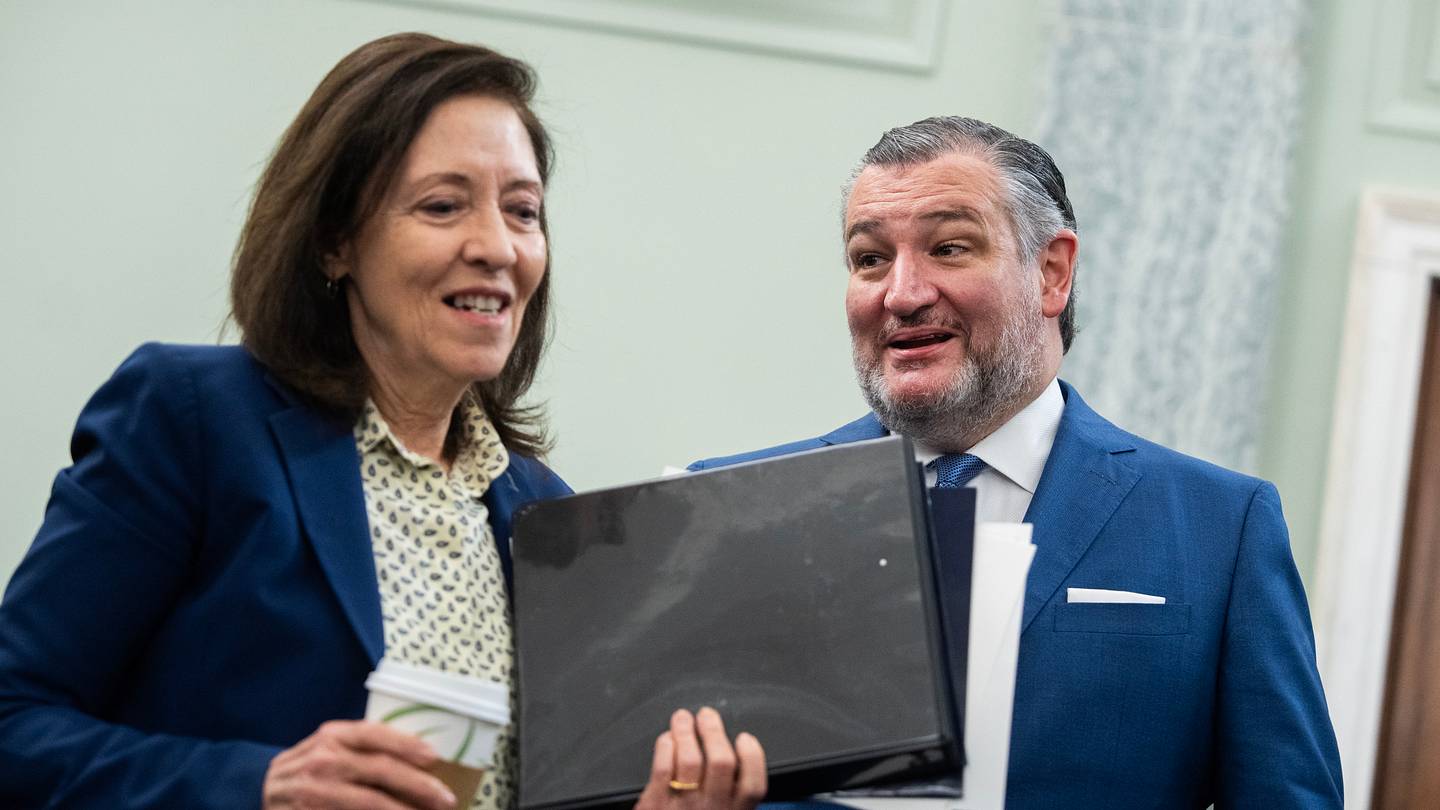
Per Yahoo Sports, Sen. Maria Cantwell, one of the co-sponsors of the bill, fired this shot at the Big Ten and SEC as the bill progressed out of committee: “The politics of these [conference] commissioners moving around deck chairs [with realignment] and making millions of dollars themselves and not thinking about the broad interest to solve these problems has led us to this point. It’s time to listen to some other people.”
Here we get down to the essence of the matter—to a potential reckoning five years in the making. The cardinal collegiate sin of predatory action upon other power conferences has neither been forgotten nor forgiven. It left a gaping wound, and that wound has festered. And since then, the Big Ten and SEC have kept pushing everyone else to the brink.
The pigs became hogs. The hogs are now confronted with the consequences of their gluttony.
In 2021, the SEC swiped Texas and Oklahoma from the Big 12, setting off a realignment chain reaction. A year later, the Big Ten began tearing down the Pac-12 by taking USC and UCLA. Then it came for Oregon and Washington, reducing the rest of a 100-plus-year-old league to diaspora. Texas was of a mind to move somewhere, and if the SEC hadn’t taken the Longhorns then every other power conference would have—but this was a deal done in top secret that profoundly destabilized another conference and altered the balance of the entire country. Then the Big Ten did the same thing under cover of night by raiding Los Angeles. Conferences currently screaming for guardrails and transparency when it comes to athlete movement and compensation required neither of things for itself when making expansion moves that led to seismic national disruption.
Guess who still remembers the damage done by those raids? Cantwell, from the state of Washington, where many Washington State alums and fans live and vote. If you want to identify the single biggest loser from that realignment spasm, it’s the Cougars. They were left without a league and have helped piece together a Pac-12 Lite (with fellow castoff Oregon State) as a means of survival on a lesser level.
Guess who else doesn’t like the escalating revenue gap between the Big Ten and SEC and the other power conferences, the ACC and Big 12? Billionaire Texas Tech board of regents chair Cody Campbell. He’s on a power trip of his own and has some suspect motives but—importantly—Campbell has the ear of Sen. Ted Cruz of Texas, another one of the bill’s co-sponsors.
“I love [SEC members] Texas and A&M, but they are going to thrive and win national championships,” Cruz told Yahoo Sports. “If we don’t act, I’m not sure any other Texas program survives. I look around Texas and imagine a world without TCU, SMU or Baylor or Texas Tech or Houston or Rice.”
That’s hyperbole, but the point remains: Leagues that already had all the advantages, but kept pushing for more, made a lot of enemies. Just about everyone else in the NCAA Division I ranks is in favor of the Cruz-Cantwell bill, which means they are lined up against the Big Ten and the SEC. That includes the Big 12 and the ACC.
Those two conferences, and the rest of the FBS ranks, were strong-armed into ceding control of the format of the College Football Playoff to the Big Ten and SEC. That was a truly craven response by institutions who participate in the championship. Why did they do it? Because the hogs threatened to break off and have their own championship.
Leverage was exerted in paying for the House v. NCAA settlement. Approximately 60% of a $1.6 billion reduction in NCAA revenue distributions was ticketed for non-power conferences, despite not being named in the lawsuit. Yet 90% of that money is expected to go to football and basketball players in power conferences.
And similar tactics were deployed in pushing the expansion of the men’s and women’s NCAA basketball tournaments to 76. And the altering of the NIT format. Give us what we want, or we’re leaving.
In the context of all those power grabs, a small portion of Congress—and a large portion of Division I—has coalesced around legislation that is not advantageous to the Power 2. Which presents an interesting “what’s next?” scenario, even if it takes several years to play out in terms of media-rights contracts.
Is the nuclear breakaway option back in play? And is it more real than it’s ever been? Would a Congressional attempt at placing limits on the SEC and Big Ten actually have the opposite effect, empowering them to be even more aggressive in pursuing their own interests?
Even before the PCSA was introduced, SEC spring meetings last month were spiced by breakaway talk. It seemed like empty posturing at the time, but now you wonder if there will be a more serious appraisal of it. (ESPN and Fox, of course, would play a major role in any new world order. And they’ve already played a major role in creating the current, chaotic world order.)
The Big Ten and SEC have, in theory, been handed convenient cover to mull a drastic move. The commissioners of the two leagues, Tony Petitti and Greg Sankey, have sometimes portrayed themselves as being forced into a power grab by unmanageable circumstances elsewhere. (See: the diminished authority of the NCAA as a governance and enforcement entity.) We’ll see if they can rationalize what would be the ultimate power move by blaming Congress for authoring a bill they didn’t want.
I remain firmly convinced that any consolidation into a super league would be the final ruination of college sports. It would tear asunder the national fabric of the enterprise once and for all. It would be the ultimate betrayal of trust for many fans, who are already frustrated and disillusioned by the constant tumult and rapacious quest for more money.
I don’t think Sankey wants to be known as one of the destroyers of the collegiate athletics model. I’m not sure Petitti cares. The presidents and chancellors within their leagues would have that on their hands as well, and as a rule they are shrewdly political animals with self-preservation a prime motivator.
But given the Power 2’s recent history of aggressive self interest, I’m not sure they could calmly accept potential Congressional legislation that they haven’t expressly approved. It’s been so long since someone told them “no” that they might not handle it well.
The hogs are indignant. But if the PCSA continues to advance, the Senators are holding the knives.
More College Football From Sports Illustrated
Listen to SI’s college sports podcast, Others Receiving Votes, below or on Apple and Spotify. Watch the show on SI’s College YouTube channel.
Published Jun 22, 2026 | Modified Jun 22, 2026
 PAT FORDE
Pat Forde is a senior writer for Sports Illustrated who covers college football and college basketball as well as the Olympics and horse racing. He cohosts the College Football Enquirer podcast and is a football analyst on the Big Ten Network. He previously worked for Yahoo Sports, ESPN and The (Louisville) Courier-Journal. Forde has won 28 Associated Press Sports Editors writing contest awards, has been published three times in the Best American Sports Writing book series, and was nominated for the 1990 Pulitzer Prize. A past president of the U.S. Basketball Writers Association and member of the Football Writers Association of America, he lives in Louisville with his wife. They have three children, all of whom were collegiate swimmers.
Follow ByPatFordeHome/College Football
Badenoch blasts 'moaning' female Labour MPs over Burnham jobs 'quota'

Kemi Badenoch has told Labour women to earn a job in Andy Burnham's Cabinet instead of demanding they are handed jobs because of their gender.
The Tory leader lashed out today amid reports that female MPs are demanding the de-facto new prime minister introduce a 50:50 gender split 'quota' in his government.
Amid reports that former foreign secretary David Miliband is being lined up to return to the role, possibly with his brother Ed as Chancellor, one female minister also complained that Burnham could not have 'more Milibands than women' in the top posts.
But in a scathing article in the Times today Mrs Badenoch told them to 'stop moaning' and get chosen on merit instead of retreating into 'more of the failed identity politics that is holding back our country'.
'There are many, many reasons why you shouldn't have any Milibands in the cabinet,' she said.
'But complaining that the boys haven't given them the right jobs or that the boys are taking all the jobs, just shows that Labour's women still don't get it.'
The idea of quotas was also attacked by Baroness Jacqui Smith, Labour's Skills Minister.
Asked by Times Radio if Mr Burnham should reserve jobs for women, she said: 'No, I think what Andy Burnham should be doing is building the very best team around him to change this country.'

A letter written by the Women's Parliamentary Labour Party has called on Mr Burnham to ensure a 50:50 split between men and women in government jobs

Amid reports that former foreign secretary David Miliband (above, right, in 2010) is being lined up to return to the role, possibly with his brother Ed as Chancellor, one female minister complained that Burnham could not have 'more Milibands than women' in the top posts

But Mrs Badenoch told them to pipe down and get chosen on merit instead of retreating into 'more of the failed identity politics that is holding back our country'
A letter written by the Women's Parliamentary Labour Party and seen by the BBC has called on Mr Burnham to ensure a 50:50 split between men and women in government jobs after he succeeds Sir Keir Starmer.
'We are asking you to demonstrate this change from day one and address the toxicity and misogyny within our own party and government,' it said.
Labour has never had a female leader, while the Conservatives have had three, and Mrs Badenoch urged the government to follow its meritocratic example.
'If you run a meritocracy, then you do not have to worry about jobs for the boys,' she wrote.
'Every woman who is a Conservative MP, every woman who has ever won the leadership, has had to fight to get where she is.
'By contrast, Labour women are demanding guarantees from Burnham. But the truth is he doesn't have to give any guarantees.
'If none of Labour's women are prepared to get their hands dirty and challenge him for the leadership, their demands are toothless.'
'In fact, it's quite revealing that the women's parliamentary Labour Party has written to Burnham asking him to commit himself to at least 50 per cent female ministers.
'This has nothing to do with meritocracy. It is yet more of the failed identity politics that is holding back our country.'