Newsom’s final budget: California’s fiscal house of cards
- US News
- World News
- Page Six
- Sports
- Post Sports+
- Sports Betting
- Business
- Opinion
- Entertainment
- Shopping
- Lifestyle
- Health
- Real Estate
- Alexa
- Media
- Tech
- Science
- Astrology
- Video
- Photos
- Pod Force One
- NY POSTcast

Switch between CA and NY editions here.
EditionRecommended
Skip to main content OpinionNewsom’s final budget: California’s fiscal house of cards
By Jon Fleischman Published June 30, 2026, 4:40 p.m. ETSee more of our coverage in your search results.
Add The California Post on GoogleThis week, Democratic legislators approved a state budget — Gavin Newsom’s last as governor.
When Newsom took office in 2019, California’s budget totaled approximately $209 billion. The budget he and the Legislature are now sending to his desk comes in at roughly $356 billion. In seven years, total state spending has increased by nearly $147 billion — a staggering 70% increase (40%, after inflation).
That is not merely a budget increase. It is a governing philosophy expressed in dollars.
California’s population did not grow by anything close to 70% during those years. Inflation did not come close to that either. State government grew because the political conditions existed to make it grow.

When a liberal governor sits down with liberal supermajorities in both the State Senate and State Assembly, the result is not difficult to predict. More programs become permanent. Temporary spending becomes ongoing spending. Every surplus becomes an excuse to expand government rather than prepare for the downturn that eventually follows every economic expansion.
The state spent tens of billions of dollars addressing homelessness, yet California still has the nation’s largest homeless population. Medi-Cal spending climbed to record levels and has become one of the major drivers of the state’s budget pressure. Education spending continued rising even as enrollment declined in many districts throughout the state.
This is not complicated. Sacramento demanded more money, spent more money, and promised better results. Yet the core failures remain: homelessness, affordability, weak schools, rising energy costs, insurance instability and basic quality of life.
Taxpayers are entitled to ask what exactly they received in exchange for an additional $147 billion in annual spending.
California has built one of the most progressive — and volatile — tax systems in America. In boom years, stock market gains, IPO activity and investment income can flood Sacramento with revenue. That money feels permanent when it arrives, but much of it is tied to financial markets that can reverse quickly.
That is the trap. Sacramento builds ongoing programs with revenues that may not continue. When markets rise, politicians expand government. When markets fall, capital gains disappear, tax receipts drop, and the state suddenly discovers that permanent spending commitments were built on temporary money.
Put plainly, California’s budget does not simply rise and fall with the economy. It rises and falls with the stock market.
The volatility would be risky enough on its own. But California’s political class has added another danger: It increasingly treats wealth creation as something to punish rather than protect.
Just the mere possibility of California imposing a billionaire wealth tax has already sent a message to the taxpayers Sacramento depends upon to keep the money flowing. You may be next. California has already watched entrepreneurs, investors and business leaders leave for states with lower taxes and less hostility toward success. Whether Sacramento likes it or not, the people capable of paying the largest tax bills are also among the people most capable of leaving.
Building a $356 billion government while telling your largest taxpayers that they are the enemy is not fiscal planning. It is wishful thinking.
For much of the Newsom era, California benefited from technology booms, surging markets and extraordinary capital gains revenues. Sacramento treated those revenues not as temporary windfalls, but as the new normal.
Sign up for the California Morning Report newsletter
California's top news, sports and entertainment delivered to your inbox every day.
Thanks for signing up!
But the bigger issue is not simply whether California can afford a $356 billion government.
It is whether Californians should want one.
America was founded on a very different idea: That free people, families, communities, businesses, religious institutions, and civic associations should carry the primary responsibility for building prosperous lives and strong communities, with government serving as a limited backstop rather than the central actor in every aspect of society.
California’s political leadership has embraced a different vision. Under Gov. Newsom and Democratic supermajorities, the assumption increasingly seems to be that every problem requires another program, another subsidy, another bureaucracy, and another demand on taxpayers.
Seven years later, the bill has arrived.
And so has the question of whether a government this large, this expensive, and this dependent upon perfect economic conditions was ever sustainable in the first place.
Jon Fleischman, a longtime strategist in California politics and a lifelong baseball fan, writes at SoDoesItMatter.com.
Download The California Post App, follow us on social, and subscribe to our newsletters
California Post News: Facebook, Instagram, TikTok, X, YouTube, WhatsApp, LinkedIn
California Post Sports Facebook, Instagram, TikTok, YouTube, X
California Post Opinion
California Post Newsletters: Sign up here!
California Post App: Download here!
Home delivery: Sign up here!
Page Six Hollywood: Sign up here!
Filed under Read Next New York's Democratic primary winners: Letters to the Edit...
Trending Now on NYPost.com
-
 This story has been shared 64,848 times.
64,848
This story has been shared 64,848 times.
64,848
Cops who busted smiling sisters Cookie and Kitty offer hint at motive for Texas mom’s murder
-
 This story has been shared 63,059 times.
63,059
This story has been shared 63,059 times.
63,059
Boyfriend desperately tried to save hiker as massive alligator ripped her apart in three feet of water
-
 This story has been shared 61,336 times.
61,336
This story has been shared 61,336 times.
61,336
Mystery of explosive diarrhea parasite outbreak in the US — as experts try to figure out what’s causing it
Most Commented Join the conversation
-
 This story has 2.1K comments.
2.1K
This story has 2.1K comments.
2.1K
Trump issues dire warning about fate of Iran after punishing Islamic Republic for Strait of Hormuz attacks
-
 This story has 1.7K comments.
1.7K
This story has 1.7K comments.
1.7K
Supreme Court rules ballots arriving after Election Day can be counted, in win for Dems
-
 This story has 1.6K comments.
1.6K
This story has 1.6K comments.
1.6K
JD Vance tells Bill Maher how ‘America wins’ with or without Iran deal
Columnists
-
Daniel McCarthy

Bill Maher got the award, but Trump’s free-speech impact is the real prize
-
Cindy Adams

Summer is the time to see the world — and hunt for deals
-
Betsy McCaughey

Mamdani’s rent-freeze win could come back to bite him — at the Supreme Court
See All Columnists
More Stories
Page Six
‘The Devil Wears Prada 2’ is now streaming — Here’s how to watch at home
Decider
Stream It Or Skip It: ‘Agent Kim Reactivated’ On Netflix, Where A Mild-Mannered Office Worker Dregs Up His Black Ops Past When His Daughter Goes Missing
NYPost
Cops who busted smiling sisters Cookie and Kitty offer hint at motive for Texas mom’s murder
© 2026 NYP Holdings, Inc. All Rights Reserved Terms of Use Subscription Terms Privacy Notice SitemapYour California Privacy Rights

Woman secretly livestreamed more than 700 hours of her ex-husband using his Ring cameras
Twitter share button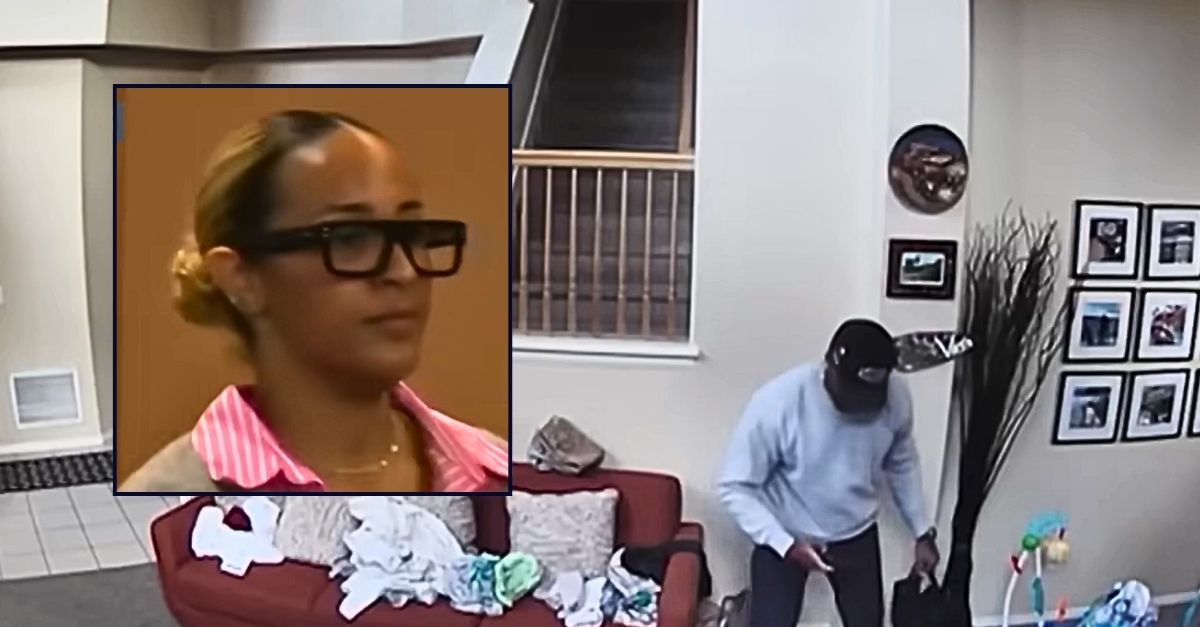
Inset: Rayna Bell in court. Background: Ring camera footage showing Rayna Bell's ex-husband being spied on in his California home (KNSD/YouTube).
A California woman has admitted to using her ex-husband's Ring cameras to spy on him, with court documents saying she livestreamed more than 700 hours of the man and his family from inside his home.
Rayna Bell pleaded guilty last week to a misdemeanor charge of eavesdropping using an electronic device, according to court records. She was ordered to pay restitution as part of the plea deal and must serve one day in custody, with credit for time served and one year of probation.
Sign up for the Law&Crime Daily Newsletter for more breaking news and updatesA request for a "domestic violence restraining order" filed by the ex-husband, obtained by local NBC affiliate KNSD, accused Bell of "unlawfully accessing" her ex's private Ring camera system last year and linking his account to half a dozen Amazon Alexa devices that were registered to her.
"[Bell] viewed video footage for approximately 44,640 minutes — an average of 12 hours per day — over the span of two months," the request said. "These devices include cameras inside and outside my home, including our children's rooms. Her unauthorized access violated both my privacy and the safety of my household."
The ex-husband and his family told KNSD they first noticed something was wrong after hearing a voice coming from one of the cameras.
"It was his ex-wife's voice," recounted the man's fiancee, Acacia Young. "We tried so hard to try to restore the peace, the security, the privacy. Once you are robbed of that, it's almost impossible to try to restore that in your home."
According to the restraining order request, the footage that Bell "live viewed" and recorded included "deeply personal and private moments, such as my fiancee breastfeeding our newborn, nudity and partially undressed footage of our children … in vulnerable settings."
The recordings were "deeply invasive" and deemed as possible child exploitation by the ex-husband, according to KNSD.
"[Bell] also accessed and recorded confidential household conversations, including private discussions between my fiancée and me regarding our finances, credit card numbers, banking details, Social Security information, medical records, medical health history, and other protected health and identity-related data," the request charged. "Her conduct constitutes a serious invasion of privacy and potential identity theft."
Bell did not respond to KNSD's requests for comment. Her ex-husband plans to take legal action against her in civil court.
"You're always going to feel like they can do it again," Young said. "Or if they had the opportunity, they would do it again."
Tags: Californiaguilty pleaHusbandsan diegospyingwifeFollow Law&Crime:
Brendan Sorsby will not pursue path to NFL in 2026, QB to prepare for 2027 draft
Former Indiana, Cincinnati and Texas Tech quarterback Brendan Sorsby is accepting the consequences for his gambling problems and will sit out both the collegiate and NFL seasons in 2026.
After his effort to join the NFL in a supplemental draft this summer failed, Sorsby will not seek litigation against the NFL and will be eligible for the 2027 NFL Draft, per CBS Sports NFL Insider Jonathan Jones. The league won't punish Sorsby further for his known gambling conduct on top of what's unofficially a one-year suspension from football. Per the settlement between the NFL, the NFL Players' Association and Sorsby, he will be allowed to take part in the Senior Bowl, pro day and team visits in the lead up to the 2027 like any other draft-eligible prospect, per ESPN.
Sorsby released the following statement on the decision:
"There has been a lot of news about me out there, and I want to share this statement to make sure things are clear. I accept 100% responsibility for my actions. I did not have control of my gambling problem, and it took getting caught for me to realize that, but it was truly the best thing that could've happened to me. Because of this, I have been able to get the help I need and fully focus on my recovery.
"The news about the supplemental draft changes nothing about my recovery journey. I will continue to take it one day at a time. Focusing on making myself better throughout this process and making sure to share what I have learned and will continue to learn with others going forward. I am fully committed to being the best version of myself that I can be while getting ready for the 2027 draft. God makes no mistakes, and I look forward to seeing the good that is to come from this."
Sorsby's 2026 has been a winding road to lead up to this decision. He transferred to Texas Tech as the transfer portal's No. 2 overall prospect, per 247 Sports on Jan. 4, after earning first-team All-Big 12 honors at Cincinnati in 2025, thanks to leading the conference in passer efficiency rating (155.1). The NCAA then alerted Texas Tech of Sorsby's gambling activity on April 14, which led to the quarterback entering a gambling rehab facility in Arizona on April 27. He then filed for his collegiate reinstatement on May 18 after being ruled ineligible by the NCAA for thousands of bets placed during his four-year college football career. On June 8, he found a Texas judge willing to grant him an injunction to the NCAA's decision to make him ineligible, which appeared to clear a path for him to play for Texas Tech in 2026. Sorsby then decided to walk away from his college career to join the NFL via a supplemental draft this summer, after the Big 12 pursued legal action against him and Texas Tech on June 15.
| 45-plus pass TD and 1,000-plus rush yards in two-year span, Big 12 history | Two-year span |
|---|---|
Brendan Sorsby (CIN) | 2024-2025 |
Sam Ehlinger (TEX) | 2018-2020 |
Kyler Murray (OKLA) | 2017-2018 |
Trevone Boykin (TCU) | 2014-2015 |
Robert Griffin III (BAY) | 2010-2011 |
Colt McCoy (TEX) | 2007-2008 |
Zac Robinson (OKST) | 2007-2008 |
CBS Sports NFL Draft analyst Ryan Wilson views Sorsby as a potential first-round talent, and he now has a year to prove his worth through a year of training on his own while staying squeaky clean off the field.
Add CBS Sports on Google