NBA Draft 2026 First-Round Grades: Hornets, Bulls Reach While Top Draft Picks Rate Highly

NBA Draft 2026 First-Round Grades: Hornets, Bulls Reach While Top Draft Picks Rate Highly
The top five teams all receive top marks for their selections with plenty of value throughout the first round.Kevin Sweeney|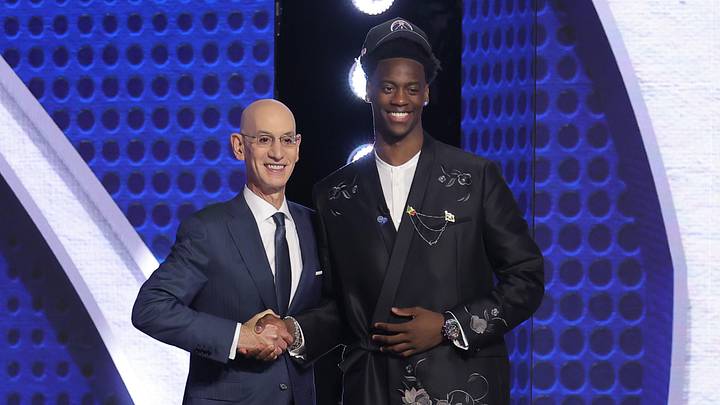
In this story:
Washington WizardsUtah JazzMemphis GrizzliesChicago BullsLos Angeles ClippersBrooklyn NetsSacramento KingsAtlanta HawksDallas MavericksMilwaukee BucksGolden State WarriorsOklahoma City ThunderCharlotte HornetsDetroit PistonsToronto RaptorsSan Antonio SpursPhiladelphia 76ersLos Angeles LakersNew York KnicksBoston CelticsPhoenix SunsThe first round of the 2026 NBA draft is in the books, and many teams made smart moves on first blush. Here’s how Sports Illustrated grades each pick in Round 1.
1. Washington Wizards: AJ Dybantsa
The Wizards endured three straight 64-plus-loss campaigns and eight straight losing seasons for a chance to add a prospect like Dybantsa. He checks all the boxes of an elite prospect, from the measurables to the consistent track record of production. He becomes the centerpiece of a promising young core with Alex Sarr, Kyshawn George, Bilal Coulibaly and Tre Johnson, and when paired with Trae Young and Anthony Davis should position the Wizards to get back to the postseason sooner rather than later.
Grade: A
2. Utah Jazz: Darryn Peterson
Utah would’ve loved to have the choice between Peterson and Dybantsa, but should be thrilled to land the one who fell to them at No. 2. Peterson gives the Jazz a guard with legitimate all-NBA potential and a potential scoring champion in time. There’s a strong case to be made that the Jazz got the best player in this draft. The head-to-head showings between Peterson and Dybantsa in college, high school and at USA Basketball almost always tilted Peterson’s way.
Grade: A
3. Memphis Grizzlies: Cameron Boozer
Some will question Boozer’s ceiling, in large part to the aesthetics of his game. But for Memphis, an organization intent on avoiding a long rebuild, Boozer is the perfect player to have fall to them. He and Zach Edey could maul opposing frontcourts with their physicality and form a unique long-term partnership. This is the type of player you can build your franchise around, the consummate winner and worker that teammates and fans will love.
Grade: A+
4. Chicago Bulls: Caleb Wilson
Wilson has been likely to be Chicago-bound ever since the lottery saw the Bulls jump to No. 4. Freakishly athletic with an intensity and joy that is hard to find, Wilson embodies new Bulls executive Bryson Graham’s “SLAP” moniker: size, length, athleticism, physicality. Suddenly, there are real reasons for excitement for an organization that has been stuck in purgatory for years.
Grade: A
5. Los Angeles Clippers: Keaton Wagler
Wagler effectively allows the Clippers to operate on parallel timelines, giving them an ultra-talented potential point guard of the future who carried Illinois to the Final Four and has the positional size and shooting ability to play next to Darius Garland and help the Clippers compete in the playoffs next season. There are concerns about his lacking athletic burst and slight frame, but his developmental trajectory is remarkable, and it takes a cold-blooded star to score 46 points on the road at Purdue.
Grade: A-
6. Brooklyn Nets: Mikel Brown Jr.
The Nets front office has often heavily leaned on high school and grassroots evaluations. In those settings, Brown was seen as the best point guard in this class. If he regains that form after an up-and-down season at Louisville, Nets fans will forget quickly about falling in the lottery. But the frustrating moments with decision-making and injury woes at Louisville create some risk here in spite of the upside.
Grade: B+
7. Sacramento Kings: Darius Acuff Jr.
The Kings get their guy. Acuff has long been coveted in Sacramento, in part because of familiarity between his father and Kings general manager Scott Perry dating back to Perry coaching the elder Acuff at Eastern Kentucky. He’ll immediately be the driving force of the Kings’ offense, capable of taking over games with his scoring and playmaking. The question is whether you can build a winner around a small guard like Acuff who has historically struggled on the defensive end.
Grade: A-
8. Atlanta Hawks: Kingston Flemings
The Hawks found success last season after trading Trae Young playing without a traditional point guard and using bigger ballhandlers like Dyson Daniels, Nickeil Alexander-Walker and Jalen Johnson who boosted their defense. Flemings doesn’t have great size, but he’s a ball hawk defensively and an unselfish playmaker for others who lives in the paint. If his outside shot continues to develop, watch out. But if it doesn’t, can Flemings and Daniels fit together as two middling outside shooters?
Grade: B
9. Dallas Mavericks: Morez Johnson Jr.
New Mavericks coach Dusty May is bringing one of the pieces of his national champion Michigan team with him. This is a bit ambitious for my taste, but Johnson drew rave reviews behind the scenes and publicly from May all season for his incredible work ethic, competitiveness and approach … and his stock had risen throughout the predraft process. He has the size to play either power forward or center and should fit nicely with Cooper Flagg in Dallas. It’s just a question of whether his ceiling is high enough to warrant going this high.
Grade: B
10. Milwaukee Bucks: Brayden Burries
Burries is a really nice piece to help jump-start the Bucks’ rebuild after trading Giannis Antetokounmpo. He’s a two-way player who can play with and without the ball and is a confident shotmaker. He could have a Desmond Bane–type career if things break right. The Bucks get the best player left on my board at this stage.
Grade: A
11. Golden State Warriors: Yaxel Lendeborg
If there was a place that could afford to draft a guy who turns 24 before he’ll make his NBA debut, it’s Golden State, which is attempting to make one more run building around Stephen Curry. Lendeborg should be an instant-impact player, someone who can guard multiple positions, make perimeter shots and dominate in transition. And Lendeborg going to a situation where he’ll have plenty of proven veterans around him to help him mature is perhaps the best-case scenario for the Michigan product. Still, the track record for players this old returning lottery-level value is very poor.
Grade: B-
12. Oklahoma City Thunder: Aday Mara
What better way to try to combat Victor Wembanyama in the postseason than drafting the biggest player in the class? I’m bullish on Mara’s two-way potential at the next level after he put it all together as a junior at Michigan. His ability to protect the rim gives him a path to early minutes, but the feel for the game and passing chops gives him high offensive upside playing off Shai Gilgeous-Alexander. Plus, Mara gives Oklahoma City some flexibility regarding Isaiah Hartenstein’s looming $28.5 million team option.
Grade: A
13. Milwaukee Bucks: Nate Ament
We had mocked Ament to Milwaukee at No. 10; instead the Bucks get him at No. 13 with the pick they acquired in the Giannis Antetokounmpo trade. This is a big swing on someone who’s still developing physically and needs to improve his strength, but guys with his size and length who can really shoot the ball are very hard to find. He has one of the five highest ceilings in this draft class, so this is a risk well worth taking even if there’s a chance he flames out early.
Grade: A
14. Charlotte Hornets: Hannes Steinbach
There’s no denying Steinbach’s production, stacking double-doubles at Washington. But while Charlotte needed a big man to add to its rotation, I’m not sure Steinbach ever emerges into a starter. He’s a bit of a tweener defensively. Is he mobile enough to guard power forwards or strong and bouncy enough to protect the rim as a center? This is a high-floor, lower-ceiling pick.
Grade: C+
15. Chicago Bulls: Dailyn Swain
Swain is another who fits Graham’s team-building ethos, but this is a reach for me at No. 15. He’s still a shaky outside shooter who thrived with the ball in his hands this year at Texas, but will have to find ways to add more value off the ball in the NBA. That said, Graham will appreciate Swain’s constant motor driving to the rim and high-level finishing numbers.
Grade: C-
16. Oklahoma City Thunder (via Memphis): Bennett Stirtz
Our first trade of the first round! This year’s playoffs proved that no amount of guard depth is too much after the Thunder got decimated by injury. In Stirtz, Oklahoma City gets another highly capable shooter who can play on and off the ball. He’s a skilled pick-and-roll player with an advanced floater game and an electric off-dribble shooter with a fast release. Oklahoma City has used its draft capital well to potentially backfill as its current role players get more expensive to retain.
Grade: B+
17. Detroit Pistons (via Memphis and Oklahoma City): Ebuka Okorie
The most glaring hole for Detroit was adding playmaking alongside Cade Cunningham in the backcourt. The Pistons moved up a few spots to get Okorie, who averaged more than 23 points per game this season as a freshman at Stanford. Detroit has the personnel and positional size to somewhat insulate Okorie size-wise, which was critical given his slight frame. Don’t be surprised if he is a factor in Detroit’s playoff rotation as a rookie.
Grade: B+
18. Charlotte Hornets: Christian Anderson
We had our first run of point guards from pick Nos. 5–8. The second wave has come in the teens, with now three straight PGs after Charlotte’s selection of Anderson. The Hornets’ resurgence last season was keyed by their electric three-point shooting, making more than 16 triples per game to lead the league. Anderson adds to that after making 108 threes at 42% this year at Texas Tech. He could anchor Charlotte’s second unit or play alongside LaMelo Ball at times.
Grades: A-
19. Toronto Raptors: Allen Graves
For the second straight year, Toronto picks up a jack-of-all-trades forward that analytics models loved. Last year, that was Collin Murray-Boyles, who ended up earning significant minutes in the playoffs as a rookie. This year, it’s Graves, who graded out in some models as a top-five-to-10 player in the class. He’s a unique player who’ll have to convert into more of a wing than the small-ball center he was in college at times, but he knows how to fill up the stat sheet.
Grade: B
20. San Antonio Spurs: Jayden Quaintance
Quaintance entered the year a contender to go in the top 10, but slipped as teams flagged concerns about his recovery from an ACL tear suffered late in the 2024–25 season. He has incredible tools, with a 7'5" wingspan, monstrous hands and elite mobility when healthy. If he’s healthy, he can learn under Victor Wembanyama and potentially make this Spurs rim protection even more fierce. The injury risk is the only thing keeping this from being one of the best picks in this draft.
Grade: B+
21. Memphis Grizzlies (via Detroit): Karim López
López had buzz as high as the late lottery, so Memphis collecting five second-round picks by moving down from No. 16 to No. 21 and still getting a prospect like this is a nice value play. López feels like a safer investment in the 20s though. While he has a safe floor as a role player with high-level size and improving three-point shooting, his lack of on-ball creation experience does cap his ceiling some.
Grade: A-
22. Philadelphia 76ers: Labaron Philon Jr.
The Sixers stop Philon’s draft night slide at No. 22. He won’t have a clear path to competing for a starting spot in Philadelphia with Tyrese Maxey and VJ Edgecombe in tow, but this could end up being a blessing in disguise for Philon with a real path to emerge as a valuable bench contributor. His shiftiness on the ball should give the Sixers a different look off the bench.
Grade: B
23. Atlanta Hawks: Zuby Ejiofor
Rick Pitino fell in love with Ejiofor in his three years at St. John’s, and there’s no question he’ll endear himself quickly in Atlanta with his nonstop motor. He’s also a versatile defender, which fits the Hawks’ identity well. Pitino is bullish on his improvement as a shooter long term, and that will be a swing skill for him to become a key rotation cog. I liked other bigs in this range more than Ejiofor, but it’s not a huge reach given Ejiofor earned strong interest throughout the 20s.
Grade: B-
24. Los Angeles Lakers (via New York): Cameron Carr
Carr had interest all the way up into the late lottery, but slipped into the 20s and the Lakers moved up a spot to make sure they got him. He has elite three-and-D potential if he continues to add strength and improve his focus on the defensive end because the tools athletically are elite. This pick could age well if the Lakers have some patience; Carr was a late bloomer and exploded last season at Baylor.
Grade: A-
25. Dallas Mavericks (via New York and L.A. Lakers): Sergio De Larrea
De Larrea is an interesting long-term piece for the Mavericks with excellent size and passing ability. The expectation around the NBA has been that De Larrea would remain in Europe as a “stash” and come over later, but this isn’t a throwaway pick for Dallas and De Larrea has a real chance to make an impact when he eventually comes over. Dallas GM Mike Schmitz has deep connections globally, so it’s not surprising that his first draft with the Mavs sees them take a player who has come up the ranks in Europe.
Grade: B-
26. San Antonio Spurs (via Denver): Tarris Reed Jr.
The Spurs took an 18-year-old project big in Quaintance at No. 20 and now trades back into the first round to No. 26 to get a guy in Reed who will be 23 years old when he makes his NBA debut. San Antonio got beat badly in minutes without Wembanyama on the floor in the playoffs. Reed also lets Wembanyama slide to the power forward spot to help battle on the boards.
Grade: B
27. Boston Celtics: Chris Cenac Jr.
This is an interesting marriage between a win-now team in Boston and a bit of a project in Cenac, but players with his incredible physical tools are almost never available at this range in the draft. Cenac has a monster 7'5" wingspan, impressive mobility and most importantly made real strides as a rebounder and shooter in his time at Houston. Think of this as a longer-term chip for Brad Stevens and the Celtics organization, either as a developmental piece who emerges in his second or third year or as a trade chip as they continue to work on putting the right pieces around Jayson Tatum.
Grade: A-
28. Brooklyn Nets: Joshua Jefferson
Jefferson had a monster senior season at Iowa State. He stuffs the stat sheet with his ability as a passer, rebounder and midrange threat. He has some real appeal as a connective role player who doesn’t need the ball in his hands to succeed. The Nets’ roster is crowded with young pieces, so Jefferson may have to compete with the likes of 2025 first-rounder Danny Wolf for early minutes. Still, the opportunity should be there for a Nets team still in rebuilding mode.
Grade: B
29. Sacramento Kings (via Cleveland): Alex Karaban
Cleveland had been heavily rumored to be open to moving out of the first, and Sacramento takes advantage by moving back in for a consummate winner in Karaban. I worry about who he guards in the NBA after getting hunted off the dribble at times in college, but teams loved his three-point shooting, feel and leadership attributes.
Grade: B-
30. Phoenix Suns (via Dallas): Koa Peat
Phoenix saves the day for Peat, the former top-10 recruit whose odd predraft process left him vulnerable to falling out of the first round altogether. For a player who grew up in the suburbs of Phoenix and starred at Arizona to land with the Suns is a nice consolation prize as he assuredly thought he’d get picked sooner. He’ll add toughness and edge for the Suns, even if he never develops into a reliable three-point threat.
Grade: B+
More NBA Draft From Sports Illustrated
Listen to SI’s NBA podcast, Open Floor, below or on Apple and Spotify. Watch the show on SI’s YouTube channel.
Published 1 minute ago | Modified just now
 KEVIN SWEENEY
Kevin Sweeney is a staff writer at Sports Illustrated covering college basketball and the NBA draft. He joined the SI staff in July 2021 and also serves host and analyst for The Field of 68. Sweeney is a Naismith Trophy voter and ia member of the U.S. Basketball Writers Association. He is a graduate of Northwestern University’s Medill School of Journalism.
Home/NBA/NBA Draft
Badenoch blasts 'moaning' female Labour MPs over Burnham jobs 'quota'

Kemi Badenoch has told Labour women to earn a job in Andy Burnham's Cabinet instead of demanding they are handed jobs because of their gender.
The Tory leader lashed out today amid reports that female MPs are demanding the de-facto new prime minister introduce a 50:50 gender split 'quota' in his government.
Amid reports that former foreign secretary David Miliband is being lined up to return to the role, possibly with his brother Ed as Chancellor, one female minister also complained that Burnham could not have 'more Milibands than women' in the top posts.
But in a scathing article in the Times today Mrs Badenoch told them to 'stop moaning' and get chosen on merit instead of retreating into 'more of the failed identity politics that is holding back our country'.
'There are many, many reasons why you shouldn't have any Milibands in the cabinet,' she said.
'But complaining that the boys haven't given them the right jobs or that the boys are taking all the jobs, just shows that Labour's women still don't get it.'
The idea of quotas was also attacked by Baroness Jacqui Smith, Labour's Skills Minister.
Asked by Times Radio if Mr Burnham should reserve jobs for women, she said: 'No, I think what Andy Burnham should be doing is building the very best team around him to change this country.'

A letter written by the Women's Parliamentary Labour Party has called on Mr Burnham to ensure a 50:50 split between men and women in government jobs

Amid reports that former foreign secretary David Miliband (above, right, in 2010) is being lined up to return to the role, possibly with his brother Ed as Chancellor, one female minister complained that Burnham could not have 'more Milibands than women' in the top posts

But Mrs Badenoch told them to pipe down and get chosen on merit instead of retreating into 'more of the failed identity politics that is holding back our country'
A letter written by the Women's Parliamentary Labour Party and seen by the BBC has called on Mr Burnham to ensure a 50:50 split between men and women in government jobs after he succeeds Sir Keir Starmer.
'We are asking you to demonstrate this change from day one and address the toxicity and misogyny within our own party and government,' it said.
Labour has never had a female leader, while the Conservatives have had three, and Mrs Badenoch urged the government to follow its meritocratic example.
'If you run a meritocracy, then you do not have to worry about jobs for the boys,' she wrote.
'Every woman who is a Conservative MP, every woman who has ever won the leadership, has had to fight to get where she is.
'By contrast, Labour women are demanding guarantees from Burnham. But the truth is he doesn't have to give any guarantees.
'If none of Labour's women are prepared to get their hands dirty and challenge him for the leadership, their demands are toothless.'
'In fact, it's quite revealing that the women's parliamentary Labour Party has written to Burnham asking him to commit himself to at least 50 per cent female ministers.
'This has nothing to do with meritocracy. It is yet more of the failed identity politics that is holding back our country.'