Mom’s Boyfriend Decides To “Prove” Child Is Lying, It Ends Exactly As Expected
 Family, RelationshipsPublished Jun 26, 2026
 Mom’s Boyfriend Decides To “Prove” Child Is Lying, It Ends Exactly As Expected
Add us on Google Nikita Manot BoredPanda staff Add us on Google 7
 25
7
Link copied!
Share
Link copied!
Share
As kids, we’re often taught that when an adult tells us to do something, we should listen. And while most adults genuinely want what’s best for us, sometimes they’re completely wrong about it.
That’s exactly what happened in today’s story. One person shared a childhood memory involving their mom’s boyfriend, a man who decided he knew better than everyone else. Despite being warned that the child had a serious food trauma involving coleslaw, he became convinced they were just being dramatic or flat-out lying. So, while Mom was out of town for the day, he came up with a plan to “prove” it. What happened next turned into a disaster involving vomit, panic, and a house that smelled terrible. Keep reading to see how this boyfriend’s attempt to prove a point blew up spectacularly.
RELATED:Children can develop food-related trauma when they’re pressured, shamed, or forced to eat things that make them uncomfortable
Image credits: Mikhail Nilov / Pexels (not the actual photo)
One woman shared how, as a child, her mother’s boyfriend refused to believe her aversion to coleslaw, leading to a situation she still remembers years later
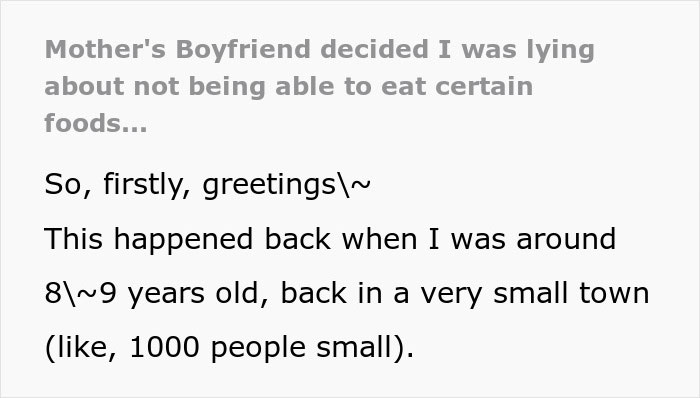

Image credits: Jonathan Farber / Unsplash (not the actual photo)



Image credits: Vitaly Gariev / Unsplash (not the actual photo)
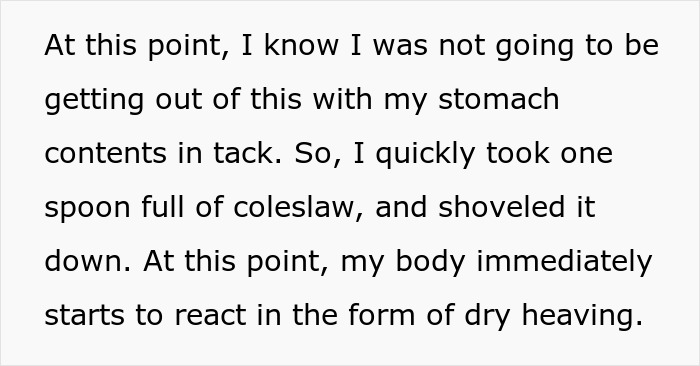
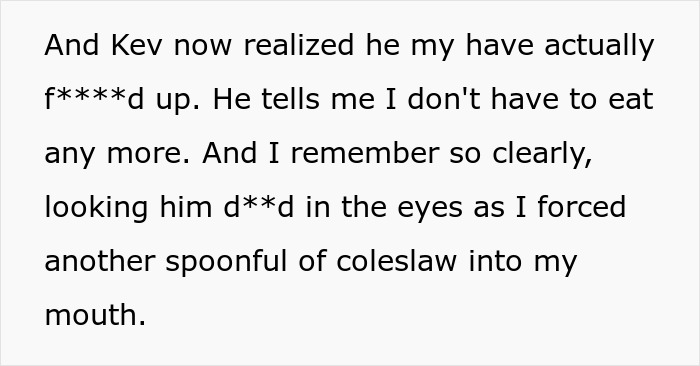
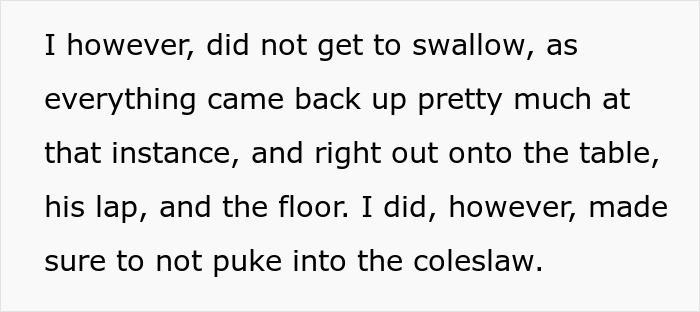


Image credits: Alena Darmel / Pexels (not the actual photo)
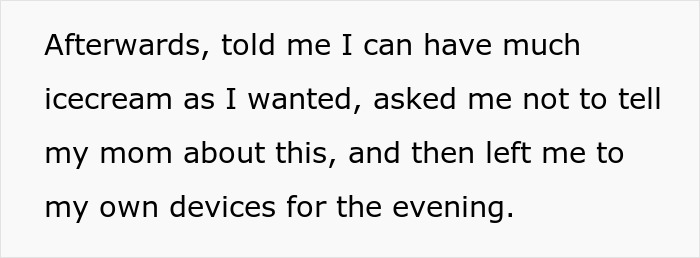


Image credits: Getty Images / Unsplash (not the actual photo)
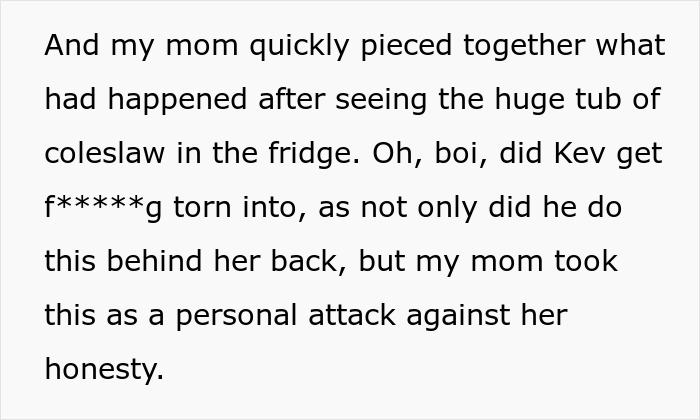
Image credits: FryoKnight
Image credits: Getty Images / Unsplash (not the actual photo)
Eating disorder rates among children and teens have increased significantly since the pandemic.
Often, when a child refuses to eat broccoli, pushes away a plate of vegetables, or dramatically declares that a banana is “gross,” we tend to shrug it off as typical kid behavior. After all, many children go through picky eating phases as they learn about different tastes and textures. Some youngsters happily survive on three foods for months and somehow still have endless energy. But while selective eating can be completely normal, it’s important to remember that not every food-related struggle is simply a phase. In some cases, a child’s relationship with food may be much more complicated. What looks like stubbornness on the surface could actually be anxiety, fear, or the early signs of an eating disorder. That’s why it’s important to pay attention when eating habits become extreme, persistent, or emotionally distressing. Sometimes there’s a bigger story behind what’s happening at the dinner table.
Unfortunately, eating disorders among young people have become a growing concern around the world. A 2023 study found that approximately 22% of children and adolescents globally show signs of disordered eating, a surprisingly high figure. Researchers have also observed a sharp increase in diagnosed eating disorders in recent years. Data from several European countries revealed an increase of up to 40% among 6- to 18-year-olds since the beginning of the COVID-19 pandemic. Similar trends have been reported in the United States, where healthcare professionals have noted a significant rise in eating disorder cases among children and teenagers. Experts believe a combination of isolation, stress, disrupted routines, social media exposure, and mental health challenges may have contributed to this increase. Whatever the causes, the numbers highlight that this issue is far more common than many people realize.
The statistics become even more striking when we look at individual countries. An analysis of data from the UK National Health Service found that the number of children and young people beginning treatment for eating disorders rose from 5,240 in 2016–17 to approximately 11,800 in 2022–23. That’s more than double in just a few years. France has reported similar concerns. Research found that the incidence of eating disorders among students doubled between 2009 and 2021. Particularly alarming was the increase among younger students, rising from 24.0% in 2009 to 46.6% in 2021, during the COVID-19 pandemic. These numbers suggest that eating disorders are becoming an increasingly serious public health issue affecting families across different cultures and countries. Behind every statistic is a young person struggling with food, body image, emotional distress, or trauma.
There are many reasons why a child might develop an eating disorder, and the causes are often complex rather than straightforward. One important factor is the environment in which children grow up. Parents and caregivers play a huge role in shaping a child’s relationship with food, health, and body image. Children are constantly observing how adults talk about weight, dieting, exercise, and appearance. If food becomes associated with guilt, shame, punishment, or strict rules, children may begin developing unhealthy attitudes toward eating. Experts have found that inconsistent guidance around food and poor role modeling can make it harder for children to build healthy habits. Over time, this may increase the risk of disordered eating patterns.
Another major factor is childhood trauma. Adverse childhood experiences such as neglect, violence, instability, or chronic stress can leave deep emotional wounds that affect many aspects of a person’s life, including their relationship with food. For some children, eating becomes a way to regain a sense of control when other parts of life feel chaotic. In other cases, food may become associated with fear, anxiety, or painful memories. Family conflict, parental separation, or living in an unpredictable home environment can also contribute to emotional distress. Not every child who experiences hardship develops an eating disorder, but research consistently shows that trauma can increase the risk. Emotional pain often finds different ways to express itself, and sometimes it shows up through eating behaviors.
Image credits: Ivonne Lecou / Unsplash (not the actual photo)
Studies indicate that trauma can increase a child’s vulnerability to eating disorders.
Experts also talk about something known as food trauma, which can have a lasting impact on a child’s relationship with eating. Food trauma may occur when children don’t have reliable access to enough food and experience hunger or deprivation. In these situations, food becomes associated with fear, uncertainty, and survival. However, food trauma can also occur at the opposite end of the spectrum. Some children are pressured, forced, or manipulated into eating beyond their comfort levels. Constantly being told to “finish everything on your plate” despite feeling full may seem harmless to some adults, but repeated experiences can interfere with a child’s ability to recognize their own hunger and fullness cues. Over time, these experiences can shape how a person thinks about food for years to come. Food is deeply emotional, especially during childhood.
Research has repeatedly shown that trauma increases the likelihood of developing eating disorders such as anorexia nervosa, bulimia nervosa, and binge eating disorder. Anorexia nervosa is characterized by severe food restriction, intense fear of weight gain, and an unhealthy perception of body size or shape. People with anorexia often consume far fewer calories than their bodies need, which can lead to serious health complications. For some individuals, restricting food becomes a way of coping with emotional distress or maintaining a sense of control. While discussions about anorexia often focus on weight, the condition is actually a complex mental health disorder. It affects thoughts, emotions, behaviors, and physical health simultaneously. Early intervention is extremely important because recovery becomes more difficult the longer the disorder continues.
Bulimia nervosa and binge eating disorder involve different patterns of behavior, but both can be equally serious. Bulimia typically involves episodes of consuming large amounts of food followed by attempts to compensate through behaviors such as self-induced vomiting, excessive exercise, or other methods intended to prevent weight gain. Binge eating disorder, on the other hand, involves consuming unusually large amounts of food while feeling a loss of control, but without those compensatory behaviors afterward. People struggling with these conditions often experience intense feelings of guilt, shame, embarrassment, or emotional distress. Despite common stereotypes, eating disorders affect people of all body types, ages, and backgrounds. They are not simply about food or appearance. At their core, they are often linked to emotional pain, stress, trauma, and mental health challenges that require understanding and support.
Clearly, eating disorders are far more serious than simply being a “picky eater” or having unusual food preferences. They can affect a child’s physical health, emotional well-being, confidence, relationships, and quality of life. The good news is that recovery is possible, especially when warning signs are recognized early. Supportive parents, teachers, healthcare professionals, and mental health experts can make a tremendous difference. Creating a safe environment where children feel heard rather than judged is often an important first step. Open conversations about emotions, healthy relationships with food, and seeking professional help when needed can go a long way. Most importantly, children should never be shamed for struggles they may not fully understand themselves. Compassion and education are often far more effective than criticism or force.
Coming back to this particular case, it seems the child may have been dealing with significant emotional challenges linked to experiences at home. That’s why the mother’s boyfriend’s decision to dismiss the child’s concerns and force them to eat feels especially troubling. Food-related trauma is very real, and ignoring it can make existing struggles even worse. While it’s possible he simply didn’t understand the seriousness of the situation, a lack of awareness doesn’t erase the impact his actions may have had on the child. Sometimes adults assume they are helping when they are actually causing more harm. Pandas, what do you think? Do you believe this was a case of misunderstanding, lack of education about food trauma, or something more concerning altogether?
Many people were shocked and frustrated by the way her mother’s boyfriend handled the situation

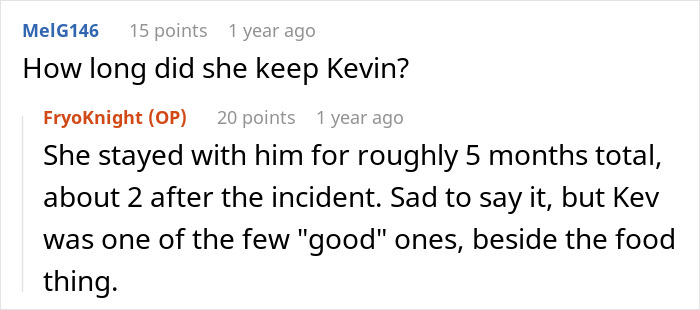
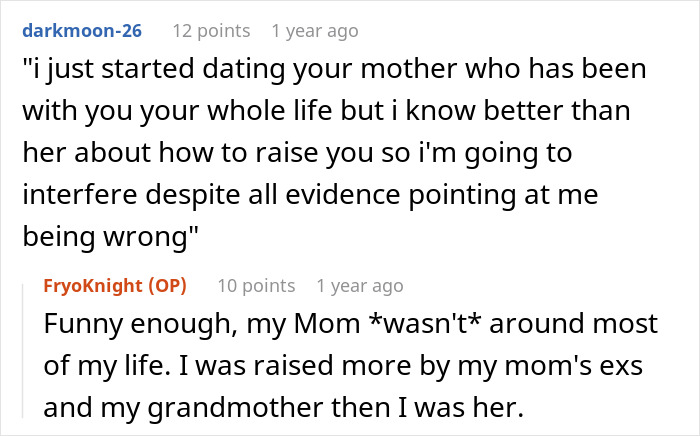
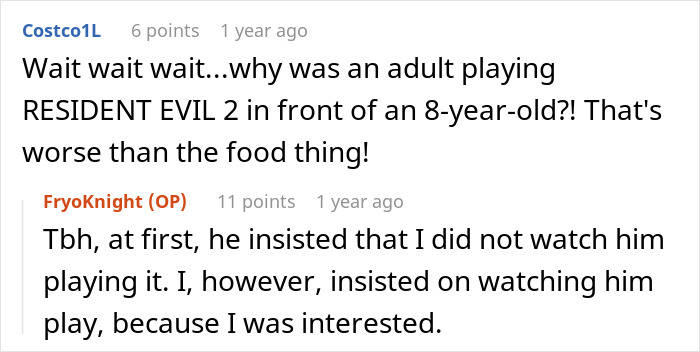

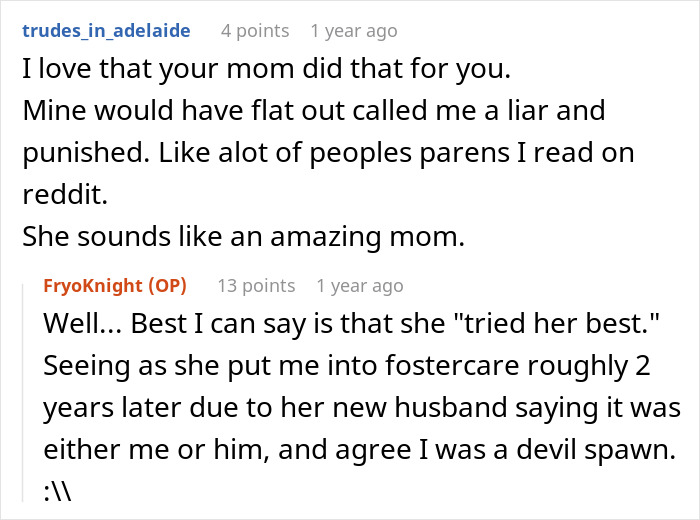

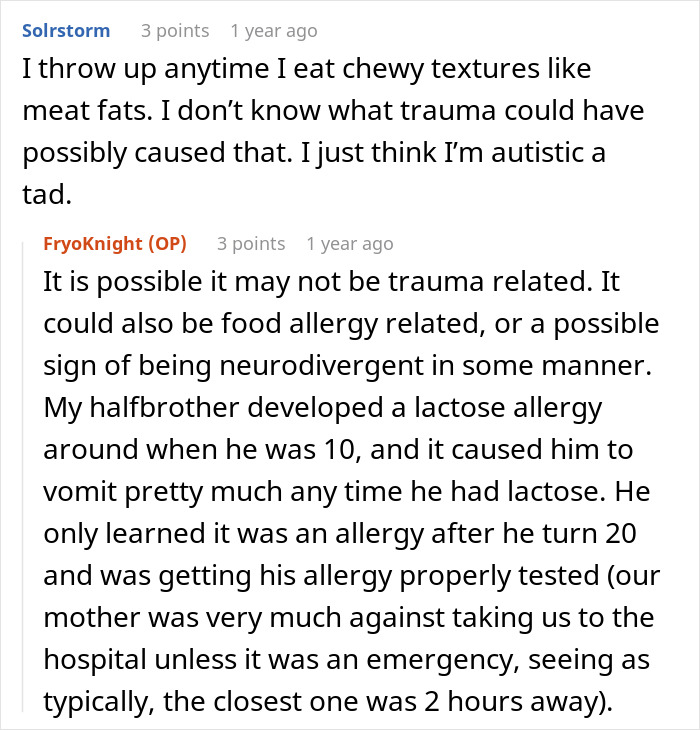
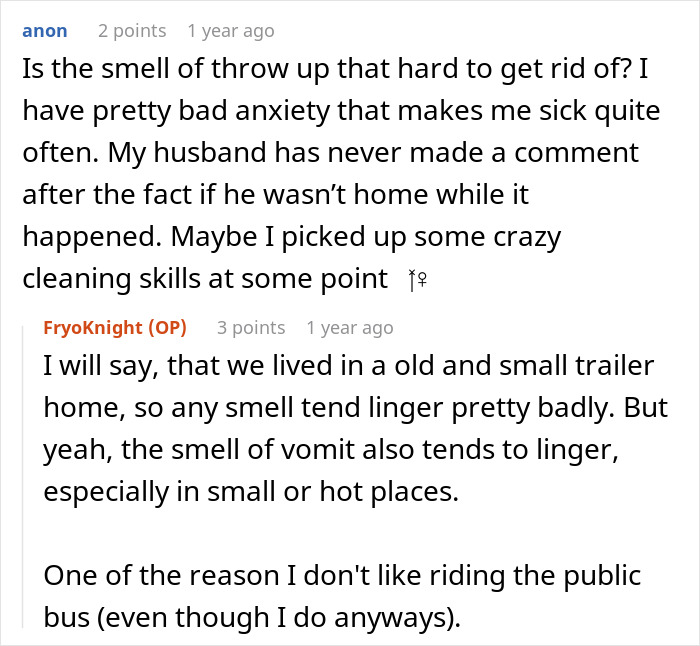

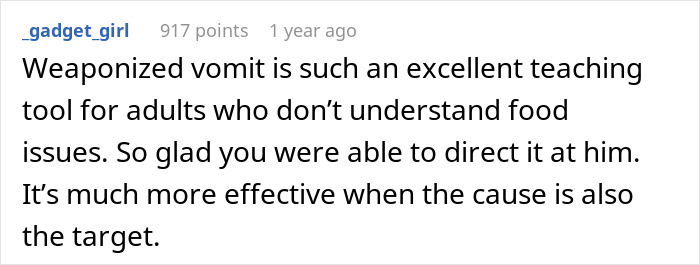
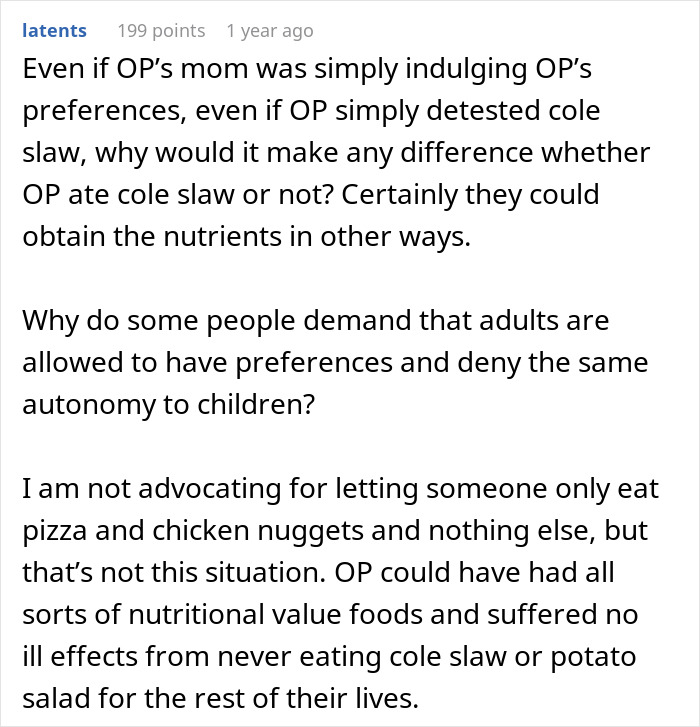

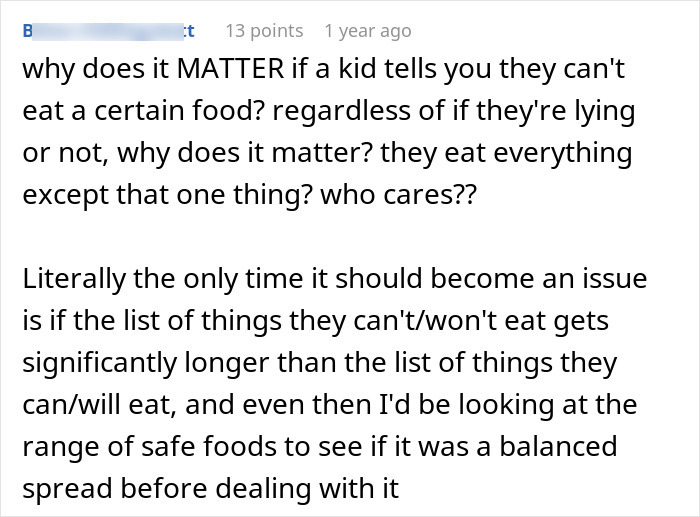

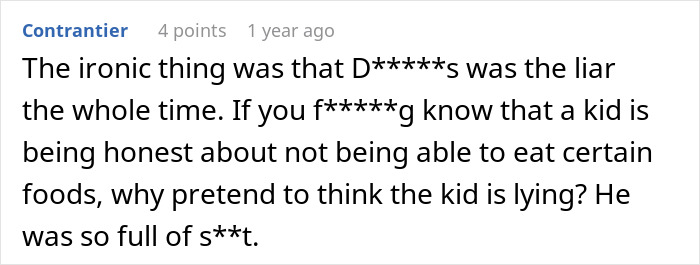


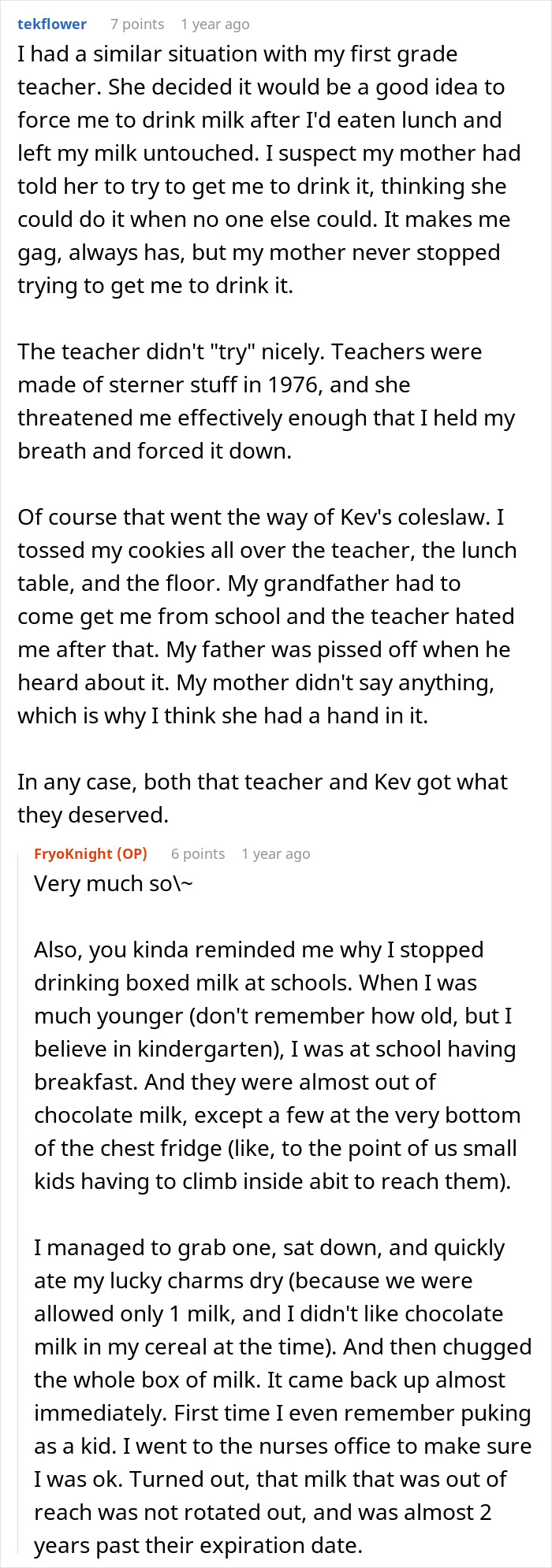
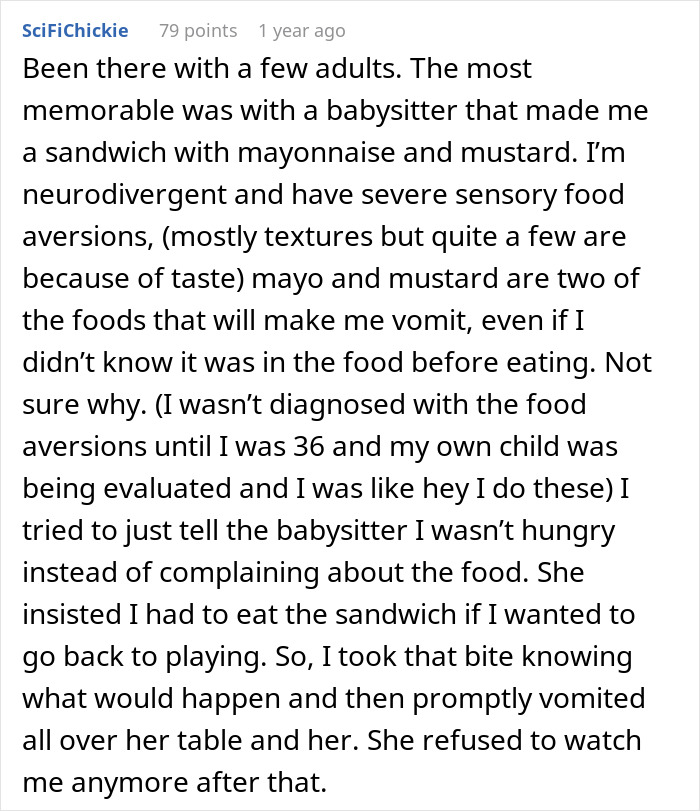
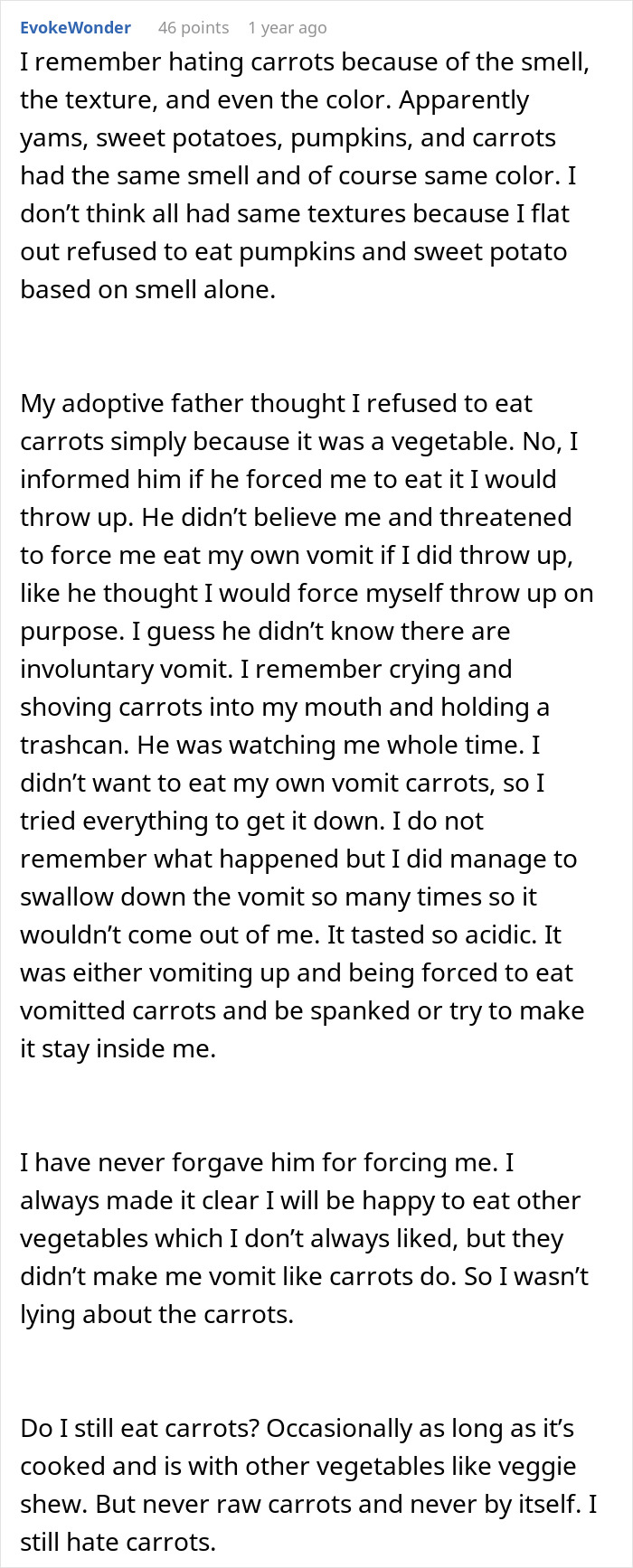
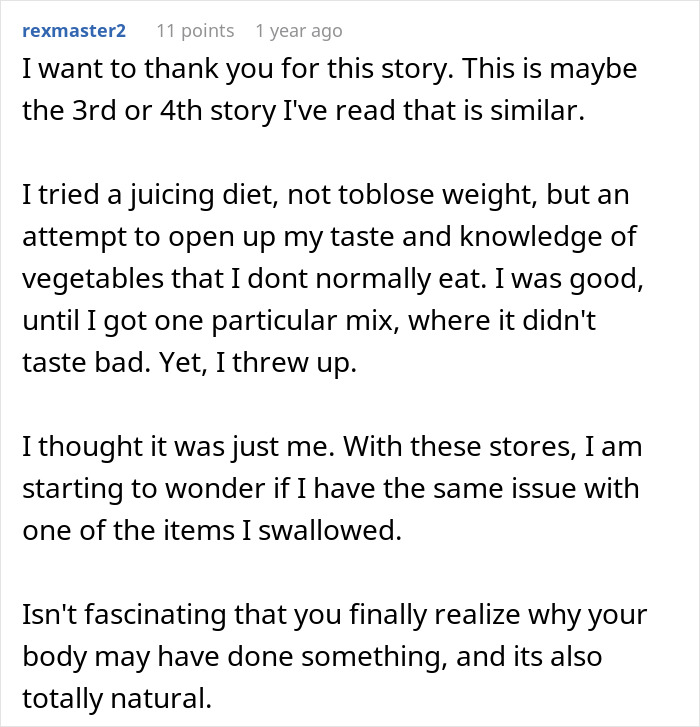
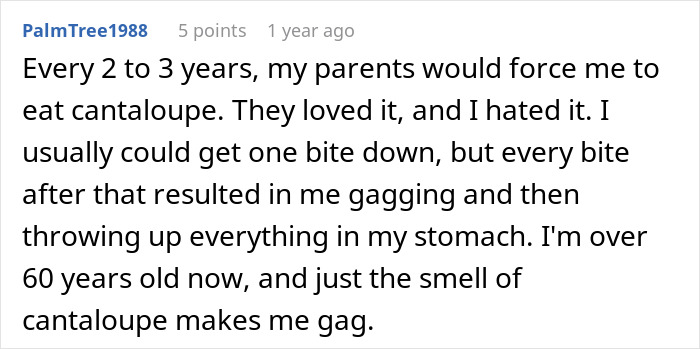
The story also prompted others in the comments to open up about their own experiences with food-related trauma
Poll Question
Total votes ·Thanks! Check out the results:
Total votes · Newsletter
Subscribe to Access
Exclusive Polls

By entering your email and clicking Subscribe, you're agreeing to let us send you customized marketing messages about us and our advertising partners. You are also agreeing to our Privacy Policy.
Thank you! You've successfully subscribed to newsletters!
Share on Facebook Nikita Manot
Writer, BoredPanda staff
Read more »Nikita's knack for storytelling and creativity has led her into the world of writing. With a robust foundation in business studies, she crafts compelling narratives by seamlessly blending analytical insight with imaginative expression. At Bored Panda, she embarks on an exhilarating quest to explore diverse topics, fueled by curiosity and passion. During her leisure time, she savors life's simple pleasures, such as gardening, cooking homemade meals and hosting gatherings for loved ones.
Read less » Nikita Manot
Writer, BoredPanda staff
Read more »Nikita's knack for storytelling and creativity has led her into the world of writing. With a robust foundation in business studies, she crafts compelling narratives by seamlessly blending analytical insight with imaginative expression. At Bored Panda, she embarks on an exhilarating quest to explore diverse topics, fueled by curiosity and passion. During her leisure time, she savors life's simple pleasures, such as gardening, cooking homemade meals and hosting gatherings for loved ones.
Read less » What do you think ? POST
POST  DrBronxx DrBronxx Community Member • points posts comments upvotes FollowUnfollow 9 hours ago
 Today I learned that food trauma is a thing. Not, strictly speaking, a formal medical diagnosis, but a thing nonetheless.
5 5points reply Scotira Scotira Community Member • points posts comments upvotes FollowUnfollow 3 hours ago
 My late mother was born right after WW2 in Germany. So food was scarce and they would water down a lot of things and stretch meals. And oc nothing was wasted. Breakfast usually was oatmeal gruel (cooked oats, water, and a splash of milk. And she hated it, she had to sit at the table until every bite was gone. Her whole life she couldn't drink anything with milk in it, eat anything with oats or even look at someone eating oats with milk without getting sick. Forcing someone to eat something is a sure way to get someone an eating disorder 🤦🏻♀️
 KatSaidThat KatSaidThat Community Member • points posts comments upvotes FollowUnfollow 3 hours ago
 It very much is and can lead to serious eating disorders, which become a medical issue.
2 2points reply Bookworm Bookworm Community Member • points posts comments upvotes FollowUnfollow 11 hours ago
 I would have stayed and continued throwing up on the bf until I was done.
5 5points reply GatorGran GatorGran Community Member • points posts comments upvotes FollowUnfollow 8 minutes ago
 Throwing up into the tub of coleslaw should be an option.
0 0points reply Load More Replies... Earonn - Earonn - Community Member • points posts comments upvotes FollowUnfollow 4 hours ago
 What is it with freaks not believing it when other people tell them they can't eat certain things? Even if they exaggerate or can-but-just-don;t-want, surely it's better to do it than to risk anything or force people to eat something they hate? Yes, I'm sure there are exceptions, but that doesn't constitute a reason to mistreat everyone.
2 2points reply Load More Comments POST DrBronxx DrBronxx Community Member • points posts comments upvotes FollowUnfollow 9 hours ago Today I learned that food trauma is a thing. Not, strictly speaking, a formal medical diagnosis, but a thing nonetheless.
5 5points reply Scotira Scotira Community Member • points posts comments upvotes FollowUnfollow 3 hours ago My late mother was born right after WW2 in Germany. So food was scarce and they would water down a lot of things and stretch meals. And oc nothing was wasted. Breakfast usually was oatmeal gruel (cooked oats, water, and a splash of milk. And she hated it, she had to sit at the table until every bite was gone. Her whole life she couldn't drink anything with milk in it, eat anything with oats or even look at someone eating oats with milk without getting sick. Forcing someone to eat something is a sure way to get someone an eating disorder 🤦🏻♀️
4 4points reply Load More Replies... KatSaidThat KatSaidThat Community Member • points posts comments upvotes FollowUnfollow 3 hours ago It very much is and can lead to serious eating disorders, which become a medical issue.
2 2points reply Bookworm Bookworm Community Member • points posts comments upvotes FollowUnfollow 11 hours ago I would have stayed and continued throwing up on the bf until I was done.
May you like
GatorGran GatorGran Community Member • points posts comments upvotes FollowUnfollow 8 minutes ago Throwing up into the tub of coleslaw should be an option.
0 0points reply Load More Replies... Earonn - Earonn - Community Member • points posts comments upvotes FollowUnfollow 4 hours ago What is it with freaks not believing it when other people tell them they can't eat certain things? Even if they exaggerate or can-but-just-don;t-want, surely it's better to do it than to risk anything or force people to eat something they hate? Yes, I'm sure there are exceptions, but that doesn't constitute a reason to mistreat everyone.
2 2points reply Load More Comments Back to Homepage
  More about Relationships Homepage
  Trending Relationships Homepage Next in Relationships Related on Bored Panda