Iran's loser victory
 Charlie Gammell
Iran’s loser victory
- Friday, June 19, 2026, 5:14 AM
-
Text size
- Small
- Medium
- Large
- Compact
- Normal
- Spacious
- Comments
-
Share
Share
Charlie Gammell
Iran’s loser victory
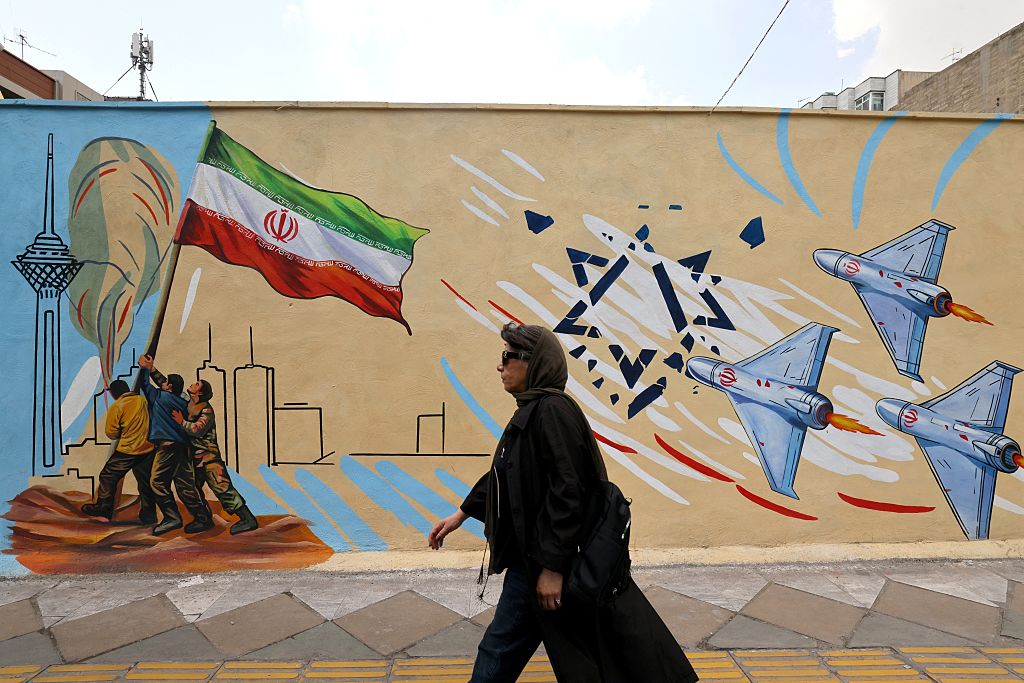
After years of negotiations, two wars, a succession of ruthlessly quashed uprisings in Iran and countless billions of dollars’ worth of ordnance smashing into rubble across the region, we have the bones of an agreement. Not a deal, it should be said. Instead an understanding that manages to speak volumes and yet say very little in the way of concrete details. Vice President JD Vance’s trip to Switzerland may have been postponed — after Israel and Hezbollah exchanged fire over Lebanon last night — but the Memorandum of Understanding between America and Israel has been signed, and both sides seem confident that the peace process has not yet been derailed.
Who won, you might ask? Surely, Iran. The US, after all, has not achieved one of its stated aims of the conflict; the regime still stands, missile stockpiles still exist, the proxies still fight and a Khamenei rules over the people of Iran.
Tehran has gained some mighty financial concessions from the US. Clause 9 of the Memorandum of Understanding (MOU) clearly states that Iran’s nuclear program will “maintain” the status quo, i.e., still be able to enrich uranium and maintain centrifuges. Gone is the Trumpian red line of zero enrichment.
You could say that the Islamic Republic has undergone a coup, of sorts
Likewise, Iran will, subject to compliance, receive a $300 billion reconstruction fund (double what the Marshall Plan would be worth in today’s money), paid for from regional pockets. Those very same pockets that have taken such a hammering both literally and economically since Iran decided to close the Strait of Hormuz, a concession which must be a bitter pill to swallow across the Gulf, and in Tel Aviv.
Let’s not forget, one of the main reasons for Trump pulling out of the JCPOA in 2018 was due to significant pressure from Gulf powers, alarmed at how Iran was spending its new sanctions-free income on proxies and expanding its influence in the region. And now they are being asked to pay huge sums of money to rebuild the economy of their most troublesome neighbor.
Similarly, the Strait of Hormuz, once closed, can always be closed again, a reality that gives Iran the sort of latent leverage that a nuclear bomb might once have provided. But at a fraction of the cost, and without any of the aggravation.
Dig a little deeper, however, and the truth becomes more complicated. For despite the Islamic Republic’s apparent ascendancy, both in its ability to shape a global narrative which pits them as the plucky underdogs, but also in its ability to survive months of bombardment, Tehran has repeatedly returned to the negotiating table.
What has driven this desire to negotiate again and again has been the economic imperative. Or put simply, a currency in free fall, an economy utterly decimated by the internet shutdown that has crippled Iran’s highly significant e-commerce sector and rampant inflation that has put even the most basic foodstuffs beyond the reach of ordinary Iranians.
Iran may well feel entitled to claim this MoU as a great victory, and so they should, but the clearer eyed strategists in the Islamic Republic (and there are many of them) are aware of the scale of the challenge ahead. The regime knows that staying in power is not simple, nor is managing their “victory” in such a way that gives Iranian people a measure of economic relief, skates over the horrors of January’s massacre and the drumbeat of executions of political prisoners. Overcoming these problems will take time, money and is by no means a sure thing.
Most popular
Jane Stannus
Who stands to gain in the pistachio wars?
Kelly Chapman
My night with Woah VickyBen Clerkin
What I saw at the Montréal shootingThe Islamic Republic of today is fundamentally different to the Islamic Republic of last year. January saw the IRGC and the Basij kill thousands upon thousands of Iranians in the name of staying in power. The war has simply cemented the power of these same people. An Islamic Republic shorn of its Supreme Leader, Ali Khamenei, is more akin to a military dominated state such as Pakistan. Mojtaba’s whereabouts are simply unknown. You could say that the Islamic Republic has undergone a coup, of sorts. And not everyone is pleased.
Clerical hardliners have vocally opposed the signing of the MoU, publicly denouncing Mohammad-Bagher Ghalibaf, the parliamentary Speaker, and Abbas Araghchi, foreign minister, accusing them of having the blood of former Supreme Leader Ali Khamenei on their hands. Mojtaba Khamenei condition and whereabout remain a mysterious, but he’s no doubt wary of an over-powerful IRGC rendering him obsolete and is reportedly shoring up his power base wherever he can.
Ghalibaf and the IRGC, despite being on the same page today, will ultimately diverge on how Iran evolves from conflict to post-conflict. Ghalibaf, a sharp elbowed mercantilist and pragmatist, will seek to use the money to make Iran prosperous and secure. Meanwhile, elements of the IRGC will look to reconstitute, gradually, Iran’s Axis of Resistance, and perhaps stick more closely to Iran’s revolutionary heritage.
Without the ruthless guiding of a feared Supreme Leader, it remains to be seen for how much longer the centre can hold. As the spoils of war, sanctions waivers and unfrozen assets, start to trickle into the Iranian system, these splits and fractures could potentially become the fault lines. Nothing corrodes quite like a huge influx of money into a corrupt political-economic system.
Donald Trump is significantly less popular on the streets of Iran than he was in those heady days of January 2026, when he was recklessly promising help to brave Iranians fighting bullets with bottles, urging them head out to resist. “He’s just as bad as the IRGC,” an Iranian said to me yesterday. There will, undoubtedly, be more popular unrest in Iran in the coming months, but as the US seeks to remove sanctions (a hugely complex venture fraught with US and EU legal challenges), what support can the people of Iran expect in their valiant struggle?
Who can derail this now? Iranian decision makers are adamant that this deal will go through, and have told their military that responding to Israeli aggression is best done obliquely. Tehran will seek to use Israeli attacks on Lebanon to drive a harder bargain with the US during these crucial 60 days, driving a wedge between Donald and Bibi and ultimately feeding the Iranian regional charm offensive which aims to portray Israel, not Iran, as the real regional menace. It seems as if message discipline in Iran will hold when it comes to resisting Israeli provocation.
Both Donald Trump and J.D. Vance have talked a tough game since the signing of the MoU, stressing that they won’t tolerate any Iranian backsliding. But in reality, US options when it comes to pressuring Iran are limited to economic levers. Washington has been strategically outplayed by Tehran to the extent that Iran has rendered superior military might obsolete. Any US military attack on Iran would simply be met with asymmetrical attacks across the region, and once again a closed Strait of Hormuz. Historians will, one day, marvel at how, once again, the world’s most mighty military has been blunted by a smarter, more ruthless, more cunning foe.
Beyond the recriminations in DC and the muted jubilation in Tehran, it’s worth noting the huge significance of this moment. There may well be a realignment in the Middle East, with a resurgent IRGC-dominated Iran, an isolated Israel and a bloc of Sunni Arab nations looking on nervously. The next 60 days will define the next decade, and beyond.
Badenoch blasts 'moaning' female Labour MPs over Burnham jobs 'quota'

Kemi Badenoch has told Labour women to earn a job in Andy Burnham's Cabinet instead of demanding they are handed jobs because of their gender.
The Tory leader lashed out today amid reports that female MPs are demanding the de-facto new prime minister introduce a 50:50 gender split 'quota' in his government.
Amid reports that former foreign secretary David Miliband is being lined up to return to the role, possibly with his brother Ed as Chancellor, one female minister also complained that Burnham could not have 'more Milibands than women' in the top posts.
But in a scathing article in the Times today Mrs Badenoch told them to 'stop moaning' and get chosen on merit instead of retreating into 'more of the failed identity politics that is holding back our country'.
'There are many, many reasons why you shouldn't have any Milibands in the cabinet,' she said.
'But complaining that the boys haven't given them the right jobs or that the boys are taking all the jobs, just shows that Labour's women still don't get it.'
The idea of quotas was also attacked by Baroness Jacqui Smith, Labour's Skills Minister.
Asked by Times Radio if Mr Burnham should reserve jobs for women, she said: 'No, I think what Andy Burnham should be doing is building the very best team around him to change this country.'

A letter written by the Women's Parliamentary Labour Party has called on Mr Burnham to ensure a 50:50 split between men and women in government jobs

Amid reports that former foreign secretary David Miliband (above, right, in 2010) is being lined up to return to the role, possibly with his brother Ed as Chancellor, one female minister complained that Burnham could not have 'more Milibands than women' in the top posts

But Mrs Badenoch told them to pipe down and get chosen on merit instead of retreating into 'more of the failed identity politics that is holding back our country'
A letter written by the Women's Parliamentary Labour Party and seen by the BBC has called on Mr Burnham to ensure a 50:50 split between men and women in government jobs after he succeeds Sir Keir Starmer.
'We are asking you to demonstrate this change from day one and address the toxicity and misogyny within our own party and government,' it said.
Labour has never had a female leader, while the Conservatives have had three, and Mrs Badenoch urged the government to follow its meritocratic example.
'If you run a meritocracy, then you do not have to worry about jobs for the boys,' she wrote.
'Every woman who is a Conservative MP, every woman who has ever won the leadership, has had to fight to get where she is.
'By contrast, Labour women are demanding guarantees from Burnham. But the truth is he doesn't have to give any guarantees.
'If none of Labour's women are prepared to get their hands dirty and challenge him for the leadership, their demands are toothless.'
'In fact, it's quite revealing that the women's parliamentary Labour Party has written to Burnham asking him to commit himself to at least 50 per cent female ministers.
'This has nothing to do with meritocracy. It is yet more of the failed identity politics that is holding back our country.'
Venezuela Fury and Noah Price subsidising their life by livestreaming

Venezuela Fury and her husband Noah Price look to be making their own way in the world by raking it in from their lucrative social media accounts.
The influencer daughter of Tyson and Paris Fury, 16, has become an internet sensation after tying the knot with her husband Noah, 19, earlier this year.
Since getting married and moving in together the couple have been earning thousands of pounds a month, livestreaming their life as newlyweds in their static caravan in the East Riding of Yorkshire.
And fans can't get enough of their regular life updates on TikTok and Kick, which have proved to be very profitable for the pair.
They look to be supporting themselves after Noah denied that he was given £5million by Venezuela's family as a wedding gift.
Despite his wife's huge family wealth, an estimated combined £160 million, Noah recently told his Kick followers that he 'pays for everything' for the couple.
Making light of the claims about Venezuela's millionaire financial status, Noah said: 'I actually pay for everything unfortunately. You'd expect the millionaire to pay for it wouldn't you.'

Venezuela Fury and Noah Price are earning thousands livestreaming their caravan life - after her new groom insisted he pays all the bills and denied he had £5m handout from her dad

The influencer daughter of Tyson and Paris Fury , 16, has become an internet sensation after tying the knot with her husband Noah, 19, earlier this year
Venezuela then asked their fans: 'Do you think I am a millionaire?'
Noah joked: 'She isn't a secret millionaire guys', before she broke into song and sang: 'But I live like a millionaire!'
But it seems according to estimated calculations from their social media work, Noah and Venezuela can more than afford to support themselves.
Noah has been livestreaming on platforms such as Kick and TikTok, where viewers can send paid gifts or donations.
He was previously encouraging viewers to send gifts on his honeymoon during livestreams, suggesting this is one revenue stream.
Both Noah and Venezuela have built substantial followings on Instagram and TikTok. They can potentially earn money through sponsored posts, brand collaborations, affiliate links and creator payouts.
Kick allows its creators to take home 95 per cent of the £4.99 subscription cost that fans pay.
Streamers keep 100 per cent of direct tips and donations, minus minor standard payment processing fees.
It is unclear how many subscribers Noah currently has because this information is hidden, but he does have 7,200 followers which is publicly viewable.
An industry insider has suggested Noah is making around £400 per video on TikTok, while Venezuela is likely to make £2,000 due to her following count of 1.3 million.

An industry insider has suggested Noah is making around £400 per video on TikTok, while Venezuela is likely to make £2,000 due to her following count of 1.3 million
In one video on their honeymoon, Noah asked his followers if they'd give them some more gifts now that they were married.
In a TikTok live viewed by 20,000 he said: 'Keep liking our videos people, keep sending gifts.'
After saying thank you to several of his followers he joked they should stick around on the livestream and 'watch Venezuela punch me in the mouth'.
The other half of the honeymooning couple said: 'I am, honestly!'
Noah previously confirmed that the pair don't share their finances after they were asked whether they have a shared bank account.
'She earns her money, I earn mine,' said Noah, as Venezuela joked: 'Yeah, what you gonna do about it.'
Noah went on to debunk the rumour that Tyson gave him £5million when he tied the knot with his daughter as he insisted: 'No Tyson did not give me £5million'.
Meanwhile Venezuela is being eyed up by executives for a fly on the wall TV series.

Noah went on to debunk the rumour that Tyson gave him £5million when he tied the knot with his daughter as he insisted: 'No Tyson did not give me £5million'
Boasting 1.3 million TikTok followers, Venezuela is already entertaining fans with her honest musings and candid moments, from cooking to kitting out her and Noah's static caravan home.
And following the success of the Netflix series At Home With The Furys, it is no wonder bosses are wanting to draw on the Fury popularity.
A TV insider said: 'The couple are not A-list celebrities but everyone has become obsessed with their love story.
'People are genuinely intrigued by them. Whether it’s the fact they have married so young, Venezuela’s famous family or their gypsy lifestyle, they have the ‘X factor'.
'Several TV executives think a proper fly-on-the-wall series following their lives as newlyweds in the gypsy community would be fascinating,' they told The Sun.
It is thought Netflix would be likely to produce the series due to their already established relationship with the Furys.
Venezuela's representatives told The Daily Mail: 'We have many offers on the table regarding Venezuela which we are discussing.'