Internal emails show how RFK Jr.'s team sought to sway the CDC
 Politics
Internal emails show how RFK Jr.'s team sought to sway the CDC
By Joe Walsh Senior Editor, Politics Joe Walsh is a senior editor for digital politics at CBS News. Joe previously covered breaking news for Forbes and local news in Boston. Read Full Bio Joe WalshJune 25, 2026 / 11:24 PM EDT / CBS News
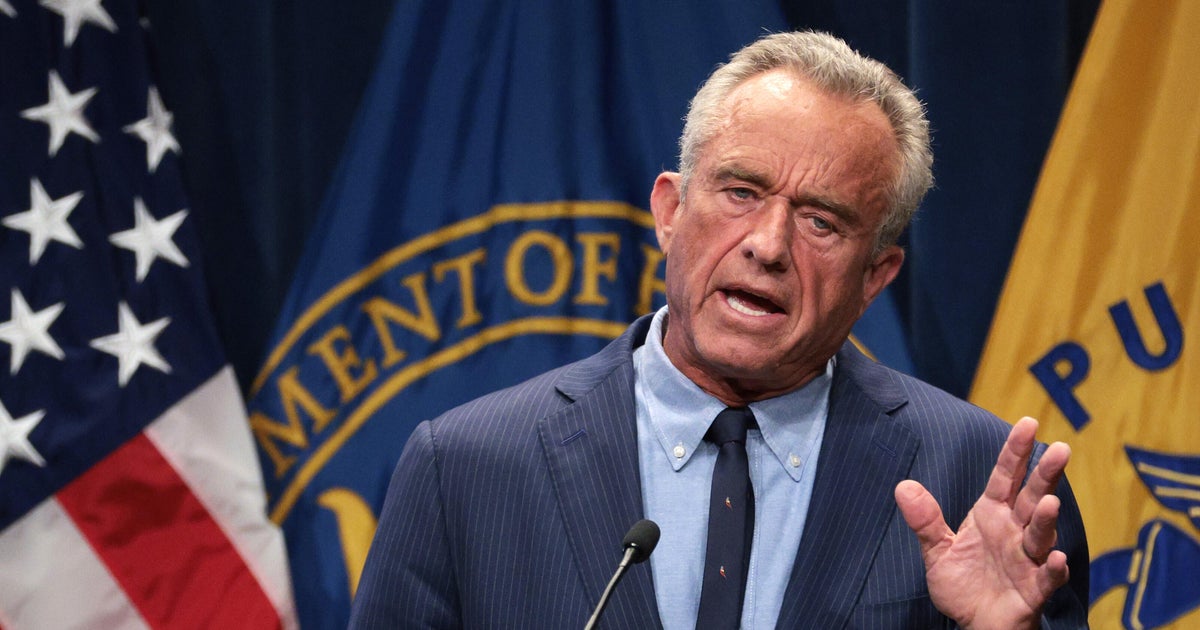
Add CBS News on GoogleA trove of newly released internal emails offers a new look at how the Centers for Disease Control and Prevention navigated some of the most controversial public health decisions of President Trump's second term — and, at times, chafed at pressure from Health and Human Services Secretary Robert F. Kennedy Jr. and his team.
The emails span from the administration's early days — when HHS sought to shut down a flu vaccine advertising campaign — to the dramatic firing of CDC Director Susan Monarez last August. They were formally released Thursday by Democrats on the Senate Committee on Health, Education, Labor and Pensions, which said it obtained them from Dr. Debra Houry, the CDC's former chief medical officer who resigned after Monarez was ousted.
The committee's ranking member, independent Sen. Bernie Sanders of Vermont, argued the emails show Kennedy, a longtime vaccine skeptic, "prioritized politics over public health, ignored expert guidance, and endangered people, particularly children."
CBS News has reached out to HHS for comment.
Request to pull flu vaccine ads "came directly from" RFK Jr.
In mid-February 2025, during flu season, then-CDC communications official Nicole Coffin told colleagues in an email that HHS communications chief Andrew Nixon "asked that we pull out of circulation all campaign ad buys related to flu or anything encouraging shots or vaccinations."
The request "came directly from the Secretary," Coffin said she was told, adding that the plan was to focus on "informed consent," or messaging that informs patients of risks and benefits.
Another CDC official then looped in Monarez and Houry and warned of possible consequences.
"Given that this is the worst flu season in years, halting a campaign currently in the field presents significant reputational risk to the agency," he wrote in an email. "There are also likely legal issues with contracts/appropriated funding."
On a separate email chain, Coffin asked Nixon if she could share the CDC's flu shot-related ad campaigns with him so the agency could understand what needed to change. Nixon responded that he was happy to take a look, but "this was a direct ask from Secretary Kennedy."
Several days later, Coffin said HHS had "instructed we immediately pause" a pro-vaccination ad campaign called "Wild to Mild." Another campaign known as "Get My Flu Shot" would remain.
RFK's move to replace members of vaccine panel: "He doesn't care which members"
A few months into his tenure, Kennedy removed all 17 members of the Advisory Committee for Immunization Practices, which makes vaccine recommendations for the nation. Before making the decision public, a Kennedy aide noted in a memo that the panel, known as ACIP, had only one vacancy after 2024 and new openings would not come up until 2027.
"This gives Biden appointees significant sway over ACIP and its recommendations until 2028," according to a draft memo, which outlined Kennedy's options for replacing either some or all of the existing ACIP members.
Separately, in a set of notes from an internal meeting on the planned changes, a CDC official appeared to suggest Kennedy's team was frustrated that the Biden administration had filled vacancies just before Joe Biden left office.
"They think last minute appointments were a way to block. Didn't ask us for help," the official wrote, summarizing Kennedy's views.
"Secretary wants to replace 10 members on the ACIP committee. He has a bench of 10 ready to replace," the notes also read. "He doesn't care which members."
Stuart Burns, a Kennedy adviser at the CDC, was tasked with writing a new memo about the plan. The stated objective would be "to 'depoliticize' the committee by installing people more aligned to the Secretary's agenda," the meeting notes said.
ACIP's influential recommendations are closely watched because they're directly tied to federal policies — including which vaccines insurers are required to cover.
Ultimately, Kennedy removed all the members, writing in an opinion piece in The Wall Street Journal, "A clean sweep is needed to re-establish public confidence in vaccine science."
His picks included close allies and members of his inner circle. Several had a history of criticizing vaccine recommendations or questioning their safety. Some had ties to lawsuits against vaccine makers. One said he had previously invested in a vaccine.
A federal judge ruled in March the changes at the advisory committee were unlawful, finding the Trump administration had "disregarded" required processes. HHS appealed.
Major CDC decisions needed "political review"
In mid-August of last year, a senior HHS aide sent Monarez an email emphasizing the "absolute need for political review of major policy decisions at CDC."
Noting that Monarez's team was working on some "key priorities of the White House and the Secretary," the aide said a Kennedy adviser and Monarez's chief of staff "both need to review any major policy decision coming out of CDC before changes occur."
Monarez was told to "err on the side of caution" when deciding what qualifies as "major."
Eight days later, Monarez was ousted. She had been confirmed by the Senate less than a month earlier, though she led the CDC in an acting capacity before then.
Monarez's ouster coincided with the resignations of several other top CDC officials, including Houry — the agency's chief medical officer — and Dr. Demetre Daskalakis, who led the National Center for Immunization and Respiratory Diseases.
Monarez later wrote in a Wall Street Journal opinion piece that Kennedy had "pressured me to resign or face termination" in a late August meeting, and asked her to "preapprove" any recommendations by the new vaccine advisory committee.
She also testified to the Senate that in the leadup to her firing, Kennedy pressured her to agree to upcoming changes to the childhood vaccination schedule and to commit to firing CDC scientists. When she refused those conditions, she said, Kennedy told her that he had already spoken to the White House about having her removed.
Several months later, the CDC reduced the number of recommended childhood immunizations from 17 to 11, with several other vaccines — including for hepatitis A and hepatitis B — recommended primarily for children in high-risk categories. The new guidance was heavily criticized by health groups, which argued the decision could sow confusion and leave children vulnerable to serious disease. The Trump administration argued the guidance was aligned with vaccination schedules in other Western countries.
HHS strongly denied Monarez's allegations and accused her of insubordination while on the job, including by refusing to implement Mr. Trump's executive orders.
Kennedy accused Monarez of lying, telling senators in an early September hearing: "I never had a private meeting with her. Other witnesses to every meeting that we have, and all those witnesses will say, 'I never said that.'"
Kennedy claimed he asked Monarez to resign "because I asked her, 'Are you a trustworthy person?' and she said no." She disputed his account of the conversation.
Badenoch blasts 'moaning' female Labour MPs over Burnham jobs 'quota'

Kemi Badenoch has told Labour women to earn a job in Andy Burnham's Cabinet instead of demanding they are handed jobs because of their gender.
The Tory leader lashed out today amid reports that female MPs are demanding the de-facto new prime minister introduce a 50:50 gender split 'quota' in his government.
Amid reports that former foreign secretary David Miliband is being lined up to return to the role, possibly with his brother Ed as Chancellor, one female minister also complained that Burnham could not have 'more Milibands than women' in the top posts.
But in a scathing article in the Times today Mrs Badenoch told them to 'stop moaning' and get chosen on merit instead of retreating into 'more of the failed identity politics that is holding back our country'.
'There are many, many reasons why you shouldn't have any Milibands in the cabinet,' she said.
'But complaining that the boys haven't given them the right jobs or that the boys are taking all the jobs, just shows that Labour's women still don't get it.'
The idea of quotas was also attacked by Baroness Jacqui Smith, Labour's Skills Minister.
Asked by Times Radio if Mr Burnham should reserve jobs for women, she said: 'No, I think what Andy Burnham should be doing is building the very best team around him to change this country.'

A letter written by the Women's Parliamentary Labour Party has called on Mr Burnham to ensure a 50:50 split between men and women in government jobs

Amid reports that former foreign secretary David Miliband (above, right, in 2010) is being lined up to return to the role, possibly with his brother Ed as Chancellor, one female minister complained that Burnham could not have 'more Milibands than women' in the top posts

But Mrs Badenoch told them to pipe down and get chosen on merit instead of retreating into 'more of the failed identity politics that is holding back our country'
A letter written by the Women's Parliamentary Labour Party and seen by the BBC has called on Mr Burnham to ensure a 50:50 split between men and women in government jobs after he succeeds Sir Keir Starmer.
'We are asking you to demonstrate this change from day one and address the toxicity and misogyny within our own party and government,' it said.
Labour has never had a female leader, while the Conservatives have had three, and Mrs Badenoch urged the government to follow its meritocratic example.
'If you run a meritocracy, then you do not have to worry about jobs for the boys,' she wrote.
'Every woman who is a Conservative MP, every woman who has ever won the leadership, has had to fight to get where she is.
'By contrast, Labour women are demanding guarantees from Burnham. But the truth is he doesn't have to give any guarantees.
'If none of Labour's women are prepared to get their hands dirty and challenge him for the leadership, their demands are toothless.'
'In fact, it's quite revealing that the women's parliamentary Labour Party has written to Burnham asking him to commit himself to at least 50 per cent female ministers.
'This has nothing to do with meritocracy. It is yet more of the failed identity politics that is holding back our country.'