How cities are fighting back against the 'heat island effect'
How cities are fighting back against the 'heat island effect'
As temperatures rise, researchers are rethinking how cities measure and respond to urban heat. But experts say successful solutions require finding solutions tailored to local conditions rather than relying on one-size-fits-all fixes.
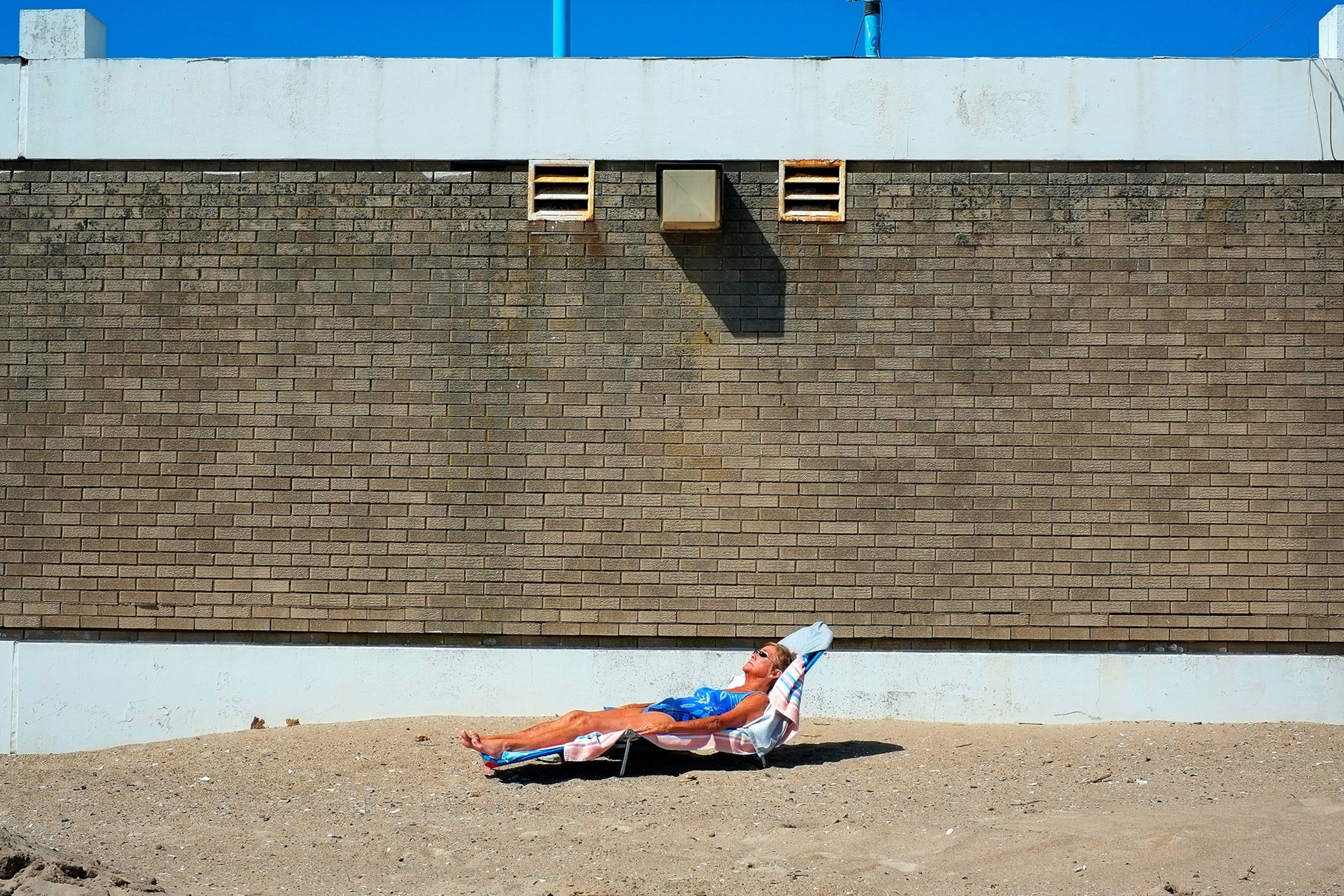
Record-breaking heat and humidity are already upon us at the start of what is predicted to be a scorcher of a summer.
Our cities, with their dark, asphalt surfaces, exhaust-emitting vehicles, and heat-trapping buildings, feel these temperatures the most. Many residents experience at least 8 degrees of additional heat just because of their neighborhood layout, according to Climate Central, which assessed heat patterns in 65 metropolitan areas.
These high temperatures radiate starkly in contrast to surrounding suburbs on a thermal satellite map, earning the phenomenon its name: the Heat Island Effect. It’s been a guiding metric in heat mitigation since the field became widely studied over a decade ago.
The Heat Island Effect can be a helpful—if at times overly simplistic—reference point, scientists say. It raises awareness about the severity of urban heat but experts say the phenomenon can put too much emphasis on the temperature of the ground, rather than the ways those temperatures affect people. High temperatures have been linked to cardiovascular deaths, chronic kidney disease mortality and respiratory failure.
(Extreme heat can be deadly–here’s how to know if you’re at risk.)
Scientists and architects have begun to search for protections from these extreme urban heat waves. What’s emerged in some places is a patchwork of green spaces, architectural innovations, and technological advancement, that might help cities find relief from searing temperatures.
These efforts require surgical precision or they can backfire. No two cities are the same, and their reasons for absorbing heat are also not the same, says Mat Santamouris, a distinguished professor of high-performance architecture at the University of New South Wales. Heat poses different problems for different cities: In some it’s a chronic condition, while in others it’s a rare but severe disaster that requires emergency preparedness. Adopting the wrong strategies can be wasteful and even detrimental.
“Every mitigation project in a city should be designed by experts and tested,” says Santamouris. “Or we risk having very poor results, spending a tremendous budget, and increasing temperature in the cities.”
The delicate art of building a heat-proof city
Each city is susceptible to heat in its own way.
Sydney and Dubai overheat because they are close to the desert. In these contexts, reflective surfaces can repel solar radiation, lowering temperatures and shrinking the hot air column above the cities.
By contrast, Athens’s heat comes from its dense planning and the blockage of airflow from the surrounding mountain range. In Athens the priority is ventilation: cooling rooftops to below the ambient air temperature with greenery and reflective materials. That pulls heavier, denser air down into the streets, drawing sea breezes through the city and flushing the heat out.
Other cities have adopted these practices. Singapore, which is warming roughly twice as fast as the global average, has been a leader in both architectural and technological innovations when it comes to cooling, investing in green spaces, shade, and underground cooling pipes.
(Why the heat index matters more than just the temperature)
Reflective surfaces on pavements or rooftops have become more common—and controversial—in the fight to beat the heat. Cities have used a variety of materials, from reflective paint to lighter-colored asphalt alternatives to cool surfaces. Reflective pavements were installed in one of Los Angeles’s hottest neighborhoods and during a 2022 heat wave saw ambient air temperatures as much as 3.4 degrees Fahrenheit cooler than those in neighboring areas, according to a 2024 study in in Environmental Research Communications.
But reflective surfaces have also become a lightning rod for dispute in the field.
“I'm a big fan of white paint but up high,” says Vivek Shandas, a professor at Portland State University who focuses on developing strategies for addressing the implications of climate change on urban areas. “I like coatings that don't necessarily reflect it right into the places people are walking.”
Others feel focusing on cooler surfaces misses the point.
"You’re making communities cooler, but you're not making people cooler necessarily," says V. Kelly Turner, a professor of urban planning at the University of California Los Angeles who directs the Heat Research Program at the Luskin Center for Innovation.
Planting the right trees in the right places
Another way to cool down a city? Introduce plants.
Medellin, Colombia, invested millions of dollars in “green corridors,” lush, connected thoroughfares across the city aimed at providing cool spaces and shade for pedestrians.
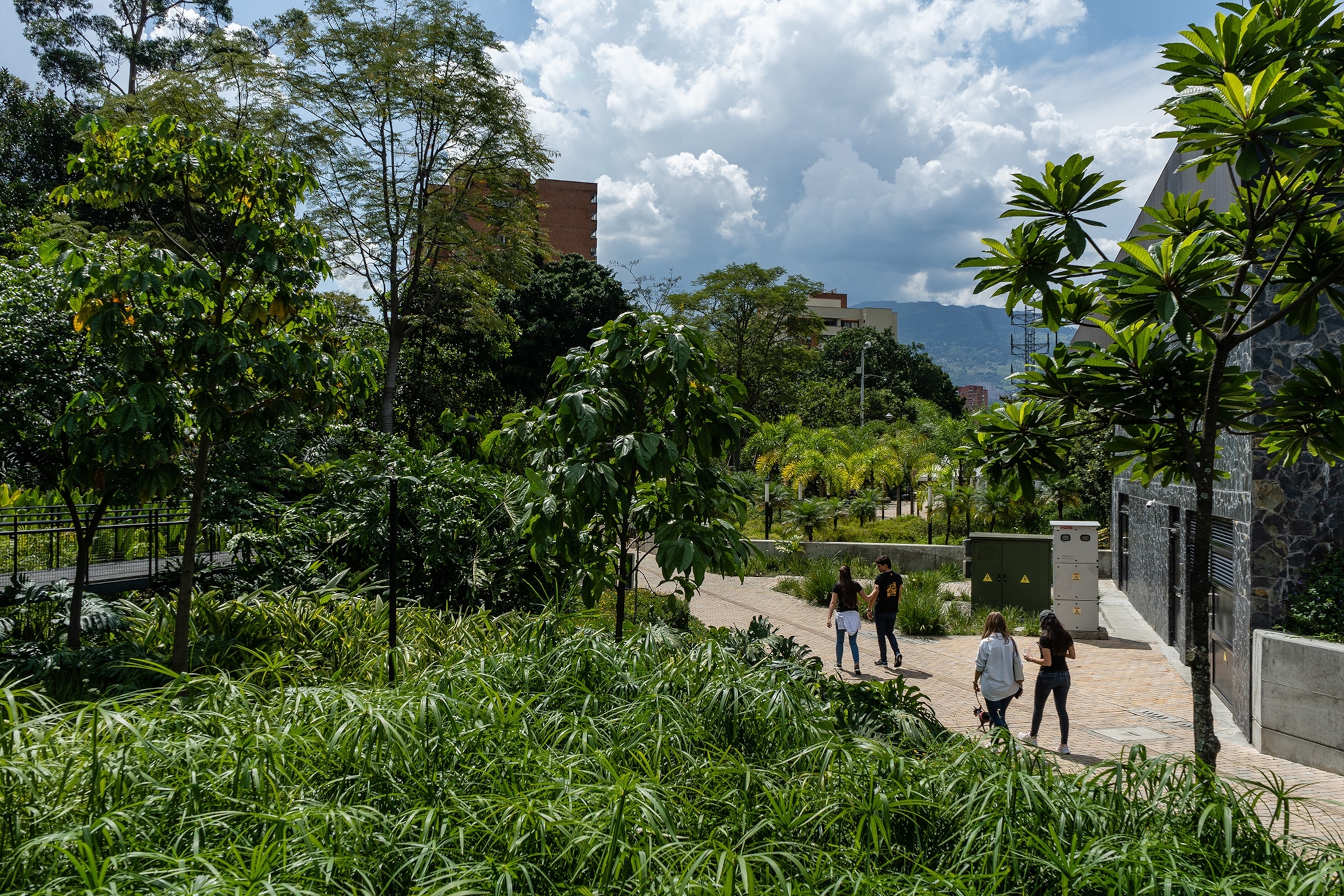
Santiago, Chile, pledged to plant 30,000 new trees in its metro area to provide shade and cooling for approximately a third of the country’s population.
Tree planting pledges have long been touted as ambitious fixes to environmental strife. But applied irresponsibly, they can do more harm than good, says Santamouris. “Humidity, increases in temperature.” In rare cases tree canopies can trap heat instead of shielding from it.
Considering the species of tree before planting is vital, testing if it can withstand the climate it is meant to protect from, how much water it needs, and where its shade would be most effective. For example, a tree planted in a parking lot is much less valuable to a community than one planted in a playground, says Ladd Keith, director of the Heat Resilience Initiative at the University of Arizona.
But be it greenery, architecture or reflective surfaces, these changes come at a cost, one many of the world's most heat-exposed countries simply can't afford, says Santamouris.
The future of fighting heat
Heat is ultimately a personal problem. It affects you differently depending on your age, where you live, what preexisting conditions you may have, and how you go about your day.
The next wave of heat mitigation may depend less on fixing a city or planting trees, and more on providing people with their own personalized warnings and forecasts.
“I don't think we're far off from the day when your Google Maps actually has a shade layer,” says Turner, that conjures walking routes away from the sun, adjusting for the time of day. Her own team has already mapped shade across 360 U.S. cities and towns. She also envisions a personalized weather app that swaps blanket heat alerts for more customized warnings based on your demographic and health risks.
Innovation in materials is also moving forward. Santamouris describes cutting-edge cooling surfaces still in the experimental phase that not only reflect sunlight but absorb water overnight and then evaporate it during the day.
And beyond pricey infrastructure, some cities have started to treat extreme heat as an emergency. Like flood or fire preparations, cities around the globe are implementing action plans, early warnings, and appointing heat officers charged with protecting communities.
In 2010 a heatwave in Ahmedabad, India, killed more than 1,000 people as temperatures rose to 116 degrees Fahrenheit. The city acted, formulating South Asia’s first heat-health action plan that launched three years later. The plan included a special forecast, early warnings, and educating health workers on heat illness and how to treat it.
(Heat waves kill people—and climate change is making it worse)
The framework has been credited with saving thousands of lives in subsequent heat waves. It also showed accessible ways that cities can protect people without spending money on new buildings, greenery, or material.
All these efforts underscore an inevitable and widespread reality. Our cities will get hotter, and they are no longer built for the climate we live in.
"At the end of the day, extreme heat affects everyone—not just through heat-related deaths and illnesses but quality of life: whether your children can play outside, whether you can exercise, the amount of money you spend on air conditioning, energy and water,” says Keith. “It really is more prevalent than a lot of folks understand in their daily lives.”
Ruby Mellen is a freelance writer based in Washington, D.C. She reports on climate change, science, and international affairs.Badenoch blasts 'moaning' female Labour MPs over Burnham jobs 'quota'

Kemi Badenoch has told Labour women to earn a job in Andy Burnham's Cabinet instead of demanding they are handed jobs because of their gender.
The Tory leader lashed out today amid reports that female MPs are demanding the de-facto new prime minister introduce a 50:50 gender split 'quota' in his government.
Amid reports that former foreign secretary David Miliband is being lined up to return to the role, possibly with his brother Ed as Chancellor, one female minister also complained that Burnham could not have 'more Milibands than women' in the top posts.
But in a scathing article in the Times today Mrs Badenoch told them to 'stop moaning' and get chosen on merit instead of retreating into 'more of the failed identity politics that is holding back our country'.
'There are many, many reasons why you shouldn't have any Milibands in the cabinet,' she said.
'But complaining that the boys haven't given them the right jobs or that the boys are taking all the jobs, just shows that Labour's women still don't get it.'
The idea of quotas was also attacked by Baroness Jacqui Smith, Labour's Skills Minister.
Asked by Times Radio if Mr Burnham should reserve jobs for women, she said: 'No, I think what Andy Burnham should be doing is building the very best team around him to change this country.'

A letter written by the Women's Parliamentary Labour Party has called on Mr Burnham to ensure a 50:50 split between men and women in government jobs

Amid reports that former foreign secretary David Miliband (above, right, in 2010) is being lined up to return to the role, possibly with his brother Ed as Chancellor, one female minister complained that Burnham could not have 'more Milibands than women' in the top posts

But Mrs Badenoch told them to pipe down and get chosen on merit instead of retreating into 'more of the failed identity politics that is holding back our country'
A letter written by the Women's Parliamentary Labour Party and seen by the BBC has called on Mr Burnham to ensure a 50:50 split between men and women in government jobs after he succeeds Sir Keir Starmer.
'We are asking you to demonstrate this change from day one and address the toxicity and misogyny within our own party and government,' it said.
Labour has never had a female leader, while the Conservatives have had three, and Mrs Badenoch urged the government to follow its meritocratic example.
'If you run a meritocracy, then you do not have to worry about jobs for the boys,' she wrote.
'Every woman who is a Conservative MP, every woman who has ever won the leadership, has had to fight to get where she is.
'By contrast, Labour women are demanding guarantees from Burnham. But the truth is he doesn't have to give any guarantees.
'If none of Labour's women are prepared to get their hands dirty and challenge him for the leadership, their demands are toothless.'
'In fact, it's quite revealing that the women's parliamentary Labour Party has written to Burnham asking him to commit himself to at least 50 per cent female ministers.
'This has nothing to do with meritocracy. It is yet more of the failed identity politics that is holding back our country.'