Explaining the Supplemental NFL draft, plus offseason workout takeaways
 Newsletter
Explaining the Supplemental NFL draft, plus offseason workout takeaways

IRVING, UNITED STATES: Cris Carter of the Minnesota Vikings (80) runs away from Dallas Cowboys defenders Darren Woodson (28) and Kenny Wheaton (30) en route to a 54 yard touchdown reception during the first quarter of action at Texas Stadium in Irving, TX, 26 November. (PAUL BUCK/AFP via Getty Images) PAUL BUCK
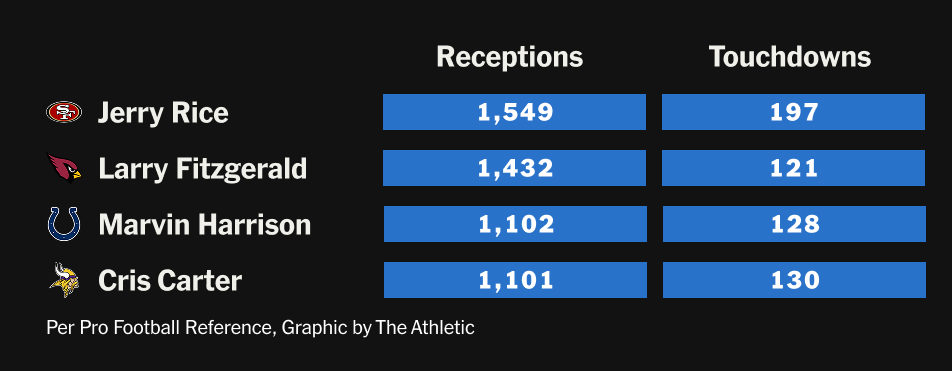
By Jacob RobinsonJune 23, 2026 8:29 pm EDT UpdatedYes, the cover photo is of the Hall of Famer Cris Carter. He finished his career behind only Jerry Rice in touchdown receptions (129) and total catches (1,101). Despite retiring nearly 25 years ago, Carter still ranks near the top of both categories among receivers:
Before all that, Carter was a fourth-round supplemental draft pick. (By the Eagles!) Intending to play his senior year at Ohio State, he instead entered the 1987 supplemental draft after the NCAA ruled him ineligible due to … ready for it? … prematurely signing with an agent. The horror!
(Side note: The NCAA pushing this type of activity underground actually created a horrible situation involving both the mob and FBI. Bleacher Report has a good story on the saga here.)
Carter was drafted in September 1987, during the second (of three) supplemental drafts held that year.
Inside: How (and why) the supplemental draft works, plus what we’ve learned from early offseason workouts. If you missed Thursday’s newsletter, we had a fun look at the best/worst jerseys for all 32 teams. Let’s roll.
This article is from The Athletic’s NFL newsletter. Sign up here to receive it directly in your inbox. It’s free to subscribe.
Supplemental draft, explained
Since the supplemental draft is so infrequent, it remains a poorly understood part of the NFL rulebook. Here’s what you should know about it:
1. The league’s collective bargaining agreement mandates that college prospects who do not enter the NFL via the draft can apply for selection in a supplemental draft (though there must be a reason, as players can’t just decide to skip the April version).
2. If no one applies for the supplemental draft, it doesn’t happen that year. It also doesn’t happen if teams are uninterested in the applicants. Sorry to any readers hoping to throw their names into the hat.
3. Similar to the regular draft, the selection order is essentially the reverse of the previous season’s standings (more detail here), but there’s a big twist: Instead of actually drafting players, teams bid on them. Simpler process when there’s only one guy up for grabs.
4. Teams bid with their picks from the following year’s draft. Once a team drafts a player in the supplemental draft, it forfeits that pick in the subsequent April. At stake this year are those especially valuable 2027 picks.
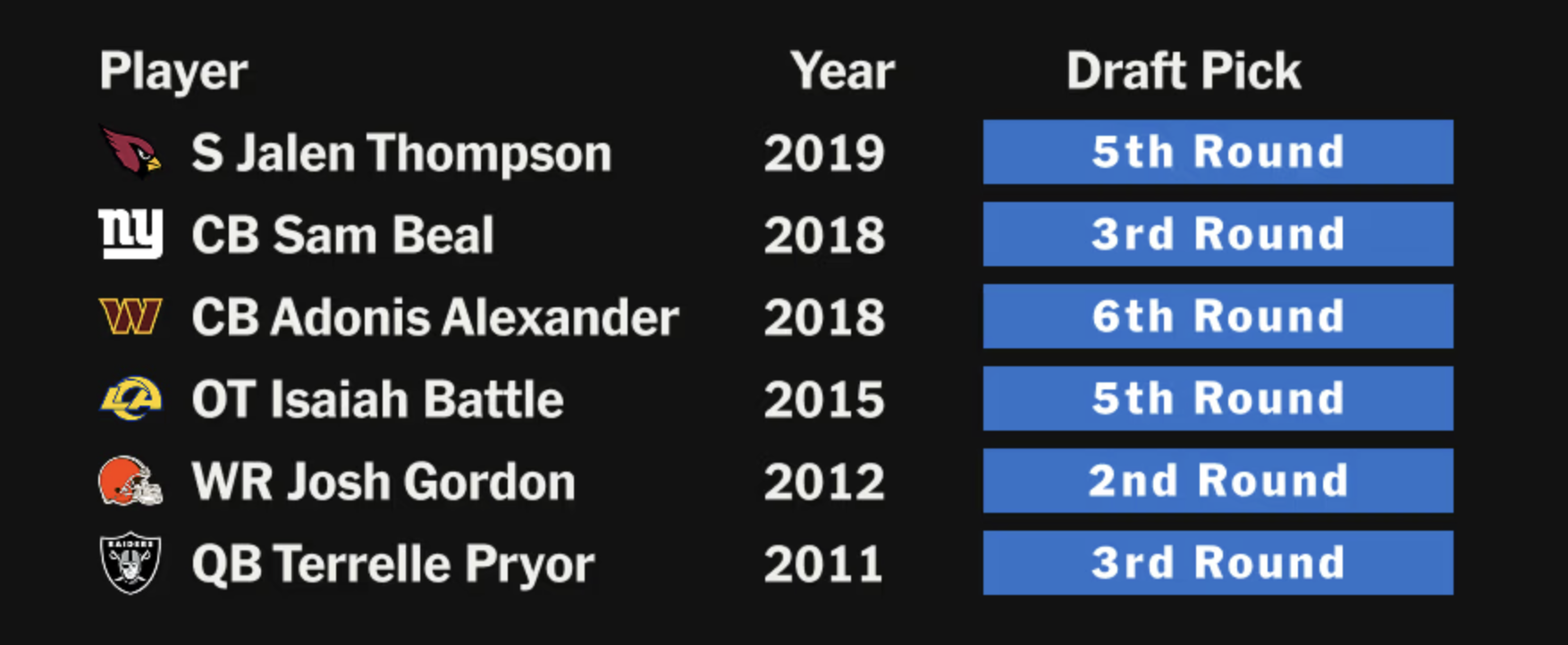
This time, Brendan Sorsby hoped to be the first supplemental draft pick since 2019. The six supplemental picks preceding him:
Browns coach Todd Monken said he doesn’t believe his team was willing to “go down that road” of drafting Sorsby, and I’m sure many other teams felt similarly. (Then again, Shedeur Sanders wasn’t exactly Plan A for Cleveland.)
What we’re learning
It’s too early to tell if the Vikings’ quarterback battle will matter for 2026. But I’m not impressed by excuses I’ve heard from Kyler Murray, who Alec Lewis has said “looked uncomfortable at times.”
“Me already being behind and not getting the reps that you would typically want a guy to get, learning an offense, is probably the toughest part,” Murray has said. It should only be a matter of time before the Vikings’ prized free-agent signing wins out over J.J. McCarthy.
As for other offseason workout takeaways:
Buffalo’s new 36-year-old head coach, Joe Brady, wants to be a players’ coach. His players are raving about how much they’re enjoying what staffers have called “a breath of fresh air.”
Chicago is focused on improving Caleb Williams’ precision (and thus his completion percentage, which ranked 32nd in 2025). Ben Johnson and staff are grading the location of nearly all of Williams’ workout throws.
Dallas has a defense? Jon Machota would be “surprised if (new DC) Christian Parker didn’t have success” in his first year, given how prepared he is and how well the team is responding so far. The league’s second-best offense in 2025 just needs an average defense for a bounce-back year from last year’s 7-9-1 finish.
There is so much more on all 32 teams in the full story, including how strong Jaylen Waddle looks in Denver. 👀
Extra Points
👀 Happy belated Father’s Day. Mike Jones has an incredible story on fathers and sons who’ve played in the NFL. Six current players even have a grandfather and father who played in the league. Before you read, can you name any of them?
💸 New highest-paid defensive lineman. Titans All-Pro DT Jeffery Simmons signed a three-year extension in Tennessee with a $35.3 million average.
📽 Cam Ward in Year 2. Can last year’s top pick continue to improve? Nick Baumgardner looked at the film to see how the Tennessee QB can grow as a sophomore.
🦅 Nick Sirianni is real. Say what you want about the Eagles coach, but don’t call him a phony. Michael Silver has a terrific story about one of the league’s most successful leaders.
▶️ Thursday’s most-clicked: That story on the best/worst NFL uniforms, which was my first newsletter-led story to reach the major trending list here at The Athletic! So grateful for all the writers’ help on that one. I stand by my Buccaneers take.
📫 Enjoyed this read? Sign up here to receive The Athletic’s free NFL newsletter in your inbox.
Also, check out our other newsletters.N
Jun 24, 2026Connections: Sports Edition
Spot the pattern. Connect the terms
Find the hidden link between sports terms
Badenoch blasts 'moaning' female Labour MPs over Burnham jobs 'quota'

Kemi Badenoch has told Labour women to earn a job in Andy Burnham's Cabinet instead of demanding they are handed jobs because of their gender.
The Tory leader lashed out today amid reports that female MPs are demanding the de-facto new prime minister introduce a 50:50 gender split 'quota' in his government.
Amid reports that former foreign secretary David Miliband is being lined up to return to the role, possibly with his brother Ed as Chancellor, one female minister also complained that Burnham could not have 'more Milibands than women' in the top posts.
But in a scathing article in the Times today Mrs Badenoch told them to 'stop moaning' and get chosen on merit instead of retreating into 'more of the failed identity politics that is holding back our country'.
'There are many, many reasons why you shouldn't have any Milibands in the cabinet,' she said.
'But complaining that the boys haven't given them the right jobs or that the boys are taking all the jobs, just shows that Labour's women still don't get it.'
The idea of quotas was also attacked by Baroness Jacqui Smith, Labour's Skills Minister.
Asked by Times Radio if Mr Burnham should reserve jobs for women, she said: 'No, I think what Andy Burnham should be doing is building the very best team around him to change this country.'

A letter written by the Women's Parliamentary Labour Party has called on Mr Burnham to ensure a 50:50 split between men and women in government jobs

Amid reports that former foreign secretary David Miliband (above, right, in 2010) is being lined up to return to the role, possibly with his brother Ed as Chancellor, one female minister complained that Burnham could not have 'more Milibands than women' in the top posts

But Mrs Badenoch told them to pipe down and get chosen on merit instead of retreating into 'more of the failed identity politics that is holding back our country'
A letter written by the Women's Parliamentary Labour Party and seen by the BBC has called on Mr Burnham to ensure a 50:50 split between men and women in government jobs after he succeeds Sir Keir Starmer.
'We are asking you to demonstrate this change from day one and address the toxicity and misogyny within our own party and government,' it said.
Labour has never had a female leader, while the Conservatives have had three, and Mrs Badenoch urged the government to follow its meritocratic example.
'If you run a meritocracy, then you do not have to worry about jobs for the boys,' she wrote.
'Every woman who is a Conservative MP, every woman who has ever won the leadership, has had to fight to get where she is.
'By contrast, Labour women are demanding guarantees from Burnham. But the truth is he doesn't have to give any guarantees.
'If none of Labour's women are prepared to get their hands dirty and challenge him for the leadership, their demands are toothless.'
'In fact, it's quite revealing that the women's parliamentary Labour Party has written to Burnham asking him to commit himself to at least 50 per cent female ministers.
'This has nothing to do with meritocracy. It is yet more of the failed identity politics that is holding back our country.'