Exclusive—Xi Van Fleet: One Ideal, Two Revolutions—How America and Communist China Pursued Justice and Achieved Opposite Results
Exclusive—Xi Van Fleet: One Ideal, Two Revolutions—How America and Communist China Pursued Justice and Achieved Opposite Results

As America approaches its 250th anniversary, we should be compelled not only to celebrate, but to reflect.
History offers a powerful comparison.
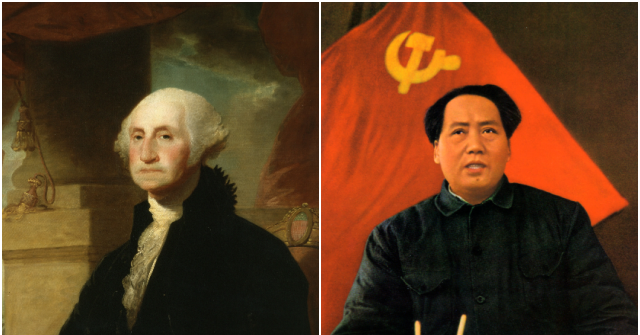
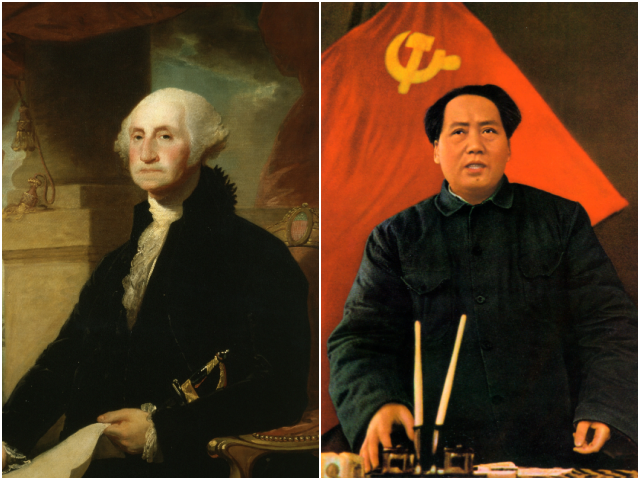
In the 18th century, American colonists declared independence and launched a revolution in the name of liberty. In the 20th century, the Chinese Communist Party (CCP) carried out its own revolution in the name of liberation. Both promised a new world. Both rejected the old order. Both spoke the language of justice.
And both succeeded.
One produced a nation where individuals are free. The other produced a system where individuals are enslaved by the state.
Why?
The answer lies not in the slogans, but in their ideological foundations—one rooted in biblical principles, the other in Marxism.
The American Revolution was not merely a rebellion against British rule. It was grounded in a radical idea: that rights do not come from rulers or government. When Thomas Jefferson wrote that all men are “endowed by their Creator with certain unalienable Rights,” he affirmed that government is not the source of rights, but their protector. Because these rights come from God, no one—not even a majority—can take them away. This belief shaped everything that followed.
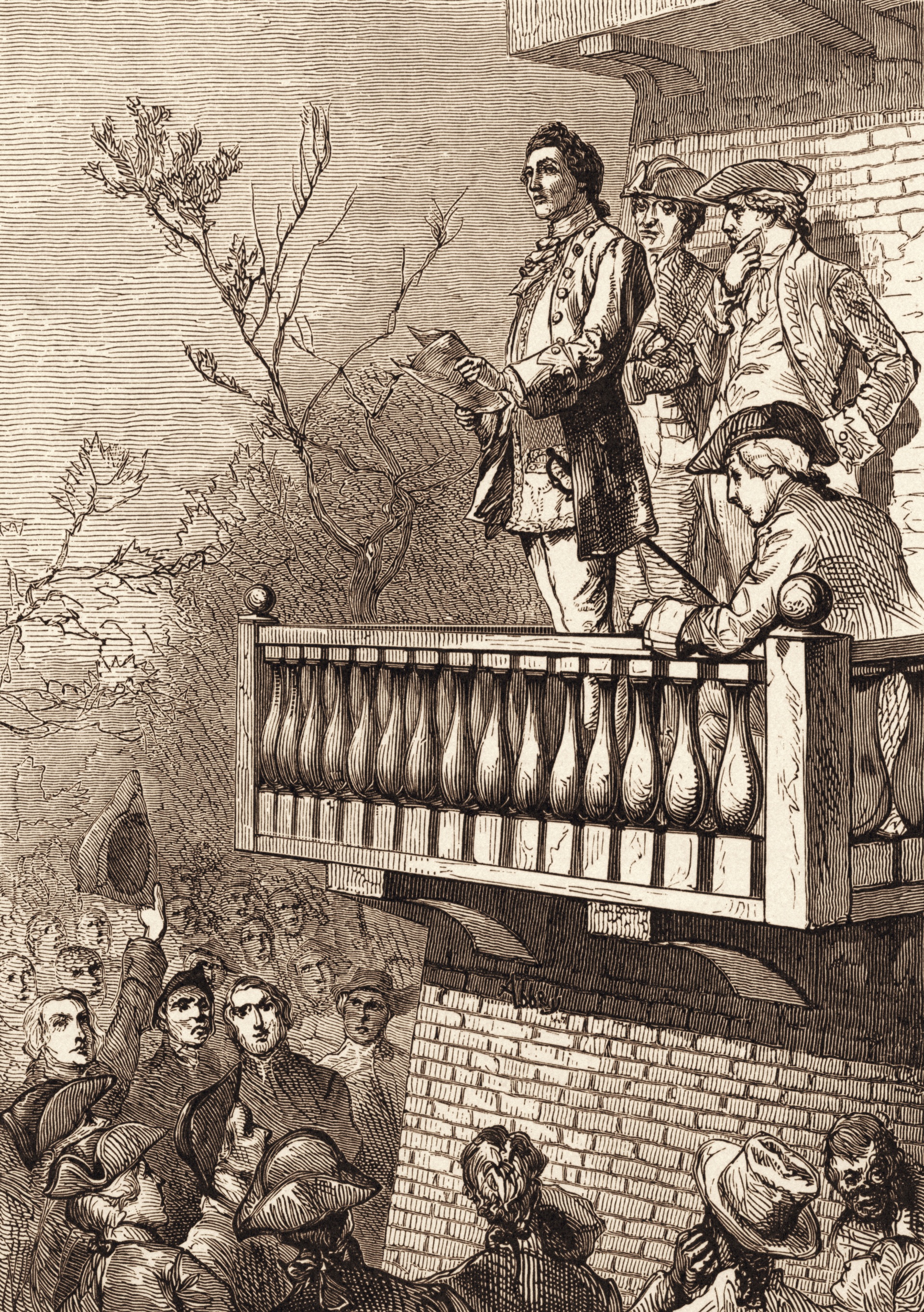
Engraving showing the reading of the Declaration of Independence to a crowd of onlookers in the State House yard in Philadelphia, Pennsylvania, July 8, 1776. (Stock Montage/Getty Images)
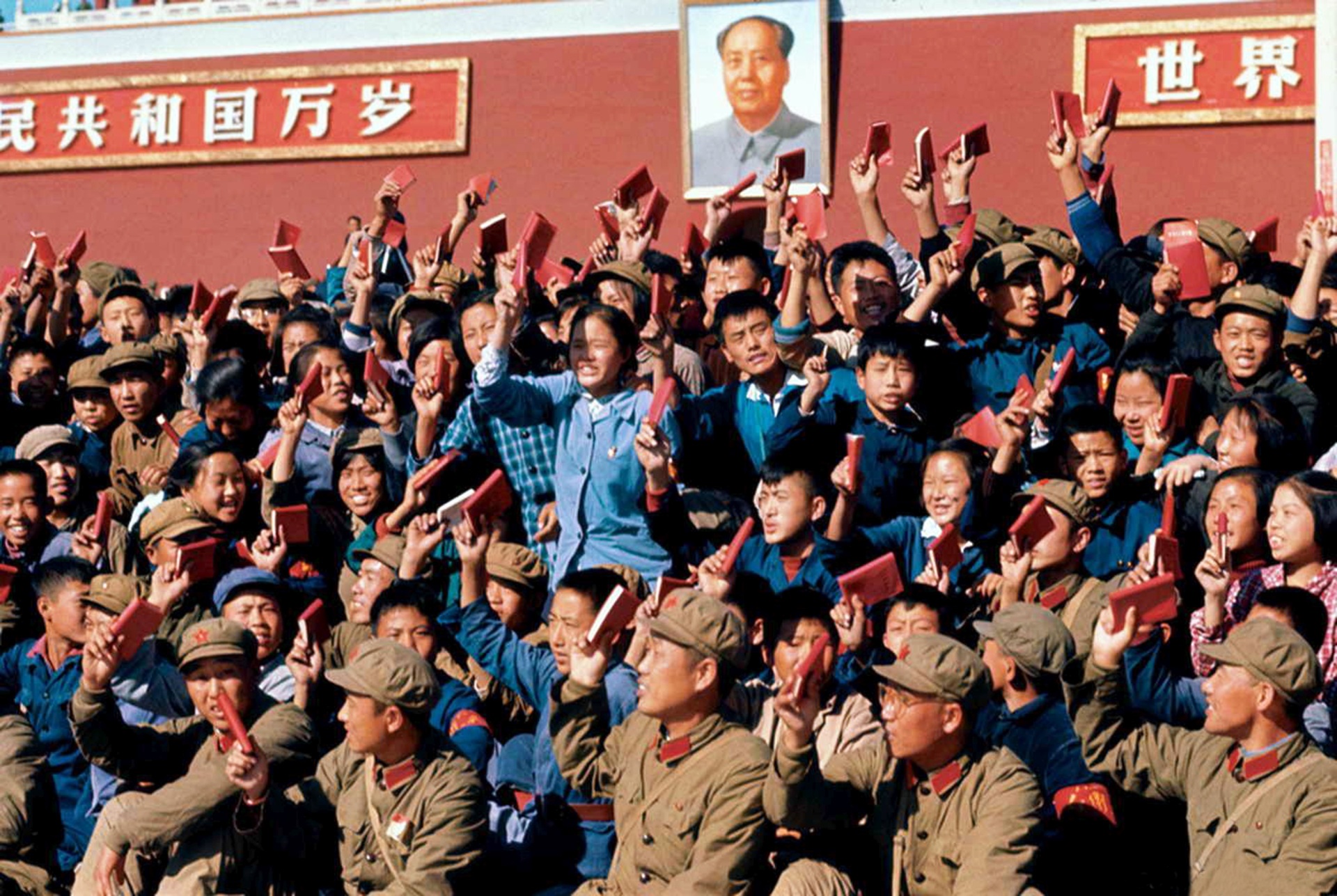
“Red Guards” wave copies of Mao Zedong’s “Little Red Book” in Tiananmen, Beijing, circa 1966. (Universal Images Group via Getty Images)
The Chinese Communist Revolution also invoked justice—but it began with a very different premise. Justice was defined as state-enforced sameness: an equality of outcome that promises everything to everyone, but in practice leaves no one with anything.
Although both revolutions envisioned a better world, their outcomes could not be more different. In America, the American Dream is built on freedom—where anyone, regardless of circumstance, is free to try, to succeed, and to fail. In Communist China, the attempt to create a utopia instead unleashed a hell on earth—where the state holds unlimited power and the people have none. Under Mao, tens of millions perished. Intellectuals were purged. Families were torn apart. Faith was suppressed—all in the name of the people. As the state became the ultimate authority, the individual was reduced to a mere particle of the collective.
I have lived in both worlds.
I spent my first 26 years under Mao’s iron grip. My formative years were stolen by the chaos and violence of the Cultural Revolution. Freedom was foreign to me—I was never allowed to make choices. The Party controlled every aspect of my life: where I could live, how much I was rationed—not just for food, but for all daily necessities—whether I could attend college, and what job I would be assigned. I obeyed, like hundreds of millions of my fellow Chinese. From a very young age, I understood exactly what would happen if I complained or resisted.

Xi Van Fleet as a “Little Red Guard” in elementary school during the Cultural Revolution, holding Mao’s “Little Red Book” and wearing a Mao badge. (Photo courtesy of Xi Van Fleet)
When I came to America, I felt as though I had been given a second life. It was a completely different world—people saw me as an individual, not a label. Above all, no one dictated what I could say or how I should live. This was the freedom I first experienced in America. I loved my new country and was determined to assimilate and become a true American.
Forty years have passed since I first set foot in America. Over that time, I have witnessed changes in my beloved country—changes that, little by little, began to remind me of the Communist system I escaped.
It started with seemingly harmless political correctness, which I once embraced as kindness. But over time, I noticed that only certain speech was permitted. If I did not comply, I risked being labeled a racist or a bigot—much like being branded “counter-revolutionary” in China.
I also saw identity become everything. Once, I was treated as an individual; now, I was reduced to a member of an identity group—just as I had been in China. The familiar terms of “oppressor” and “oppressed” that I grew up with had entered the American lexicon—now used to divide Americans. By 2020, I could no longer ignore the echoes of Mao’s Cultural Revolution.
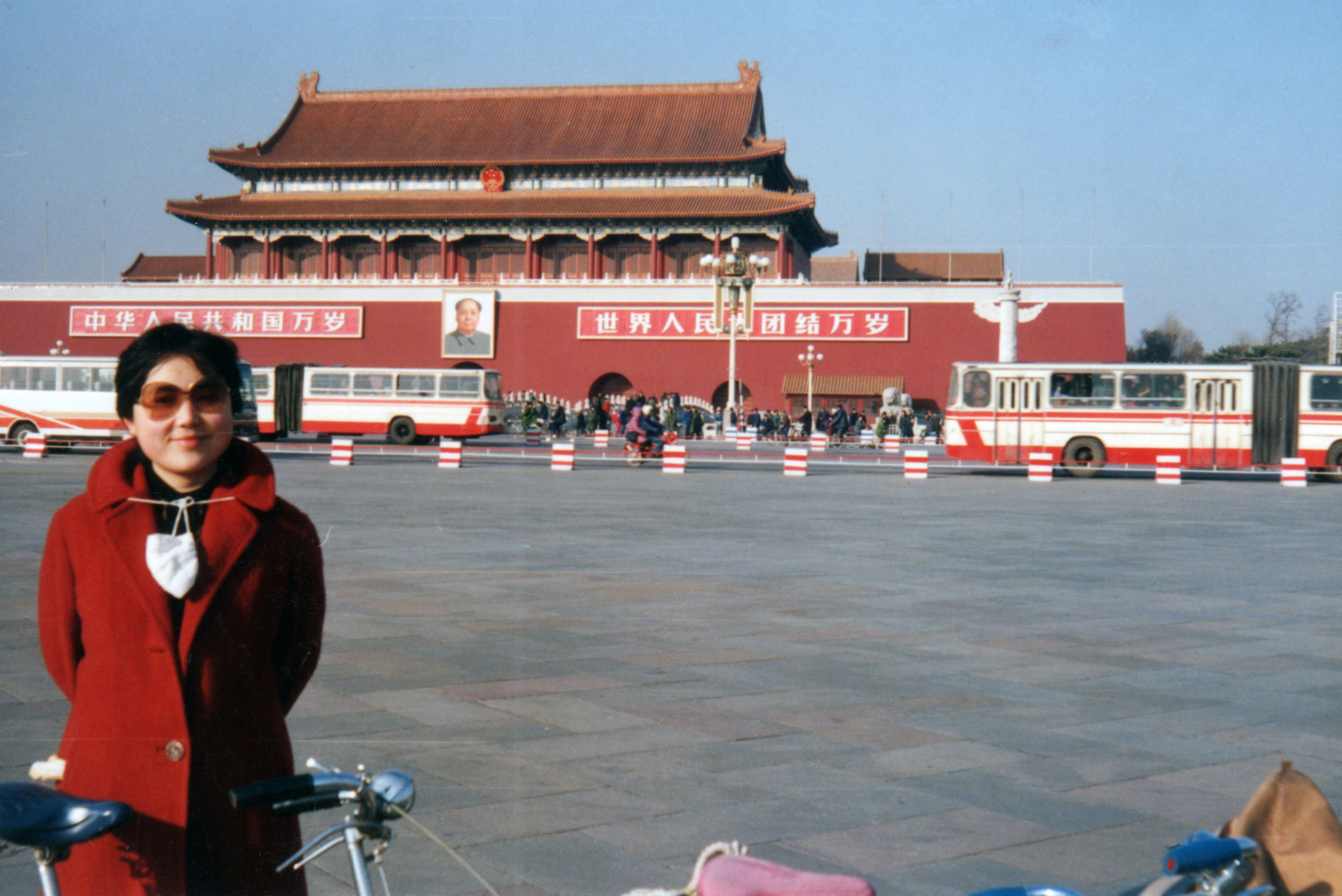
Xi Van Fleet in Tiananmen Square in 1986 on the day after she got her visa to come to the United States. (Photo courtesy of Xi Van Fleet)
It is clear that some in America seek to overturn the system born of the American Revolution, advancing instead a model that echoes Maoist revolution—where equality is redefined as enforced sameness, dissent is silenced, and government power expands without limit.
I never imagined that in my lifetime I would witness such a transformation.
As we mark 250 years of American independence, many are tempted to focus on the nation’s flaws and declare the great experiment a failure. But we should remember that the Founders never sought to create a perfect world—that belongs to God alone. Instead, they created a system rooted in the belief in God-given rights—a system that not only provides maximum freedom to individuals but also allows for self-correction and renewal.
On the other hand, in systems where the state is the highest authority, power becomes truth. And when power defines truth, freedom is crushed.
On this historic occasion, let us remember: freedom is not a given. It requires vigilance and the courage to defend it. That is why I refused to stand by. I joined millions of patriots in the fight to protect our liberty and keep the American Dream alive for generations to come and for the next 250 years.
As we celebrate this historic anniversary, let us renew our commitment to keep our republic.
Xi Van Fleet is the author of Mao’s America: A Survivor’s Warning and Made in America: The Hidden History of How the U.S. Enabled Communist China and Created Our Greatest Threat.
Badenoch blasts 'moaning' female Labour MPs over Burnham jobs 'quota'

Kemi Badenoch has told Labour women to earn a job in Andy Burnham's Cabinet instead of demanding they are handed jobs because of their gender.
The Tory leader lashed out today amid reports that female MPs are demanding the de-facto new prime minister introduce a 50:50 gender split 'quota' in his government.
Amid reports that former foreign secretary David Miliband is being lined up to return to the role, possibly with his brother Ed as Chancellor, one female minister also complained that Burnham could not have 'more Milibands than women' in the top posts.
But in a scathing article in the Times today Mrs Badenoch told them to 'stop moaning' and get chosen on merit instead of retreating into 'more of the failed identity politics that is holding back our country'.
'There are many, many reasons why you shouldn't have any Milibands in the cabinet,' she said.
'But complaining that the boys haven't given them the right jobs or that the boys are taking all the jobs, just shows that Labour's women still don't get it.'
The idea of quotas was also attacked by Baroness Jacqui Smith, Labour's Skills Minister.
Asked by Times Radio if Mr Burnham should reserve jobs for women, she said: 'No, I think what Andy Burnham should be doing is building the very best team around him to change this country.'

A letter written by the Women's Parliamentary Labour Party has called on Mr Burnham to ensure a 50:50 split between men and women in government jobs

Amid reports that former foreign secretary David Miliband (above, right, in 2010) is being lined up to return to the role, possibly with his brother Ed as Chancellor, one female minister complained that Burnham could not have 'more Milibands than women' in the top posts

But Mrs Badenoch told them to pipe down and get chosen on merit instead of retreating into 'more of the failed identity politics that is holding back our country'
A letter written by the Women's Parliamentary Labour Party and seen by the BBC has called on Mr Burnham to ensure a 50:50 split between men and women in government jobs after he succeeds Sir Keir Starmer.
'We are asking you to demonstrate this change from day one and address the toxicity and misogyny within our own party and government,' it said.
Labour has never had a female leader, while the Conservatives have had three, and Mrs Badenoch urged the government to follow its meritocratic example.
'If you run a meritocracy, then you do not have to worry about jobs for the boys,' she wrote.
'Every woman who is a Conservative MP, every woman who has ever won the leadership, has had to fight to get where she is.
'By contrast, Labour women are demanding guarantees from Burnham. But the truth is he doesn't have to give any guarantees.
'If none of Labour's women are prepared to get their hands dirty and challenge him for the leadership, their demands are toothless.'
'In fact, it's quite revealing that the women's parliamentary Labour Party has written to Burnham asking him to commit himself to at least 50 per cent female ministers.
'This has nothing to do with meritocracy. It is yet more of the failed identity politics that is holding back our country.'