Erin Brockovich Launches Plan to Take on AI Data Centers Around the Country
Erin Brockovich Launches Plan to Take on AI Data Centers Around the Country
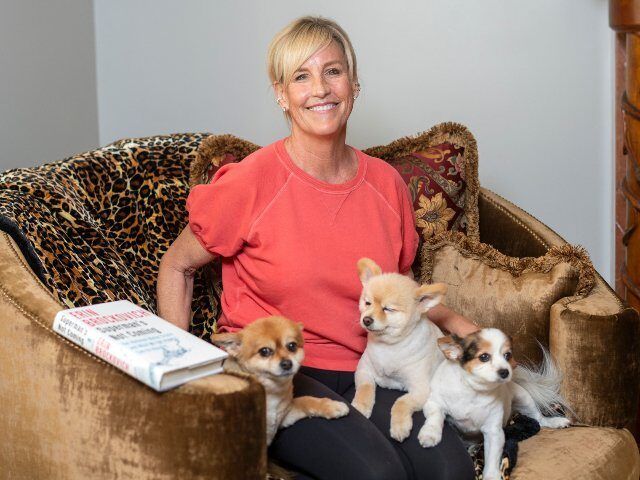

Erin Brockovich, who secured a historic $333 million settlement against PG&E in 1993 and was immortalized by Julia Roberts on the silver screen, has launched a new battle against the proliferation of AI data centers across the United States and beyond.
The Guardian reports that the environmental activist who became a household name after her work on the Hinkley, California, groundwater contamination case has identified what she describes as a threat on par with that scandal, only larger in scope. After receiving thousands of emails from concerned citizens, Brockovich has turned her attention to the rapid construction of massive AI data centers happening with minimal public input or environmental oversight.
The campaign began when Brockovich noticed an unusual pattern in her inbox. She received 30 emails from people in the same town, all expressing concerns about data centers. In April, she issued a public call on her website asking anyone with concerns about data centers near them to contact her. Within a month, 3,862 people responded. Brockovich characterizes the situation as “Hinkley on steroids.”
Using the information gathered from these emails, Brockovich created an open-source map documenting AI data centers across the United States. As of June 24, the map shows 33 AI data centers that are operational, 68 under construction, and 41 proposed. More than 7,000 reports have been submitted through her online form, revealing a pattern of construction happening largely without public knowledge or consent.
AI data centers are enormous in scale. Some stretch over hundreds of acres, and in May, Utah approved a center twice the size of Manhattan. According to Brockovich, many communities learn about these facilities only after construction has already begun, or in some cases, months after they have been approved by local officials.
A major concern for Brockovich is the secrecy surrounding the approval process. Data center developers often enter into nondisclosure agreements with local officials, making it impossible for residents to understand why projects were approved without environmental impact assessments or public input. Brockovich reports receiving emails from people whose local leaders are changing zoning laws to accommodate these facilities. “If data centers are so great, why are they being built in secret?” reads one headline on her Substack blog.
Local governments attempting to pause or halt construction face severe financial consequences. In Hill County, Texas, county commissioners voted on a year-long moratorium after unexpected public outcry. The county was then sued by developers for $100 million in damages and, according to the Texas Tribune, has since backed down from the moratorium.
Beyond concerns about water consumption, residents near operational data centers report significant noise pollution. “It really becomes about the noise, the decibels,” Brockovich says. People describe being driven to distraction by constant humming, hissing, and buzzing from generators operating around the clock. Communities also report increased electricity bills, power surges, and concerns about wildlife disappearing from areas surrounding the data centers.
Brockovich, who turns 66 this month, brings decades of experience to this fight. She was instrumental in the 1993 case against Pacific Gas and Electric Company on behalf of Hinkley, California, residents whose groundwater had been contaminated. Despite having no formal legal training, she helped secure a $333 million settlement, then the largest ever payout for a direct-action lawsuit. The 2000 film starring Julia Roberts immortalized her story.
Since Hinkley, Brockovich has worked on other environmental pollution cases, including additional cases against PG&E related to hexavalent chromium. More recently, she has focused on PFAS, or per- and polyfluoroalkyl substances, known as “forever chemicals” that are components in firefighting foam used on US military bases. These chemicals have been linked to fertility issues and some cancers.
Brockovich’s immediate goal is to secure case-by-case moratoriums on data center approvals. She is compiling cases through her open-source mapping site and notes that council responses vary depending on how receptive officials are to local complaints. Many states are only now beginning to consider whether state-level regulation and oversight of data centers is necessary.
She emphasizes that opposition to data centers is bipartisan. Her approach focuses on building lawsuits from the ground up rather than seeking immediate policy change from the top. She advocates for environmental impact reports, transparency about power sources, and town hall meetings where residents can voice their concerns.
“We have to have some courage to show up, and it’s difficult to do that when you’re up against forces that have all the money and all the intelligence and all the bandwidth in the world,” Brockovich says. Despite describing herself as being in her “legacy phase” with six grandchildren, she remains committed to the fight, though she acknowledges she cannot win it alone.
Breitbart News previously reported that AI data center opponents have blocked or delayed projects worth $130 billion so far this year:
At least 75 projects worth about $130 billion have been blocked or delayed from January through March across the country as a result of data center opponents, according to a Data Center Watch study obtained by NBC News.
The authors of the study further noted that this hindering of AI data centers is the most on record in a three-month period since they began tracking the matter in 2023.
“The quarter reflected a structural shift rather than a cyclical spike: communities have internalized an opposition playbook, legislative sessions introduced formal regulatory uncertainty, and the number of active opposition groups more than doubled to 833 across 49 states,” the study read.
Read more at the Guardian here.
Lucas Nolan is a reporter for Breitbart News covering issues of AI, free speech, and online censorship.
Badenoch blasts 'moaning' female Labour MPs over Burnham jobs 'quota'

Kemi Badenoch has told Labour women to earn a job in Andy Burnham's Cabinet instead of demanding they are handed jobs because of their gender.
The Tory leader lashed out today amid reports that female MPs are demanding the de-facto new prime minister introduce a 50:50 gender split 'quota' in his government.
Amid reports that former foreign secretary David Miliband is being lined up to return to the role, possibly with his brother Ed as Chancellor, one female minister also complained that Burnham could not have 'more Milibands than women' in the top posts.
But in a scathing article in the Times today Mrs Badenoch told them to 'stop moaning' and get chosen on merit instead of retreating into 'more of the failed identity politics that is holding back our country'.
'There are many, many reasons why you shouldn't have any Milibands in the cabinet,' she said.
'But complaining that the boys haven't given them the right jobs or that the boys are taking all the jobs, just shows that Labour's women still don't get it.'
The idea of quotas was also attacked by Baroness Jacqui Smith, Labour's Skills Minister.
Asked by Times Radio if Mr Burnham should reserve jobs for women, she said: 'No, I think what Andy Burnham should be doing is building the very best team around him to change this country.'

A letter written by the Women's Parliamentary Labour Party has called on Mr Burnham to ensure a 50:50 split between men and women in government jobs

Amid reports that former foreign secretary David Miliband (above, right, in 2010) is being lined up to return to the role, possibly with his brother Ed as Chancellor, one female minister complained that Burnham could not have 'more Milibands than women' in the top posts

But Mrs Badenoch told them to pipe down and get chosen on merit instead of retreating into 'more of the failed identity politics that is holding back our country'
A letter written by the Women's Parliamentary Labour Party and seen by the BBC has called on Mr Burnham to ensure a 50:50 split between men and women in government jobs after he succeeds Sir Keir Starmer.
'We are asking you to demonstrate this change from day one and address the toxicity and misogyny within our own party and government,' it said.
Labour has never had a female leader, while the Conservatives have had three, and Mrs Badenoch urged the government to follow its meritocratic example.
'If you run a meritocracy, then you do not have to worry about jobs for the boys,' she wrote.
'Every woman who is a Conservative MP, every woman who has ever won the leadership, has had to fight to get where she is.
'By contrast, Labour women are demanding guarantees from Burnham. But the truth is he doesn't have to give any guarantees.
'If none of Labour's women are prepared to get their hands dirty and challenge him for the leadership, their demands are toothless.'
'In fact, it's quite revealing that the women's parliamentary Labour Party has written to Burnham asking him to commit himself to at least 50 per cent female ministers.
'This has nothing to do with meritocracy. It is yet more of the failed identity politics that is holding back our country.'
Venezuela Fury and Noah Price subsidising their life by livestreaming

Venezuela Fury and her husband Noah Price look to be making their own way in the world by raking it in from their lucrative social media accounts.
The influencer daughter of Tyson and Paris Fury, 16, has become an internet sensation after tying the knot with her husband Noah, 19, earlier this year.
Since getting married and moving in together the couple have been earning thousands of pounds a month, livestreaming their life as newlyweds in their static caravan in the East Riding of Yorkshire.
And fans can't get enough of their regular life updates on TikTok and Kick, which have proved to be very profitable for the pair.
They look to be supporting themselves after Noah denied that he was given £5million by Venezuela's family as a wedding gift.
Despite his wife's huge family wealth, an estimated combined £160 million, Noah recently told his Kick followers that he 'pays for everything' for the couple.
Making light of the claims about Venezuela's millionaire financial status, Noah said: 'I actually pay for everything unfortunately. You'd expect the millionaire to pay for it wouldn't you.'

Venezuela Fury and Noah Price are earning thousands livestreaming their caravan life - after her new groom insisted he pays all the bills and denied he had £5m handout from her dad

The influencer daughter of Tyson and Paris Fury , 16, has become an internet sensation after tying the knot with her husband Noah, 19, earlier this year
Venezuela then asked their fans: 'Do you think I am a millionaire?'
Noah joked: 'She isn't a secret millionaire guys', before she broke into song and sang: 'But I live like a millionaire!'
But it seems according to estimated calculations from their social media work, Noah and Venezuela can more than afford to support themselves.
Noah has been livestreaming on platforms such as Kick and TikTok, where viewers can send paid gifts or donations.
He was previously encouraging viewers to send gifts on his honeymoon during livestreams, suggesting this is one revenue stream.
Both Noah and Venezuela have built substantial followings on Instagram and TikTok. They can potentially earn money through sponsored posts, brand collaborations, affiliate links and creator payouts.
Kick allows its creators to take home 95 per cent of the £4.99 subscription cost that fans pay.
Streamers keep 100 per cent of direct tips and donations, minus minor standard payment processing fees.
It is unclear how many subscribers Noah currently has because this information is hidden, but he does have 7,200 followers which is publicly viewable.
An industry insider has suggested Noah is making around £400 per video on TikTok, while Venezuela is likely to make £2,000 due to her following count of 1.3 million.

An industry insider has suggested Noah is making around £400 per video on TikTok, while Venezuela is likely to make £2,000 due to her following count of 1.3 million
In one video on their honeymoon, Noah asked his followers if they'd give them some more gifts now that they were married.
In a TikTok live viewed by 20,000 he said: 'Keep liking our videos people, keep sending gifts.'
After saying thank you to several of his followers he joked they should stick around on the livestream and 'watch Venezuela punch me in the mouth'.
The other half of the honeymooning couple said: 'I am, honestly!'
Noah previously confirmed that the pair don't share their finances after they were asked whether they have a shared bank account.
'She earns her money, I earn mine,' said Noah, as Venezuela joked: 'Yeah, what you gonna do about it.'
Noah went on to debunk the rumour that Tyson gave him £5million when he tied the knot with his daughter as he insisted: 'No Tyson did not give me £5million'.
Meanwhile Venezuela is being eyed up by executives for a fly on the wall TV series.

Noah went on to debunk the rumour that Tyson gave him £5million when he tied the knot with his daughter as he insisted: 'No Tyson did not give me £5million'
Boasting 1.3 million TikTok followers, Venezuela is already entertaining fans with her honest musings and candid moments, from cooking to kitting out her and Noah's static caravan home.
And following the success of the Netflix series At Home With The Furys, it is no wonder bosses are wanting to draw on the Fury popularity.
A TV insider said: 'The couple are not A-list celebrities but everyone has become obsessed with their love story.
'People are genuinely intrigued by them. Whether it’s the fact they have married so young, Venezuela’s famous family or their gypsy lifestyle, they have the ‘X factor'.
'Several TV executives think a proper fly-on-the-wall series following their lives as newlyweds in the gypsy community would be fascinating,' they told The Sun.
It is thought Netflix would be likely to produce the series due to their already established relationship with the Furys.
Venezuela's representatives told The Daily Mail: 'We have many offers on the table regarding Venezuela which we are discussing.'