Combat Experience as a Strategic Resource: Lessons of the Red Army Purges
Whatever one’s views on Secretary of Defense Pete Hegseth’s tenure, there is no denying that he has been unambiguous about some of his stated objectives. In a January 2025 Message to the Force, he committed the Department of Defense to rebuilding the military and reestablishing deterrence. This would be accomplished through “a focus on lethality, meritocracy, accountability, standards, and readiness.” And in September 2025 remarks to General and Flag (Admiral) officers at Marine Corps Base Quantico, Hegseth said, “the only mission of the newly restored Department of War is this: warfighting, preparing for war and preparing to win, unrelenting and uncompromising in that pursuit.” Although some may find Hegseth’s tone questionable at times, his particular emphasis on combat effectiveness garners broad agreement across the political and policy spectrum, and rightfully so.
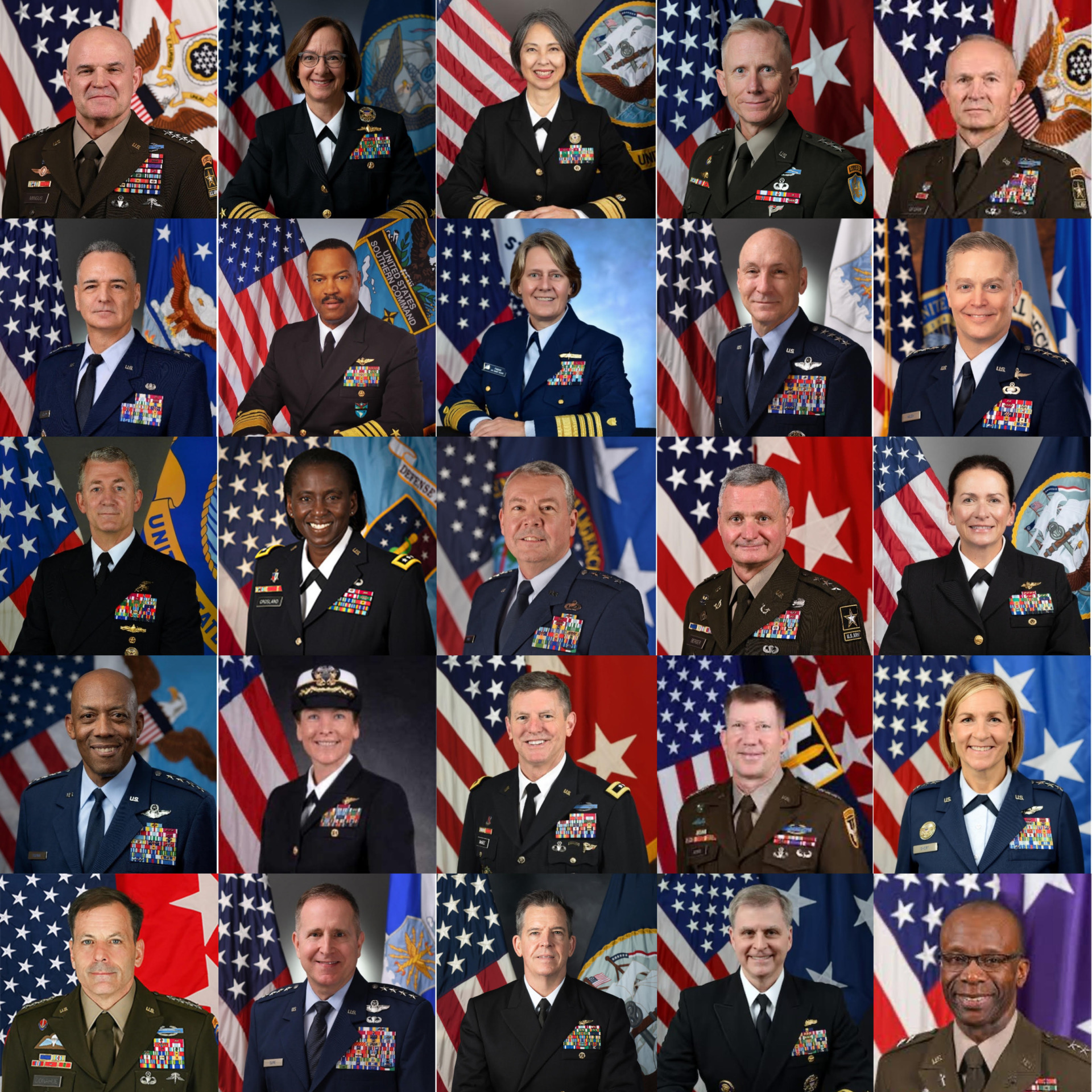
That said, a wave of controversial changes in senior leadership has taken place alongside the pursuit of that objective. Since January 2025, the Defense Department has removed, replaced, or forced the early retirement of a remarkable concentration of operationally experienced senior officers. Among them are the Chairman of the Joint Chiefs, the Chief of Naval Operations, the Chief of Staff of the Army, and the Commander of U.S. Cyber Command, who concurrently serves as Director of the National Security Agency. Most recently, General Christopher Donahue, one of the most decorated and combat-experienced officers of his generation, has been forced out as Commander of U.S. Army Europe and Africa and, in his NATO role, as Commander of Allied Land Command. Public explanations have been sparse and, to the extent they have been offered, largely general.

The question regarding these departures is not whether the President and Secretary of Defense have broad lawful authority to reshape the senior officer corps. They unequivocally do. Nor is it a question of whether personnel decisions of this kind are ever warranted. Sometimes they certainly are. Instead, at its core, a central question is their impact on the combat effectiveness, indeed the lethality, of our armed forces.
I take up this question through the lens of a case study drawn from one of the most consequential instances of rapid military leadership depletion in modern history, the Red Army purges of 1937-1938 and their effects on its performance during the conflicts that followed. My central proposition is straightforward: Operational experience, especially in combat, is a strategic resource, a form of military capital that takes decades to develop and that can be squandered in months.
Combat Experience as a Strategic Resource
Carl von Clausewitz, the 19th–century master of strategy, understood that “friction” – the aggregate of chance events, miscommunication, physical exhaustion, and profound uncertainty – distinguishes “real war from war on paper.” As he observes in On War, this is the defining feature of warfare. In war, plans and orders rarely survive contact with the enemy fully intact; the victorious commander is not necessarily the one with the best initial plan, but rather more likely the one who can act and adapt in the face of friction.
The remedy for such friction, Clausewitz argued, is not just better doctrine. Instead, it is experienced judgment, what he labeled the “coup d’oeil,” an intuitive ability to quickly acquire situational awareness and act decisively when deep analysis and consultation are simply impossible. Clausewitz also argued that a commander must have “resolution,” the courage to follow that insight. These qualities cannot, in his view, be taught theoretically or conferred by promotion. They are instead acquired through experience under fire, through the accrued habit of sound judgment in actual operations.
This understanding mirrors current U.S. military doctrine. For instance, Army Doctrine Publication (ADP) 6-22, Army Leadership and the Profession, is explicit. Chapter 1 begins: “the Army personnel development system’s lifecycle management functions, including leader and professional development as well as talent management, are career-long processes centered on sequential and progressive training, education, and experience” (¶ 1-25, emphasis added). The doctrine further emphasizes that professional attributes, including the judgment required for effective command, are “molded through experience over time” (¶ 1-85, emphasis added).
That doctrinal commitment to experience-based development reflects a deeper principle embedded in U.S. military command philosophy. “Mission Command” – the Army’s foundational approach to command and control in operations – maintains that effective military organizations cannot function through top-down direction alone. When plans degrade on contact and orders are overtaken by events, the organization that prevails is the one where trust is intact. As noted in ADP 6-0, “Mutual trust is essential to successful mission command, and it must flow throughout the chain of command. Subordinates are more willing to exercise initiative when they believe their commander trusts them.” That trust, built through sustained operational and personal relationships, must be embedded in organizational culture. Rapid, widespread, and unexplained leadership turnover places it at risk.
Military organizations accumulate three distinct forms of combat experience, each essential to sustaining that culture of trust and initiative. Tactical experience involves leading units in contact with enemy forces and making life-and-death decisions under fire. Operational experience – campaign planning, joint and coalition operations, theater-level command – is rarer and thus far harder to replace when senior commanders are removed. Institutional experience includes developing future leaders through mentorship, enforcing professional standards, and forging the relationships that enable effective coalitions and joint operations; it is especially slow to build and easy to destroy.
Clausewitz also understood that mastering friction required a command climate in which subordinates trusted their own judgment enough to act when events overtake plans and orders. A commander builds that climate by demonstrating competence and shared hardship. The removal of trusted leaders or the introduction of fear into the command relationship can lead to the collapse of a military organization’s combat effectiveness. For Clausewitz, the commander’s coup d’oeil and resolution are inseparable from the institutional environment in which they are exercised. The result is institutional competence, in which the military organization, at whatever level of command, adapts faster, makes fewer serious errors, and preserves the lessons of past operations in ways that positively influence performance in subsequent operations. The respective unit is more combat-effective and more lethal.
What Has Been Lost
Over the past 18 months, the U.S. armed forces have seen a cascade of departures of senior officers with decades of operational experience, including combat. The cumulative effect is an undeniable decline in the aggregate experience in the force.
General Christopher Donahue, the Commander of NATO’s Allied Land Command and U.S. Army Europe and Africa, is the most recent example. Commissioned from West Point in 1992, Donahue spent over three decades building extraordinary operational breadth, including command of U.S. and NATO special operations forces, the 82nd Airborne Division during the 2021 Kabul evacuation, and the XVIII Airborne Corps, the nation’s primary contingency response force. General Donahue has “deployed over 20 times in support of named operations Iraqi Freedom, Enduring Freedom, New Dawn, Inherent Resolve, Atlantic Resolve, Freedom’s Sentinel, European Assure, Deter and Reinforce, and in support of the Sudan crisis.” While commanding the Corps, he deployed his headquarters to Europe following Russia’s 2022 invasion of Ukraine, built personal relationships with Ukrainian military commanders that became foundational to U.S. security assistance, and helped establish the Security Assistance Group-Ukraine. His understanding of Russia’s operational patterns, NATO’s command dynamics, and the specific capabilities and limitations of Allied forces along the eastern flank, combined with his prior combat experience, is precisely what Clausewitz meant by coup d’œil.
General Donahue’s was only the latest in a series of removals. A number are particularly noteworthy. General Randy George was asked to step down and retire effective immediately as Army Chief of Staff in April 2026, capping a career that stretched from Desert Storm through multiple deployments to Iraq and Afghanistan. Before becoming the Army’s senior uniformed officer, he had commanded the 173rd Airborne Brigade Combat Team in Iraq; the 4th Brigade Combat Team, 4th Infantry Division, in Afghanistan; the 4th Infantry Division itself (deploying the division headquarters to Afghanistan in support of the Resolute Support Mission); and I Corps. General Charles (CQ) Brown, removed as Chairman of the Joint Chiefs in February 2025, was an F-16 pilot with over 3,100 flight hours, including 130 combat hours. He had commanded Air Forces Central Command and Pacific Air Forces, and served as Air Force Chief of Staff before ascending to the nation’s highest military position. Admiral Lisa Franchetti, removed simultaneously with Brown, had commanded Carrier Strike Groups Nine and Fifteen, Naval Forces Korea, and the Sixth Fleet before being named Chief of Naval Operations. General Timothy Haugh, removed in April 2025 from dual command of U.S. Cyber Command and the National Security Agency, brought more than thirty years of experience in intelligence and cyber operations.
What’s more, Lieutenant General Joe Berger, removed as the Judge Advocate General of the Army (along with the other Service Judge Advocates), represented a category of loss often overlooked – operational law experience. He had served as senior legal advisor to the Joint Special Operations Command, U.S. Army Cyber Command, and the 160th Special Operations Aviation Regiment before assuming the Army’s most senior uniformed legal position.
Those are all officers of extraordinary operational wherewithal.
But the list is longer still. More than two dozen General and Flag officers have been removed, forced into early retirement, or abruptly replaced since January 2025. Secretary Hegseth has also blocked or removed numerous officers from senior officer promotion lists.
Collectively, they represent over nine centuries of tactical, operational, and institutional experience across every domain of warfare – as the Table shows.
Such concentrated leadership turnover has precedent in military history, and its unintended consequences merit careful study.
Senior US Military Officers Removed Under Secretary Pete Hegseth
| # | Officer | Role | Departure Date | Years of Service |
|---|---|---|---|---|
| 1 | Adm. Linda L. Fagan | Commandant, US Coast Guard | Jan. 21, 2025 | 39.6 |
| 2 | Gen. Charles Q. Brown Jr. | Chairman, Joint Chiefs of Staff, US Air Force | Feb. 21, 2025 | 40.7 |
| 3 | Adm. Lisa M. Franchetti | Chief of Naval Operations, US Navy | Feb. 21, 2025 | 39.7 |
| 4 | Gen. James B. Slife | Vice Chief of Staff, US Air Force | Feb. 21, 2025 | 34.7 |
| 5 | Lt. Gen. Joseph B. Berger III | Judge Advocate General, US Army | Feb. 21, 2025 | 36.7 |
| 6 | Lt. Gen. Charles L. Plummer | Judge Advocate General, US Air Force | Feb. 21, 2025 | 35.7 |
| 7 | Lt. Gen. Jennifer M. Short | Senior Military Assistant to Secretary of Defense, US Air Force | Feb. 21, 2025 | 33.7 |
| 8 | Lt. Gen. Telita Crosland | Director, Defense Health Agency, US Air Force | Feb. 2025 | 32.0 |
| 9 | Gen. Timothy G. Haugh | Director, National Security Agency and Cyber Command, Air Force | Apr. 3, 2025 | 33.8 |
| 10 | Vice Adm. Shoshona Chatfield | US Military Representative to the NATO Military Committee, US Navy | Apr. 7, 2025 | 37.8 |
| 11 | Rear Adm. Michael Donnelly | Nominated for Commander, Seventh Fleet (nomination withdrawn) (was Director Air Warfare), US Navy | On or after July 2025 | 36.0 |
| 12 | Lt. Gen. Jeffrey A. Kruse | Director, Defense Intelligence Agency, US Air Force | Aug. 22, 2025 | 34.2 |
| 13 | Rear Adm. Milton J. Sands III | Commander, Naval Special Warfare Command, US Navy | Aug. 22, 2025 | 33.2 |
| 14 | Vice Adm. Nancy S. Lacore | Chief, Navy Reserve | Aug. 22, 2025 | 33.2 |
| 15 | Rear Adm. Lia M. Reynolds | Acting Judge Advocate General, Navy | Aug. 22, 2025 | 33.2 |
| 16 | Lt. Gen. Douglas Arthur Sims II | Director of the Joint Staff, US Army | August 2025 | 34.0 |
| 17 | Lt. Gen. Joseph McGee | Director for Strategy, Plans, and Policy, Joint Staff, US Army | October 2025 | 34.3 |
| 18 | Gen. David L. Allvin | Chief of Staff, US Air Force | Nov. 1, 2025 | 39.4 |
| 19 | Adm. Alvin L. Holsey | Commander, US Southern Command, US Navy | Dec. 2, 2025 | 38.5 |
| 20 | Gen. James Mingus | Vice Chief of Staff of the Army | Feb. 6, 2026 | 40.7 |
| 21 | Vice Adm. Frederick William Kacher | Director of the Joint Staff, US Navy | Feb. 25, 2026 | 36.0 |
| 22 | Gen. Randy George | Chief of Staff of the Army | Apr. 2, 2026 | 43.8 |
| 23 | Gen. David Hodne | Commanding General, US Army Transformation and Training Command | Apr. 2, 2026 | 34.8 |
| 24 | Maj. Gen. William Green Jr. | Chief of Chaplains, US Army | Apr. 2, 2026 | 31.8 |
| 25 | Gen. Christopher T. Donahue | Commanding General, US Army Europe and Africa; Commander, NATO Allied Land Command | June 2, 2026 | 34.0 |
| Total combined years of service | 901.5 | |||
The Soviet Purges
Between 1937 and 1938, Joseph Stalin systematically purged the Red Army’s officer corps. His motivations were political, for he wanted to eliminate perceived rivals and consolidate absolute personal authority. Of the five Marshals of the Soviet Union, three were executed. Of the fifteen army commanders, thirteen were removed. Tens of thousands of officers were dismissed, with particularly heavy attrition at the division level and above. Their replacements were often politically reliable but operationally inexperienced relative to the commands they assumed (on the military purge, see Whitewood and Erickson).
Importantly, the purge destroyed the institutional memory embodied in those officers. For instance, Marshal Mikhail Tukhachevsky, executed in 1937, was the principal architect of the Soviet deep battle doctrine, which sought to integrate armor, aviation, artillery, and maneuver across the depth of an enemy’s defensive positions. At the time, the Red Army’s doctrine was, in many respects, highly advanced. With Tukhachevsky’s death, not only did a senior commander go, but so did the intellectual framework for combined-arms warfare and the network of officers who knew how to execute it.
The operational consequences appeared almost immediately, as combat effectiveness suffers when commanders lack the experience that undergirds judgment, when mutual trust has been severed, and when a culture of fear leads officers to wait for orders rather than exercise initiative. Clausewitz’s coup d’œil – the capacity for decisive action amid uncertainty – was precisely what the purge had systematically destroyed by removing those who possessed it and poisoning the command climate.
Launched in November 1939, the Winter War against Finland revealed the costs. Despite massive numerical superiority, Soviet forces performed disastrously, with the Red Army sustaining casualties at least several times higher than those of the Finns. In hindsight, it is clear that the Red Army’s failure reflected both Finnish determination and serious Soviet operational dysfunction, not least because so many of those who knew how to fight at the operational level of war were dead or imprisoned.
With the Winter War exposing Soviet military vulnerability, Hitler grew confident that a rapid campaign into Russia was feasible and launched Operation Barbarossa in June 1941. When the Germans struck, the purge essentially magnified every Soviet vulnerability. The command structure the Wehrmacht encountered was largely composed of “politically loyal” officers who had held their positions for relatively short periods, including during the disastrous campaign in Finland, and at levels beyond what their careers had prepared them for.
The Soviet military ultimately recovered. By 1943, commanders such as Zhukov and Rokossovsky, the latter having survived imprisonment during the purges and been reinstated following the Winter War debacle, were executing operations of extraordinary complexity, including those at Stalingrad and Kursk. But that recovery cost millions of additional Soviet lives and required years of grinding combat to rebuild what the purges had destroyed so quickly.
Lessons from the Soviet Experience
The Soviet experience does not map directly onto current events; indeed, the legal framework, motivations, and scale of the Red Army purges bear little resemblance to recent U.S. personnel actions. Still, the Soviet case offers a stark, historically grounded example of what happens when a military’s operational leadership experience is rapidly depleted. Three lessons emerge, all of which are relevant today.
The Loss of Experience Cascades: The impact on combat effectiveness of removing highly experienced senior commanders is not proportionate to the number removed or their decades of service. Instead, it cascades. Beyond that officer’s individual expertise, also lost are the mentorship relationships through which operational judgment is transmitted to more junior officers, the command networks through which trust has been built across the joint force and with allies and partners, and the theater-specific knowledge that no transition brief can replicate. The Red Army purges illustrated this with devastating clarity. Tukhachevsky’s removal, for instance, eliminated not merely a gifted commander but an entire framework of operational thinking and the network of officers trained to execute it. The Red Army of 1941 was not just short on experienced generals. It lacked the institutional connective tissue that transforms individual capability into collective combat effectiveness. A new commander can be assigned to a position in short order, but reconstituting the intangible assets lost with the officer’s departure takes time. In the interim, the organization operates suboptimally; it is less combat effective.
Command Climate Impacts Combat Effectiveness: The Soviet purges produced a second, subtler consequence – the corrosion of the command climate necessary for Mission Command. The officers who survived the Red Army purges did not escape its reach; instead, fear of sharing the fate of those who had been removed bred paralysis. Orders were followed long after the situations that produced them had changed. Opportunities that a confident commander might have seized passed unexploited. The purges’ most lasting damage was not the removal of specific officers but the culture of fear and intimidation it created among those who remained – the opposite of trust.
In this respect, the removal of senior U.S. military officers without explanation is particularly problematic. The signal sent is that exercising professional military judgment carries personal risk. Officers throughout the force observe these departures and draw their own conclusions about speaking truth to power, demonstrating initiative, and thinking outside the box. As Admiral William McRaven, former Commander of U.S. Special Operations Command, has explained, when senior officers hesitate to offer their professional advice, “the chance for miscalculation will grow dramatically.” And the hesitation of senior officers is a cancer that will inevitably spread to their subordinates.
It is a foundational principle of military science that command climate is a key to combat effectiveness. Clausewitz’s coup d’oeil – the capacity for decisive action amid friction – cannot be exercised by officers who have lost the professional courage to show initiative in the face of uncertainty. And where coup d’oeil cannot be exercised, Mission Command cannot properly function, because the mutual trust on which that doctrine depends requires an institutional environment in which officers are confident that acting on their own judgment will be supported rather than punished.
The Strategic Environment Does Not Pause for Reconstitution: Finland’s defense in 1939-40 exposed Red Army weaknesses before Soviet reconstitution was complete, and Germany did not delay Operation Barbarossa to allow Soviet leadership to recover. Instead, adversaries and allies assess the condition of a State’s armed forces and draw their own conclusions. The Winter War’s demonstration of Soviet military dysfunction shaped German strategic planning, with consequences that have plagued the Russian psyche and millions of families since. A military institution visibly depleting its experienced senior leadership sends a powerful signal that adversaries exploit and allies fear.
Policy Implications
Leadership change is not inherently harmful. Lincoln relieved a succession of commanders – McClellan, Burnside, and Hooker – before elevating Grant. MacArthur was famously relieved when Truman concluded that the General’s public defiance of the administration’s war policy constituted insubordination. The proposition that experienced senior officers should never be replaced is neither historically defensible nor consistent with sound doctrine. As ADP 6-22 observes, “Effective leadership is essential for realizing the full potential of an organization’s combat power and can compensate for deficiencies in other warfighting functions. The opposite is also true; counterproductive leader behaviors can negate combat power advantages” (¶ 8-45). While senior officers should sometimes be relieved, the question is whether the rationale for that decision adequately accounts for combat experience as a strategic resource, one that is profoundly difficult to replace.
Accordingly, the most important policy implication of removing senior leaders concerns how combat readiness should be assessed. The Defense Department produces highly detailed readiness reports covering unit manning, equipment availability, training currency, logistics, and related factors. To foster combat effectiveness, weapons systems and other technology can be purchased and fielded. Doctrine can be written and revised. Professional military education can be updated. But combat experience cannot be manufactured. It accumulates through each unique deployment, careful mentoring, and sustained operational engagement, producing the contextual judgment that Clausewitz identified as necessary in the face of friction on the battlefield.
In the final analysis, the central policy implication for the United States from the points made above is that it is essential to assess the risk of losing accumulated operational experience against the prevailing geostrategic reality. It is that assessment that must take center stage for anyone genuinely committed to American combat effectiveness.
Concluding Thoughts
These are challenging times for the U.S. armed forces. Since Secretary Hegseth assumed office, the United States has undertaken complex military operations in two combatant command theaters (SOUTHCOM and CENTCOM). At the same time, NATO faces a revanchist Russia in a third (EUCOM), and China remains a powerful near-peer adversary in the Pacific (PACOM). In the meantime, AFRICOM continues to confront terrorism and internal armed conflict.
My focus in this article has been singular – the impact of these removals on combat effectiveness, which is Secretary Hegseth’s own widely shared standard. If the only mission is “warfighting,” how do the removals hold up against the realities of this operational environment? Have Hegseth’s personnel decisions adequately considered the reality that experience is an indispensable form of military capital?
If not, as I believe to be the case, the impact of those decisions on combat effectiveness constitutes a strategic liability of the Defense Department’s own making – the depletion of a vital resource central to the Secretary’s sought-after lethality. The Soviet experience between 1937 and 1941 is sobering. It illustrates with unusual clarity the relationship between experienced military leadership and combat effectiveness. Preserving Clausewitz’s coup d’œil and the resolve of experienced commanders is not a matter of sentimentality about individuals who have served their country selflessly. It is prudent stewardship of a scarce strategic asset that directly affects the ability of the United States armed forces to fight and win amid the friction of warfare.
Author’s Note: With much appreciation to Ryan Goodman for the table, graphics, and always sage suggestions.
Read Next:

Abandoning Principles: Unpacking the Supreme Court’s Mullin v. Al Otro Lado Denying Asylum to Arriving Migrants
Jun. 28, 2026 Lucas Guttentag
Sanitized and Unreviewable: Unpacking the Supreme Court’s Mullin v Doe on Ending Temporary Protected Status for 1.3m Noncitizens
Jun. 26, 2026 Lucas Guttentag
U.S., U.K. Won’t Stop UAE’s Support to Sudan’s RSF by Tiptoeing Around It
Jun. 26, 2026 Mutasim Ali and Adam Keith
A Dangerous Legal Loophole: Consent is Not Enough for U.S. Military Activities in Latin America
Jun. 26, 2026 Rebecca Crootof 12323Featured Articles:

Combat Experience as a Strategic Resource: Lessons of the Red Army Purges
Jun. 29, 2026 Michael SchmittSanitized and Unreviewable: Unpacking the Supreme Court’s Mullin v Doe on Ending Temporary Protected Status for 1.3m Noncitizens
Jun. 26, 2026 Lucas GuttentagA Dangerous Legal Loophole: Consent is Not Enough for U.S. Military Activities in Latin America
Jun. 26, 2026 Rebecca Crootof
As U.N. Secretary-General Candidates Make Pitch to be Mediator-in-Chief, Will Peacebuilding End Up On the Cutting Room Floor?
Jun. 23, 2026 Jordan Street and Maria KisumbiBadenoch blasts 'moaning' female Labour MPs over Burnham jobs 'quota'

Kemi Badenoch has told Labour women to earn a job in Andy Burnham's Cabinet instead of demanding they are handed jobs because of their gender.
The Tory leader lashed out today amid reports that female MPs are demanding the de-facto new prime minister introduce a 50:50 gender split 'quota' in his government.
Amid reports that former foreign secretary David Miliband is being lined up to return to the role, possibly with his brother Ed as Chancellor, one female minister also complained that Burnham could not have 'more Milibands than women' in the top posts.
But in a scathing article in the Times today Mrs Badenoch told them to 'stop moaning' and get chosen on merit instead of retreating into 'more of the failed identity politics that is holding back our country'.
'There are many, many reasons why you shouldn't have any Milibands in the cabinet,' she said.
'But complaining that the boys haven't given them the right jobs or that the boys are taking all the jobs, just shows that Labour's women still don't get it.'
The idea of quotas was also attacked by Baroness Jacqui Smith, Labour's Skills Minister.
Asked by Times Radio if Mr Burnham should reserve jobs for women, she said: 'No, I think what Andy Burnham should be doing is building the very best team around him to change this country.'

A letter written by the Women's Parliamentary Labour Party has called on Mr Burnham to ensure a 50:50 split between men and women in government jobs

Amid reports that former foreign secretary David Miliband (above, right, in 2010) is being lined up to return to the role, possibly with his brother Ed as Chancellor, one female minister complained that Burnham could not have 'more Milibands than women' in the top posts

But Mrs Badenoch told them to pipe down and get chosen on merit instead of retreating into 'more of the failed identity politics that is holding back our country'
A letter written by the Women's Parliamentary Labour Party and seen by the BBC has called on Mr Burnham to ensure a 50:50 split between men and women in government jobs after he succeeds Sir Keir Starmer.
'We are asking you to demonstrate this change from day one and address the toxicity and misogyny within our own party and government,' it said.
Labour has never had a female leader, while the Conservatives have had three, and Mrs Badenoch urged the government to follow its meritocratic example.
'If you run a meritocracy, then you do not have to worry about jobs for the boys,' she wrote.
'Every woman who is a Conservative MP, every woman who has ever won the leadership, has had to fight to get where she is.
'By contrast, Labour women are demanding guarantees from Burnham. But the truth is he doesn't have to give any guarantees.
'If none of Labour's women are prepared to get their hands dirty and challenge him for the leadership, their demands are toothless.'
'In fact, it's quite revealing that the women's parliamentary Labour Party has written to Burnham asking him to commit himself to at least 50 per cent female ministers.
'This has nothing to do with meritocracy. It is yet more of the failed identity politics that is holding back our country.'