Can Israel fend off Hezbollah without alienating America?
 Jonathan Spyer
Can Israel fend off Hezbollah without alienating America?
- Thursday, June 25, 2026, 3:47 PM
-
Text size
- Small
- Medium
- Large
- Compact
- Normal
- Spacious
- Comments
-
Share
Share
Jonathan Spyer
Can Israel fend off Hezbollah without alienating America?
As the 60-day period of negotiations stipulated by the Memorandum of Understanding between Iran and the US gets under way, the issue of Lebanon is fast emerging as a central bone of contention. It is also revealing significant differences in the stances of America and Israel.
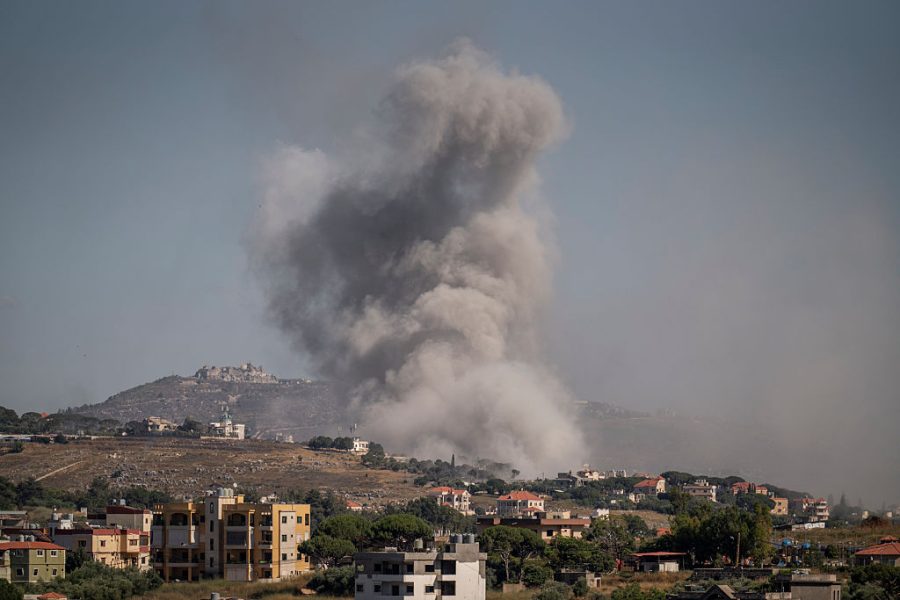
Israel has sought throughout to detach its battle with the Iranian proxy group Hezbollah in Lebanon from the negotiations – and from the larger effort to settle the conflict between the US and Iran. The logic is as follows: Hezbollah intends to continue its war against Israel. Jerusalem is aware that the US administration very much wants the current negotiations to succeed, so the Israeli government is currently engaged in the difficult task of seeking not to lose ground in an ongoing fight with an Iranian proxy, while simultaneously not coming across as a spoiler to a US administration keen to conclude its own conflict with Iran.
Iran, predictably, is keen that Israel should not succeed in this effort. As part of this, Tehran is determined to link the two fronts (i.e., Iran/Hormuz and Lebanon), insisting that failure in one means failure in both. Iran hopes by so doing to formalize a mechanism by which it can both protect its main Levantine proxy and create and widen divisions between Washington and Jerusalem.
Israel has no capacity to destroy Hezbollah in its entirety in Lebanon
Regarding the former goal, Iran hopes that US commitment to the success of any agreement will lead it to pressure Israel to withdraw from Lebanon – or otherwise stay its offensive against Hezbollah so as not to endanger the agreement’s implementation. Should Israel seek to defy US desires in this regard, this will serve the secondary goal of encouraging differences between Iran’s two enemies.
After initial wrangling between the US and Iranian sides over the issue of Lebanon, they have now reached agreement on the establishment of a “deconfliction cell” intended to ensure the cessation of military operations in the country, as required by the MoU. The mechanism includes the United States, Iran and the official government of Lebanon, along with the two countries who are mediating the negotiations, Pakistan and Qatar.
Most popular
Matt McDonald
Who can save America’s 250th birthday?
Anastasia Brown
Why Jack Schlossberg lostArieh Kovler
Will Bibi go into exile?Israel is excluded from the deconfliction cell, and it is not at all clear that the mechanism will succeed in its intended purpose. This is because a direct conflict is still under way between Israel and Hezbollah, the dynamics of which are in direct contradiction to the Geneva negotiations.
Iran believes that it emerged victorious from the war which recommenced on February 28. It is now interested in reaching an arrangement with the United States, which it sees as formalizing this achievement – and which it intends will include new arrangements on the Strait of Hormuz and the unfreezing of financial resources currently out of its reach. At the same time, Tehran has no intention of ending the broader strategic contest with the US. It also has no interest in concluding the conflict between Hezbollah and Israel.
Israel, having been attacked twice by Hezbollah in the last three years (on October 8, 2023 and March 1 this year) is, however, determined not to simply accept the status quo ante bellum. As Israeli Defense Minister Yisrael Katz bluntly expressed it this week:
Even if there is an American demand – we will not withdraw from Lebanon. 200,000 residents will not return.
Katz is referring here to residents of Israeli border communities who have quit their homes because of the danger of living close to the border fence with Lebanon thanks to Hezbollah’s liking for repurposing anti-armor missiles to target civilians and their homes.
Israel is also concerned at the practical implications of a deconfliction cell involving Iran and Qatar which is intended to manage ongoing friction between Hezbollah and Israel. As an un-named Israeli intelligence source quoted in Haaretz put it:
Transferring intelligence information, coordination plans or warnings ahead of a possible IDF attack to a body that includes Iranian or Qatari representatives is preposterous… These representatives cannot be trusted, and any shred of information that reaches them will immediately leak to Hezbollah and endanger human lives.
Israel has no capacity to destroy Hezbollah in its entirety in Lebanon, short of a ground invasion of the whole country – which is outside of the scope of possible options. At the same time, the current diplomatic process under way in Washington between the governments of Israel and Lebanon stands little chance of success, given the simple and stark fact that Hezbollah is stronger than any coercive force available to the Lebanese authorities. The Beirut government therefore simply has no capacity to force Hezbollah (which itself is represented in the government) to do anything it doesn’t want to. And neither Hezbollah nor its Iranian masters want it to stand down.
This means that further conflict in Lebanon is only a matter of time. At the same time, Israel has, under US pressure, currently ceased advancing in Lebanon and is in a defensive stance. Where is all this likely to be heading?
In the short term, with US encouragement, a partial Israeli withdrawal from some of the areas of Lebanon captured since February 28 is likely. A complete withdrawal, by contrast, probably won’t happen. Israel’s strategy since October 7 has been characterized by a desire to place barriers between its own civilian communities and potentially dangerous areas. This is the upshot of the Gaza war; it has been implemented also in Syria.
In Lebanon, the November 2024 ceasefire left the IDF in five outposts north of the border. The clear Israeli desire now is for the army to hold a zone around six miles from the border across its entire line – placing civilian communities out of range of anti-tank missiles – for as long as Hezbollah remains the de facto ruler of Lebanon. This is likely to happen but will also be accompanied by partial withdrawals from areas beyond this point. These will be handed over to the Lebanese Armed Forces, and one way or another will almost certainly then be reoccupied by Hezbollah.
What all this goes to prove is that the three months of war between February and June changed little of the deeper dynamics. The long war conducted by Iran and its Islamist proxies, intended to result in Israel’s destruction, is still under way. What has changed, at least for now, is that Israel needs to conduct this fight with the additional complication of not upsetting a US administration that is trying to make its retreat look like a peaceful outcome.
Badenoch blasts 'moaning' female Labour MPs over Burnham jobs 'quota'

Kemi Badenoch has told Labour women to earn a job in Andy Burnham's Cabinet instead of demanding they are handed jobs because of their gender.
The Tory leader lashed out today amid reports that female MPs are demanding the de-facto new prime minister introduce a 50:50 gender split 'quota' in his government.
Amid reports that former foreign secretary David Miliband is being lined up to return to the role, possibly with his brother Ed as Chancellor, one female minister also complained that Burnham could not have 'more Milibands than women' in the top posts.
But in a scathing article in the Times today Mrs Badenoch told them to 'stop moaning' and get chosen on merit instead of retreating into 'more of the failed identity politics that is holding back our country'.
'There are many, many reasons why you shouldn't have any Milibands in the cabinet,' she said.
'But complaining that the boys haven't given them the right jobs or that the boys are taking all the jobs, just shows that Labour's women still don't get it.'
The idea of quotas was also attacked by Baroness Jacqui Smith, Labour's Skills Minister.
Asked by Times Radio if Mr Burnham should reserve jobs for women, she said: 'No, I think what Andy Burnham should be doing is building the very best team around him to change this country.'

A letter written by the Women's Parliamentary Labour Party has called on Mr Burnham to ensure a 50:50 split between men and women in government jobs

Amid reports that former foreign secretary David Miliband (above, right, in 2010) is being lined up to return to the role, possibly with his brother Ed as Chancellor, one female minister complained that Burnham could not have 'more Milibands than women' in the top posts

But Mrs Badenoch told them to pipe down and get chosen on merit instead of retreating into 'more of the failed identity politics that is holding back our country'
A letter written by the Women's Parliamentary Labour Party and seen by the BBC has called on Mr Burnham to ensure a 50:50 split between men and women in government jobs after he succeeds Sir Keir Starmer.
'We are asking you to demonstrate this change from day one and address the toxicity and misogyny within our own party and government,' it said.
Labour has never had a female leader, while the Conservatives have had three, and Mrs Badenoch urged the government to follow its meritocratic example.
'If you run a meritocracy, then you do not have to worry about jobs for the boys,' she wrote.
'Every woman who is a Conservative MP, every woman who has ever won the leadership, has had to fight to get where she is.
'By contrast, Labour women are demanding guarantees from Burnham. But the truth is he doesn't have to give any guarantees.
'If none of Labour's women are prepared to get their hands dirty and challenge him for the leadership, their demands are toothless.'
'In fact, it's quite revealing that the women's parliamentary Labour Party has written to Burnham asking him to commit himself to at least 50 per cent female ministers.
'This has nothing to do with meritocracy. It is yet more of the failed identity politics that is holding back our country.'
Venezuela Fury and Noah Price subsidising their life by livestreaming

Venezuela Fury and her husband Noah Price look to be making their own way in the world by raking it in from their lucrative social media accounts.
The influencer daughter of Tyson and Paris Fury, 16, has become an internet sensation after tying the knot with her husband Noah, 19, earlier this year.
Since getting married and moving in together the couple have been earning thousands of pounds a month, livestreaming their life as newlyweds in their static caravan in the East Riding of Yorkshire.
And fans can't get enough of their regular life updates on TikTok and Kick, which have proved to be very profitable for the pair.
They look to be supporting themselves after Noah denied that he was given £5million by Venezuela's family as a wedding gift.
Despite his wife's huge family wealth, an estimated combined £160 million, Noah recently told his Kick followers that he 'pays for everything' for the couple.
Making light of the claims about Venezuela's millionaire financial status, Noah said: 'I actually pay for everything unfortunately. You'd expect the millionaire to pay for it wouldn't you.'

Venezuela Fury and Noah Price are earning thousands livestreaming their caravan life - after her new groom insisted he pays all the bills and denied he had £5m handout from her dad

The influencer daughter of Tyson and Paris Fury , 16, has become an internet sensation after tying the knot with her husband Noah, 19, earlier this year
Venezuela then asked their fans: 'Do you think I am a millionaire?'
Noah joked: 'She isn't a secret millionaire guys', before she broke into song and sang: 'But I live like a millionaire!'
But it seems according to estimated calculations from their social media work, Noah and Venezuela can more than afford to support themselves.
Noah has been livestreaming on platforms such as Kick and TikTok, where viewers can send paid gifts or donations.
He was previously encouraging viewers to send gifts on his honeymoon during livestreams, suggesting this is one revenue stream.
Both Noah and Venezuela have built substantial followings on Instagram and TikTok. They can potentially earn money through sponsored posts, brand collaborations, affiliate links and creator payouts.
Kick allows its creators to take home 95 per cent of the £4.99 subscription cost that fans pay.
Streamers keep 100 per cent of direct tips and donations, minus minor standard payment processing fees.
It is unclear how many subscribers Noah currently has because this information is hidden, but he does have 7,200 followers which is publicly viewable.
An industry insider has suggested Noah is making around £400 per video on TikTok, while Venezuela is likely to make £2,000 due to her following count of 1.3 million.

An industry insider has suggested Noah is making around £400 per video on TikTok, while Venezuela is likely to make £2,000 due to her following count of 1.3 million
In one video on their honeymoon, Noah asked his followers if they'd give them some more gifts now that they were married.
In a TikTok live viewed by 20,000 he said: 'Keep liking our videos people, keep sending gifts.'
After saying thank you to several of his followers he joked they should stick around on the livestream and 'watch Venezuela punch me in the mouth'.
The other half of the honeymooning couple said: 'I am, honestly!'
Noah previously confirmed that the pair don't share their finances after they were asked whether they have a shared bank account.
'She earns her money, I earn mine,' said Noah, as Venezuela joked: 'Yeah, what you gonna do about it.'
Noah went on to debunk the rumour that Tyson gave him £5million when he tied the knot with his daughter as he insisted: 'No Tyson did not give me £5million'.
Meanwhile Venezuela is being eyed up by executives for a fly on the wall TV series.

Noah went on to debunk the rumour that Tyson gave him £5million when he tied the knot with his daughter as he insisted: 'No Tyson did not give me £5million'
Boasting 1.3 million TikTok followers, Venezuela is already entertaining fans with her honest musings and candid moments, from cooking to kitting out her and Noah's static caravan home.
And following the success of the Netflix series At Home With The Furys, it is no wonder bosses are wanting to draw on the Fury popularity.
A TV insider said: 'The couple are not A-list celebrities but everyone has become obsessed with their love story.
'People are genuinely intrigued by them. Whether it’s the fact they have married so young, Venezuela’s famous family or their gypsy lifestyle, they have the ‘X factor'.
'Several TV executives think a proper fly-on-the-wall series following their lives as newlyweds in the gypsy community would be fascinating,' they told The Sun.
It is thought Netflix would be likely to produce the series due to their already established relationship with the Furys.
Venezuela's representatives told The Daily Mail: 'We have many offers on the table regarding Venezuela which we are discussing.'