Big Business This Week: Scrapped: The Businesses Banking on Tariffs
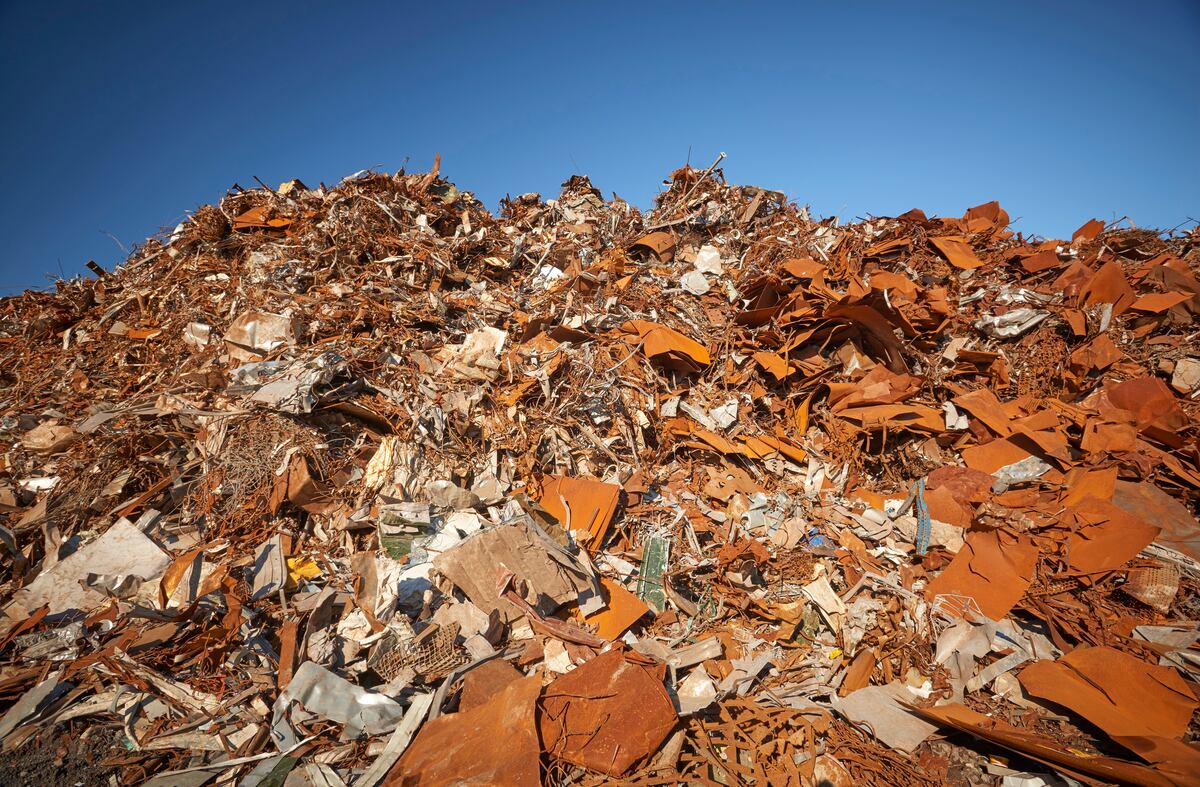
Isaac Dietrich is a deliriously happy man. As CFO of Greenwave, a scrap metal dealer with operations in Virginia, North Carolina, and Ohio, he says Trump’s tariffs on Chinese and potentially other imports mean good times for junkyards. His yards take metal from construction sites, the U.S. government and armed forces, and local municipal trash haulers who provide a steady supply of appliances and used cars.
“Historically, it’s been a demand-side market where the steel mills set the price and set all the terms,” Dietrich said by phone. But all that’s flipped, he said, with Trump’s tariffs: “Last year 80% of our sales were exports; this year is going to be almost 80% domestic at much higher prices. Tariffs are making it so Nucor and all these steel mills in the United States are going to be buying from domestic scrap yards, and that’s us,” said Dietrich.
In fact, many U.S. steelmakers, including giants like Nucor and Cleveland-Cliffs, are buying scrap companies to lock in supplies of steel at affordable prices. Dietrich wouldn’t be drawn, but that could make his firm an attractive target. Prices for scrap, Dietrich said, have risen 20% in 48 hours this week as steelmakers assess the implications of tariffs. While the price Greenwave and other firms pay for the scrap they process and re-sell varies along with market prices, Dietrich says margins will only grow, and recently his firm said publicly that it expects margins to reach 50% from about 40% right now.
“If I’m a scrap dealer, tariffs actually would increase the steel price,” said Janice Lee, a partner at the Boston Consulting Group who specializes in scrap metal markets. “But if scrap prices are lagging, that means the spread that I get between the steel and the scrap price expands, and so therefore it’s great for me.”
The U.S., says Lee, is “blessed” with a vast surplus of scrap metal, and if tariffs continue, that will halt the inflow of scrap from Canada, and retaliatory tariffs could dampen exports to Mexico, boosting the need for domestic scrap. That’s also pushing more of the vertical integration of the steel and scrap industry, which can only feed its electric arc furnaces with scrap (iron ore is used by blast furnaces, but EAFs are far more efficient and cleaner).
“As an EAF operator, that’s your sole source of raw material, so you see an advantage in making sure that you guarantee the flow,” said Lee. “That’s why a lot of players are vertically integrating.”
Watch Big Business This Week on Cheddar—and YouTube!
The Usual Suspects
- The Mouse is back! With the help of blockbuster movie sequels, including Moana 2, Deadpool & Wolverine and Inside Out 2, Disney had a whopping first quarter of its fiscal year, beating analysts’ estimates, with quarterly profit up 44% per share over the previous year. That comes even though Disney is seeing business and profits drop at ESPN and its theme parks, as the post-Covid entertainment catch-up cooled down. Hurricanes also hurt revenue from cruises and at Disney World in Orlando, but streaming is getting even more profitable: Despite a small drop in viewership, a slight hike in streaming prices and a spike in ad sales swung that business, which includes Disney+ and Hulu, to a profit of $293 million from a $138 million loss last year. Still, cruises remain one of the company’s most profitable sectors, and CEO Bob Iger said Disney is on course to add seven more ships to the six it already has. That, Iger said, is one of the company’s strengths, complementary businesses that can take up the slack when one is under pressure. Roar, Mouse, roar!
- What was Google’s motto? It started with “Do no evil,” then morphed to the Spike Lee–inspired “Do the right thing,” but now Google’s corporate credo seems to be “Do unto others before they do unto you.” On Tuesday, Google dropped from its AI principles a vow not to use AI for weapons or surveillance, Fortune reports. The revision comes just weeks after Google CEO Sundar Pichai had a front-row seat at Donald Trump’s inauguration. The new credo says AI should “support national security.” Back in 2018, Pichai wrote a blog post that listed “AI applications we will not pursue,” including “Weapons or other technologies whose principal purpose or implementation is to cause or directly facilitate injury to people” and “Technologies that gather or use information for surveillance violating internationally accepted norms.”
- Google’s share shock: Slowing growth in its cloud computing business and an announcement that company would boost AI and other capital spending by 50% to $75 billion this year sent Google shares down 7 percent so far this week. Big tech stocks have been rocked by the release of China’s DeepSeek AI model, which claims to have spent a mere $5.6 million developing its model using older-generation silicon chips. But Sundar Pichai, CEO of Google parent Alphabet, said DeepSeek wouldn’t hurt his business. In response to a question about Chinese AI on a call with analysts, Pichai said, “All of that sets us up well for the workloads ahead, both to serve billions of users across our products and on the cloud side.”
- Estée Lauder’s family feud: A strategy dispute between two generations of the Lauder family continues to damn the U.S.-based global cosmetics giant, as a fateful bet on China and a failure to win a new generation of customers sent shares plunging another 19% after the company on Tuesday announced disappointing sales, a 14.5% operating loss and up to 7,000 layoffs from its 62,000-member workforce. Estée Lauder’s revenue more than doubled from $7.8 billion in 2010 to a peak of $17.7 billion in 2022, and the share price rose 643%, all under Italian-born Fabrizio Freda, who left the CEO’s suite last year. Chief digital officer Jane Lauder wanted to go big on TikTok and grab younger users, while her cousin, CEO William Lauder, backed Freda’s China push. But China’s luxury market never recovered after Covid, shrinking nearly 20% in 2024, after Estée Lauder had invested billions in new boutiques across China, a massive logistics chain and a $1 billion factory in Japan to serve China. Shares are down more than 80% since they peaked at $370 at the end of 2021. New CEO Stéphane de la Faverie, a long-time insider, now has to streamline the company and find a way to grab those new consumers, who presumably won’t be coming from China.
- Apple’s China troubles: After U.S. and European regulators have taken on Apple’s commercial policies, now China’s market regulator says it is examining Apple’s App Store, including Apple’s commission on those sales and its restrictions on using outside payment services and competing app stores on its phones. China is Apple’s third-largest market, and the news comes notably on the heels of Trump’s announcement that he will put a 10% tariff on all Chinese imports to the U.S.
- Car talk: Plans to merge Honda and Nissan, Japan’s nos. 2 and 3 carmakers, have ground to a halt, as reports say cash-strapped Nissan balked at Honda’s demand to be the parent company in the new tie up. Nissan sells 3 million cars a year and Honda 4 million. Combined they’d be the world’s third-largest carmaker, behind Toyota and Volkswagen. But both are struggling to develop electric cars and self-driving technology. Nissan’s shares fell nearly 5% on Wednesday after the news broke, while Honda’s rose 8%. Meanwhile, Tesla sales are plummeting in Europe, down 44% in Sweden, 38% in Norway and 63% in France in January from a year earlier. Some of that is due to the lack of any new models, and some to cheaper local and Chinese electric cars, but Germany’s Schmidt Automotive Research said many consumers may be reacting to Musk’s comments at a recent convention of Germany’s far-right party, where he said Germany needs to shake off its guilt over World War II and the Holocaust. Volkswagen has also announced plans to compete with Tesla, introducing an entry-level EV at its main Wolfsburg plant that would retail for about €20,000 (about $20,000) when it goes into production in 2027.
- Bill is back: The occasionally successful activist investor Bill Ackman, owner of one of the loudest mouths in finance, has been tearing into United Healthcare in a since-deleted post on X. “If I still shorted stocks, I would short United Healthcare. The [Securities and Exchange Commission] should do a thorough investigation of the company,” Ackman posted, according to multiple media reports. “I would not be surprised to find that the company’s profitability is massively overstated due to its denial of medically necessary procedures and patient care.” Ackman has tapped in to a common concern about the largest U.S. health insurer, which has a 15% market share and a profit margin last year of 22.3%, down from 2023′s 24.5%. United’s reputation for denying benefits to policyholders is thought to be the reason that Luigi Mangione allegedly shot UnitedHealthcare CEO Brian Thompson to death in December in front of the Hilton hotel in Midtown Manhattan.
What do you think of Big Business This Week? Tell us how you really feel in this survey!
Elon’s World
Elon Musk’s lawyers were in a California courtroom telling federal judge Yvonne Gonzalez Rogers that Musk would be “irreparably harmed” if she let Sam Altman’s OpenAI, which Musk helped bankroll, convert to a for-profit company. It’s more likely that Musk’s own xAI would be harmed by OpenAI’s conversion, and the judge called Musk’s contention a “stretch,” but said the trial should still go ahead. • Beyond firing all of the government’s employees, sinking its foreign aid agency, and gaining access to every American’s Social Security information, Musk has another job: making sure Trump’s new Air Force One jets actually get delivered by Boeing. Two renovated 747s were supposed to be delivered in 2022. The planes are now expected in 2027 and 2028 because of Covid, the Boeing strike and design changes, which have all added about $2 billion to the price tag. Musk’s SpaceX competes with Boeing for government launch contracts. “The president wants those planes sooner, so we’re working with Elon to see what we can do to pull up the schedule of those programs,” Boeing CEO Kelly Ortberg said, through gritted teeth. • Trading on Musk’s newfound popularity as First Buddy, a group of Wall Street banks was able to unload $5.5 billion of X debt, after selling about $1 billion of the short-term loans last month. The X debt sold for about 97 cents on the dollar. In 2023, some hedge funds had offered Morgan Stanley just 60 cents on the dollar to take on X debt. This time, buyers were lining up, including hedge funds Citadel, Apollo Global Management, Pimco and Diameter Capital. That comes after investment fund giant Fidelity last September wrote down the value of its equity stake in X by 79%, as X hemorrhaged advertisers and users. But the new interest in X debt is likely linked to two things: 1) the excessively high interest rate, 6% over the floating rate benchmark, which with the discount yields about 12% for the buyers, and 2) as one banker told The Financial Times: “Elon’s cachet. He is an FOP, a friend of the president.”
Get Big Business This Week in your inbox every week—and read it before everybody else! Sign up today.
The Short Stack
- Getting fat on getting slim: Danish drug maker Novo Nordisk, the maker of Ozempic and Wegovy, said sales last quarter rose 25% amid growing global demand for the weight loss and diabetes drugs. But the company says it expects slower sales this year, as Trump’s health secretary nominee, Robert F. Kennedy Jr., has said Novo Nordisk is “counting on selling it to Americans because we are so stupid and so addicted to drugs,” and also because Trump threatened tariffs on Denmark for refusing to sell him Greenland.
- Is DeepSeek doing the TikTok dance? Chinese chatbot sensation DeepSeek, the low-budget AI success that was launched just two weeks ago, may be sending your information to China’s Communist government. Canadian cybersecurity firm Feroot Security found that code in DeepSeek’s registration page sends customer data to China Mobile, a telecoms provider with close ties to the Chinese government. It’s not clear exactly what data might be sent, or what the provider does with it, but the U.S. barred the company from operating here in 2019, citing national security concerns. For those same reasons, Congress ordered Chinese social platform TikTok to split from its Beijing-linked owner. And researchers at Newsguard called DeepSeek “a disinformation machine” that largely reflects the Chinese Communist Party’s view of the world. Asked if it had ties to the Chinese government or China Mobile, DeepSeek replied “DeepSeek is a Chinese company that focuses on making AGI a reality. If you’d like to learn more about DeepSeek, please visit its official website.”
- Bitcoin gets bit: After Donald Trump announced tariffs on Mexico and Canada, one of the big losers was the supposed safe-haven, chaos-hedge of crypto currency. But within 48 hours of the announcement, Bitcoin dropped 8%, falling below the $100,000 mark, and Ethereum dropped 22%. Crypto experts are split on whether in the long term crypto becomes a hedge against Trump-triggered volatility—or roadkill. The two coins recovered a bit this week, after Trump announced plans for a U.S. sovereign wealth fund, and coiners bet that it would include hyper-volatile cryptocurrency. That sovereign wealth fund itself is a bit of a confounding thing: Most sovereign wealth funds are created from surplus government revenue that is invested to create a long term excess return, rather than dumping the money straight into the budget and spending it, which generally drives up inflation. But with the U.S. running a vast budget deficit ($1.8 trillion in 2024, and over $3 trillion in 2020, during Trump’s last term), it’s not clear where the cash would come from, short of some massive tax levy or the sale of vast amounts of publicly owned assets.
- Don’t tread on my crypto: Meanwhile, the Securities and Exchange Commission is cutting back its 50-person crypto enforcement unit, the New York Times reported, citing people with “knowledge of the matter.”
- No waffling on egg prices: As bird flu sends up the price of eggs, Waffle House, that great barometer of middle-American economic activity, has slapped a 50-cent tariff on each egg on its menu. The wholesale price of eggs has more than doubled in the past year, with grocery stores and restaurants are now paying around $7.79 for a dozen Midwest large eggs, the industry standard, up from $3.33 12 months ago, the New York Times reports, citing Expana, a firm that collects and tracks the price of eggs. At that price, each egg would cost about 65 cents.
Trumplandia
Take two aspirin and call me when the tariffs expire: Pharmaceutical firms, drug distributors and and healthcare companies are worried that tariffs on countries that produce generic drugs, precursor materials for U.S.-made drugs, and other pharmaceuticals that U.S. patients need, could cripple our healthcare system, causing drug shortages and dramatically raise the cost of care. “Placing tariffs on generic drug products produced outside the U.S. will put additional pressure on an industry that is already experiencing financial distress. Distributors and generic manufacturers cannot absorb the rising costs of broad tariffs,” the Healthcare Distribution Alliance said on Feb. 2.
1, 2, 3, 4, I Declare a Trade War
The on-again/off-again trade war with America’s commercial partners may be on hold for a month, but the key indicator that seems to be at the root of it all, the U.S. trade deficit widened in 2024 to a record $1.2 trillion. And that, it seems, is what gets under Trump’s skin. “We have deficits with almost every country — not every country, but almost — and we’re going to change it,” he said Sunday. Tariffs, Trump figures, will push up the price of imports so high that U.S. consumers will instead buy American. The problem is that the U.S. doesn’t produce everything it would like to consume, so placing tariffs on one country is playing a game of global trade whack-a-mole. In fact, among the hardest hit companies in the U.S. are carmakers, which take advantage of the free trade zone formerly known as NAFTA. Besides, as long as the government’s fiscal deficits don’t get out of control (taxes and revenue track federal spending), those trade deficits are largely offset by foreigners buying U.S. government and corporate debt. U.S. imports of goods and services grew 6.6 percent to a record $4.1 trillion, as Americans bought large amounts of auto parts, weight-loss drugs, computers and food from other countries.
At the same time, U.S. exports of goods and services to the rest of the world also hit a record last year, at $3.2 trillion.
Maurice Obstfeld, a senior fellow at the Peterson Institute for International Economics and the former chief economist at the International Monetary Fund, told The Wall Street Journal that tariffs would have “an ambiguous effect” on the trade deficit, in part because they would strengthen the U.S. dollar. When the currency appreciates, that makes imports seem cheaper and exports more expensive, pushing up the trade deficit.
About Peter S. GreenPeter S. Green is a veteran reporter and editor who has spent more than two decades covering business and finance from Eastern Europe to New York City, and has worked for Bloomberg News, The New York Post, The New York Times and The Messenger. He lives in New York City and is always looking for the next big story.
Share:More In Big Business This Week Load MoreBadenoch blasts 'moaning' female Labour MPs over Burnham jobs 'quota'

Kemi Badenoch has told Labour women to earn a job in Andy Burnham's Cabinet instead of demanding they are handed jobs because of their gender.
The Tory leader lashed out today amid reports that female MPs are demanding the de-facto new prime minister introduce a 50:50 gender split 'quota' in his government.
Amid reports that former foreign secretary David Miliband is being lined up to return to the role, possibly with his brother Ed as Chancellor, one female minister also complained that Burnham could not have 'more Milibands than women' in the top posts.
But in a scathing article in the Times today Mrs Badenoch told them to 'stop moaning' and get chosen on merit instead of retreating into 'more of the failed identity politics that is holding back our country'.
'There are many, many reasons why you shouldn't have any Milibands in the cabinet,' she said.
'But complaining that the boys haven't given them the right jobs or that the boys are taking all the jobs, just shows that Labour's women still don't get it.'
The idea of quotas was also attacked by Baroness Jacqui Smith, Labour's Skills Minister.
Asked by Times Radio if Mr Burnham should reserve jobs for women, she said: 'No, I think what Andy Burnham should be doing is building the very best team around him to change this country.'

A letter written by the Women's Parliamentary Labour Party has called on Mr Burnham to ensure a 50:50 split between men and women in government jobs

Amid reports that former foreign secretary David Miliband (above, right, in 2010) is being lined up to return to the role, possibly with his brother Ed as Chancellor, one female minister complained that Burnham could not have 'more Milibands than women' in the top posts

But Mrs Badenoch told them to pipe down and get chosen on merit instead of retreating into 'more of the failed identity politics that is holding back our country'
A letter written by the Women's Parliamentary Labour Party and seen by the BBC has called on Mr Burnham to ensure a 50:50 split between men and women in government jobs after he succeeds Sir Keir Starmer.
'We are asking you to demonstrate this change from day one and address the toxicity and misogyny within our own party and government,' it said.
Labour has never had a female leader, while the Conservatives have had three, and Mrs Badenoch urged the government to follow its meritocratic example.
'If you run a meritocracy, then you do not have to worry about jobs for the boys,' she wrote.
'Every woman who is a Conservative MP, every woman who has ever won the leadership, has had to fight to get where she is.
'By contrast, Labour women are demanding guarantees from Burnham. But the truth is he doesn't have to give any guarantees.
'If none of Labour's women are prepared to get their hands dirty and challenge him for the leadership, their demands are toothless.'
'In fact, it's quite revealing that the women's parliamentary Labour Party has written to Burnham asking him to commit himself to at least 50 per cent female ministers.
'This has nothing to do with meritocracy. It is yet more of the failed identity politics that is holding back our country.'
Venezuela Fury and Noah Price subsidising their life by livestreaming

Venezuela Fury and her husband Noah Price look to be making their own way in the world by raking it in from their lucrative social media accounts.
The influencer daughter of Tyson and Paris Fury, 16, has become an internet sensation after tying the knot with her husband Noah, 19, earlier this year.
Since getting married and moving in together the couple have been earning thousands of pounds a month, livestreaming their life as newlyweds in their static caravan in the East Riding of Yorkshire.
And fans can't get enough of their regular life updates on TikTok and Kick, which have proved to be very profitable for the pair.
They look to be supporting themselves after Noah denied that he was given £5million by Venezuela's family as a wedding gift.
Despite his wife's huge family wealth, an estimated combined £160 million, Noah recently told his Kick followers that he 'pays for everything' for the couple.
Making light of the claims about Venezuela's millionaire financial status, Noah said: 'I actually pay for everything unfortunately. You'd expect the millionaire to pay for it wouldn't you.'

Venezuela Fury and Noah Price are earning thousands livestreaming their caravan life - after her new groom insisted he pays all the bills and denied he had £5m handout from her dad

The influencer daughter of Tyson and Paris Fury , 16, has become an internet sensation after tying the knot with her husband Noah, 19, earlier this year
Venezuela then asked their fans: 'Do you think I am a millionaire?'
Noah joked: 'She isn't a secret millionaire guys', before she broke into song and sang: 'But I live like a millionaire!'
But it seems according to estimated calculations from their social media work, Noah and Venezuela can more than afford to support themselves.
Noah has been livestreaming on platforms such as Kick and TikTok, where viewers can send paid gifts or donations.
He was previously encouraging viewers to send gifts on his honeymoon during livestreams, suggesting this is one revenue stream.
Both Noah and Venezuela have built substantial followings on Instagram and TikTok. They can potentially earn money through sponsored posts, brand collaborations, affiliate links and creator payouts.
Kick allows its creators to take home 95 per cent of the £4.99 subscription cost that fans pay.
Streamers keep 100 per cent of direct tips and donations, minus minor standard payment processing fees.
It is unclear how many subscribers Noah currently has because this information is hidden, but he does have 7,200 followers which is publicly viewable.
An industry insider has suggested Noah is making around £400 per video on TikTok, while Venezuela is likely to make £2,000 due to her following count of 1.3 million.

An industry insider has suggested Noah is making around £400 per video on TikTok, while Venezuela is likely to make £2,000 due to her following count of 1.3 million
In one video on their honeymoon, Noah asked his followers if they'd give them some more gifts now that they were married.
In a TikTok live viewed by 20,000 he said: 'Keep liking our videos people, keep sending gifts.'
After saying thank you to several of his followers he joked they should stick around on the livestream and 'watch Venezuela punch me in the mouth'.
The other half of the honeymooning couple said: 'I am, honestly!'
Noah previously confirmed that the pair don't share their finances after they were asked whether they have a shared bank account.
'She earns her money, I earn mine,' said Noah, as Venezuela joked: 'Yeah, what you gonna do about it.'
Noah went on to debunk the rumour that Tyson gave him £5million when he tied the knot with his daughter as he insisted: 'No Tyson did not give me £5million'.
Meanwhile Venezuela is being eyed up by executives for a fly on the wall TV series.

Noah went on to debunk the rumour that Tyson gave him £5million when he tied the knot with his daughter as he insisted: 'No Tyson did not give me £5million'
Boasting 1.3 million TikTok followers, Venezuela is already entertaining fans with her honest musings and candid moments, from cooking to kitting out her and Noah's static caravan home.
And following the success of the Netflix series At Home With The Furys, it is no wonder bosses are wanting to draw on the Fury popularity.
A TV insider said: 'The couple are not A-list celebrities but everyone has become obsessed with their love story.
'People are genuinely intrigued by them. Whether it’s the fact they have married so young, Venezuela’s famous family or their gypsy lifestyle, they have the ‘X factor'.
'Several TV executives think a proper fly-on-the-wall series following their lives as newlyweds in the gypsy community would be fascinating,' they told The Sun.
It is thought Netflix would be likely to produce the series due to their already established relationship with the Furys.
Venezuela's representatives told The Daily Mail: 'We have many offers on the table regarding Venezuela which we are discussing.'