Barack Obama’s monstrous carbuncle
Barack Obama’s monstrous carbuncle His library is as empty as he is
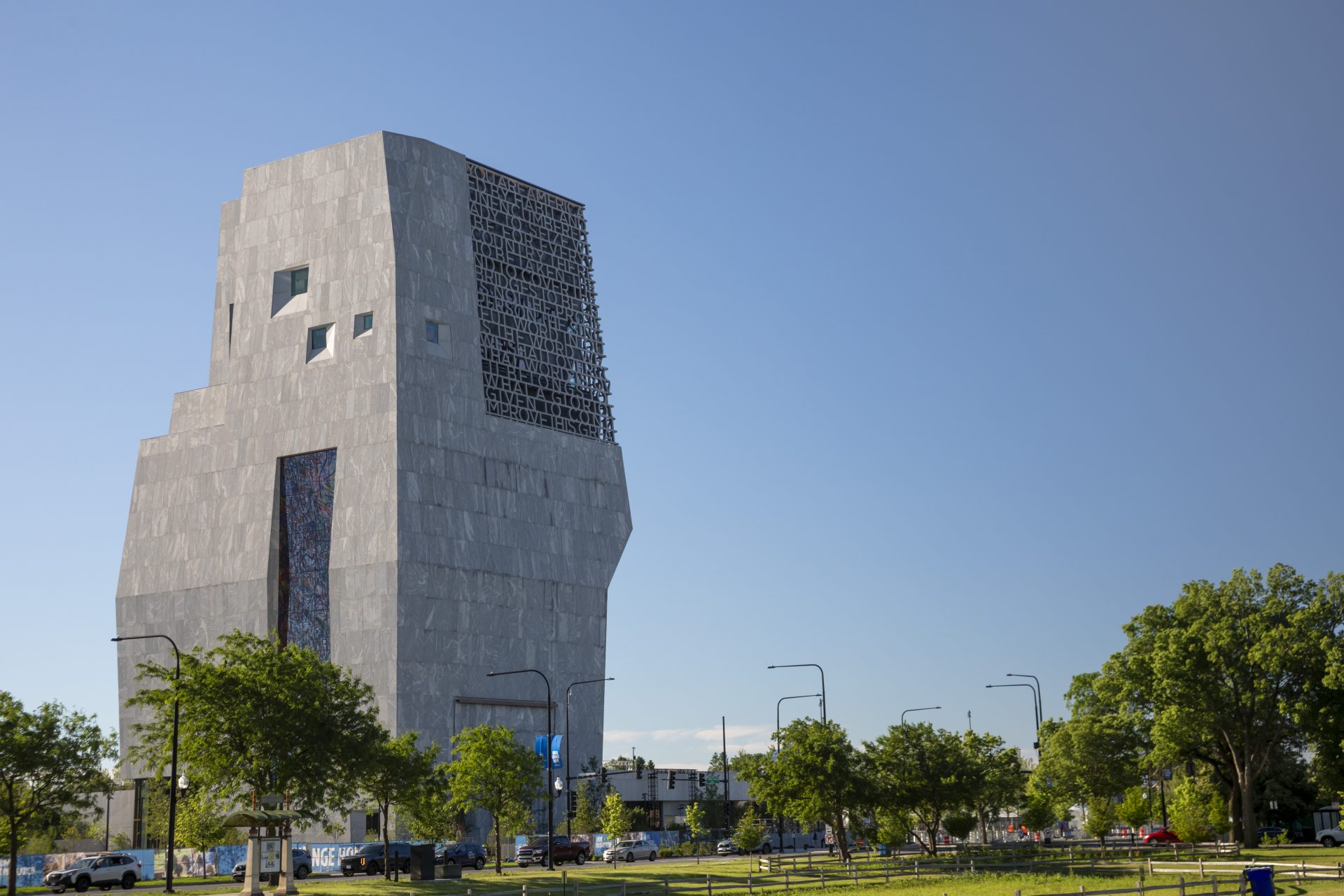
The Obama Presidential Center in Jackson Park opens this week. (Jim West/UCG/Universal Images Group/Getty)
The Obama Presidential Center in Jackson Park opens this week. (Jim West/UCG/Universal Images Group/Getty)
AmericaBarack ObamaObama Presidential CenterPolitics



 Theo Zenou
Jun 17 2026 - 12:01am 8 mins
Theo Zenou
Jun 17 2026 - 12:01am 8 mins
Five years ago, the messiah came to Chicago. He was dressed in a dark suit and crisp white shirt. No tie, of course. The messiah is a laidback kind of guy. He was in Chicago to break ground for a temple where his spirit would dwell forever. After some grandiloquent remarks, he grabbed a shovel, got down in the dirt and dug. Then, as he’s wont to do when cameras are around, he cracked a smile.
And as he planned it, so it is. Later this week, in Chicago, the Barack Obama Presidential Center opens its doors to the public, making it the 14th presidential library in the United States. For a $30 admission fee — by far the most expensive of the lot — visitors will be treated to the Obama greatest hits. It’s been a while, but surely you can intone them: Yes We Can, The Audacity of Hope, Change We Can Believe In.
Like other presidential libraries, the Obama Center is a vanity project that tells us how its namesake wants to go down in history. But it feels too on the nose to convince anyone beyond starry-eyed supporters. According to its website, the Center has four floors of “dynamic exhibits” that “explore the promise and power of democracy through the legacy of President Obama and Mrs. Obama” and connect them to the “social movements that made their work possible”. Picture John Lewis leading civil rights activists across the Edmund Pettus Bridge in Selma, or Martin Luther King waxing lyrical about his dream in front of the Lincoln Memorial in Washington. The implications of all this dynamism: Obama is the moral conscience of America. And why not? After all, just like Dr. King, and unlike the sitting president, he has a Nobel Peace Prize.
To top it all off, there’s also a full-size replica of Obama’s Oval Office, where visitors can sit at the resolute desk and play commander-in-chief for a minute or two. While that might sound like it’s worth the price of admission, former presidents have been building replicas of the Oval Office since Harry Truman in 1957. And admission to the Truman Library, in Independence, Missouri, is only $12.
Modern US presidents all have their own presidential libraries, financed by private donations. Though these “presidential temples” have gotten more extravagant since Truman’s time, they all serve the same dual purpose: they contain an exhibit on the tenure of each president, and house the archives of his administration. More than a million people visit them every year, according to the most recent figures. The most popular, with nearly 250,000 tourists, is the Reagan Library in California.
Not for long. Over the next year, 700,000 visitors are expected to flock to the South Side of Chicago, the high temple of the Midwest messiah. Like all auspicious sites, the location wasn’t picked at random. With presidential libraries, setting is storytelling. For instance, the Eisenhower Library is in his hometown of Abilene, Kansas (population: 6,000), which serves to underscore his folksy nature. The Reagan Library, meanwhile, sits atop a hill surrounded by open space. As the historian Sarah Mackay points out, this reinforced the conservative’s image as an intrepid cowboy. As for the power-hungry Lyndon B. Johnson, one location wasn’t enough for him. In addition to his official library in Austin, he also built a replica of the house where he was born in the Texas countryside. He wanted the world to be wowed by his hard-scrabble background.
“Over the next year, 700,000 visitors are expected to flock to the South Side of Chicago, the high temple of the Midwest messiah.”Much has been made about how Obama chose — scrap that, insisted on — the South Side, historically where Chicago’s working-class black communities have lived. It was there, too, that the former president spent his formative years as a community organizer. “The best education I ever had,” Obama later said. Placing his library on the South Side is a way to bring economic opportunity to the people who made him.
Or so the official narrative goes. But as David J. Garrow, author of the definitive Obama biography explains, the 44th president’s library is actually located at the top of the South Side, near Hyde Park, which “for decades has been this integrated, middle class, upper middle class island built around the University of Chicago and very separated” from the rest of the South Side. “Going further south,” Garrow says it’s important to realize, “there’s another 70-plus blocks”.
There are other question marks too. Obama’s first job in Chicago was deep in those blocks, in the neighborhood of Roseland. And yet, Garrow says, “it’s still not connected to the public transit system,” and “it’s virtually all black”. Had the Obama Center been built in Roseland, it would have been a godsend for the people there. Instead, in Garrow’s laconic observation, “we just get a little bit of an extension of Hyde Park.”
In a similar vein, the almost mythical connection between Obama and Chicago’s progressive activist circles is grossly exaggerated. As Garrow shows in his book, as soon as Obama went to Washington to become a senator, he ghosted them. Politics is ruthless, yes, but not everyone has behaved like this. Presidents from JFK to Reagan were loyal to their collaborators. They knew they could trust them more than Washington courtiers. Obama preferred the latter. As Hermene Hartman, one of his early backers and an influential figure in Chicago’s black community, put it back in 2011: “In Chicago politics, that’s rule number one: be loyal… I was very loyal to Barack, but he has not been loyal to some of the people who were there for him from day one.”
If the narrative around the Obama Center is spurious, at least the building itself looks good, right? Obama is nothing if not stylish. He knows how to do vibes. Alas, not this time. The Center is as disappointing as the man once you learn about him. This doesn’t really come as a surprise given that the architecture of presidential libraries usually reflects their subjects. It’s like the concrete embodiment of their psyche.
Take the LBJ Library, an awesome edifice, all hard lines and travertine. When it opened, Newsweek dubbed it “the big daddy of all US presidential libraries”. It showcased the gargantuan hubris of a president who had sworn he would build a “great society” and ended up being responsible for the Vietnam debacle. By contrast, the Hoover Library in West Branch, Iowa, is a modest neoclassical building. From afar, it looks like it could be your local high school. That’s the point: it befits a taciturn president who avoided the spotlight, even during the Great Depression.
More from this author Meet France's duelling royalistsDesigned by architects Tod Williams and Billie Tsien, the Obama Center is more Johnsonian than Hooverian. A thick tower with sharp, angled faces, it’s covered in gray granite. There are barely any windows. At the top is a “sky room”. The shape of the building, Obama Foundation deputy director Kim Patterson informed us recently, is “meant to mimic four hands coming together to show the importance of collective action”. Some social media users have compared it to a trash can. While that’s taking it a bit too far, there’s nothing architecturally distinctive about the Obama Center. It looks like the HQ of a Fortune 500 company.
Spread around the tower is a “campus” that feels more like a mall. There’s a branch of the Chicago public library (because Barack is an intellectual), a gym with basketball courts (because Barack is sporty), artwork from emerging and renowned artists (because Barack is hip), a cafe and fine dining restaurant where you will “experience the vibrant connection between food and community impact” (because Barack is a foodie with a social conscience). Of course, there’s also a shop to “grab your swag”.
Credit where it’s due: the Obama Center has way more going on than other presidential libraries. Amenities are usually restricted to a cafeteria and a gift shop selling bobbleheads, themed plates and books. But, yet again, this corporate sensibility was to be expected. Since leaving office a decade ago, Obama has been in his mogul era, signing lucrative deals with Netflix and Spotify.
What presidents do after the White House, especially when they are relatively young, is always revealing. Jimmy Carter was a failure in office but went on to dedicate himself to humanitarian work. Thanks to his efforts, guinea worm disease has been nearly eradicated. Bill Clinton, too, has made a positive difference with the Clinton Foundation. George W. Bush, at least, has had the decency to keep a low profile.
Despite his reputation as a high-minded intellectual, Obama is enamored with the trappings of wealth and status. Not without reason did he like to say that his favorite “perk of being president” was having his own plane. His post-presidency has been one long succession of flexes signifying nothing. One week, he’s with Oprah and Bruce Springsteen on a yacht in French Polynesia. Another, he’s hanging with George and Amal Clooney in Lake Como. In between, he’s imparting his wisdom about democracy to the readers of the New Yorker. Ultimately, the former president is like the ambitious hero in a Balzac novel: all style, no substance. As Garrow concludes in his biography, “while the crucible of self-creation had produced an ironclad will, the vessel was hollow at its core.”
“Ultimately, the former president is like the ambitious hero in a Balzac novel: all style, no substance.”And so is the Obama Center. Nothing makes this point more plainly than the fact it is a presidential library without any archives. Every other library has a research room — operated by the National Archives and Records Administration — where anyone can go and examine records from that president’s time in office. But in the case of the Obama Center, the research room is “digital” only. It’s just a website. There is no physical space for historians to actually work.
To understand quite how absurd this is, you have to go back to why presidential libraries even became a thing. The year was 1941, and Franklin D. Roosevelt was in the White House. Up until then, no system existed to catalog the archives of US presidents. Some went to the Library of Congress in Washington, others to the president’s relatives or private collectors. FDR changed that with the FDR Library, a colonial-style cottage erected on his family estate in Hyde Park — not Chicago, but leafy Upstate New York. For the first time, Roosevelt said, presidential archives would remain “whole and intact in their original condition, available to scholars of the future.”
Nearly 80 years later, I was one of those scholars, at the FDR Library for my Master’s dissertation. I remember feeling emotional while holding ink-stained letters FDR had received after his first fireside chat in March 1933. It was the height of the Great Depression, and the country was starving. Ordinary Americans were pouring their hearts out to the president, telling him how much he meant to them. One lady even compared him to Moses. The experience would have been infinitely less moving had I been on a laptop in my bedroom.
Then there’s the intellectual camaraderie of the research room. During my PhD, I spent long days poring over obscure Cold War archives at the JFK Library in Boston. At lunch, me and my fellow researchers would grab sandwiches and discuss our interpretations of the Kennedy presidency. The absence of a research room at the Obama Center will prevent such scenes from ever happening. What a failure of community building for a man who never lets us forget that he was once a community organizer.
Suggested ReadingDonald Trump knows how to partyYes, presidential libraries are vanity projects. FDR himself wasn’t entirely altruistic when he dreamed up the first. As an opponent said at the time: “Only an egomaniac would have the nerve.” Every egomaniac since has had the nerve. Even Richard Nixon, who had an exhibit about Watergate absolve him of any wrongdoing, presenting the whole thing as a “coup” by Democrats. (It was updated after his death to be historically accurate.)
Some libraries take that idea of legacy even further. Eight presidents, including FDR and Reagan, are buried on the grounds of their libraries. When you come to think of it, that’s the kind of thing you’d expect from kings: to build shrines dedicated to their memory. It’s a reminder that long before Donald Trump, who plans to open a gold-decked library in Miami, American presidents have been behaving like monarchs. All too often, the American people have merrily played along.
And yet the US also has a deep-running democratic culture. Presidential libraries, for all their pomp, are a testament to that. By giving anyone access to archives, they are the ultimate democratic space. As Reagan put it when he broke the ground of his own library: “There’ll be much to study here, much to discuss, and much to mull over. This library will allow scholars of the future to cast their own judgment on these years, and I would not presume to predict the result of their researches.”
This prospect probably unsettles Obama. He craves adulation and has enjoyed a ridiculously easy ride for most of his career. Outside of shrill conservative pundits, who he can dismiss as hacks, Obama has been feted by the mainstream media and pop culture. But that won’t last. As years go by and memories of his magnetism fade, he will be treated like any other president. And just like any other president, the only thing that will matter is the record.
No one rates FDR or Reagan because of how cool they were, or how impressive their libraries are, but because of their transformative records. And while it’s too soon to render a historical verdict, Obama’s record isn’t looking like that of a significant president. His domestic achievements were lackluster, and his foreign policy left America weaker. Obamacare, the Dodd-Frank Wall Street Reform Act; the Snowden leaks; the Iran nuclear deal; the never-enforced “red line” in Syria; the advent of wokeism in the Democratic Party: all will be scrutinized for decades to come.
And there’s nothing Obama can do to stop that. Research room or not, scholars will still access his archives — by law they must be made available over time — and cast their own judgment. The Obama Center, with its dynamic exhibits and shiny basketball courts and sky rooms and fine dining and swag, won’t make a difference.
Theo Zenou writes about global affairs, culture, and power. He is a Visiting Fellow at the Australian National University.
 TheoZenou
Join the discussion
Join like minded readers that support our journalism by becoming a paid subscriber
Subscribe to comment
To join the discussion in the comments, become a paid subscriber.
Join like minded readers that support our journalism, read unlimited articles and enjoy other subscriber-only benefits.
Subscribe Subscribe 41 Comments Most Voted Newest Oldest Inline Feedbacks View all comments Report this commentBadenoch blasts 'moaning' female Labour MPs over Burnham jobs 'quota'

Kemi Badenoch has told Labour women to earn a job in Andy Burnham's Cabinet instead of demanding they are handed jobs because of their gender.
The Tory leader lashed out today amid reports that female MPs are demanding the de-facto new prime minister introduce a 50:50 gender split 'quota' in his government.
Amid reports that former foreign secretary David Miliband is being lined up to return to the role, possibly with his brother Ed as Chancellor, one female minister also complained that Burnham could not have 'more Milibands than women' in the top posts.
But in a scathing article in the Times today Mrs Badenoch told them to 'stop moaning' and get chosen on merit instead of retreating into 'more of the failed identity politics that is holding back our country'.
'There are many, many reasons why you shouldn't have any Milibands in the cabinet,' she said.
'But complaining that the boys haven't given them the right jobs or that the boys are taking all the jobs, just shows that Labour's women still don't get it.'
The idea of quotas was also attacked by Baroness Jacqui Smith, Labour's Skills Minister.
Asked by Times Radio if Mr Burnham should reserve jobs for women, she said: 'No, I think what Andy Burnham should be doing is building the very best team around him to change this country.'

A letter written by the Women's Parliamentary Labour Party has called on Mr Burnham to ensure a 50:50 split between men and women in government jobs

Amid reports that former foreign secretary David Miliband (above, right, in 2010) is being lined up to return to the role, possibly with his brother Ed as Chancellor, one female minister complained that Burnham could not have 'more Milibands than women' in the top posts

But Mrs Badenoch told them to pipe down and get chosen on merit instead of retreating into 'more of the failed identity politics that is holding back our country'
A letter written by the Women's Parliamentary Labour Party and seen by the BBC has called on Mr Burnham to ensure a 50:50 split between men and women in government jobs after he succeeds Sir Keir Starmer.
'We are asking you to demonstrate this change from day one and address the toxicity and misogyny within our own party and government,' it said.
Labour has never had a female leader, while the Conservatives have had three, and Mrs Badenoch urged the government to follow its meritocratic example.
'If you run a meritocracy, then you do not have to worry about jobs for the boys,' she wrote.
'Every woman who is a Conservative MP, every woman who has ever won the leadership, has had to fight to get where she is.
'By contrast, Labour women are demanding guarantees from Burnham. But the truth is he doesn't have to give any guarantees.
'If none of Labour's women are prepared to get their hands dirty and challenge him for the leadership, their demands are toothless.'
'In fact, it's quite revealing that the women's parliamentary Labour Party has written to Burnham asking him to commit himself to at least 50 per cent female ministers.
'This has nothing to do with meritocracy. It is yet more of the failed identity politics that is holding back our country.'