Anti-Immigrant Marches Held Across South Africa
Anti-Immigrant Marches Held Across South Africa
Demonstrators had given undocumented migrants until Tuesday to self-deport or face consequences.


Welcome to FP Free Week. To celebrate America’s 250th birthday, our entire site is completely unlocked this week only. Enjoy the article.
Welcome back to World Brief, where we’re looking at rising xenophobia in South Africa, indirect U.S.-Iran negotiations in Qatar, and a massive Ukrainian bombardment of Russia.
‘They Must Go’
Widespread anti-immigrant rallies kicked off across South Africa on Tuesday, as thousands of demonstrators demanded that all undocumented migrants leave the country immediately. “For the next six months, we are asking for our national resources to be used to take the illegal immigrants out of this country,” said Jacinta Ngobese, the leader of March and March, which organized the event. “From building to building, they must go.”
Welcome back to World Brief, where we’re looking at rising xenophobia in South Africa, indirect U.S.-Iran negotiations in Qatar, and a massive Ukrainian bombardment of Russia.
‘They Must Go’
Widespread anti-immigrant rallies kicked off across South Africa on Tuesday, as thousands of demonstrators demanded that all undocumented migrants leave the country immediately. “For the next six months, we are asking for our national resources to be used to take the illegal immigrants out of this country,” said Jacinta Ngobese, the leader of March and March, which organized the event. “From building to building, they must go.”
Anti-immigrant groups gave migrants a “deadline” of June 30 to self-deport or face arrest and deportation, with Ngobese vowing on Tuesday to hold weekly marches until the group’s objectives are met. Although South African President Cyril Ramaphosa warned protesters to remain peaceful and not to engage in vigilantism, fear of violence has prompted thousands of people—both undocumented migrants as well as foreign nationals in South Africa legally—to flee the country.
Protesters have accused foreign nationals, mostly from other African countries, of committing crimes and taking away jobs and resources from South Africa’s citizens. Within just a few weeks, their movement gained nationwide traction—and quickly turned violent and, in some cases, even deadly. Last month, demonstrators set fire to more than 50 shacks in the harbor town of Mossel Bay, killing several foreign nationals. Protest organizers have denied responsibility for any violence. “Unfortunately, we can’t be in every single community telling them … how to behave,” Ngobese told Reuters earlier this month.
The violent mob prompted Ramaphosa to announce plans to deploy envoys across the continent to tackle xenophobic attacks. Yet such sentiment appears to only be worsening ahead of municipal elections in November, as some politicians are choosing to join the protests to boost their popularity in local races.
Consulates and foreign missions have reportedly been overwhelmed by the number of people trying to leave the country. Some undocumented migrants have resorted to sleeping outside of government offices for protection, fearing that they will be attacked in their homes. And locals have accused landlords in the cities of Johannesburg and Durban of illegally evicting foreign tenants to prevent their buildings from being vandalized.
Pretoria “will not tolerate any attempts to destabilize the country by anyone, whether marching or otherwise,” Ramaphosa said ahead of Tuesday’s march. Although he has acknowledged the public’s concerns about illegal immigration, he stressed on Monday that the right to protest “does not allow people to threaten or intimidate others, or to engage in acts of vandalism or violence.”
Ramaphosa deployed thousands of police officers on Tuesday to maintain order during the rallies, and he placed the military on standby. Many businesses chose to shutter their doors to prevent looting and vandalism.
Only around 3 million people in South Africa (or roughly 4 percent of the country’s population) are foreign nationals. Yet seven out of 10 South Africans view immigrants’ economic impact as negative, with many accusing foreigners of exacerbating the nation’s high unemployment rate.
Today’s Most Read
- As the Tide Turns Against Putin, Beware the Drowning Man by Peter Frankopan
- The Cost of America Abandoning the Military Draft by Julian E. Zelizer
- With America in Retreat, Europe Now Depends on Ukraine by Liana Fix and Paul B. Stares
What We’re Following
Talks in Doha. U.S. envoy Steve Witkoff and President Donald Trump’s son-in-law Jared Kushner arrived in Doha on Tuesday to discuss critical regional issues, including the Iran and Lebanon wars. According to Qatar’s foreign ministry, there are no high-level U.S. talks scheduled with an Iranian delegation, though an Iranian official will also be in Doha this week to discuss the potential release of frozen Iranian assets.
Control of the Strait of Hormuz is also likely to be a topic of discussion in these meetings. Iran maintains that it has sole authority over the strategic waterway, despite U.S. objections. On Tuesday, an Iranian official and four diplomats confirmed that Iran and Oman are jointly moving forward with plans to charge service-related fees for ships traversing the strait. While the countries insist that these will not be transit fees, which are illegal under international law, charging for services would be a significant change to Hormuz’s prewar status and grant Tehran greater influence over the thoroughfare.
Control of the strait is not the only sticking point to ongoing peace talks, though. Tehran insists that the truce with Washington must be linked to stopping the Israel-Lebanon war, even as Israeli forces continue to strike alleged Hezbollah targets. Over the weekend, Israeli airstrikes in Lebanon killed at least one person just one day after Israel and Lebanon signed a U.S.-mediated framework peace deal; Hezbollah was not party to these negotiations and has rejected the agreement’s terms.
Long-distance strikes. Ukrainian forces damaged one of Russia’s largest satellite communication centers on Tuesday during a massive overnight aerial bombardment of Moscow. The Dubna site “is a specialized satellite communications facility used, among other things, for intelligence gathering and coordinating the activities of Russia’s occupying forces in Ukraine,” Ukrainian President Volodymyr Zelensky wrote on X. The Kremlin has not confirmed an attack on the facility, but Moscow region Gov. Andrey Vorobyov acknowledged that a Ukrainian drone hit an “administrative building” in the area.
Hitting Dubna underscores Ukraine’s growing ability to strike targets deep inside Russian territory. Dubna is located around 310 miles from the Ukrainian border, and Tuesday’s attack was the second such strike on the facility this month.
“Step by step, we are implementing our plan of long-range sanctions and making it as difficult as possible for the aggressor state to carry out its invasion operations against Ukraine and the occupation of our territories,” Zelensky added. Russia’s defense ministry claimed to have intercepted at least 419 Ukrainian drones across at least 16 regions, including Moscow and Russian-occupied Crimea, in attacks early on Tuesday.
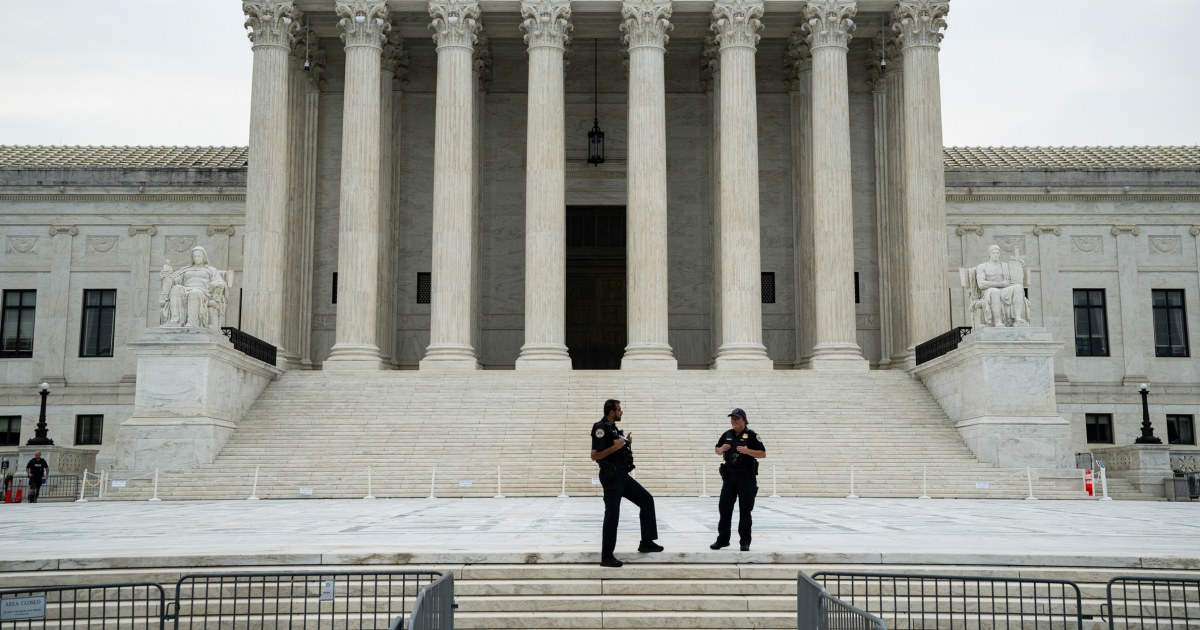
SCOTUS ruling. The U.S. Supreme Court on Tuesday rejected the White House’s effort to restrict birthright citizenship in the United States, delivering a blow to Trump’s immigration agenda.
In the 6-3 ruling, the Supreme Court upheld a lower court’s decision to block Trump’s executive order, signed on his first day in office, directing U.S. agencies not to recognize the citizenship of children born in the United States if neither parent was a U.S. citizen or legal permanent resident. “[T]here is scant evidence for this dramatically revisionist view,” Chief Justice John Roberts wrote for the court, arguing that the 14th Amendment of the U.S. Constitution extends citizenship to “every free-born person in this land.”
Trump, though, appeared to brush off the judicial loss, reposting a headline on Tuesday that claimed that “Trump’s efforts to reverse birthright citizenship may succeed with or without SCOTUS.” He later called on Congress to begin drafting legislation to end birthright citizenship, writing, “No long and unwieldy Constitutional Amendment is necessary.”
Odds and Ends
Paraguay President Santiago Peña declared Tuesday to be a national holiday to celebrate the country’s surprise World Cup victory over Germany. The South American team (ranked 33rd in the world) entered Monday’s match with low hopes, and sure enough, Germany (ranked 12th) dominated possession during the match. Yet with the score still tied 1-1 after extra time, the match proceeded to a penalty shootout, which Paraguay won 4-3. It was one of the biggest upsets of this year’s World Cup thus far.
Paraguay is the second Latin American country to make defeating Germany’s team a national celebration. Last week, Ecuador also announced a national holiday after clinching a 2-1 victory to reach the knockout stage.
Like what you read? This week only, the paywall is down to commemorate America’s 250th birthday. To keep receiving our global analysis after the gates close, sign up for FP newsletters.
Alexandra Sharp is the World Brief writer at Foreign Policy. Bluesky: @alexandrassharp.bsky.social X: @AlexandraSSharp
Read More On Civil Society | Migration and Immigration | Race and Ethnicity | South AfricaJoin the Conversation
Commenting is a benefit of a Foreign Policy subscription.
Already a subscriber? Log In.
Join the Conversation
Join the conversation on this and other recent Foreign Policy articles when you subscribe now.
Not your account? Log out
Join the Conversation
Please follow our comment guidelines, stay on topic, and be civil, courteous, and respectful of others’ beliefs.
You are commenting as . Change your username | Log outMike Lawler erupts at Dem colleague during heated House hearing: ‘Should be ashamed of yourself!’
Mike Lawler erupts at Democratic colleague during heated House hearing on sanctuary policies- US News
- World News
- Page Six
- Sports
- Post Sports+
- Sports Betting
- Business
- Opinion
- Entertainment
- Shopping
- Lifestyle
- Health
- Real Estate
- Alexa
- Media
- Tech
- Science
- Astrology
- Video
- Photos
- Pod Force One
- NY POSTcast

Switch between CA and NY editions here.
Editiontrending now in US News
Skip to main content Cops who busted smiling sisters Cookie and Kitty offer hint at...
 Boyfriend desperately tried to save hiker as massive alligator...
 Chilling photo shows bloodied Texas mom after allegedly being...
 Actress hid fugitive boyfriend, funded his escape after he...
 GOP Rep. Tom Kean Jr. reveals reason behind mysterious absence as...
 Long Island mom drank booze in bathroom as baby choked to death...
 Grinning teen was the one who stabbed Texas mom to death, cops...
 The ‘psycho’ felon son and the porn perv dad behind...
Politics
The ‘psycho’ felon son and the porn perv dad behind...
Politics
Mike Lawler erupts at Dem colleague during heated House hearing: ‘Should be ashamed of yourself!’
By Victor Nava Published June 30, 2026, 7:04 p.m. ETSee more of our coverage in your search results.
Add The New York Post on GoogleRep. Mike Lawler (R-NY) blasted Congressman Jamie Raskin (D-Md.) as an “absolute disgrace” as the two got into a shouting match Tuesday during a heated congressional hearing on the victims of sanctuary city policies.
Lawler erupted after being interrupted multiple times by Democrats as he laid out the details leading up to the heinous murder of New York teenager Sheridan Gorman in Chicago.
The Republican congressman blamed the Biden administration’s open border policies and failure to deport the Loyola University student’s accused killer, an illegal migrant from Venezuela, before he allegedly gunned her down on March 19.
“You may not want to hear the details. It may be an inconvenience to you, but the details matter,” Lawler said calmly after Rep. Pramilia Jayapal took issue with the New York pol making a lengthy statement rather than quickly introducing Gorman’s grieving mother, Jessica.
Rep. Tom McClintock (R-Calif.), the Republican chairman of the House Judiciary Subcommittee on Immigration Integrity, Security, and Enforcement, asked Lawler to wrap it up, citing an agreement with the Democrats on the panel on the form of introductions.

Undeterred, Lawler continued: “When you send your kid to college, you should be worried about making sure they go to class or hopefully that they have a nice roommate or how to help them get a summer internship. Not worried that illegal immigrants are shooting them while they’re out with their friends looking at the northern lights.”
Explore More

GOP Rep. Tom Kean Jr. reveals reason behind mysterious absence as he returns to Congress after nearly 4 months

GOP claims it will pick up NY House seats despite Trump’s unpopularity

Hakeem Jeffries slammed for congratulating Mamdani-backed candidates after Dem primary sweep: ‘The most insane people ever elected’
The congressman went on to scold Democrats for seemingly being more concerned about the deaths of anti-ICE protesters than the victims of migrant crime.
“The same outrage you feel about Renée Good and Alex Pretti you should feel about Sheridan Gorman and Laken Riley,” Lawler fumed.
Raskin shot back: “I do feel that outrage.”
“You do not!” Lawler raged.” Because if you did you would not support sanctuary jurisdictions
“You should be ashamed of yourself!”
Raskin, the ranking member of the House Judiciary Committee, noted that Lawler was not a member of the panel and asked him to “get the hell out” as they both shouted over each other.
“You don’t understand the rules of the committee. You don’t understand the Constitution. You’re full of it!” Raskin yelled.
“You’re an absolute disgrace for supporting sanctuary policies,” Lawler countered.
“Say one word about Alex Pretti and Renée Good,” Raskin demanded.
To which Lawker responded, “I did! I wrote a whole New York Times op-ed about it.”
“You should be absolutely ashamed of yourself for not opposing sanctuary policies that resulted in their daughter’s death!” he added, ending the argument.

Nelly Decker, a spokeswoman for Raskin, argued the Maryland Democrat’s outburst was justified.
“Of course Raskin yelled at [Lawler], he was a guest in the committee to introduce a witness and went on a tangent and sullied the names of Alex Pretti and Renee Good,” Decker wrote on X.
In a subsequent post, she accused Lawler of being “too busy planning his Fox moment in the committee hearing he was a guest at to actually pay attention to RM Raskin’s opening.”
Decker noted Raskin acknowledged “the devastating loss of our witnesses” in his remarks.
In her opening statement, Jessica Gorman demanded lawmakers explain when and why “protecting our American citizens stopped being your first priority.”
“This story is about my Sheridan. It’s about how failed border policies, sanctuary-city laws and twisted leaders refusing to cooperate with ICE sent her to her grave. It’s about a government and politicians that forgot their first priority,” Jessica said.
“But first I want you to know who Sheridan was. I want you to understand what we all lost because of your mismatched priorities.”
Trending Now on NYPost.com
-
 This story has been shared 94,757 times.
94,757
This story has been shared 94,757 times.
94,757
Mystery of explosive diarrhea parasite outbreak in the US — as experts try to figure out what’s causing it
-
 This story has been shared 70,000 times.
70,000
This story has been shared 70,000 times.
70,000
Cops who busted smiling sisters Cookie and Kitty offer hint at motive for Texas mom’s murder
-
 This story has been shared 47,988 times.
47,988
This story has been shared 47,988 times.
47,988
Boyfriend desperately tried to save hiker as massive alligator ripped her apart in three feet of water
Most Commented Join the conversation
-
 This story has 2.1K comments.
2.1K
This story has 2.1K comments.
2.1K
Trump issues dire warning about fate of Iran after punishing Islamic Republic for Strait of Hormuz attacks
-
 This story has 1.7K comments.
1.7K
This story has 1.7K comments.
1.7K
Supreme Court rules ballots arriving after Election Day can be counted, in win for Dems
-
 This story has 1.6K comments.
1.6K
This story has 1.6K comments.
1.6K
JD Vance tells Bill Maher how ‘America wins’ with or without Iran deal
Now on Page Six
-

Spencer Pratt makes heartbreaking claim about Daveigh Chase’s tragic death after bombshell AIDS reveal
-
Taylor Swift’s plane lands in New York area days before wedding to Travis Kelce
-
Kate Gosselin calls son Collin ‘mentally ill’ as he makes new abuse claims ahead of memoir release
Video
-
Supreme Court releases closely watched decision on birthright citizenship and allows ban on trans athletes
Now on Decider
See All
More Stories
Page Six
‘The Devil Wears Prada 2’ is now streaming — Here’s how to watch at home
Decider
Stream It Or Skip It: ‘Louis C.K.: Ridiculous’ On Netflix, The Comedian Slowly, Crudely, Comes To Grip With The Inevitability Of Mortality
NYPost
Mystery of explosive diarrhea parasite outbreak in the US — as experts try to figure out what’s causing it
© 2026 NYP Holdings, Inc. All Rights Reserved Terms of Use Subscription Terms Privacy Notice SitemapYour California Privacy Rights