6 leaders in 10 years. A look at the quick succession of British prime ministers
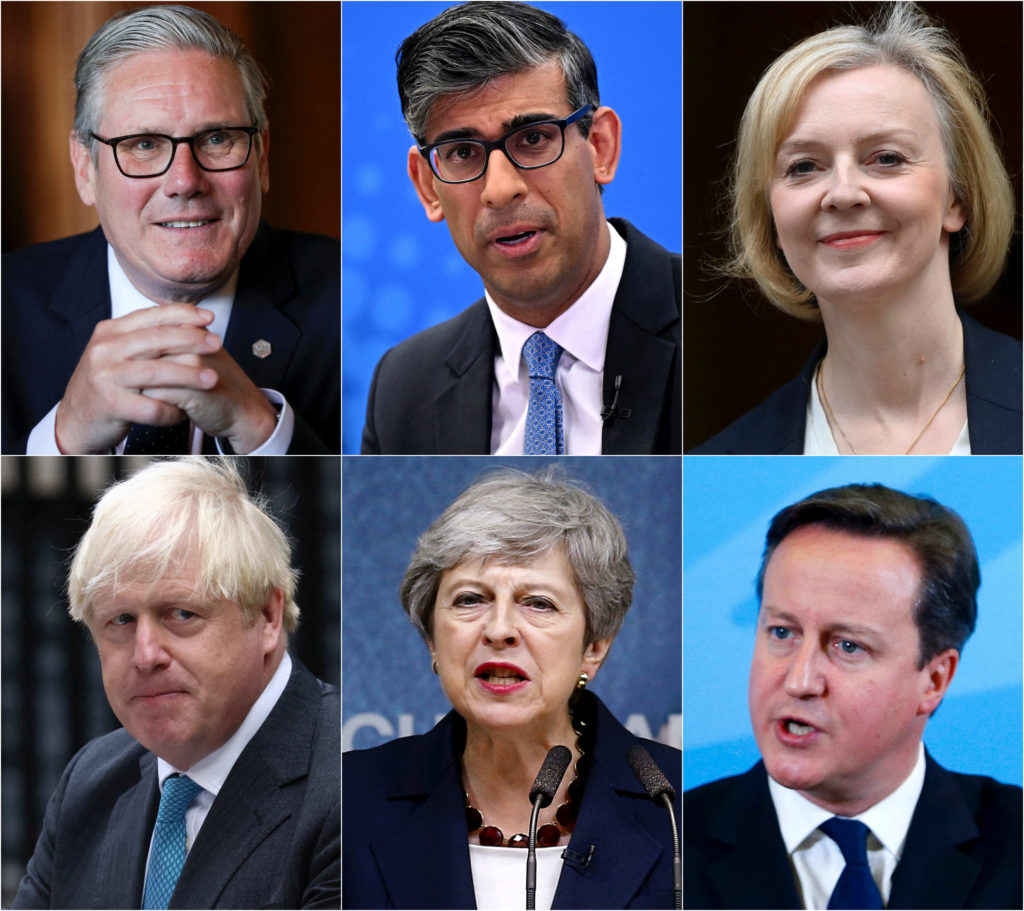
LONDON (AP) — When British Prime Minister Keir Starmer said Monday he is stepping down, he became the sixth person to stand in front of No. 10 Downing Street to make a farewell speech in a turbulent decade of U.K. politics.
Starmer had pledged to bring stability, grow the economy and end years of political chaos under the Conservative Party when he was elected in 2024 in a landslide victory for his Labour Party.
Educate your inbox
Subscribe to Here’s the Deal, our politics newsletter for analysis you won’t find anywhere else.
Barely two years later, Starmer was forced to step down after his popularity plummeted and his government struggled to deliver on his promise to "rebuild Britain."
READ MORE: How UK's Keir Starmer went from election landslide to downfall
A look at the quick succession of British prime ministers since 2016:
David Cameron (2010 to 2016)
Cameron, who won an election majority in 2015, announced his resignation in June 2016 — a day after British voters voted to leave the European Union in a pivotal referendum that he had campaigned hard against.
It was Cameron who called the referendum in a bid to quell longstanding party quarrels over Britain's relationship with Europe.
Theresa May (2016 to 2019)
May served from 2016 to May 2019, when she ended a failed three-year quest to lead Britain out of the European Union.
While May successfully struck a divorce deal with the EU, her fellow Conservative Party members refused to accept the deal. Her proposal was defeated three times in Parliament, rejected both by pro-EU opposition lawmakers and by Brexit-supporting Conservatives who thought it kept Britain too closely bound to the bloc.
"I have done my best," May said at the time.
Boris Johnson (2019 to 2022)
The charismatic and divisive Johnson oversaw Britain's exit from the EU and steered the country through the COVID-19 pandemic, but he was brought down after a series of ethics scandals tarnished his administration.
Johnson clung on to power even as allegations snowballed that he was too close to party donors, that he protected supporters from bullying and corruption allegations, and that he misled Parliament about government office parties that broke pandemic lockdown rules. He was eventually forced out after dozens of officials and his allies quit the government.
Liz Truss (2022)
Truss, a libertarian who championed small government and free-market economics, became Britain's shortest-serving prime minister when she announced her resignation in October 2022, just six weeks after taking office.
Truss took the top job on a promise to shake up Britain's economy, but her ill-conceived stimulus plan, including drastic tax cuts, caused economic and political chaos and wiped out her support in the Conservative Party.
Rishi Sunak (2022 to 2024)
Sunak secured support from his fellow Conservatives to take over from Truss in 2022, vowing to reduce inflation, cut public healthcare backlogs and halt the flow of migrants entering the U.K. by illegal means.
He was not able to lift the poll ratings for the Conservatives, and stepped down in 2024 after his party suffered its biggest defeat in its two-century history.
Keir Starmer (2024 to 2026)
Keir Starmer came to power after winning a landslide election victory in 2024, pledging to rebuild the economy and tattered public services and restore trust in politics. He was the first Labour Party prime minister Britain has seen in 14 years.
Close to two years later he acknowledged his party does not believe he is "best placed to lead us into the next general election."
Support trusted journalism and civil dialogue.
Badenoch blasts 'moaning' female Labour MPs over Burnham jobs 'quota'

Kemi Badenoch has told Labour women to earn a job in Andy Burnham's Cabinet instead of demanding they are handed jobs because of their gender.
The Tory leader lashed out today amid reports that female MPs are demanding the de-facto new prime minister introduce a 50:50 gender split 'quota' in his government.
Amid reports that former foreign secretary David Miliband is being lined up to return to the role, possibly with his brother Ed as Chancellor, one female minister also complained that Burnham could not have 'more Milibands than women' in the top posts.
But in a scathing article in the Times today Mrs Badenoch told them to 'stop moaning' and get chosen on merit instead of retreating into 'more of the failed identity politics that is holding back our country'.
'There are many, many reasons why you shouldn't have any Milibands in the cabinet,' she said.
'But complaining that the boys haven't given them the right jobs or that the boys are taking all the jobs, just shows that Labour's women still don't get it.'
The idea of quotas was also attacked by Baroness Jacqui Smith, Labour's Skills Minister.
Asked by Times Radio if Mr Burnham should reserve jobs for women, she said: 'No, I think what Andy Burnham should be doing is building the very best team around him to change this country.'

A letter written by the Women's Parliamentary Labour Party has called on Mr Burnham to ensure a 50:50 split between men and women in government jobs

Amid reports that former foreign secretary David Miliband (above, right, in 2010) is being lined up to return to the role, possibly with his brother Ed as Chancellor, one female minister complained that Burnham could not have 'more Milibands than women' in the top posts

But Mrs Badenoch told them to pipe down and get chosen on merit instead of retreating into 'more of the failed identity politics that is holding back our country'
A letter written by the Women's Parliamentary Labour Party and seen by the BBC has called on Mr Burnham to ensure a 50:50 split between men and women in government jobs after he succeeds Sir Keir Starmer.
'We are asking you to demonstrate this change from day one and address the toxicity and misogyny within our own party and government,' it said.
Labour has never had a female leader, while the Conservatives have had three, and Mrs Badenoch urged the government to follow its meritocratic example.
'If you run a meritocracy, then you do not have to worry about jobs for the boys,' she wrote.
'Every woman who is a Conservative MP, every woman who has ever won the leadership, has had to fight to get where she is.
'By contrast, Labour women are demanding guarantees from Burnham. But the truth is he doesn't have to give any guarantees.
'If none of Labour's women are prepared to get their hands dirty and challenge him for the leadership, their demands are toothless.'
'In fact, it's quite revealing that the women's parliamentary Labour Party has written to Burnham asking him to commit himself to at least 50 per cent female ministers.
'This has nothing to do with meritocracy. It is yet more of the failed identity politics that is holding back our country.'